
Tapioca pearls built the bubble tea industry, but modern shop success depends on what happens beyond classic boba. While dark, chewy cassava pearls remain a mandatory baseline on every menu, consumer taste profiles in 2026 have expanded toward diverse textures, bursting fruit flavors, silky custards, and velvety foam caps. For shop owners and beverage operators, offering a well-engineered lineup of boba tea toppings is no longer just about customer customization—it is the single most effective operational lever to increase Average Order Value (AOV) and drive repeat foot traffic.
Building a profitable topping strategy requires balancing customer delight with back-of-house reality. Offering thirty different add-ins leads to inventory bloat, high waste, and slow drink prep during peak hours. Conversely, limiting options to traditional pearls leaves money on the table when customers seek lighter, lower-calorie, or visually striking alternatives.
This ultimate guide breaks down the essential types of boba toppings, categorizes them by sensory profile, outlines standard back-of-house SOPs, and details the exact pairing rules needed to build a high-margin beverage program.
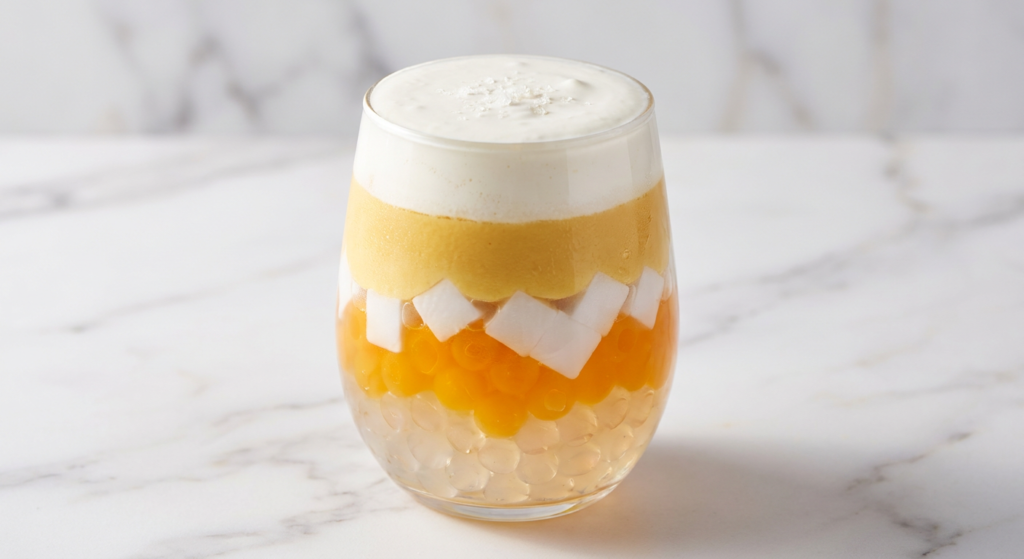
The 6 Boba Topping Families: Sensory Profiles & Ingredients
Understanding how toppings interact with tea bases starts with sensory classification. Toppings contribute more than sweet flavor—they dictate the mouthfeel, chew resistance, visual contrast, and swallowing dynamics of every cup. All commercial toppings fall into six structural families.
Visual & Texture Hierarchy of Bubble Tea Toppings:Chewy Starches (Bottom) ➔ Crisp Jellies & Popping Pearls (Mid-Cup) ➔ Silky Custards (Mid-Layer) ➔ Fluffy Foams (Top-Cap)1. Chewy Starches & Pearls (Tapioca, Mini Pearls, Brown Sugar Boba)
Chewy starch pearls represent the foundational texture of bubble tea. Made primarily from cassava root starch, traditional pearls rely on precise thermal cooking to gelatinize starches, producing the signature “Q-bounce” chew (tàn yánh / 弹yá).
- Traditional Tapioca Pearls: Cooked in boiling water and steeped in rich brown sugar or fructose syrup, classic black pearls provide a dense, comforting bite that pairs naturally with heavy milk teas.
- Mini Tapioca Pearls: Offering a smaller diameter, mini pearls pass easily through standard straws and provide a lighter, multi-grain mouthfeel per sip.
- Brown Sugar Boba: Slow-cooked in concentrated dark brown sugar syrup, these pearls create tiger-stripe wall trails when poured into cold fresh milk or black tea bases.
Pro Tip: Traditional tapioca pearls begin starching up and losing elasticity after 4 hours at room temperature. Never refrigerate cooked tapioca, as cold temperatures cause retrogradation, turning the center hard and chalky.
2. Bursting & Popping Boba (Fruit Juice Pearls)
Created through molecular gastronomy (spherification), popping boba features a translucent, ultra-thin sodium alginate membrane filled with real fruit juice or flavored syrup.
- Flavor Varieties: Popular options include mango, strawberry, passionfruit, lychee, green apple, and peach.
- Sensory Experience: Unlike chewy pearls, popping boba offers zero chew resistance. The membrane ruptures immediately under gentle palate pressure, releasing a sudden burst of liquid acidity and sweetness.
- Operational Advantage: Popping boba requires zero cooking or heating. It is shelf-stable in sealed tubs for 12 to 18 months and ready to scoop directly into cold fruit teas, sparkling sodas, and frozen slushies.
3. Crisp & Refreshing Jellies (Nata de Coco, Lychee, Grass Jelly, Aiyu)
Jellies provide a firm, clean, gelatinous structure that adds substantial chew without the heavy starch density of tapioca.
- Coconut Jelly (Nata de Coco): Produced through the fermentation of coconut water, coconut jelly is sliced into uniform rectangular cubes. It absorbs surrounding tea flavors while maintaining a crisp, firm, fibrous bite.
- Lychee & Rainbow Jellies: Fruit-flavored agar jellies offer bright translucent colors and a sweet, tropical aroma.
- Grass Jelly (Herbal Jelly): Crafted from oxidized Mesona chinensis (mint family) plants, grass jelly has a dark color and a slightly herbal, bittersweet profile. It acts as a natural cooling element in hot or iced milk teas.
- Aiyu & Aloe Vera: Diced aloe vera and citrusy Aiyu jelly provide refreshing, low-calorie options that appeal directly to health-conscious consumers.
4. Silky Custards & Puddings (Egg Pudding, Taro Paste, Sweet Red Bean)
Custard and legume add-ins introduce rich, dessert-style textures that melt smoothly into milk bases.
- Egg Pudding: Formulated from egg yolk solids, milk powder, and sugar, egg pudding has a silky, melt-in-your-mouth texture. It slides effortlessly up the straw alongside cold tea.
- Taro Paste & Purple Yam: House-made or pre-cooked taro mash lines the sides of the cup, adding a thick, earthy, velvety texture.
- Sweet Red Bean (Azuki): Slow-simmered red beans offer a traditional East Asian dessert texture, combining soft grain mealiness with gentle sweetness.
5. Creamy Foams & Top Covers (Sea Salt Cheese Foam, Mochi Foam)
Foam toppers sit on top of the beverage rather than resting at the bottom of the cup, transforming a standard iced tea into a multi-layered sipping experience.
- Sea Salt Cheese Foam: Blended from cream cheese, whipping cream, fresh milk, and sea salt, cheese foam forms a thick, dense 1-inch layer atop cold tea. Drinkers tilt the cup at a 45-degree angle to sip rich, savory-sweet cream followed by crisp, aromatic tea underneath.
- Mochi Foam: A recent texture innovation blending glutinous rice powder and cream, creating a stretchy, milk-flavored top coat that mimics fresh mochi.
Key Takeaway: Creamy foam toppers require dedicated cup lids with sip openings (or dome lids) rather than standard flat heat-sealed film, encouraging direct sipping over straw usage.
6. Specialty & Crunchy Add-ins (Sago, Crushed Oreos, Egg Waffle Strips)
Specialty add-ins blur the line between beverage and liquid dessert.
- Sago Pearls: Tiny, translucent palm-starch pearls common in Hong Kong-style mango pomelo sago drinks.
- Crushed Cookies & Chocolate: Crushed Oreos sprinkled over cheese foam or blended into shakes provide a crisp, chocolatey crunch.
- Egg Waffle Strips: Freshly baked Hong Kong egg waffles served alongside or dipped into milk tea floats.
Back-of-House SOPs: Storage, Hold Times, and Prep Efficiency
Managing back-of-house (BOH) inventory requires strict operational guidelines. Toppings vary widely in their prep labor requirements, storage conditions, and shelf-life stability.
Operators who rely entirely on high-labor cooked toppings often suffer from kitchen bottlenecks during rush periods. Successful store managers maintain a balanced mix of quick-prep items alongside zero-cook, scoop-and-serve ingredients. Reviewing a complete shop owner’s guide to boba types and toppings
helps establish standardized staff training across shifts.
| Topping Category | BOH Prep Complexity | Storage Condition | Holding Temp | Shelf Life (Cooked/Opened) | Standard Portion Size |
|---|---|---|---|---|---|
| Tapioca Pearls | High (Boil 35m + Steep 20m + Sugar Soak) | Thermal Warmer | ~140°F (60°C) | 4–6 Hours Max | 50g–70g (~1.5 scoops) |
| Popping Boba | Low (Zero-Cook, Scoop & Serve) | Refrigerated | 39°F (4°C) | 7–14 Days Opened | 30g–50g (~1 scoop) |
| Crystal Boba | Low (Ready-to-use in syrup) | Refrigerated | 39°F (4°C) | 7–10 Days Opened | 40g–60g (~1 scoop) |
| Coconut Jelly | Low (Ready-to-use, Drain excess) | Refrigerated | 39°F (4°C) | 10–14 Days Opened | 40g–50g (~1 scoop) |
| Egg Pudding | Medium (Cook powder 10m + Chill 2h) | Refrigerated | 39°F (4°C) | 48 Hours Max | 50g–70g (1 large slice) |
| Cheese Foam | Medium (Whip 5m with electric mixer) | Refrigerated | 39°F (4°C) | 12 Hours Max (Same Day) | 40g–60g (1-inch layer) |
Standard Topping Prep Workflow:Receive Sealed Wholesale Tub ➔ Store Ambient (Unopened) ➔ Portion into BOH Station Containers ➔ Hold Cold at 39°F ➔ Portion with Standard 50g Perforated Scoop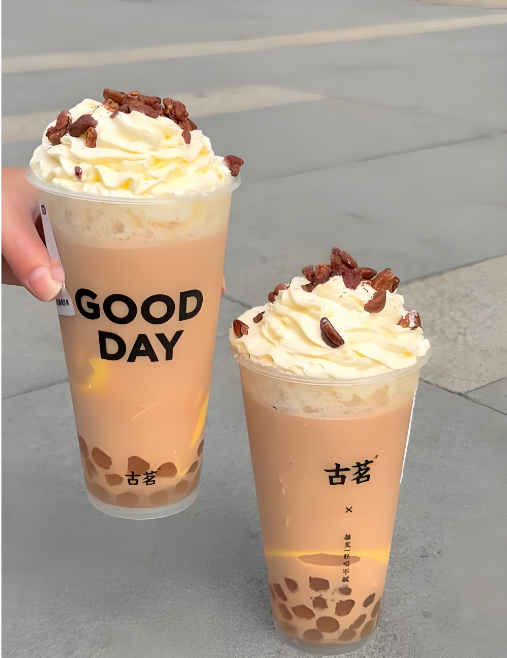
Key Storage & Safety Rules:
- Never Freeze Popping Boba: Temperatures below 32°F (0°C) cause internal juice to expand, destroying the delicate alginate membrane and leaving flat, empty skins.
- Use Perforated Scoops for Jellies and Boba: Always portion wet toppings using stainless steel perforated scoops to drain excess packing syrup before adding them to the cup. Uncontrolled syrup transfer skews beverage sweetness levels and dilutes ice ratios.
- Refrigerate Opened Tubs Immediately: Once opened, commercial tubs of popping boba, crystal boba, and coconut jelly must be covered, stored at 39°F (4°C), and used within 7 to 14 days.
Beverage Science & Pairing Rules: Matching Toppings with Tea Bases
Combining toppings and liquid tea bases is both an art and a science. Placing the wrong topping in a drink can ruin the beverage’s acidity balance, curdle dairy fats, or overwhelm delicate floral notes.
Flavor & Texture Chemistry Matrix:Heavy Creamy Base (Black/Taro) ➔ Demands Dense Warm Chew (Tapioca / Pudding)Acidic Fruit Base (Lemon/Passion) ➔ Demands Light Bursting / Crisp Bite (Popping Boba / Coconut Jelly)Aromatic Floral Base (Jasmine/Oolong) ➔ Demands Airy Creamy Top Coat (Cheese Foam / Crystal Boba)Rule 1: High-Acidity Fruit Teas Need Light, Bursting, or Crisp Toppings
- Target Bases: Passionfruit green tea, lemon green tea, grapefruit tea, guava iced tea.
- Recommended Toppings: Mango popping boba, passionfruit popping boba, coconut jelly, aloe vera, crystal boba.
- Why It Works: Citrus and high fruit acidity clash with heavy dairy or warm tapioca starch. Light, fruit-soaked jellies and juice-filled popping pearls accentuate the refreshing, thirst-quenching profile without emulsification issues.
Rule 2: Rich Fresh Milk Teas Demand Warm, Dense, or Silky Toppings
- Target Bases: Classic black milk tea, brown sugar milk tea, taro fresh milk, roasted oolong milk tea.
- Recommended Toppings: Warm tapioca pearls, egg pudding, grass jelly, sweet red bean, taro mash.
- Why It Works: High dairy fat coats the mouth. Dense, chewy tapioca or silky egg pudding complements this richness, creating a satisfying, dessert-weight beverage experience.
Rule 3: Aromatic Floral & Roasted Teas Excel with Creamy Foam Caps
- Target Bases: Jasmine green tea, High-Mountain Ali Mountain Oolong, Hojicha, Ceremonial Matcha.
- Recommended Toppings: Sea salt cheese foam, mochi foam, white crystal boba.
- Why It Works: Premium single-origin teas possess delicate floral or roasted aromas. Instead of submerging heavy sweet toppings at the bottom, floating a savory-sweet cheese foam layer allows the drinker to experience the aromatic tea notes cleanly beneath the cream. For step-by-step blending ratios, review the detailed cheese foam milk tea SOP guide.
Menu Economics: How Toppings Boost Average Order Value (AOV)
In commercial boba shop menu engineering, toppings represent the single highest gross margin item in the building. While liquid tea bases, dairy, and custom cups carry fixed costs, adding a 50-gram scoop of popping boba or crystal boba costs an operator approximately $0.12 to $0.22 in raw materials, while generating an add-on retail price of $0.75 to $1.25.
This translates to a 75% to 85% gross margin on topping upsells.
Margin Analysis of a 2nd Topping Upsell:Retail Add-on Price: $1.00Raw Material Cost (50g Popping Boba): $0.15Gross Profit per Scoop: $0.85 (85% Margin)AOV Impact across 300 daily cups: +$255.00 Daily RevenueThe 3-Tier Menu Strategy
To avoid overwhelming customers while maximizing profit, implement the 3-tier menu framework outlined in the milk tea toppings strategy playbook
:
- Tier 1: Core Daily Toppings (Always On, High Volume)
- Selection: Classic Tapioca Pearls + Coconut Jelly or Egg Pudding.
- Purpose: Fast execution, low price barrier, satisfying 80% of routine orders.
- Tier 2: Seasonal Rotating Toppings (Quarterly LTOs)
- Selection: Mango Popping Boba & Crystal Boba in Spring/Summer; Sweet Red Bean & Taro Paste in Fall/Winter.
- Purpose: Creates urgency, encourages social media sharing, and tests new flavor concepts without permanent inventory commitment.
- Tier 3: Premium Top-Covers (High Margin Upgrades)
- Selection: Sea Salt Cheese Foam or Mochi Foam.
- Purpose: Positioned as a luxury +$1.25 upgrade for specialty teas, significantly raising total ticket size.
Building Default Pairings & The Second Topping Upsell
Rather than leaving drinks completely blank (“Choose your tea, then pick 5 toppings”), design signature drinks where Base Drink + 1 Default Topping is built into the list price.
For example, price a “Brown Sugar Milk Tea with Tapioca” at $6.50. When the customer orders, staff are trained to ask a simple high-converting follow-up question: “Would you like to add silky Egg Pudding for just $1.00 more?”
By positioning the second topping as a complementary texture contrast, shops consistently achieve a 30% to 40% attach rate on secondary toppings. Operators interested in structured menu ladders can read more on boosting average order value with boba toppings
.
Sourcing Wholesale Toppings for Your Boba Shop
Maintaining consistent drink quality across multiple store locations requires reliable wholesale supply partners. When evaluating commercial boba topping suppliers, shop owners should look for three core standards:
- Consistent Particle Sizing & Elasticity: Tapioca pearls and crystal boba must maintain uniform size to ensure consistent straw suction and reliable portion control.
- True-to-Fruit Flavor Formulations: Popping boba and fruit jellies should utilize real fruit juice concentrates rather than overly synthetic chemical flavorings.
- Sealed Commercial Packaging: Wholesale tubs (typically 3.2kg to 3.8kg for popping boba and jellies) should feature air-tight, tamper-evident seals that guarantee long ambient shelf life prior to opening.
As a dedicated B2B wholesale distributor, BubbleTeaSuppliers provides high-volume boba shops, cafes, and restaurant chains with premium-grade toppings, loose-leaf tea bases, flavor powders, syrups, and professional store equipment. Partnering with an established distributor ensures reliable stock availability, competitive tier pricing, and direct access to shop SOP consultation.
Frequently Asked Questions (FAQ) About Boba Toppings
What is the difference between popping boba vs crystal boba?
Popping boba consists of a thin alginate membrane filled with fruit juice that bursts immediately when bitten. Crystal boba is made from konjac/agar starch and offers a firm, translucent, jelly-like chew with no liquid center. Crystal boba is heat-stable and chewy, while popping boba is liquid-filled and refreshing.
Do popping boba and crystal boba require cooking?
No. Unlike traditional tapioca pearls which require 40 to 60 minutes of boiling and steeping, both popping boba and commercial crystal boba come pre-prepared and packed in syrup. They are ready to scoop and serve directly from the tub.
How long does opened popping boba last in a boba shop?
Once opened, popping boba tubs should be kept refrigerated at 39°F (4°C) with the pearls fully submerged in their original syrup. Under proper refrigeration, opened popping boba maintains optimal flavor and membrane integrity for 7 to 14 days.
Which boba toppings are gluten-free and vegan-friendly?
Popping boba, crystal boba (agar/konjac based), coconut jelly (nata de coco), aloe vera, and grass jelly are naturally gluten-free and vegan. Traditional tapioca pearls are also gluten-free (made from cassava starch). However, egg pudding contains dairy and egg solids, and cheese foam contains dairy products.
How much topping should be added to a standard 16oz and 24oz boba drink?
Standard commercial portioning uses 40g to 50g (~1 to 1.5 scoops) for a 16oz cup, and 60g to 70g (~2 scoops) for a 24oz cup. Using perforated scoops ensures consistent weight portioning without transferring excess syrup into the beverage. *