
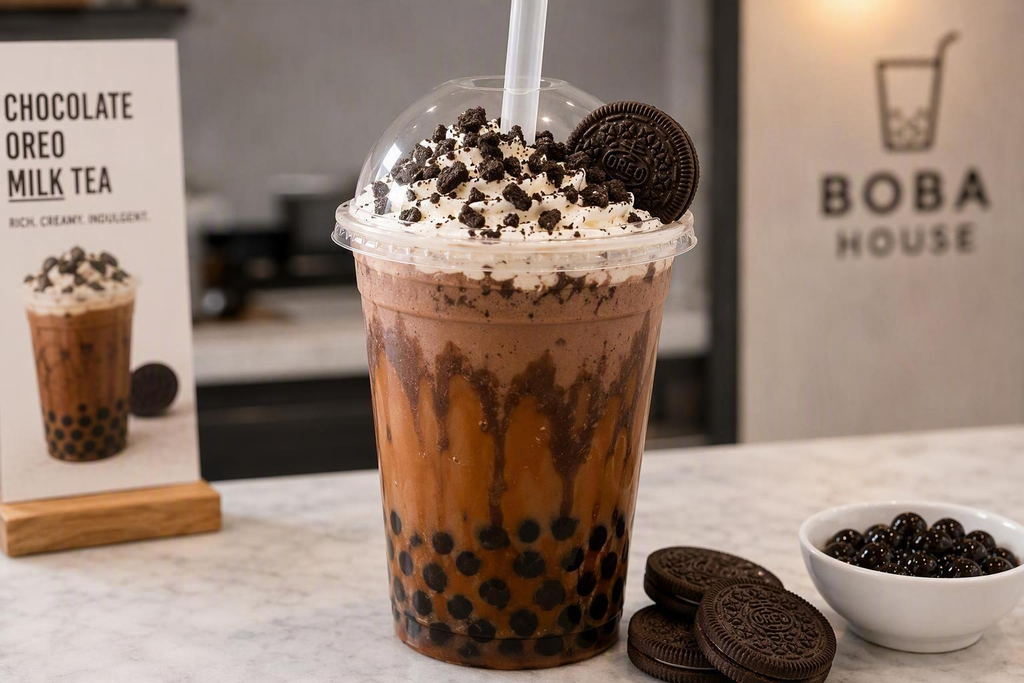
Chocolate Oreo milk tea does something few drinks can: it tastes like a dessert, photographs like a milkshake, and still drinks like a milk tea. That combination is why it keeps showing up as a mid-to-premium “hero item” on menus — and why it is worth more than just a flavor you throw on the board.
This guide is for US bubble tea shop owners and managers deciding whether to add it and, if so, how to launch it so it actually sells. We’ll walk through where the drink fits, how to build it cleanly, which toppings raise the ticket, how to price it, and how to push it on social media. If you’re still in menu-development mode, the BubbleTeaSuppliers library of new bubble tea drink ideas and SOP is a useful starting point.
Why chocolate Oreo milk tea sells
Oreo and cookies-and-cream is one of the most nostalgia-loaded flavor profiles in American food. Fold that into a creamy milk tea with chewy boba and you get a drink that feels indulgent but lighter and more sippable than a full milkshake — exactly the sweet spot dessert milk tea lives in.
Two things make it commercially attractive rather than just popular:
- It reads instantly. Crushed cookies and a dark chocolate layer tell the customer what they’re getting before they taste it.
- It justifies a higher price. A drink that looks and tastes like dessert can sit comfortably above standard milk tea on a menu.
Shops typically describe it with texture-and-contrast cues — “rich, decadent chocolate with crunchy Oreo bits and creamy foam” — because those words help customers see the value. For a home-cook take on how the layers come together, an Edible Mosaic’s Oreo milk tea recipe shows the cookies-and-cream + brown-sugar-boba pairing that tends to sell well.
Is it right for your menu?
Before you commit inventory, decide what role the drink plays. A chocolate Oreo milk tea is not a core everyday seller for most shops; it works best as a signature indulgence or a seasonal limited-time special. That positioning matters because it changes how you build, price, and market it.
Three signs it fits your shop:
- You already run a milk tea base and want a higher-ticket add-on. If classic milk tea sells, this becomes a premium variation on demand you already have.
- You need something photogenic. Dessert-layered drinks are among the most shareable on a boba menu.
- You want a “staff pick” or seasonal special that’s easy to train. One build with one topping script is far easier than juggling endless SKUs.
If your customers skew heavily toward fruit teas and lighter options, you may want to hold this as a limited-time offer rather than a permanent slot. Check demand against a broader read on what sells before you commit shelf space — and if you want a sense of which flavor profiles already carry traffic, a rundown of the top-selling milk tea flavors gives useful context for whether chocolate-leaning drinks belong high on your board.
Your answer also depends on your kitchen reality. Dessert drinks add steps, so the deciding question is less “do customers like Oreo?” and more “can my team nail this build during a rush, every time?” If the answer is yes, you have a strong premium option. If it’s a stretch, fix the process before you list it — a slow, inconsistent dessert drink costs you more than the menu item earns.
How to build it (chocolate base)
You can make the chocolate milk-tea foundation a few ways. For a shop, consistency and speed matter more than “romantic” ingredients.
Chocolate format — pick one:
- Chocolate syrup or sauce: Fastest, easy to pump, least settling. Downside: can skew sweeter and less “real cocoa.”
- Cocoa/chocolate powder: Best real-chocolate finish, but it settles unless staff slurry it first — this needs to live in your recipe.
- Hot-chocolate mix: Most forgiving (often has sugar + stabilizers), but sweetness control is harder and flavor can read artificial.
For a dessert drink that leans on depth rather than just sugar, a chocolate sauce or a syrup-style chocolate base is usually the sweet spot between speed and taste. If you prefer powder, treat mixing as part of the SOP.
Tea base: Chocolate needs a backbone. Black tea brewed strong and cooled reads clearly under cocoa and dairy without adding bitterness.
Milk/creamer: Keep whatever powdered-creamer or fresh-milk base you already use for classic milk tea. Warm dairy can curdle in cold builds, so cool the tea before you mix — most chocolate milk-tea recipe guides flag this exact step.
Sweetener: Adjust down if your chocolate is already sweet. Fructose or simple syrup dose to taste.
Pro Tip: Train staff to taste the chocolate layer alone before adding the Oreo top. If the base is one-note sweet, no amount of cookie will fix the balance.
The Oreo layer (topping that makes it premium)
The chocolate gets you the flavor; the Oreo gets you the “wow.” Keep the cookie work simple and consistent:
- Crushed Oreo crumbs are your main garnish and signal — store them ready in a labeled shaker.
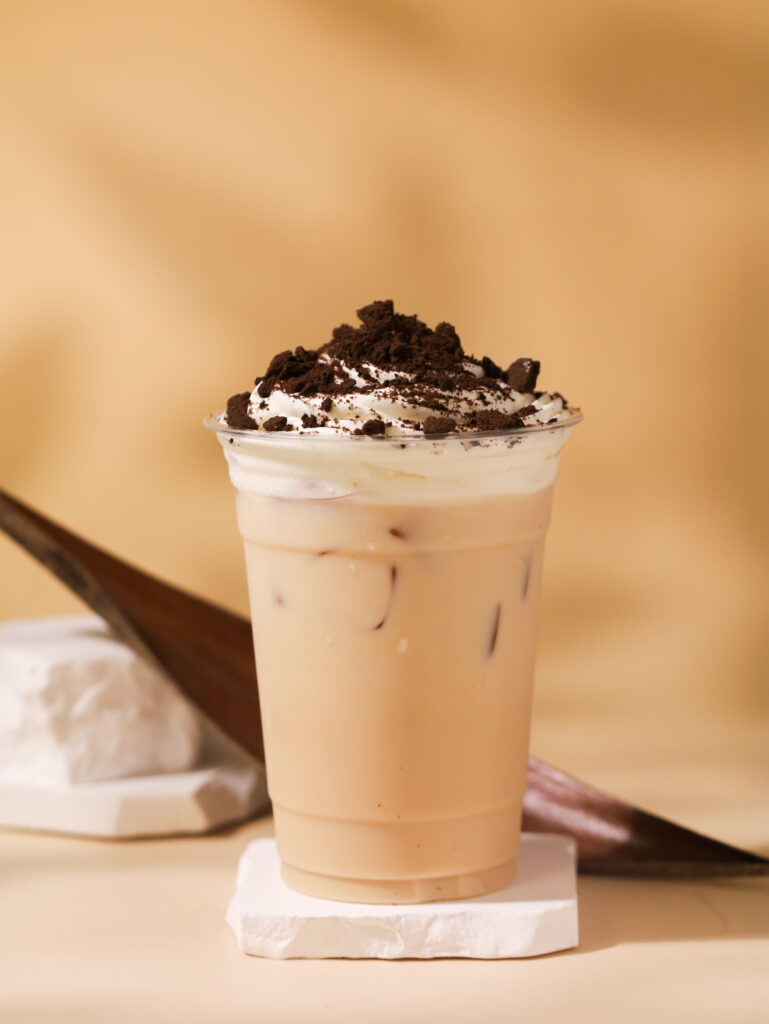
- Whipped cream or cheese foam cap adds the dessert look and an easy premium tier.
- Chocolate drizzle or extra crumbs on the rim push the Instagram factor without extra SKUs.
Because topping choices drive both the look and the ticket, operators will want a structured approach. A menu strategy built around milk tea toppings that sell is the kind of framework that keeps this from becoming a free-for-all of add-ons.
Topping and pairing combinations that sell
The best sellers combine the layers shoppers already associate with cookies-and-cream:
- Chocolate Oreo + boba + whipped cream — the classic dessert build.
- Chocolate Oreo + cream foam (cheese or sweet foam) — richer, higher-margin premium.
- Oreo + crushed-cookie rim or extra cookie dust — visual gold on a feed.
- Cookies-and-cream shake crossover — blend into a thick drink for customers who want full dessert mode, like the ice-cream version in Tyberry Much’s Oreo bubble milk tea.
A simple upsell ladder staff can remember:
- Standard: chocolate Oreo milk tea with boba
- Plus: add whipped cream or cream foam
- Premium: add whipped/foam + cookie rim + chocolate drizzle
Premium toppings are a reliable way to raise average ticket. Industry menu-strategy guidance commonly prices topping upgrades at roughly $0.50 to $1.50 per drink on top of the base — a small add-on that compounds across a day of orders.
What it costs and how to price it
Pricing a dessert drink is about protecting margin while keeping it accessible. Two numbers matter: your ingredient cost on the build, and where the menu packs it.
For menu architecture, most successful boba menus keep a lean core of reliable best-sellers (classic and fruit milk teas) and move occasionally rotating, higher-margin signature items into a “Specials” section. The chocolate Oreo slot belongs there — it earns its premium without crowding your everyday lineup. Reading the approach in a bubble tea menu design guide on grouping drinks and writing descriptions helps you write the line so it sells.
On pricing, use a familiar base price with clean add-on tiers, and don’t be afraid to hold a small launch discount before settling into your real price. An article on creating a good boba menu recommends pricing endings like .25 or .99 and using an intro promo to drive trial. To signal where specialty drinks land on a real menu, consider an example like a shop listing its Oreo milk tea at $7.50— this is directionally where an indulgent, topped dessert milk tea can sit, not a guarantee for your market.
⚠️ Warning: Don’t over-freeze your price. Watch ingredient cost as cocoa and cookie prices shift, and re-price the drink every few months so the premium stays real.
How to launch it (menu copy + social)
A great recipe only matters if customers order it. Three moves make the difference.
1. Name it like a dessert. Short and vivid wins: “Cookies & Cream Milk Tea,” “Chocolate Cookie Crush,” “Oreo Cream Milk Tea.” Avoid burying it in a generic flavor list.
2. Frame it as special, not permanent. “Signature,” “Seasonal,” “Staff Pick,” or “Limited-Time” creates urgency and eases exit when you rotate it. Put it in its own specials block so it stands out.
3. Photograph the layers and the garnish. Show the dark chocolate layer, the whipped-cream cap, and the crushed cookie. Match the photo to what you actually serve, keep the background clean, and lead with one textural element that reads in a feed or a short Reel. Consistency between the ad and the cup is what builds repeat orders.
If you need a repeatable build-and-serve format to copy, the shop-ready SOP template used across BubbleTeaSuppliers’ menu development guides is a solid model for locking speed and QC.
A few common pitfalls
Run a small test batch and watch for these before you put it on the board:
- Cocoa settling. If you use powder, always pre-mix it into a smooth slurry and keep the spec written. Otherwise you get sediment at the bottom.
- Overly sweet base. Dessert drinks creep sweet-fast. Taste the chocolate layer before sweetener.
- Cookie crumbs going stale or uneven. Prep crumbs in small batches and reseal.
- A photo that oversells. Serve exactly what your hero image shows, or you’ll lose trust on repeat orders.
Next steps
- Run a 10-cup test, lock your chocolate base and topping script, and confirm three consistent QC checkpoints.
- Decide the positioning (signature vs. seasonal) and drop it into the right menu slot with printed copy.
- Shoot your hero image and announce the launch as a special, then watch the topping-adder mix.
A chocolate Oreo milk tea is a genuinely strong menu weapon — as long as you treat it like a product line, not a recipe. Build it clean, price it with margin in mind, and market it as the dessert drink it is.