
Guava fresh milk tea is a high-margin flavor only if it’s consistent. Otherwise it turns into the classic operator problem: one shift makes a clean, tea-forward drink, the next shift makes pink sugar milk that tastes like “guava candy.”
This SOP is written for US bubble tea shop operators who want a repeatable 16 oz build using jasmine green tea and fresh milk, with no default topping.
What this drink should taste like (calibration your staff can use)
A solid guava fresh milk tea should be:
Tropical and bright, not jammy
Creamy but still tea-led (jasmine aroma is noticeable)
Smooth and stable (no grainy “split milk” mouthfeel)
Balanced sweetness (not sticky-sweet)
When it’s wrong, it’s usually wrong in one of these ways:
Perfume + sugar water → tea base is too weak
Flat and overly sweet → guava dose is too high and tea is too weak
Bitter finish → jasmine tea is over-extracted
Grainy / curdled look → temperature + acidity + dairy interaction
Prereqs: set up the station for consistency (not “vibes”)
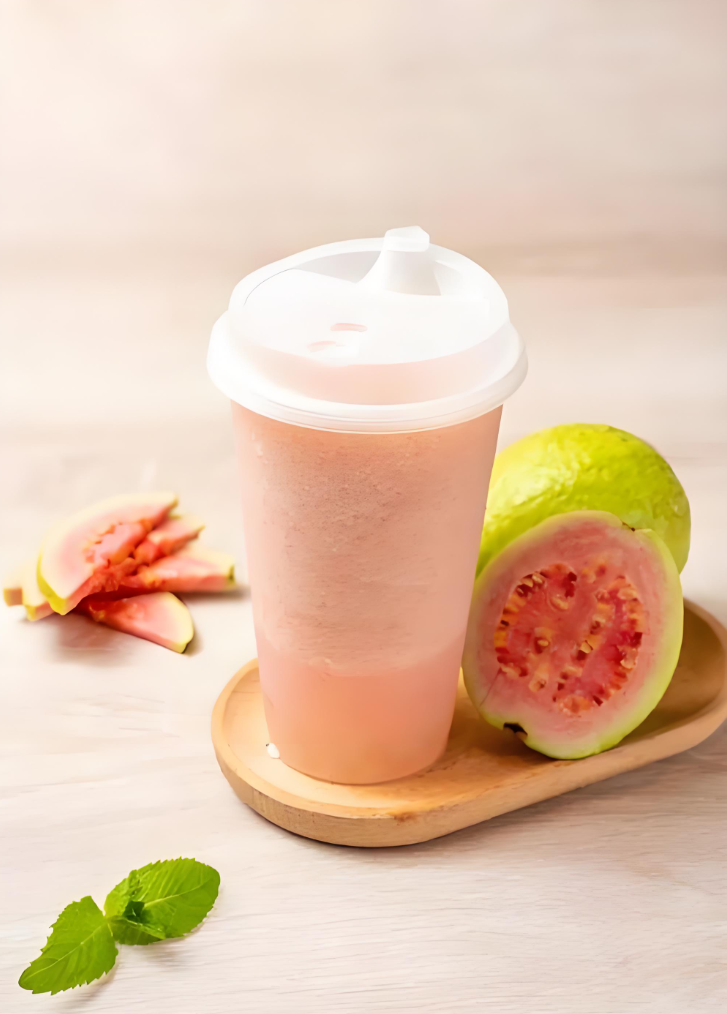
You don’t need new equipment. You do need a system that prevents guessing.
Minimum station setup
Guava syrup in a bottle or pump
Fresh milk in a cold pitcher
Chilled jasmine green tea in a labeled pitcher
Jigger or marked measuring cup (15/30/45 mL is enough)
Timer (tea steeping + shake time)
Ice scoop or ice scale (scale is best)
The 4 variables that cause 90% of inconsistency
Guava syrup dose (free-pouring destroys repeatability)
Tea strength (milk tea needs stronger tea than drinking tea)
Ice amount (dilution changes sweetness and body fast)
Shake time (under-mixing leaves layers; over-shaking adds foam and can stress some dairy)
Pro Tip: Train one “default build” first. After you can hit the default every time, then add options (sweetness levels, toppings, alt milks).
Step-by-step SOP: Guava fresh milk tea (16 oz)
This is a shop-default spec designed for speed on the line.
16 oz build spec (default)
Ingredients (per 16 oz / ~473 mL cup):
Guava syrup: 30 mL
Fresh milk: 110 mL
Jasmine green tea (chilled, strong): 150 mL
Ice: ~175 g (or your 16 oz ice fill line)
Optional: simple syrup/fructose 0–5 mL (only after tasting—don’t add by habit).
Why these numbers? They’re a scaled 16 oz starting point from a shop spec written for a 700 mL build, which is a useful way to avoid “guessing by taste.” That original spec is documented in BubbleTeaSuppliers’ 700 ml guava milk tea shop spec.
Build order (fast service)
Step 1 — Grab cup + shaker
Input: clean 16 oz cup + shaker
Action: stage both at the station
Done when: cup and shaker are ready before liquids hit the counter
Step 2 — Add guava syrup (measured)
Input: guava syrup
Action: add 30 mL into the cup
Done when: syrup is in the bottom of the cup and was measured (jigger/pump), not free-poured
Step 3 — Add milk
Input: cold fresh milk
Action: add 110 mL
Done when: base looks evenly pale pink (no thick syrup sitting in one spot)
Step 4 — Add chilled jasmine green tea
Input: chilled jasmine green tea
Action: add 150 mL
Done when: liquid reaches your pre-ice line (if you use lines)
Step 5 — Add ice
Input: ice
Action: add ~175 g (or your standard 16 oz ice fill)
Done when: ice matches your store standard (same every shift)
Step 6 — Shake
Input: sealed shaker
Action: shake 8–10 seconds
Done when: drink color is uniform and cup feels cold/frosty
Tight adjustment band (keep it trainable)
Guava syrups vary a lot in sweetness and intensity. Pick one house spec and keep changes small.
Light guava: 25 mL
Default: 30 mL
Bold guava: 35 mL
Rule: Change by 5 mL steps only. Smaller changes are hard to train; bigger changes cause remakes.
If you’re writing your menu or POS as a guava milk tea recipe, list the default (30 mL) and keep the adjustment range as an internal note for training.
Jasmine green tea brew spec (milk-tea strength, not “drinking tea”)
If your tea base is weak, staff will add more syrup to “fix it.” That pushes your COGS up and your drink gets sweeter without becoming better.
A shop SOP guide from BubbleTeaSuppliers calls out two relevant truths:
Milk tea needs a stronger tea base than plain tea.
Jasmine green tea works, but it’s easy to over-brew into bitterness.
(Reference: Boba Tea Drink Ingredients: A Shop-Ready Milk Tea SOP.)
Practical jasmine brew guidelines (operator-friendly)
Because tea brands differ, use a simple approach:
Brew with grams + timer (no scoops)
Use hot but not boiling water for green tea
Strain immediately at the timer
Cool fast and chill before service
Quick “tea strength” QC (takes 30–60 seconds)
Taste the chilled tea plain: it should be strong but not harsh.
Mix a small sample with your standard milk dose (this is basically a “jasmine green milk tea” taste test).
If it tastes watery, fix the tea strength—not the syrup.
Sweetness ladder (simple enough to train)
Operators get into trouble when “50% sweetness” means five different things.
Start with a 3-step ladder tied to your guava dose:
Less sweet: 25 mL guava syrup
Default: 30 mL
More sweet: 35 mL
If your POS forces 0/25/50/75/100, you can still map those to three real builds at first:
50% → 25 mL
75% → 30 mL
100% → 35 mL
Then add more granularity only after you see demand.
⚠️ Warning: If you later add toppings, remember toppings add sweetness. Re-test your default guava dose when you roll out sweet toppings.
Milk choice: what works best in a fruit + dairy build
Because this drink is a fruit milk tea recipe, dairy stability matters more than in classic black milk tea.
A practical approach:
Whole milk tends to give better body and a more stable mouthfeel than lower-fat milk.
If you see separation issues and you want a low-drama fix, many shops test a more stable “barista” plant milk for fruit+dairy builds.
Keep this SOP simple: pick one default milk system for the drink, and only offer substitutes once the default is stable.
Troubleshooting: the four failure modes you’ll actually see
1) Grainy texture / curdled look / separation
What you’ll notice: fine curds, dusty mouthfeel, or separation after sitting.
Most common causes:
Tea not chilled (temperature shock)
Too aggressive shaking
Acidic fruit base interacting with dairy
Fixes (in order):
Confirm tea is fully chilled before mixing with milk.
Ensure milk is fresh and cold.
Keep the shake time, but reduce “shake violence.”
If it still happens, test a more stable milk system for this drink.
2) Too sweet / “guava candy”
Most common cause: syrup is free-poured or the syrup is sweeter than expected.
Fixes:
Drop guava syrup by 5 mL.
Confirm your ice standard; less ice makes everything taste sweeter.
3) Flat, milky, no tea backbone
Most common cause: tea brewed like drinking tea.
Fixes:
Strengthen tea base.
Don’t reduce tea volume to “make room” for more milk.
4) Bitter jasmine finish
Most common cause: over-extraction.
Fixes:
Lower water temperature.
Shorten steep time.
Strain immediately at the timer.
Ops notes: batching, training, and food safety
Batch tea like an ingredient
If you want consistent milk tea, treat tea like a prepped product:
Brew on a schedule (don’t “top up” old tea)
Label pitchers (tea type + brew time)
Keep tea chilled
Use a defined discard window based on your local rules and your process
Training checklist (print this for new hires)
Measure guava syrup every time
Use the same ice standard (weight or fill line)
Shake the full 8–10 seconds
If a drink is “off,” adjust guava by 5 mL or tea strength—not random changes
Cold holding reminder (US baseline)
Milk and prepared beverages are time/temperature sensitive. A commonly cited baseline in US retail guidance is cold holding 41°F (5°C) or below for TCS foods in the FDA Food Code (see 2022 FDA Food Code Chapter 3 — Food (PDF), which includes §3-501.16).
Always follow your local health department requirements and your store procedures.
Optional: a “one base, two drinks” guava mini-menu
If you’re adding this as an LTO, a simple way to build sales without adding complexity is to run:
Guava fresh milk tea (this SOP)
Guava fruit tea (same syrup, different build)
If you want a reference spec for a guava fruit tea format, start with this internal SOP: Guava fruit tea SOP for bubble tea shops.
Next steps: launch as a 7-day pilot
Lock your default (25/30/35 mL ladder).
Train ice + shake time.
Run a 7-day pilot.
Track daily:
units sold
sweetness distribution
remake count + reason
For more operator-style guava builds and scaling logic, use BubbleTeaSuppliers as a resource hub.