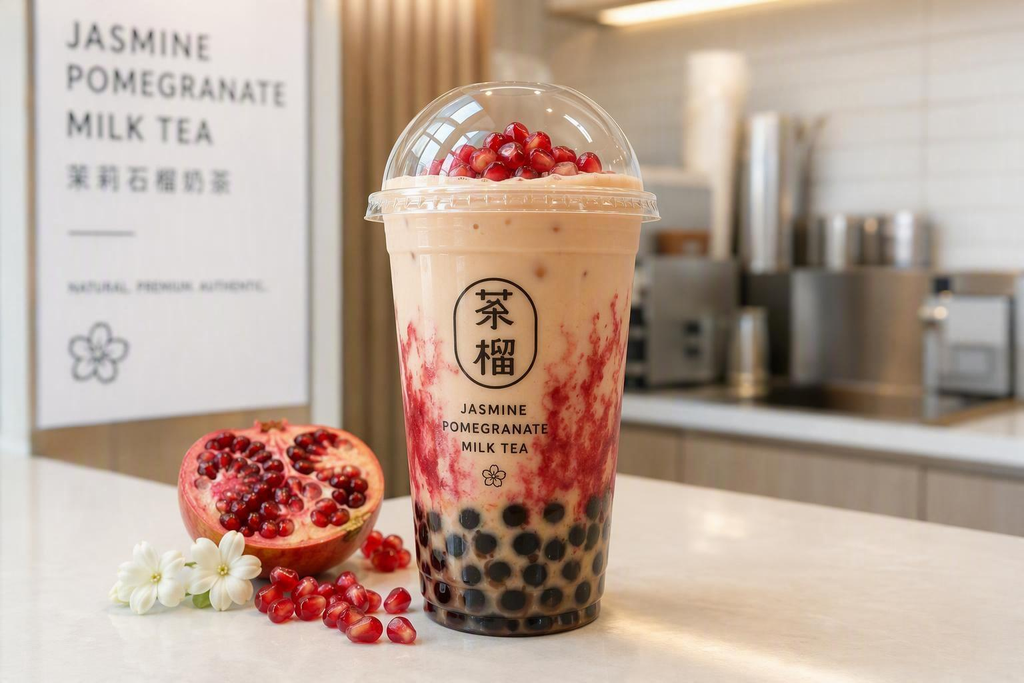
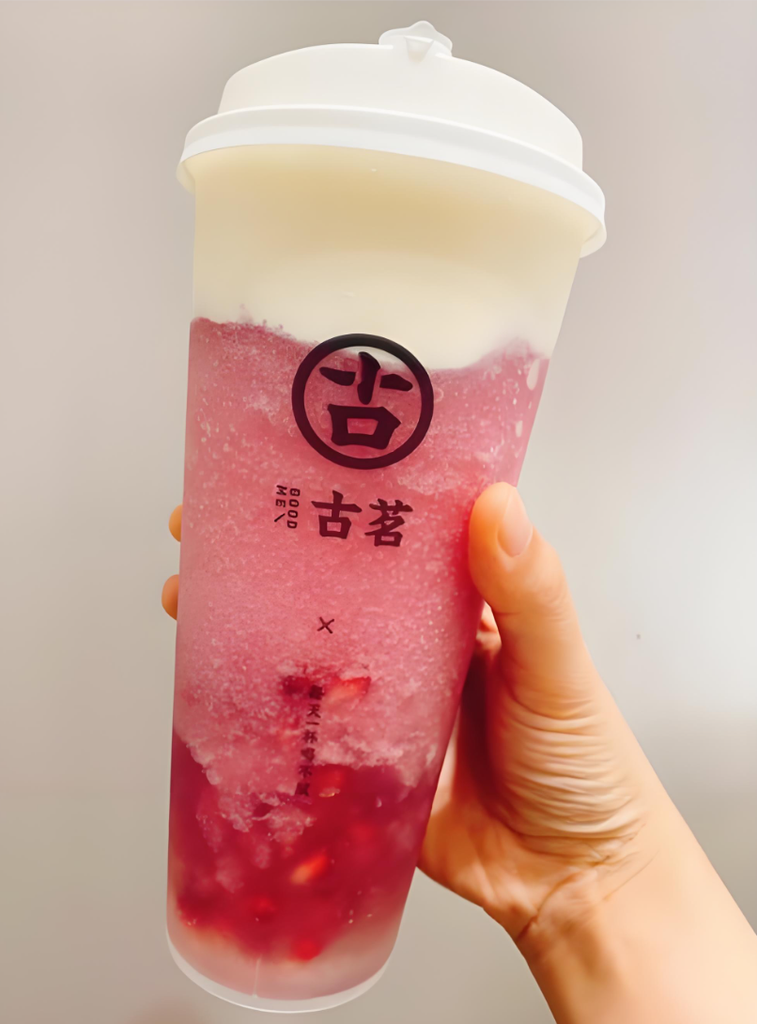
A floral jasmine base with a ruby-red pomegranate accent sounds like a premium menu idea, and it is — right up until a barista dumps acidic pomegranate juice into cold milk and watches it fleck. Pomegranate brings brightness, color, and a tart-sweet jolt, but its acidity is also the reason most fruit-and-dairy drinks curdle behind the counter.
This guide is a shop-ready jasmine pomegranate milk tea SOP for bubble tea shop owners, managers, and menu developers. You’ll get the exact jasmine green tea brewing method, an honest syrup-versus-juice-versus-concentrate sourcing decision framed around curdling risk, full 16 oz and 22 oz spec sheets, an assembly order your baristas can follow on any shift, and the troubleshooting that keeps the drink smooth cup after cup.
Why This Pairing Works on a Milk Tea Menu
Jasmine green tea reads refined and a little indulgent, which is why it keeps showing up as the floral base in premium menus rather than the default black-tea workhorse. On 2026 beverage trend roundups, pomegranate is treated as a familiar-but-premium fruit — valued for its tart, slightly wine-like depth, its deep ruby color, and a seasonal hook that leans into fall and holiday menus. Pair the two and you get a drink that looks layered, tastes bright rather than cloying, and gives customers a reason to order something that isn’t another fully sweet caramel milk tea.
Two rules keep the pairing honest:
Jasmine is the base; pomegranate is the accent. The tea should carry the cup, with pomegranate adding color and a tart lift — not a syrup-heavy dessert drink in disguise.
Keep it “not too sweet.” The whole point is a clean floral-tart cup. Over-sweetening smothers the jasmine and turns the pomegranate into generic berry candy.
Pro Tip: Run this as a regular menu item OR a fall-holiday limited-time offer. The flavor and color both play beautifully in an LTO window without any awkward seasonal-only ingredients.
Brew the Jasmine Green Tea So It Stays Fragrant
Jasmine’s selling point is its floral aroma, and that fragrance is fragile. Too-hot water, over-steeping, or squeezing the leaves all pull out bitter polyphenols and flatten the tea into something generic. For a commercial concentrate, aim for a leaf-to-water ratio around 1:35 to 1:40 by weight — roughly 10 g of jasmine green tea leaves per liter of water — which gives you a strong-enough base to survive milk without turning bitter.
Jasmine green tea concentrate (batch brew)
Heat water to 170–180°F (77–82°C). Do not use rolling-boil water.
Add the jasmine leaves and steep for 6–7 minutes. Stir gently once or twice, but do not squeeze or crush the leaves.
Strain immediately.
Shock-chill over ice or in an ice bath until cold, then hold below 41°F (5°C).
Steep a fresh batch every few hours — jasmine concentrate flattens as it sits. The precise chilling and holding method is covered in our cold milk tea commercial SOP.
Done when: the concentrate tastes clean and floral, not bitter or astringent. If you are still choosing tea, milk, and sweetener components, our jasmine milk tea ingredient guide walks through the full tea-and-dairy system. For how jasmine builds differ from a classic black milk tea, the jasmine vs. classic milk tea SOP breakdown compares both side by side.
Choose a Milk Base That Holds Up to Acid
The milk base does more than add creaminess — it is the phase most at risk when an acidic fruit enters the cup.
Milk base
How it performs
Best for
Dairy (whole / barista-style)
Richest, creamiest mouthfeel; most prone to curdling if acid contacts it untreated
Premium dairy line; needs proper acid sequencing
Non-dairy creamer / milk powder
Stable, shelf-friendly body; the standard boba-shop backbone
High-volume core drink; dependable consistency
Plant milks (oat, almond, coconut)
Dairy-free option; stability varies widely by brand and added gums
Making the drink vegan without sacrificing the base flavor
For most shops, a non-dairy creamer or a barista-style milk is the easy default because it gives a consistent, stable body across shifts. If you want a truly dairy-free jasmine milk tea, an oat or soy blend usually stays smooth with pomegranate better than thin almond milk. Whichever you choose, lock it in a spec card instead of switching day to day.
Pomegranate Syrup, Juice, or Concentrate: Which One to Buy
Here is the decision that determines whether your jasmine pomegranate milk tea is easy or aggravating to make. Pomegranate is naturally acidic — juice pH commonly lands in the rough 2.5–3.5 range — and that acid is exactly what can make milk proteins clump when the two meet. So your sourcing choice is really a curdling-risk decision more than a flavor one.
Format
Tartness / consistency
Curdling risk
Best menu role
Pomegranate syrup
Sweet, consistent, predictable
Lowest — sugar buffers the acid; easiest to dose
High-volume core drink; safe everyday option
100% pomegranate juice
Bright, natural, most tart
Highest — must be folded into the tea/sugar side, never poured straight into milk
Premium “real fruit” accent used carefully
Pomegranate puree
Fuller body, real-fruit mouthfeel
Medium — less acidic than raw juice but still active
Thicker premium builds; can double as a bottom layer
The realistic shop recommendation
For a dependable milk tea you can hand to any shift, start with pomegranate syrup as your base sweetness and color, then add a small measured splash of 100% juice or puree only when you want genuine fruit character on a premium line. This “syrup + real fruit” hybrid gives you speed and consistency from the syrup and perceived authenticity from the real fruit, without betting the drink’s stability on raw juice alone.
Two sourcing rules apply regardless of format:
Standardize the pomegranate portion as a locked dose in your spec card. Free-pouring syrup or juice is the fastest way to get a sour cup on one shift and a candy-sweet one on the next.
Keep the fruit an accent. Dose enough that it clearly tastes like pomegranate, but never so much that the jasmine and milk become an afterthought.
When you are building out the pomegranate, jasmine tea, milk, and topping stock, sourcing everything from one wholesale bubble tea ingredients supplier keeps every batch uniform and delivery schedules predictable.
Build the Jasmine Pomegranate Milk Tea (16 oz & 22 oz Specs)
Consistency starts with a locked build card. The method below uses the safe sequence that keeps the acidic fruit away from the milk in a single concentrated pour: the pomegranate goes in as a bottom fruit layer in the serving cup, and the jasmine milk tea is shaken separately and poured on top. The drink looks layered in the cup, and the guest stirs just before drinking — which is exactly how you avoid curdling while still delivering a pomegranate-forward flavor in every sip.
16 oz Jasmine Pomegranate Milk Tea (about 500 ml)
Chilled jasmine green tea concentrate: 130 ml
Milk base (creamer/dairy/plant): 110 ml
Pomegranate syrup: 25 ml (bottom layer)
Optional real-fruit accent (100% juice): 20–25 ml blended into the pomegranate syrup layer
Simple syrup / fructose (to taste, optional): 5–10 ml added to the tea before milk
Ice: fill the shaker to about 85% of the shaker line
Tapioca pearls / topping: 50 g in the serving cup
Scale the liquid ratios rather than just adding ice for a larger order:
22 oz Jasmine Pomegranate Milk Tea (about 650 ml)
Chilled jasmine green tea concentrate: 180 ml
Milk base (creamer/dairy/plant): 155 ml
Pomegranate syrup: 35 ml (bottom layer)
Optional real-fruit accent: 28–32 ml blended into the syrup layer
Simple syrup / fructose (to taste, optional): 8–14 ml added to the tea before milk
Ice: fill the shaker to about 85% of the shaker line
Tapioca pearls / topping: 70 g in the serving cup
Assembly order (this order prevents curdling)
Scoop the tapioca pearls or topping into the clean serving cup.
Add the pomegranate syrup (plus optional real-fruit accent) as the bottom layer at the base of the cup.
In a separate shaker, combine the chilled jasmine concentrate, the milk base, and any optional sweetener, then add ice.
Shake until well chilled and uniform — about 8–10 seconds — so the tea and milk are fully blended before they meet the pomegranate.
Strain or pour the jasmine milk tea over the ice into the serving cup, on top of the pomegranate layer.
The drink is ready when it shows a clean ruby fruit layer beneath an even jasmine milk tea. Serve with a wide boba straw and tell the customer to stir before drinking.
Done when: the drink is a uniform orchid-pink when stirred, smells floral rather than weakly perfumed, and has no visible curdling or flecks.
⚠️ Warning: Never shake the pomegranate directly into the milk in the shaker, and never pour 100% pomegranate juice as a straight stream into hot or undiluted milk. If you want a fully mixed (non-layered) drink, gently stir the pomegranate into the cold tea base first and only then add the milk — the tea buffers the acid before it reaches the dairy.
Balancing Tart, Sweet, and Floral So It Reorders
The drink only succeeds if the three flavors stay in proportion. Jasmine is subtle and easy to bury, pomegranate is easy to let run too tart or too sweet, and milk can flatten both. Taste and lock the balance into your spec card.
Jasmine-forward anchor points:
If the cup tastes flat and milky, the tea is too weak — increase the tea ratio, not the sweetener.
If it tastes bitter, the jasmine was over-steeped or brewed too hot; re-brew at a gentler temperature.
Pomegranate should register as a bright, tart lift, not a sour assault or a plain berry syrup.
For the sweetness curve, give customers a “not too sweet” house default and let them scale down from there, because the marketing story is a lighter, floral-tart drink. A customer who wants it sweeter can always add at the condiment bar; a drink that starts too sweet cannot be un-sweetened.
Sweetness level
16 oz pomegranate syrup
22 oz pomegranate syrup
House default
25 ml
35 ml
Less sweet
18 ml
25 ml
Troubleshooting: The Three Most Common Failures
Even with a locked card, you will see a few predictable issues in the first week. Handle each one at the source:
Curdling or flecks. Almost always means pomegranate reached the milk in a concentrated or warm hit. Re-check the build order — fruit on the bottom, tea-and-milk shaken separately on top — and keep both the tea and milk cold. If you serve a fully blended version, stir the pomegranate into the cold tea before the milk.
Bitter or flat jasmine. Bitter means the brew ran too long or too hot; flat means the concentrate is too old or too weak. Steep 6–7 minutes at 170–180°F and rotate the batch frequently.
Inconsistent tartness. This is a portioning problem. Weigh or pump the pomegranate syrup exactly and never let baristas free-pour. Juice, in particular, varies by brand and batch, so if you use it, taste and lock the sweetener dose after your first real batch.
Your Next Step
A jasmine pomegranate milk tea is a strong way to add a floral, tart, “not too sweet” option that photographs beautifully and fits a premium or seasonal slot. The drink is only as good as the systems around it — standardize the jasmine brew, choose your pomegranate format for how it handles acid, and pin the build to a spec card your whole team can follow.
When you are ready to stock the tea, pomegranate syrup, milk base, and toppings, sourcing through BubbleTeaSuppliers keeps every element consistent — reach out for a wholesale catalog and spec guidance so your jasmine pomegranate milk tea launches with uniform batch details from the first shift.