
In high-volume bubble tea operations, speed of service and drink-to-drink consistency determine shop profitability. While traditional loose-leaf jasmine green tea brewing remains a mainstay for batch tea urns, commercial beverage directors are increasingly incorporating soluble jasmine tea powder into their core menu workflows.
Jasmine tea powder eliminates the 15-minute steeping cycle, prevents tea leaf oxidation during long shifts, and delivers an immediate, standardized floral aroma that pairs effortlessly with dairy, plant-based milks, and fruit syrups. However, converting a boba bar from traditional brewed liquid tea to tea powder requires precise line protocols. Improper mixing water temperatures cause powder clumping, while incorrect powder-to-liquid ratios lead to bitter, astringent notes or diluted iced beverages.
This commercial guide provides a line-tested jasmine tea powder recipe framework, including gram and milliliter spec sheets for standard 16 oz (500 ml) and 22 oz (700 ml) cup sizes, dissolution temperature chemistry, speed-of-service assembly SOPs, and unit cost calculations (COGS) to maximize gross margins behind the counter.
The Science of Jasmine Tea Powder: Solubility & Water Temperature
Unlike instant spray-dried tea mixes that contain heavy maltodextrin bulking agents, premium barista-grade jasmine tea powder consists of ultra-fine micro-ground jasmine green tea leaves and concentrated tea extracts. Achieving a smooth suspension without chalky residue or sediment requires understanding water thermal dynamics and dispersion chemistry.
Water Temperature Thresholds (175°F–185°F / 80°C–85°C)
Water temperature is the most critical variable when working with tea powder:
- Excessive Heat (>195°F / 90°C): Boiling water thermal-scorches delicate floral aromatic compounds (linalool and benzyl acetate) present in jasmine blossoms. It also rapidly extracts bitter catechins and tannins, resulting in a harsh, dry mouthfeel.
- Sub-Optimal Heat (<150°F / 65°C): Cool or lukewarm water fails to break the surface tension of micro-ground tea particles. The powder hydrophobic surfaces trap air pockets, causing hydrophobic clumping (“fish eyes”) that stick to shaker cups and straws.
- Optimal Range (175°F–185°F / 80°C–85°C): This sweet spot rapidly dissolves soluble tea solids, releases sweet floral top notes, and maintains a vibrant, pale jade-amber hue.
Pro Tip: Set your boba bar hot water tower dispenser specifically to 180°F (82°C). This allows baristas to pour hot water directly over powder doses without thermal scorching or manual temperature adjusting during peak rush hours.
High-Shear Dispersion vs. Manual Stirring
Stirring tea powder with a spoon or boba straw in a plastic shaker cup creates dense powder lumps that sink to the bottom. Commercial boba bars utilize two primary high-shear dispersion methods:
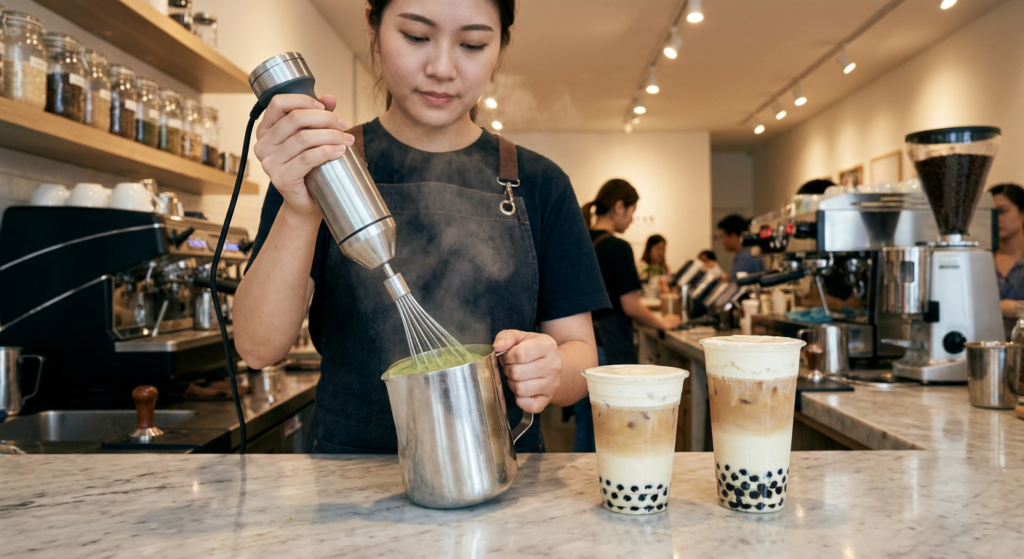
- Electric Hand Whisk (Single Serving): A battery-operated or corded micro-whisk rotating at 10,000+ RPM breaks particle agglomerates within 5 to 7 seconds, forming a micro-foam layer that enhances milk tea creaminess.
- Pre-Shift Batch Whisking (Station Prep): Using an industrial immersion blender to mix hot water and jasmine tea powder in 2-liter stainless steel pitchers creates a stable liquid concentrate that sits on the line for 4 to 6 hours without settling.
Review our comprehensive commercial jasmine milk tea ingredient guide
for additional technical breakdowns on tea base stability and sweetener integration.
Standard Commercial Recipe Spec Sheets (16 oz vs. 22 oz)
Standardization is the foundation of beverage franchising and multi-location consistency. Below are the exact line specifications for classic iced Jasmine Tea Powder Milk Tea across standard US cup sizes.
16 oz (500 ml) & 22 oz (700 ml) Line Formulas
| Ingredient Component | 16 oz (500 ml Cup) | 22 oz (700 ml Cup) | Operational Function |
|---|---|---|---|
| Jasmine Tea Powder | 18 g (approx. 1.5 standard scoops) | 26 g (approx. 2 standard scoops) | Primary tea flavor & floral aroma base |
| Hot Water (180°F / 82°C) | 100 ml | 150 ml | Dissolution medium for powder solids |
| Non-Dairy Creamer (or Liquid Milk) | 30 g powder (or 60 ml milk) | 42 g powder (or 85 ml milk) | Body, opacity, and mouthfeel structure |
| Cane Sugar Syrup / Fructose | 25 ml (100% sweetness) | 35 ml (100% sweetness) | Sweetness balance & astringency mask |
| Ice Weight | 180 g (approx. 1 full scoop) | 250 g (approx. 1.5 scoops) | Immediate chilling & dilution balance |
| Tapioca Pearls (Topping) | 50 g (approx. 1 scoop) | 70 g (approx. 1.5 scoops) | Standard chewable texture addition |
| Finished Liquid Volume | ~450 ml | ~650 ml | Leaves proper head-space for cup sealing |
Note: If using non-dairy creamer powder, add the creamer powder directly to the hot tea concentrate and whisk simultaneously with the jasmine tea powder for maximum thermal solubility.
Step-by-Step Boba Bar Line Assembly SOP
To maintain an assembly speed under 30 seconds per drink, train baristas to follow this strict 4-step sequence:
[Step 1: Dissolve Powder] ➔ [Step 2: Bind Sweetener & Creamer] ➔ [Step 3: Ice & High-Speed Shake] ➔ [Step 4: Seal & Serve]Step 1: Measure & Dissolve Hot Base
Position a stainless steel mixing shaker on a calibrated digital gram scale. Tare the scale to zero. Measure 18 g (16 oz) or 26 g (22 oz) of premium jasmine tea powder. Dispense 100 ml (16 oz) or 150 ml (22 oz) of 180°F hot water into the shaker. Insert the electric hand whisk for 6 seconds until completely liquid with no visible floating specks.
Step 2: Add Creamer and Sweetener
Add 30 g non-dairy creamer (or 60 ml fresh whole milk / barista oat milk) and 25 ml cane sugar syrup into the hot tea mixture. Whisk for another 3 seconds. The thermal heat of the tea base instantly melts the creamer solids, locking in a smooth emulsified texture.
Step 3: Ice, Chill, and Aerate
Fill the shaker cup with weighed ice (180 g for 16 oz / 250 g for 22 oz). Secure the shaker cap and shake vigorously for 8 to 10 manual passes (or place in an automated mechanical shaker machine for 6 seconds). Shaking rapidly chills the drink while aerating the tea, creating a signature velvety foam head.
Step 4: Topping Build & Sealing
Add 1 scoop of warm cooked tapioca pearls to the bottom of a clear plastic boba cup. Pour the chilled jasmine milk tea over the boba. Pass the cup through an automated film sealing machine, insert a wide straw, and serve immediately.
For more details on optimizing bar station layouts and staff speed, consult our guide on boba shop milk tea consistency standards
.
4 High-Margin Jasmine Tea Powder Menu Variations
Jasmine tea powder serves as a versatile flavor base across multiple beverage categories. Introducing modular variations allows shops to expand menu offerings without stocking additional SKU inventory.
1. Classic Jasmine Non-Dairy Milk Tea
- Profile: Traditional Taiwanese boba shop style with rich body and high floral fragrance.
- Key Spec: Uses non-dairy creamer powder dissolved directly in hot jasmine tea concentrate.
- Best Toppings: Brown sugar tapioca pearls, egg pudding, or grass jelly.
2. Barista Jasmine Oat Milk Latte
- Profile: Trendy, plant-based specialty drink targeting health-conscious urban demographics.
- Key Spec: Dissolve 20 g jasmine tea powder in 80 ml hot water with 25 ml sweetener. Fill shaker with ice and pour 120 ml barista-grade oat milk. Shake hard to produce a creamy oat foam.
- Best Toppings: Aloe vera cubes or crystal boba.
3. Jasmine Cloud Cheese Foam Green Tea
- Profile: Refreshing iced tea base topped with a savory, salted cream cheese cloud layer.
- Key Spec: Dissolve 16 g jasmine tea powder in 120 ml hot water, stir in 30 ml cane sugar, and shake over ice with zero dairy. Pour into cup and top with 40 ml fresh cream cheese foam layer.
- Best Toppings: Cheese foam layer, sea salt cream, or coconut jelly.
4. Jasmine Lychee & Passion Fruit Tea
- Profile: Bright, tropical fruit tea with elevated floral notes.
- Key Spec: Dissolve 14 g jasmine tea powder in 100 ml hot water. Add 30 ml lychee syrup and 15 ml passion fruit puree. Fill with ice, top with cold filtered water, and shake.
- Best Toppings: Mango popping boba, lychee jelly, or rainbow jelly.
Batch Concentrate Prep vs. On-Demand Rush Workflow
Deciding between batching tea concentrate or building single cups on-demand depends on your shop’s daily cup volume and peak rush patterns.
┌─────────────────────────────────────────┐ │ Daily Store Sales Volume Analysis │ └────────────────────┬────────────────────┘ │ ┌─────────────────┴─────────────────┐ ▼ ▼ [Under 150 Cups / Day] [Over 250 Cups / Day] │ │ ▼ ▼ ┌─────────────────────┐ ┌─────────────────────┐ │ On-Demand Prep SOP │ │ Batch Concentrate │ │ Single Cup Whisking │ │ 4-Hour Storage Urn │ └─────────────────────┘ └─────────────────────┘Option A: On-Demand Whisking (Best for Low-to-Medium Volume)
- Method: Barista whisks powder per order directly in the shaker cup.
- Pros: Zero beverage waste, maximum aroma release per serving, highly customizable sweetness and milk levels.
- Cons: Takes 8 to 12 seconds longer per drink during high-volume rushes.
Option B: Batch Liquid Concentrate (Best for High-Volume Rushes)
- Method: Every morning, baristas prep 2 liters of concentrated jasmine tea liquid using an immersion blender:
- Formula: 200 g Jasmine Tea Powder + 1,200 ml Hot Water (180°F) + 200 g Cane Sugar.
- Yield: 1,600 ml concentrated liquid base (sufficient for sixteen 16 oz drinks).
- Line SOP: For each 16 oz order, pour 100 ml of pre-mixed liquid concentrate, add 60 ml milk, fill with ice, and shake.
- Shelf Life: Store in a insulated thermal dispenser or refrigerated pour bottle for up to 6 hours. Stir well before each pour.
Unit Economics & Profit Margin Breakdown (COGS)
Switching to commercial jasmine tea powder significantly improves beverage gross profit margins by reducing labor prep hours, boiling energy costs, and tea leaf disposal waste.
Cost-Per-Cup (COGS) Financial Model (16 oz Serving)
| Cost Component | Quantity / Specs | Wholesale Unit Cost | Portion Cost ($ USD) |
|---|---|---|---|
| Wholesale Jasmine Tea Powder | 18 g portion | $18.50 per 1 kg (1,000 g) bag | $0.33 |
| Non-Dairy Creamer / Milk | 30 g portion | $6.20 per 1 kg bag | $0.18 |
| Cane Sugar Syrup | 25 ml portion | $12.00 per 5 kg jug | $0.05 |
| Tapioca Pearls | 50 g portion | $22.00 per 3 kg bag | $0.12 |
| Custom Cup, Lid, & Straw | 1 set | Combined packaging cost | $0.14 |
| Total Unit COGS | — | — | $0.82 |
Profit Margin Realization
- Average US Retail Menu Price (16 oz Jasmine Milk Tea): $6.25
- Unit Cost of Goods Sold (COGS): $0.82
- Gross Profit per Cup: $5.43
- Gross Profit Margin Percentage: 86.88%
By sourcing high-purity wholesale commercial boba tea ingredients
in bulk, multi-unit operators can further reduce portion costs down to ~$0.68 per cup, pushing gross margins above 89%.
Troubleshooting Common Line Preparation Failures
When audit checks reveal drink defects, use this operational troubleshooting matrix to train line staff:
1. Issue: Powder Clumping or “Fish Eyes” Floating in Drink
- Root Cause: Water temperature below 160°F or insufficient mixing shear.
- Line Fix: Ensure hot water dispenser is set to 180°F (82°C). Train staff to insert the electric whisk immediately upon pouring hot water, rather than letting the powder sit undisturbed in the cup.
2. Issue: Harsh Astringency or Bitter Aftertaste
- Root Cause: Water temperature exceeded 195°F or powder dosage was over-measured.
- Line Fix: Calibrate digital gram scales weekly. Verify water tower temperature with a calibrated probe thermometer.
3. Issue: Watery or Thin Texture After Shaking
- Root Cause: Insufficient ice weight or using warm tea concentrate that prematurely melts ice.
- Line Fix: Always use the full specified ice weight (180 g for 16 oz) to ensure rapid chilling without over-dilution. If batching concentrate, cool the base in an ice bath before transferring it to the line.
Frequently Asked Questions (FAQ)
How does jasmine tea powder differ from matcha powder?
While both are fine powdered teas, matcha is made from shade-grown green tea leaves (Camellia sinensis) that are steamed, dried, and stone-ground into a whole-leaf powder. Commercial jasmine tea powder combines high-grade green tea solids infused with natural jasmine blossom aromatics, formulated specifically for instant dissolution in hot water without requiring traditional bamboo whisking protocols.
What is the shelf life of opened wholesale jasmine tea powder bags?
In a sealed, moisture-proof commercial container stored at room temperature (65°F–75°F), opened jasmine tea powder maintains peak floral aroma and color for 3 to 6 months. Keep bags away from high-humidity areas, steam tables, and direct sunlight to prevent clumping.
Can jasmine tea powder be used for hot milk tea drinks?
Yes. For a 16 oz hot Jasmine Milk Tea, dissolve 20 g powder and 30 g creamer in 250 ml hot water (180°F), stir in 25 ml sweetener, and top with steamed milk or hot water. Serve in an insulated hot cup at 165°F.
Next Steps: Elevate Your Boba Shop Menu
Standardizing your beverage recipes with premium soluble tea bases improves line speed, eliminates shift-to-shift variance, and protects your gross profit margins.
Whether you are launching a new bubble tea store or upgrading an existing drink menu, sourcing barista-tested ingredients is essential. Explore our complete selection of wholesale commercial boba tea ingredients
, tea powders, toppings, and custom cafe packaging at BubbleTeaSuppliers.com to request commercial sample kits and bulk pricing today.