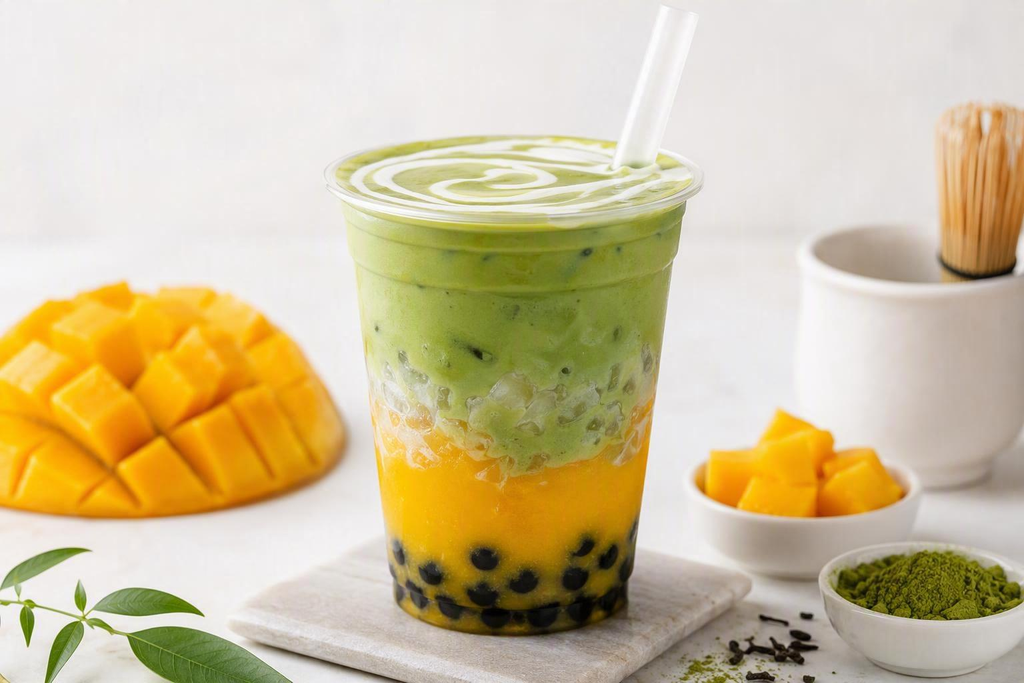
Mango and matcha have been running together on boba menus for a while, but the version gaining traction right now adds one more layer: white chocolate. That addition changes the drink from a straightforward fruit-matcha hybrid into something closer to a dessert latte — rich, tropical, and just unusual enough to earn a photo and a return visit.
According to Technomic Ignite data, matcha menu mentions rose 21.6% between Q1 2024 and Q1 2025. Mango consistently ranks as one of the top performing boba flavors across US shops. A mango white chocolate matcha drink sits at the intersection of both signals, and it gives you a clear premium angle without requiring any sourcing you don’t already have.
This guide covers what makes the flavor combination work, the ingredient formats that hold up in a commercial setting, exact build specs for 16 oz and 24 oz cups, and the menu positioning logic that helps you price it confidently.
Why This Flavor Combination Works
The three-way pairing is more coherent than it sounds.
Mango brings tropical sweetness and a mild acidity that cuts through heavier bases. Matcha contributes earthiness and a slight bitterness that keeps the drink from reading as purely dessert. White chocolate is the binding element: its fat content and sweetness soften matcha’s sharpness, round out the mango’s brightness, and give the overall mouthfeel a creamier body than either ingredient achieves on its own.
The result tastes like a drink that made a deliberate decision about balance. That’s not always true of improvisational fruit-matcha combinations, where the tartness can overwhelm the tea or the sweetness runs flat. Adding white chocolate introduces a third flavor axis that holds everything together.
From a visual standpoint, the layered build — yellow-orange mango puree below the ice, green matcha on top — photographs well in a clear cup with a wide straw. That matters for social shareability, which remains one of the primary discovery channels for new boba flavors among younger customers.
Ingredient Specs and Sourcing Formats
Getting consistent output at volume requires choosing the right commercial format for each component. Here’s what holds up across shifts.
Matcha Powder
For a milk-based drink like this, you want a culinary-grade or barista-grade matcha, not ceremonial. Ceremonial-grade matcha is priced for whisked preparation with minimal dilution. In a milk drink, the nuanced flavor differentials largely disappear, and you’re paying for yield you won’t capture.
A solid culinary or latte-grade powder will produce a vibrant color, dissolve cleanly into a slurry with hot water, and stay stable in a cold milk environment. The typical spec is 2.0–2.5 g of matcha powder whisked with 1.5–2 oz of hot water (170–175°F, never boiling) to form a smooth shot before the drink is built.
For sourcing guidance, the matcha powder selection guide on BubbleTeaSuppliers.com walks through the grade decisions and what to test before committing to a wholesale quantity. There’s also a detailed standard vs. ceremonial grade comparison that covers the sourcing trade-offs directly.
Pro Tip: Whisk your matcha slurry fresh per batch rather than pre-mixing a large volume. Pre-mixed matcha oxidizes quickly and loses its green vibrancy within a few hours. If you batch prep for a rush period, keep it refrigerated and cap the window at two hours.
Mango Component
Mango puree is the right format for this drink in a commercial setting. Fresh mango cubes create portion inconsistency, oxidize quickly once cut, and produce variable sweetness depending on the fruit’s ripeness. Blended fresh mango requires extra equipment at the station.
A shelf-stable or refrigerated mango puree gives you consistent Brix, predictable color, and a smooth texture that layers cleanly. The standard portion runs 2–3 oz for a 16 oz cup and 3–4 oz for a 24 oz cup, placed at the bottom of the cup before ice.
If your puree is heavily sweetened at the base, dial back any added simple syrup in your build to keep the overall sweetness level from pushing too high. Most commercial mango purees run sweet enough on their own.
White Chocolate Sauce
Use a pourable white chocolate sauce rather than melted baking white chocolate. Commercial sauces like Monin or DaVinci are formulated to stay fluid when cold, mix evenly, and deliver consistent flavor without seizing or separating in a milk environment.
Apply it directly over the ice or swirl it along the inside of the cup before building the mango layer. Either approach gives you a visible white chocolate element without requiring a separate dispense step during the build.
The typical portion is 0.5–1 oz (1–2 tablespoons) per 16 oz serving. Adjust based on the sweetness of your mango puree and your target sweetness level.
Milk Base
Whole milk is the standard for this build. It gives you enough fat to create a creamy texture without competing with the mango or matcha flavors.
Oat milk (barista-grade) is the strongest plant-based option here. It has a neutral flavor profile, handles cold well, and produces a similar mouthfeel to whole milk. Coconut milk can work for a tropical variation but reads sweeter and will shift the flavor balance toward the mango side.
Avoid almond milk in this application — it’s too thin and the slight bitterness can compound with matcha in a way that doesn’t flatter the drink.
Commercial Recipe Specifications
These specs are calibrated for consistent output across different staff members. All measurements are by weight or volume, not by feel.
Component
16 oz Cup
24 oz Cup
Mango puree
2–2.5 oz
3–4 oz
White chocolate sauce
0.5–1 oz
1–1.5 oz
Simple syrup (1:1)
0–0.5 oz (adjust by puree sweetness)
0–0.5 oz
Ice
Fill to ¾ cup after puree
Fill to ¾ cup after puree
Matcha powder
2.0–2.5 g
2.5–3.0 g
Hot water for slurry
1.5 oz (170–175°F)
2 oz (170–175°F)
Milk (whole or barista oat)
4–5 oz
6–7 oz
Tapioca pearls (optional)
60–80 g
80–100 g
Estimated build time
90–120 seconds
90–120 seconds
Sweetness level at the default spec targets a medium (40–50% sweet) finish. If your standard menu sweetness levels run higher, add simple syrup in 0.25 oz increments rather than increasing the white chocolate sauce — sauce volume affects flavor balance and texture more than sweetness alone.
Step-by-Step Build Order
The order matters here. Building mango below the ice and matcha on top keeps the layers visually distinct and gives the customer a clear layered drink before they stir.
Step 1 — Tapioca pearls (if included) Add pre-cooked, sweetened pearls to the bottom of the cup. Standard prep: coat in light brown sugar syrup and hold warm. Do not use cold or unseasoned pearls — they will turn hard and chewy in the wrong direction.
Step 2 — Mango puree Pour mango puree directly over the pearls. For a cleaner layer, tilt the cup and pour slowly along the inside wall.
Step 3 — White chocolate sauce Drizzle white chocolate sauce over the mango puree. A circular motion gives you the visual swirl; a straight pour concentrates the flavor in the center. Both are acceptable.
Step 4 — Ice Fill to approximately three-quarters capacity. Pack it in firmly — loose ice shifts and disrupts the layers as soon as milk is added.
Step 5 — Milk Pour milk over the back of a spoon held just above the ice surface. This slows the pour and helps the milk sit between the mango layer and the matcha layer. Don’t rush this step if the layered presentation matters to your shop’s aesthetic.
Step 6 — Matcha slurry Whisk matcha powder with hot water immediately before this step. Pour the slurry slowly over the milk. The density difference between the cooled milk layer and the fresh slurry gives you the separation. Cap, seal, and serve without shaking.
Key Takeaway: The matcha slurry must be whisked fresh. Pre-batching the slurry and refrigerating it can work for up to two hours, but the color dulls and the texture thickens. If speed at peak hours is a concern, consider pre-weighing your matcha portions rather than pre-mixing the slurry.
Sweetness and Customization Options
The default build runs at a medium sweetness, which positions it well for customers who typically order milk teas at 50–70% sweet. If your shop uses a sweetness dial system, here’s how to think about adjustments:
Less sweet: Reduce or eliminate the simple syrup and use a lower-Brix mango puree if available. The white chocolate sauce contributes background sweetness that’s harder to scale down without changing the drink’s character.
More sweet: Increase simple syrup rather than white chocolate sauce. Keep sauce volume stable for consistency.
Plant-based version: Swap whole milk for barista oat milk. The flavor profile holds. Avoid substituting the white chocolate sauce with a “dairy-free” alternative unless you’ve tested the specific product — some vegan white chocolate sauces have an off-flavor that surfaces more in cold drinks than hot ones.
Cheese foam variation: A thin, lightly salted cream cheese foam on top can work here. It adds a savory contrast to the sweet mango layer and softens the matcha’s bitterness further. Keep the foam layer light — heavy foam will overwhelm the three-layer visual.
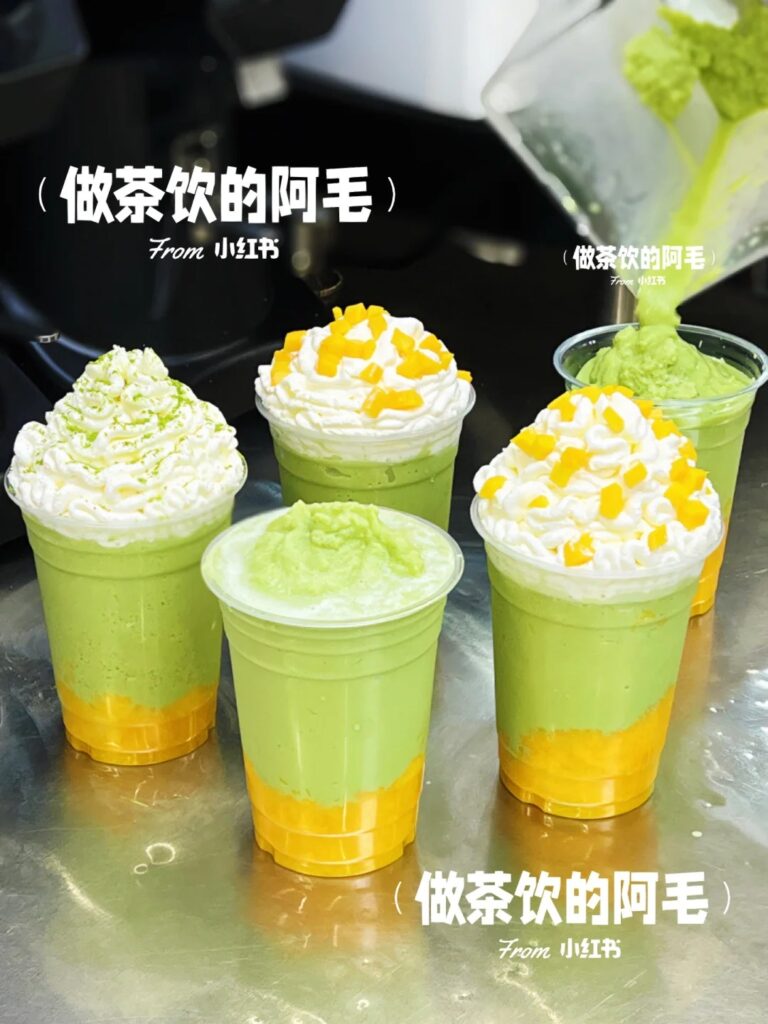
Frozen version: Blend the mango puree with ice instead of layering, add the milk and white chocolate in the blender, and pour the matcha slurry on top of the frozen base. You get a smoothie-style drink with the same flavor logic. This variation reduces the visual impact but may perform well as a seasonal or summer menu item.
For the core matcha boba construction logic, the matcha boba stability tips and operator recipes at BubbleTeaSuppliers.com covers common failure points around separation and powder clumping across different environments.
Menu Positioning and Pricing
This drink has the ingredient cost profile of a premium item. Mango puree, white chocolate sauce, and culinary-grade matcha are all mid-to-high-cost inputs compared to a standard milk tea build. Factor that into your margin math before setting the menu price.
A reasonable starting point for a 16 oz version in a US boba shop: $7.50–$9.00 depending on your market and whether you’re including pearls. The ingredient cost per cup typically lands between $1.80 and $2.40 at current wholesale rates — that leaves solid margin at the middle of that price range without requiring aggressive upselling.
For menu positioning, frame it as a signature or seasonal item rather than a standard menu add. Signature positioning lets you price it slightly above the regular matcha latte while setting clear expectations that it’s a more complex build. Limited-time or rotating seasonal placement also protects you from the maintenance cost of holding mango puree year-round if mango isn’t already a staple in your rotation.
If mango is already on your menu — in a fruit tea or milk tea — adding this drink is low-friction. You’re not introducing new SKUs; you’re reassembling existing ingredients into a different format with one new input (white chocolate sauce).
On the matcha milk tea build guide you’ll find the baseline matcha milk tea SOP that this drink extends, which is useful if you’re adding both items to the menu at the same time and want consistent matcha preparation standards across the station.
Frequently Asked Questions
What’s the difference between using white chocolate sauce vs. white chocolate syrup? Sauce is thicker, provides more flavor per volume, and creates visible texture in the cup. Syrup is thinner and blends more evenly but delivers less intensity. For a layered drink where the white chocolate should read as a distinct element, sauce is the better choice.
Can I use matcha premix powder instead of pure matcha? You can, but match carefully. Premix powders typically contain sweetener and creamer already blended in, which will push your sweetness level higher and alter the mouthfeel. If you use a premix, reduce or eliminate the simple syrup and test the overall balance before putting it on the menu.
How do I keep the layers from blending immediately on pickup? Pack the ice firmly, pour the milk slowly over a spoon, and keep the pour speed low on the matcha slurry. A cup lid that sits tightly and doesn’t create a sealed vacuum also helps — it reduces the sloshing effect when the customer picks up the cup.
Does this drink work without tapioca pearls? Yes. The core flavor combination works independently of toppings. If your customer profile trends toward people who don’t like chewing their drinks, offer it pearl-free as the default and add pearls as an option. Mango popping boba is a good topping alternative — the burst texture pairs well with the smooth layered base.
What matcha grade should I use? Culinary or latte grade is the right call for a milk drink. Ceremonial-grade is optimized for whisked, undiluted preparation — the premium qualities don’t survive the dilution in a cold milk build. Save ceremonial grade for your iced matcha latte menu items where the matcha is the sole flavor driver. For more detail, the matcha powder selection guide breaks down exactly what to look for in a spec sheet before ordering wholesale.
Ready to add this to your menu? BubbleTeaSuppliers.com carries culinary-grade matcha powder, mango puree, and the other wholesale ingredients you need to build this drink consistently across your shop. Browse the wholesale catalog to request samples before you commit to a full run.