
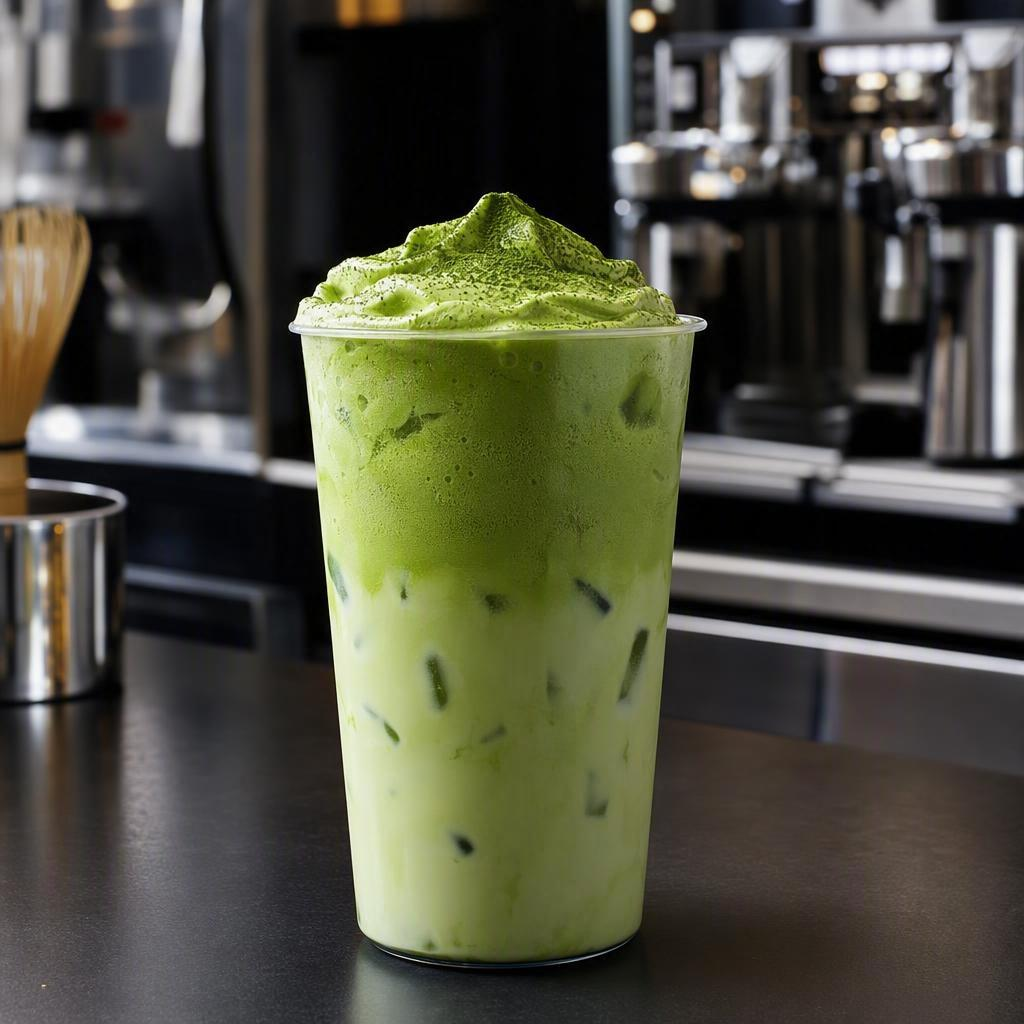
A matcha cloud latte is a layered iced drink topped with a light, whip-like matcha foam cap. It has quietly become one of the most photographed items on café and boba menus, and it sells on looks alone: a pale green milk base with a thick, cloud-white cap that holds its shape through a full service. What it needs to be on your bar is not a clever garnish, but a repeatable build. Here is a batch-ready SOP for 16 oz and 22 oz cups — with the exact grams, temperatures, and holding times your line can actually execute.
This guide is written for operators, not home cooks. The recipes are scaled in grams so a new hire can hit the same drink every time, the foam is built in batches so rush service stays fast, and every spec is sized to the two cup formats most US boba shops keep in rotation. If you already run a standard iced matcha latte, you are most of the way there — the cloud is the only genuinely new component.
Why a matcha cloud latte earns a slot on your menu
The drink does two jobs at once. The two-tone layer reads as premium, and the word “cloud” signals an indulgent, dessert-like finish without making the whole cup heavy. That combination drives add-on behavior: customers treat a cloud cap the way they treat a foam top — as the upgrade they say yes to.
There’s also an operational argument. Unlike fruit-tea builds that need a different purée per SKU, the matcha cloud latte runs on one base and one foam recipe you batch once before rush. When one batch makes dozens of cups, it is faster on a busy line than it looks. Food & Wine covered the trend
as a drink whose fame rests on its photogenic, glossy foam — and that visual is exactly what turns a menu hit into free social proof for your shop. A customer who photographs the two-tone layer is doing marketing for you at peak menu-traffic hours.
Ingredients and equipment checklist
Before the build, confirm these are in reach at the station:
- Barista-grade matcha (culinary or matcha-blend powder that dissolves cleanly; ceremonial grade is overkill and costs more per gram for a milk drink)
- Milk for the base: whole milk, barista oat milk, or a coconut-milk blend
- Cream for the foam: heavy cream or a barista plant cream alternative
- Simple syrup (or your house sweetener)
- Fine-mesh sieve for sifting
- Frother or high-speed blender to build the foam
- Batch container (food-safe pitcher or cambro) for prepped foam
- Scale accurate to 0.1 g for portioning matcha
Quality of the matcha matters more here than in most drinks because the foam is unsweetened on top. A bitter or clumpy powder ruins the first sip. Think of it in terms of suspension chemistry: matcha is a fine, water-absorbing powder, and if it is not fully broken into liquid, it settles into gritty, bitter clumps instead of staying suspended in the foam. That is why sifting and the correct water temperature are non-negotiable steps, not ceremony. If you are unsure which grade fits your cost, the guide to choosing the right matcha powder for your bubble tea shop
walks through culinary vs. ceremonial and blends.
The matcha cloud foam base (the heart of the drink)
Everything distinctive about this drink lives in the foam, so get the base right first. The reliable commercial formula is roughly two parts cream to one part milk, with matcha and sweetener added to build flavor and structure. Whip to soft peaks — thick enough to sit on top, glossy enough to pour — never to a stiff whipped-cream stage.
Dairy cloud foam
The single-serving dairy foam, scaled per cup:
| Ingredient | 16 oz cup | 22 oz cup |
|---|---|---|
| Heavy cream | 30 g | 40 g |
| Milk (whole or 2%) | 15 g | 20 g |
| Matcha (sifted) | 3 g | 4 g |
| Simple syrup | 8–12 g | 10–15 g |
| Pinch of salt (optional) | as needed | as needed |
The salt is not for flavor on its own — it rounds the matcha’s bitter edge and helps the foam hold. A technique note from japanomars’ matcha cold foam guide for cafes
is worth posting at the station: a foam that is overworked “sits like meringue” and will not drink through a straw. Stop at glossy, pourable soft peaks.
Dairy-free foam
The same build works with plant bases, and barista oat or coconut cream foams up surprisingly well. Use a barista-friendly oat milk (higher fat, more stable foam):
| Ingredient | 16 oz cup | 22 oz cup |
|---|---|---|
| Barista oat cream (or coconut cream) | 30 g | 40 g |
| Barista oat milk | 15 g | 20 g |
| Matcha (sifted) | 3 g | 4 g |
| Syrup or maple | 8–12 g | 10–15 g |
Test your plant cream once before committing. Some coconut creams separate when frothed for too long; if yours does, shorten the whip time and keep the cup cold.
Batch scaling and holding time
For a service-period batch, scale the formula linearly so you keep the same ratio, then portion to cups. A workable batch for a night rush: 250 g cream, 125 g milk, 12 g matcha, and 60–90 g sweetener, frothed in a batch container and poured over each drink. This mirrors the food-service matcha cold foam batch proportions
operators use to hold foam steady across multiple drinks.
Holding window: 1.5–2 hours refrigerated. Make a fresh batch when the current one begins to separate or thin. Do not try to save an over-frothed batch by blending it again — it will collapse.
Pro Tip: Batch the matcha slurry (matcha + warm water to a smooth paste) the same way, then whip only the liquid foam per service window. Two small prepped components mean one drink takes seconds to assemble.
Step-by-step build for 16 oz and 22 oz cups
Every step below is the same regardless of cup size — only the volumes change. Use the spec table as your master build.
Matcha cloud latte spec sheet
| Component | 16 oz | 22 oz |
|---|---|---|
| Matcha (sifted, for base shot) | 3 g | 4 g |
| Warm water (160–176 °F / 70–80 °C) | 30 ml | 40 ml |
| Simple syrup (in slurry, while warm) | 10 ml | 15 ml |
| Milk (base) | fill to line over ice | fill to line over ice |
| Cloud foam (dairy or dairy-free) | 45–48 g | 60–64 g |
Step 1 — Sift and slurry the matcha base. Sift the matcha into a dry container, add warm water at 160–176 °F (70–80 °C), and whisk or shake until completely smooth. Sweeten the slurry while it is still warm so the sugar dissolves cleanly. This mirrors the base workflow in our iced matcha latte SOP for cafés and boba shops
.
⚠️ Warning: Do not use boiling water. Above 176 °F the matcha scalds, turns bitter, and muddies the color you’re selling.
Step 2 — Build the base over ice. Add ice to the serving cup, pour in cold milk to the fill line, then pour the warm matcha slurry over the top for the layered two-tone look, or shake everything together if your line runs faster fully blended.
Step 3 — Whip the cloud foam. In a separate cold container, combine the foam ingredients and froth to soft peaks.
Step 4 — Top and finish. Spoon or pour the foam over the drink right before service so the layer stays distinct. Dust lightly with matcha, then hand it off.
Verify your result before it leaves the bar: the slurry has no clumps, the foam sits on top without collapsing, and it pours through a straw without forming a rubbery cap.
Speed of service and QC checkpoints
The whole point of a batch SOP is that the drink stays fast. Sequence the station so neither component slows the line:
- Prep once, early: batch both the matcha slurry and the cloud foam before rush; store the foam cold.
- Build per cup: ice → milk to line → slurry pour → foam top → dust. No per-drink whipping.
- First-sip QC: a good foam should dissolve into the milk as you drink, keeping texture without a stiff cap. If it sits like meringue, reduce whip time on the next batch.
A realistic target is a 60–90 second build per cup from a prepped station, which is competitive with your fast-moving milk teas. The two prepped components remove what would otherwise be the two slowest steps — whisking matcha to a clean slurry and whipping foam to the right viscosity — and move them off the ticket time entirely.
Two failure modes to watch: clumpy slurry (adds a hit of bitter powder to the first sip — re-sift and whip longer) and over-whipped foam (pours poorly, reads as stale). Catch both at the pre-rush batch, not at the counter. Put a short station card with the gram specs and the two checkpoints where the line can see it, so anyone on bar can self-correct without asking.
COGS and portion control
Because this drink uses gram-based portions, it is easy to track cost per unit without over-sweetening or drifting thicker on the foam. Weigh the matcha once per shift to confirm the dose, and meter the foam by weight or by a fixed ladle so a seven-cup rush does not turn into a ten-cup giveaway. The foam is the priciest component — portion discipline on cream and matcha is where the margin lives.
Key Takeaway: The matcha cloud latte’s cost is concentrated in two ingredients — matcha and cream. Portion both by weight and the drink stays profitable across every cup size, even when you give away a couple on a slow Tuesday.
Keep pricing out of the floor recipe and in the menu formula you own, and adjust the foam-to-drink ratio only after a costed test. A quick weekly check of batch yield versus cups sold tells you if the line is drifting on portions before it shows up in the ledger.
Menu and LTO ideas
The cloud cap is a natural platform for limited-time offers. Keep the foam base identical and change the base layer — jasmine milk tea under a matcha cloud, or a spring matcha latte rotation
for seasonal menus. Each of these matcha cloud drink variations reuses the same batch and costs the same to prep, so you add menu novelty without adding line steps.
For operators building out their full matcha lineup, our complete commercial matcha milk tea SOP guide
layers the standard latte onto the same product family.
FAQ
Can I prep the cloud foam ahead of time? Yes, but keep it refrigerated and use it within 1.5–2 hours. Whip a fresh batch once it starts to thin or separate.
Is “cloud matcha latte” the same drink as a matcha cold foam latte? Essentially yes — shops list it under all three names. The unifying build is the whipped matcha foam cap on top of a cold matcha milk base. If you already pour matcha cold foam on iced drinks, this is the same foam, just used as the whole top layer.
Does the dairy-free version taste as good? Barista oat cream and coconut cream whip into a stable, rich foam. Test your plant cream once, because some separate when frothed too long.
How long does the matcha cloud hold its shape? The foam holds for the life of the drink, but it starts to dissipate over 20–30 minutes as it blends with the milk — which is exactly the texture you want as the customer drinks.
What matcha grade should I use in the foam? A culinary or matcha-blend powder works best for a milk drink; it costs less per gram than ceremonial grade and keeps the foam from turning bitter when it’s unsweetened.
Does the foam survive delivery or a to-go lid? The cloud loses some height in transit, so for delivery, cap it slightly thicker and tell the driver to keep the cup upright. For dine-in and walk-up, pour the foam right before hand-off so the layer photographs at its best.
Next steps
Adding a matcha cloud latte to your menu is a low-risk, batch-efficient way to raise average ticket and give customers a drink they will photograph. When you are ready to source barista-grade matcha, plant creams, and the rest of the build at wholesale volume, explore BubbleTeaSuppliers’ wholesale matcha ingredients
to keep the recipe cost-controlled and consistent.