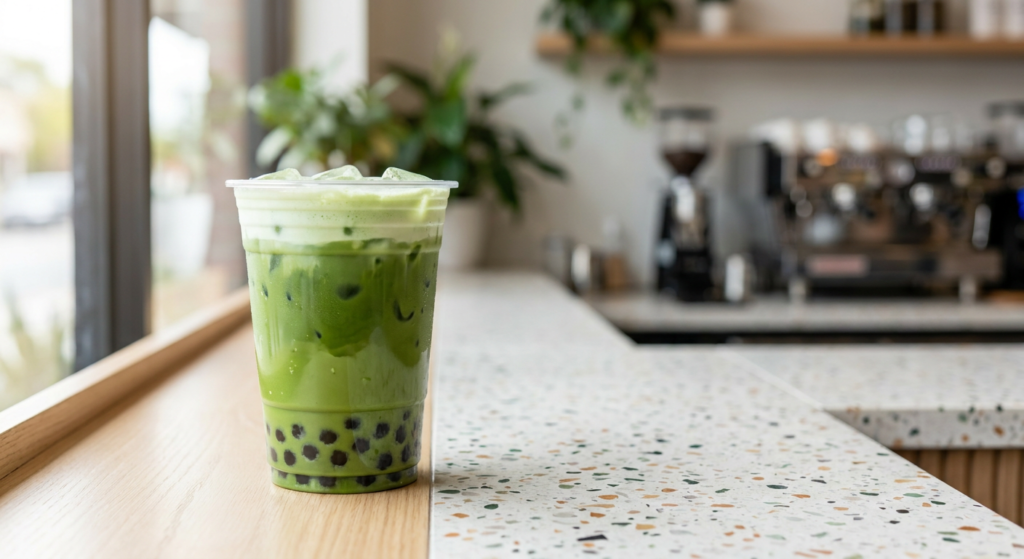
Matcha milk tea stands as one of the most profitable, high-velocity core offerings on a modern bubble tea menu. In the United States food service market, customer demand for matcha drinks extends far beyond basic green tea lattes. Consumers expect vibrant jade-green visual presentation, a velvety smooth texture free of powder clumps, and a balanced flavor profile where rich tea umami cuts cleanly through sweet milk and toppings.
For bubble tea shop owners, managers, and beverage developers, mastering matcha milk tea requires more than just pouring green powder into cold milk. Because powdered green tea behaves differently than steeped loose-leaf black or oolong tea, operating a consistent matcha program demands strict standard operating procedures (SOPs). From selecting the proper powder grade and maintaining precise water extraction temperatures to executing fast-service whisking and balancing beverage margins, every operational detail impacts customer satisfaction and repeat sales.
This commercial guide provides a complete operational roadmap for serving premium matcha milk tea in a fast-casual bubble tea setting.
Choosing the Right Matcha Powder Grade for Commercial Milk Tea
Selecting the correct grade of matcha powder is the foundation of a successful milk tea program. Matcha is produced by shade-growing tea bushes (Camellia sinensis) prior to harvest to boost chlorophyll and amino acid levels, then steaming, de-stemming, and stone-grinding the leaves into a micro-fine powder. However, not all commercial matcha powders perform equally when mixed with sweet milks, heavy syrups, and ice.
Ceremonial grade matcha represents the youngest, most delicate spring tea leaves. While its vibrant electric-green hue is stunning, its subtle flavor notes can easily be masked or overpowered by dairy, non-dairy creamers, and fructose. Furthermore, the higher raw ingredient cost of ceremonial matcha narrows profit margins without delivering a noticeably superior taste profile in sweet milk tea applications.
For standard commercial boba shops, Premium Barista Grade (Latte Grade) is the industry benchmark. This grade utilizes early second-flush harvests that retain high chlorophyll content for an attractive green color while providing a firmer, tea-forward astringency. This natural astringency is essential: it allows the distinct vegetal character of matcha to cut cleanly through whole milk, condensed milk, or oat milk without tasting bland or diluted.
When sourcing wholesale matcha tea powders
, shop managers should evaluate three key metrics:
Solubility & Fineness: The powder must pass fine-mesh sifting cleanly without hard, moisture-bound lumps.
Color Stability: The green hue should hold its vibrancy when exposed to cold milk and ice for at least 30 minutes without turning grayish-brown.
Flavor Balance: A clean umami opening followed by a pleasant, mild tea structure that pairs well with cane sugar, fructose, or brown sugar boba.
Pro Tip: Avoid using low-grade culinary powders for milk tea. Low-grade culinary matcha contains high tannin levels that produce an unpleasantly bitter, dry mouthfeel and a dull olive-yellow color that looks unappealing in clear cups. Sourcing a dedicated premium barista-grade matcha powder
ensures consistent taste and strong visual appeal across all shifts.
The Science of Matcha Preparation: Sifting, Temperature, and Dispersion
Unlike steeped teas where leaves are strained out, matcha is a suspension of microscopic leaf particles suspended in liquid. Because the powder does not dissolve, improper prep leads to settling, grittiness, or unsightly floating clumps.
Static electricity and ambient humidity cause fine matcha particles to form dense micro-lumps during storage. Dumping un-sifted matcha directly into liquids creates hydrophobic pockets of dry powder that resist mixing.
Baristas should sift matcha powder through a stainless-steel fine-mesh sieve directly into the mixing pitcher prior to adding water. For high-volume stores, sifting a 100g portion of matcha into an airtight, dry stainless-steel canister at the start of the shift speeds up order assembly while maintaining loose, lump-free powder.
2. Water Temperature Control (70°C–80°C / 160°F–175°F)
Water temperature is the most critical variable in controlling matcha astringency:
Scalding Water (>85°C / 185°F): Scorches the delicate tea amino acids and releases bitter polyphenols, making the drink harsh and astringent.
Cold Water (<50°C / 120°F): Prevents the natural tea fats and proteins from emulsifying, leading to rapid particle separation and a watery texture.
To achieve optimal suspension and smooth flavor, maintain water dispensers at 75°C (167°F). If your shop uses standard boiling water equipment, mix 3 parts boiling water with 1 part room-temperature filtered water to reach the ideal temperature range instantly.
3. High-Speed Whisking vs. Immersion Frothing
While traditional bamboo whisks (chasen) work well for single ceremonial bowls, fast-casual boba shops require speed and repeatability.
Commercial baristas should use a handheld electric frother or a variable-speed immersion blender equipped with a whisk attachment. Frothing a 1:15 ratio of matcha-to-warm-water for 10 to 15 seconds creates a smooth, suspended “matcha shot” with a fine, stable micro-foam layer.
Standardized Matcha Milk Tea Recipes (16 oz and 22 oz Spec Sheets)
Maintaining drink consistency across multiple baristas requires explicit gram-and-milliliter spec sheets. Below are the standardized commercial recipes for classic iced matcha milk tea with boba.
+-----------------------------------------------------------------------------------------------+| COMMERCIAL MATCHA MILK TEA SPECIFICATIONS |+--------------------------+---------------------------------+----------------------------------+| Ingredient / Step | 16 oz Cup Build (Standard) | 22 oz Cup Build (Large) |+--------------------------+---------------------------------+----------------------------------+| Tapioca Pearls (Boba) | 70 g (approx. 1 scoop) | 100 g (approx. 1.5 scoops) || Fructose / Cane Syrup | 25 mL (Adjust for sweetness %) | 35 mL (Adjust for sweetness %) || Standard Ice Volume | 180 g | 250 g || Cold Milk Choice | 180 mL | 250 mL || Barista Matcha Powder | 3.5 g | 5.0 g || Warm Water (75°C) | 60 mL | 80 mL |+--------------------------+---------------------------------+----------------------------------+
STEP-BY-STEP ASSEMBLY SEQUENCE:1. Scoop warm tapioca pearls into cup base.2. Add fructose syrup directly over pearls.3. Fill cup to 70% height with solid ice cubes.4. Pour cold milk over ice, leaving a 2-inch gap at the top.5. Sift matcha powder into warm water and froth for 12 seconds until smooth.6. Gently pour the warm matcha shot over the ice to create a distinct two-layer visual.7. Seal or cap the cup and serve.
Sweetener Adjustments for Customer Orders
Customer sweetness preferences in US boba shops vary widely. Baristas should calibrate fructose dispensers to maintain consistent flavor ratios:
100% Sweetness (Standard): 25 mL (16 oz) / 35 mL (22 oz)
70% Sweetness (Less Sweet): 18 mL (16 oz) / 25 mL (22 oz)
50% Sweetness (Half Sweet): 12 mL (16 oz) / 18 mL (22 oz)
30% Sweetness (Light Sweet): 8 mL (16 oz) / 10 mL (22 oz)
Milk Selection & Dairy-Free Pairings for Matcha
The choice of liquid base defines the body, mouthfeel, and visual presentation of matcha milk tea. Modern boba shop menus must cater to both traditional dairy preferences and growing plant-based dietary demands.
+-----------------------------------------------------------------------------------------------+| MILK & PLANT-BASED PAIRING MATRIX FOR MATCHA |+--------------------+--------------------------------+-----------------------------------------+| Milk Base | Flavor Profile Impact | Operational Notes |+--------------------+--------------------------------+-----------------------------------------+| Whole Milk | Creamy, rich, mild natural | Classic standard; provides smooth body || | sweetness. | and clean layering contrast. |+--------------------+--------------------------------+-----------------------------------------+| Barista Oat Milk | Nutty, toasted grain notes, | #1 alternative milk seller; natural || | velvety texture. | lipids stabilize matcha suspension. |+--------------------+--------------------------------+-----------------------------------------+| Non-Dairy Creamer | High fat content, ultra-rich, | Traditional Taiwanese boba style; || (Powder / Liquid) | sweet commercial finish. | completely masks green astringency. |+--------------------+--------------------------------+-----------------------------------------+| Almond / Coconut | Lighter body, distinct nut/ | Thinner mouthfeel; coconut adds a || Milk | tropical flavor notes. | popular tropical twist to iced matcha. |+--------------------+--------------------------------+-----------------------------------------+
Why Barista Oat Milk Is the Ultimate Matcha Pairing
Barista-edition oat milk has emerged as the most popular non-dairy upgrade for matcha in North America. Unlike standard almond milk, which can be thin and watery, oat milk contains natural oat lipids and soluble fibers that create a creamy, rich emulsion similar to whole dairy milk. Furthermore, the natural cereal sweetness of oat milk complements the earthy, umami notes of matcha, creating a smooth drink even at reduced sugar levels.
When building your beverage program, offering a $0.75 to $1.00 menu upgrade for barista oat milk increases average order value (AOV) while satisfying vegan and lactose-sensitive customers. Explore our full range of wholesale bubble tea supplies
to equip your store with compatible milk bases and syrups.
High-Margin Topping Pairings & Menu Variations
Expanding your menu beyond standard matcha milk tea with signature toppings allows your shop to command higher price points and stand out from local competitors.
HIGH-MARGIN MATCHA COMBINATIONS:┌─────────────────────────────────┐│ Cream Cheese Foam Layer │ <-- Rich, salty-sweet foam cap├─────────────────────────────────┤│ Fresh Cold Milk / Oat Milk │ <-- Velvety white center layer├─────────────────────────────────┤│ Frosted Matcha Shot Base │ <-- Deep green tea concentration├─────────────────────────────────┤│ Brown Sugar Tapioca Pearls │ <-- Warm, chewy boba anchor└─────────────────────────────────┘
1. Cream Cheese Foam Cap (Matcha Cheese Tea)
A savory, slightly salty cream cheese foam cap poured over iced matcha milk tea offers a luxurious taste contrast. The saltiness of the cream cheese cuts through the rich matcha umami, encouraging customers to sip directly through the lid before mixing.
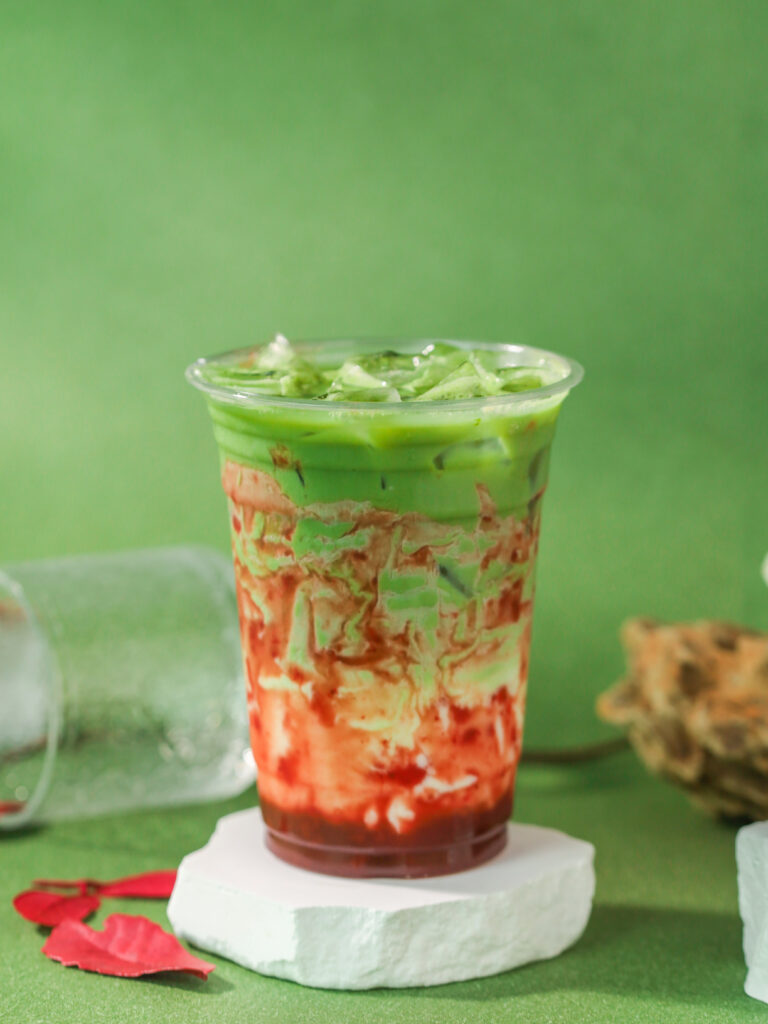
2. Strawberry Matcha Latte
Layering 40 g of real strawberry puree or fruit jam at the bottom of the cup, followed by ice, cold milk, and a top layer of matcha shot creates a striking red-white-green tri-color beverage. Strawberry matcha remains one of the highest-performing seasonal menu items across US boba chains.
3. Fresh Mochi Foam or Mochi Paste
Mochi foam—a stretchable, sweet rice-based topping—adds an interactive chewy texture to iced drinks. Paired with matcha milk tea, mochi topping positions your drink in the premium dessert-beverage category.
To learn more about structuring a multi-drink beverage lineup, consult our guide on matcha vs. hojicha comparison guide
to expand your green tea offerings.
Commercial Storage, Batch SOPs, and Holding Times
Operational speed depends on smart station setup and ingredient shelf-life management.
+-----------------------------------------------------------------------------------------------+| MATCHA INGREDIENT STORAGE & SHELF-LIFE GUIDE |+--------------------------+----------------------+---------------------------------------------+| Ingredient Item | Storage Condition | Maximum Holding Time |+--------------------------+----------------------+---------------------------------------------+| Unopened Bulk Matcha | Cool, dark, dry storage | 12 Months from manufacture date || Opened Powder Canister | Sealed airtight, refrigerated | 30 Days (Prevent moisture & oxidation) || Pre-Whisked Matcha Base | Chilled (<4°C / 39°F) in glass | 4 to 6 Hours maximum || Cooked Tapioca Pearls | Warm syrup bath (60°C) | 4 Hours (Discard after 4 hours for texture)|+--------------------------+----------------------+---------------------------------------------+
Managing Pre-Whisked Matcha Concentrate
For high-volume stores during peak rush hours, whisking individual matcha shots for every ticket can slow down drink assembly times. Shops can pre-mix a concentrated matcha base:
Sift 50 g of barista matcha powder into 750 mL of warm filtered water (75°C).
Blend at medium speed for 30 seconds until completely smooth.
Pour the concentrate into a glass squeeze bottle or covered pour pitcher and submerge in an ice bath to chill rapidly.
Store in the station under-counter refrigerator at <4°C.
Holding Rule: Pre-whisked matcha base must be used within 4 to 6 hours. After 6 hours, natural oxidation will dull the bright green color and cause the tea particulates to settle into a dense sediment layer. Always shake or swirl the squeeze bottle before dispensing.
Drink Costing & Profit Margin Analysis (COGS)
Understanding your Cost of Goods Sold (COGS) ensures that your matcha beverage line yields strong gross margins.
+-----------------------------------------------------------------------------------------------+| COST OF GOODS SOLD (COGS) BREAKDOWN — 16 OZ MATCHA BOBA TEA |+--------------------------+----------------------+----------------------+----------------------+| Ingredient Component | Usage Quantity | Unit Cost Est. (USD) | Total Line Cost |+--------------------------+----------------------+----------------------+----------------------+| Barista Matcha Powder | 3.5 g | $0.05 / gram | $0.175 || Whole Milk / Oat Milk | 180 mL | $0.002 / mL | $0.360 || Tapioca Pearls (Boba) | 70 g | $0.003 / gram | $0.210 || Fructose & Filtered Water| 25 mL | $0.002 / mL | $0.050 || Cup, Lid, Straw & Ice | 1 Set | $0.200 / unit | $0.200 |+--------------------------+----------------------+----------------------+----------------------+| TOTAL DIRECT COGS PER CUP | | $0.995 (~$1.00) |+-------------------------------------------------+----------------------+----------------------+
Profitability & Pricing Strategy
With a direct ingredient and packaging cost of approximately $1.00 per 16 oz cup, boba shops in the US market typically price classic matcha milk tea between $5.75 and $6.75.
Adding premium toppings like cheese foam (+$1.25) or upgrading to barista oat milk (+$0.85) incurs minimal additional ingredient cost ($0.25–$0.30), driving net margins above 85%.
For complete store menu planning and ingredient sourcing, review our dedicated matcha bubble tea menu program
resource page.
Frequently Asked Questions (FAQ)
Why does my matcha milk tea look yellow or brown instead of bright green?
Muted or brownish coloration is caused by two factors: using low-grade culinary matcha with high tannin content, or exposing matcha to boiling water (>85°C), which oxidizes the chlorophyll. Always use a high-grade barista matcha and maintain whisking water between 70°C and 80°C.
Should I shake matcha milk tea in a cocktail shaker or serve it layered?
Both methods are valid depending on your shop style. Shaking the drink homogenizes the flavor and creates a light, frothy top layer. Layering the dark green matcha shot over cold white milk creates a dramatic visual contrast that drives social media engagement, allowing customers to mix the drink themselves with a straw.
How can I stop matcha powder from settling at the bottom of the cup?
Because matcha is a suspended solid rather than a dissolved solution, minor settling over time is natural. To minimize settling during consumption, froth the powder thoroughly in warm water before adding milk, and use milks with higher fat or lipid stability (such as whole dairy milk or barista oat milk).
Next Steps for Your Boba Menu
Building a top-tier matcha milk tea program requires reliable ingredient suppliers and clear operational standards. By standardizing your powder grades, water temperatures, and barista SOPs, your shop can deliver consistent, vibrant green beverages that keep customers coming back.
To sample commercial barista-grade matcha powders, custom syrups, and premium boba supplies, explore the full wholesale catalog at BubbleTeaSuppliers.com