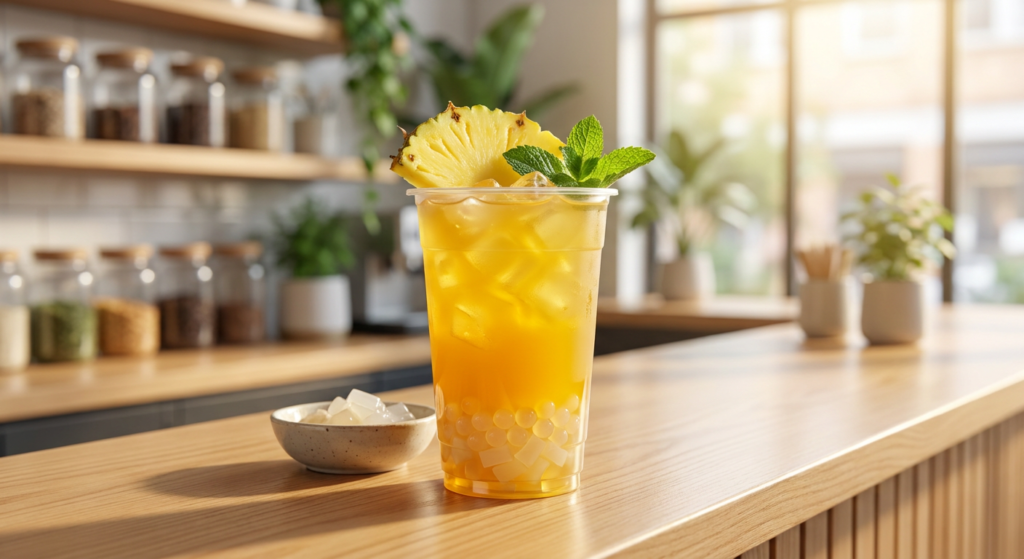
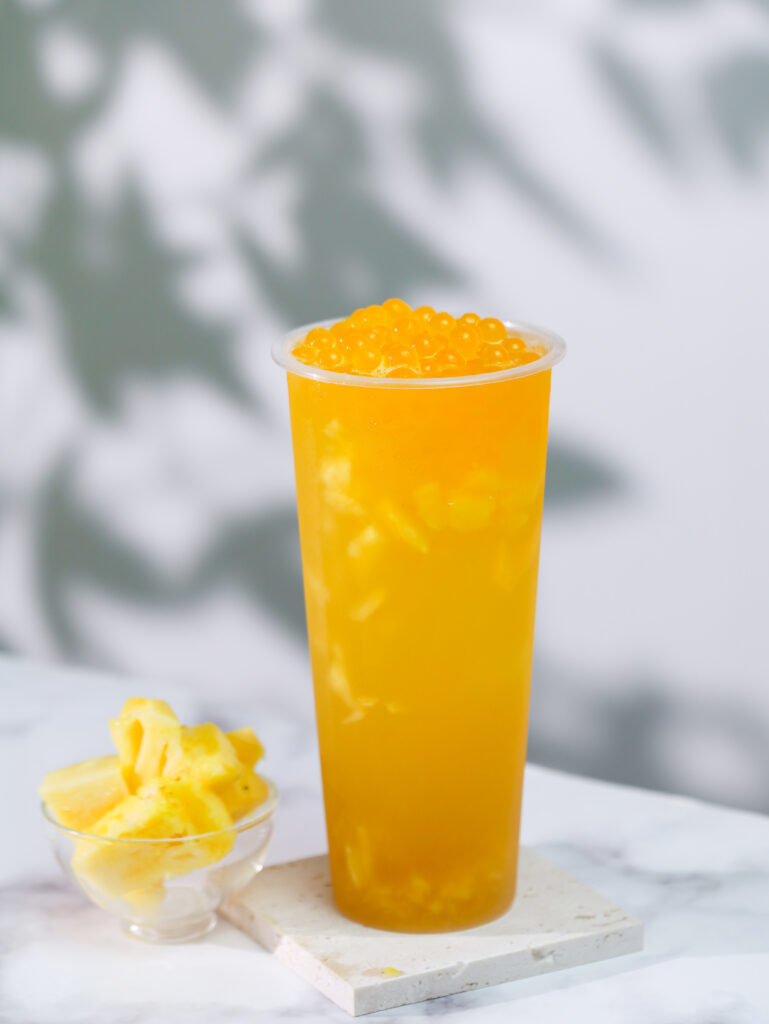
Fruit teas remain one of the highest-margin categories for modern boba stores and beverage operators. Among tropical profiles, pineapple stands out as a year-round top seller. Its natural balance of bright acidity and tropical sweetness pairs exceptionally well with floral green teas, roasted oolongs, and chewable toppings like crystal boba or coconut jelly.
However, executing a great pineapple tea at home is vastly different from running a commercial drink line. In a busy shop environment, baristas need a standardized Pineapple Fruit Tea Recipe SOP that eliminates guessing, maintains cup-to-cup consistency across shifts, and minimizes ticket times during peak rush hours.
This guide breaks down the complete commercial workflow for bubble tea shop owners, managers, and beverage developers. You will find exact tea extraction parameters, ingredient selection trade-offs, standard 16 oz and 22 oz build specs, step-by-step barista assembly rules, and menu strategies to maximize Average Order Value (AOV).
Selecting the Right Tea Base: Green, Oolong, or Black Tea
The foundation of any high-performing fruit tea is a properly brewed tea base. Pineapple possesses a strong aromatic profile with prominent malic and citric acidity. Choosing the wrong tea base can result in a drink that tastes either overly astringent or dull and washed out.
1. Jasmine Green Tea (The Gold Standard Default)
Jasmine green tea is the signature choice for tropical fruit teas across North American and East Asian boba shops. The delicate floral notes of jasmine blossom elevate the natural aroma of pineapple without overpowering the palate.
Flavor Profile: Light, crisp, highly aromatic, and clean.
Best Use: Refreshing summer iced fruit teas, shaken fruit teas with coconut jelly, and clear iced drinks.
Operational Tip: Keep steeping temperatures strictly below 80°C (176°F) to prevent extracting harsh catechins that clash with fruit acids.
2. Four Seasons Oolong (Four Seasons Spring / Si Ji Chun)
Four Seasons Oolong offers a middle ground between floral green tea and roasted tea. It provides a rich, buttery orchid body that rounds out pineapple’s sharper acid edges.
Best Use: Premium signature fruit teas, cheese foam fruit teas, and layered ice slushies.
Operational Tip: Flash-chill brewed oolong immediately over ice to preserve its subtle floral bouquet.
3. Black Tea (Ceylon or Assam)
While less common for crisp fruit teas, black tea is useful when creating richer, dessert-style beverages or piña-colada-inspired drinks that incorporate creamer or coconut milk.
Flavor Profile: Bold, malty, brisk, and full-bodied.
Best Use: Pineapple fruit milk tea hybrids, spiced tropical iced teas, and dark sugar boba pairings.
Pro Tip: Standardize your shop on Jasmine Green Tea for classic pineapple fruit teas and Four Seasons Oolong for your premium signature line. Using two core tea bases across your entire fruit tea menu simplifies inventory while providing distinct menu tiers.
Commercial Ingredient Comparison: Syrup vs. Puree/Jam vs. Fresh Fruit
How you source and dose your pineapple flavor directly impacts speed of service, food cost, visual appeal, and beverage stability. Commercial operators usually choose among three primary ingredient formats.
Criteria
Commercial Pineapple Syrup
Pineapple Puree / Jam (Real Pulp)
Fresh Pineapple Chunks
Speed of Service
Extremely fast (5–10 seconds)
Fast (10–15 seconds)
Slow (25–40 seconds, requires prep)
Consistency
100% standardized sweetness & flavor
Consistent texture, rich visual fruit pulp
Variable sweetness depending on fruit ripeness
Shelf Life
12+ months unopened; 30 days open
6–12 months unopened; 7–10 days refrigerated
2–3 days max once cut
Visual Appeal
Clear yellow liquid
Textured golden fruit fibers
Fresh fruit garnish in cup
Food Cost per Cup
Lowest ($0.12–$0.18)
Moderate ($0.25–$0.35)
Highest ($0.45–$0.65)
Primary Menu Role
High-volume core drinks
Signature fruit tea series
Premium LTO / fresh fruit specials
Operational Strategy for Shops
For maximum operational efficiency, many top-performing shops adopt a hybrid approach:
Core High-Volume Drinks: Dosed with commercial pineapple syrup for rapid ticket throughput and tight food cost control.
Signature Artisanal Drinks: Dosed with a combination of 25 ml pineapple syrup (for base sweetness) + 20 g pineapple puree/jam (for visible fruit pulp and mouthfeel).
Cup Visual Garnish: Optional diced fresh pineapple chunks placed at the bottom of 22 oz cups to justify a higher price point.
If you are expanding your commercial syrup and tea base stock, sourcing from dedicated wholesale bubble tea ingredients
suppliers ensures batch-to-batch uniformity and reliable delivery schedules.
Inconsistent tea brewing is the single biggest cause of drink flavor variation in boba stores. When hot tea is brewed too weak, adding ice and fruit syrup dilutes the flavor into sweet water. When brewed too strong or steeped too long, bitter tea tannins mask the pineapple flavor.
Follow these exact batch extraction ratios for commercial fruit tea preparation.
+-----------------------------------------------------------------------------------+| BATCH TEA BREWING SOP (3 LITERS) |+-----------------------------------------------------------------------------------+| 1. Measure 90 g loose Jasmine Green Tea leaves (30 g per 1,000 ml water). || 2. Heat 3,000 ml filtered water to 78°C – 80°C (172°F – 176°F). || 3. Pour water over tea leaves in a insulated brew bucket; steep for 7 minutes. || 4. Strain leaves thoroughly through a fine-mesh tea cloth; do NOT squeeze. || 5. Stir in 1,500 g ice cubes immediately to shock-chill the tea. || 6. Store chilled tea in a sealed dispenser at 2°C – 4°C. Max hold time: 4 hours. |+-----------------------------------------------------------------------------------+
Critical Rules for Tea Storage
Temperature Control: Store brewed tea base below 4°C (39°F). Warm tea accelerates ice melting in the shaker cup, causing drink dilution.
4-Hour Shelf Life: Jasmine green tea oxidizes when exposed to air. Always discard unused batch tea after 4 hours.
No Squeezing: Never squeeze tea leaves during filtration. Squeezing releases bitter polyphenols from the leaf stems.
Standardized Pineapple Fruit Tea Recipe Specs (16 oz vs. 22 oz)
To keep drink assembly seamless across all barista shifts, post these standardized recipe cards at every shaking station. All measurements reflect standard 100% sweetness and standard ice.
+-----------------------------------------------------------------------------------+| 16 OZ (500 ML) PINEAPPLE FRUIT TEA SPEC |+-----------------------------------------------------------------------------------+| - Chilled Jasmine Green Tea Base: 200 ml || - Commercial Pineapple Syrup: 35 ml || - Liquid Fructose (Sweetener): 10 ml (adjust for sweetness scaling) || - Fresh Lemon Juice (Optional): 5 ml (adds bright citrus pop) || - Ice Cubes: 180 g (fill shaker to 85% line) || - Topping (Coconut Jelly / Boba): 50 g (pre-dosed in serving cup) |+-----------------------------------------------------------------------------------+
+-----------------------------------------------------------------------------------+| 22 OZ (700 ML) PINEAPPLE FRUIT TEA SPEC |+-----------------------------------------------------------------------------------+| - Chilled Jasmine Green Tea Base: 280 ml || - Commercial Pineapple Syrup: 50 ml || - Liquid Fructose (Sweetener): 15 ml || - Fresh Lemon Juice (Optional): 8 ml || - Ice Cubes: 250 g (fill shaker to 85% line) || - Topping (Coconut Jelly / Boba): 70 g (pre-dosed in serving cup) |+-----------------------------------------------------------------------------------+
Sweetener Scaling Matrix (Fructose Adjustment)
Customers frequently request custom sweetness levels. Train baristas using this straightforward dosing table:
Sweetness Level
16 oz Fructose Dose
22 oz Fructose Dose
100% (Regular)
10 ml
15 ml
70% (Less Sweet)
7 ml
10 ml
50% (Half Sweet)
5 ml
7 ml
30% (Light Sweet)
3 ml
4 ml
0% (Unsweetened)
0 ml (pineapple syrup only)
0 ml
For comprehensive station prep charts and cup build workflows, review our detailed pineapple fruit tea assembly guidelines
.
Step-by-Step Barista Assembly & Shaking Protocol
Speed and consistency depend on a disciplined assembly order. Baristas must follow this 5-step operational protocol for every ticket.
Step 1: Prep Serving Cup │ └─ Add 50g–70g chosen topping (Coconut Jelly / Crystal Boba) to cup bottom. ▼Step 2: Dose Shaker Ingredients │ └─ Pour 35ml (16oz) or 50ml (22oz) Pineapple Syrup into cocktail shaker. │ └─ Add fructose sweetener according to requested sweetness level. │ └─ Add optional 5ml fresh lemon/lime juice for extra zesty brightness. ▼Step 3: Add Tea Base & Ice │ └─ Measure 200ml (16oz) or 280ml (22oz) chilled Jasmine Green Tea. │ └─ Add ice cubes to the shaker's 80% capacity line. ▼Step 4: Hard Shake (10–12 Seconds) │ └─ Seal shaker lid and shake vigorously for 10–12 seconds. │ └─ Hard shaking aerates the liquid, creating micro-bubbles and chilling the drink. ▼Step 5: Pour, Seal & Serve └─ Strain and pour complete liquid and remaining ice over prepped cup toppings. └─ Seal with cup sealing machine or domed lid. Serve with wide boba straw.
Warning: Never shake tapioca pearls, crystal boba, or jelly toppings inside the cocktail shaker. Shaking damages fragile toppings, breaks down jelly cubes, and creates unsightly debris floating in the drink. Always dose toppings directly into the serving cup before pouring.
High-Margin Topping Pairings & Menu Variations to Boost AOV
Topping add-ons represent pure high-margin upside for boba stores. A standard fruit tea priced at $5.50 can easily reach $6.75–$7.25 with strategic topping suggestions.
+-----------------------------------------------------------------------------------+| TOP PINEAPPLE FRUIT TEA PAIRINGS |+-----------------------------------------------------------------------------------+| 1. Pineapple + Coconut Jelly (Piña Colada Vibe) || Coconut jelly absorbs the tart pineapple syrup, giving a chewy, tropical finish|| || 2. Pineapple + Mango Popping Boba (Tropical Explosion) || Bursting juice pearls create a multi-layered fruit punch experience. || || 3. Pineapple + Crystal Boba (Agar Pearls) || Crisp, translucent texture without adding heavy starch calories. || || 4. Pineapple Green Tea + Cheese Foam Top (Savory & Sweet) || Slightly salted cream cheese foam balances the bright acidity of pineapple. |+-----------------------------------------------------------------------------------+
Winning Menu Variation Ideas
Tropical Trio Fruit Punch: Jasmine Green Tea + Pineapple Syrup + Passionfruit Puree + Mango Popping Boba.
Iced Golden Oolong Pineapple: Four Seasons Oolong Tea + Pineapple Jam + Aloe Vera Jelly + Fresh Lime Slice.
Opened Pineapple Syrup: Store in a cool, dry speed rail or well-ventilated cabinet. Shelf life: 30 days at room temperature.
Opened Pineapple Puree / Jam: Store in food-grade covered containers inside a walk-in cooler (2°C–4°C). Shelf life: 7–10 days refrigerated.
Prepared Toppings (Coconut Jelly / Crystal Boba): Keep submerged in original syrup solution. Refrigerate after opening. Use within 5 days.
Brewed Tea Base: Max hold time 4 hours in temperature-controlled dispensers.
Cost Control Checklist for Store Managers
Use Jiggers or Portion Pumps: Never allow baristas to free-pour syrups or fructose. A 10 ml over-pour on every drink can erode monthly net margins by 3%–5%.
Pre-portion Toppings: Use standardized 50 g or 70 g topping scoops to maintain exact food cost per cup.
Track Daily Waste: Log discarded tea batches at the end of each shift to fine-tune batch brewing sizes during slow hours.
Frequently Asked Questions (FAQ)
What is the best tea base for pineapple fruit tea in a boba shop?
Jasmine Green Tea is the primary choice because its fresh floral aroma complements pineapple’s natural acidity. Four Seasons Oolong is an excellent secondary option for premium signature fruit teas requiring a richer, smoother finish.
Should I use pineapple syrup or real pineapple puree for my menu?
Use commercial pineapple syrup for high-volume core drinks due to its speed, consistent sweetness, and lower food cost ($0.12–$0.18 per cup). Use pineapple puree or jam for premium, higher-priced artisanal series where visible fruit pulp adds perceived customer value.
Why does my pineapple fruit tea separate or look cloudy?
Drink separation or cloudiness usually occurs when warm tea base is mixed with cold syrup, or when tea is steeped at excessively high temperatures (extracting excess tannins). Always shock-chill your tea base over ice immediately after brewing and store it below 4°C before mixing.
How do I prevent pineapple fruit tea from tasting too sour or acidic?
Balance pineapple’s natural citric acid by adding 10 ml–15 ml of liquid fructose or simple syrup per 16 oz cup, or pair the drink with sweet coconut jelly or popping boba toppings.
Build a Standout Beverage Menu with BubbleTeaSuppliers
Standardizing your Pineapple Fruit Tea Recipe SOP is essential for scaling store operations, maintaining beverage quality across shifts, and boosting store profitability. By pairing a high-grade Jasmine Green Tea base with standardized syrup dosing and high-margin toppings, your shop can deliver a top-selling tropical drink that keeps customers returning.
At BubbleTeaSuppliers, we supply store owners and beverage developers with premium tea leaves, authentic fruit syrups, real fruit jams, and wholesale toppings engineered for high-volume commercial operations.
Ready to upgrade your seasonal beverage menu? Explore wholesale bubble tea ingredients
and request commercial samples for your shop today.