
Ask ten people to describe “milk tea” and you’ll get ten different answers — and that’s the point. In Taiwan it means chewy pearls bobbing in sweet, creamy tea. In Hong Kong it’s a silky, bracingly strong cup strained through a cloth “sock.” In India it simmers on the stovetop with cardamom and ginger. In Malaysia it’s literally poured from one jug to another, high in the air, until it turns frothy.
Milk tea isn’t one drink. It’s a global family of tea-plus-milk traditions, and each member is defined as much by how it’s made as by what goes in it. That’s great news for cafe and boba shop owners: understanding these types of milk tea around the world gives you a palate of flavors and preparation techniques you can adapt to stand out, without reinventing your whole operation.
From the chewy pearls of Taiwan to the spiced simmering pots of India, here is a curated tour of the major types of milk tea around the world — where each comes from, what makes it unique, and how to add it to a real menu.
What Unites Every Type of Milk Tea
Before the styles, the base. Nearly every milk tea in the world starts with the same simple architecture: a brewed tea, a milk or creamer, and a sweetener. The variety comes from the choices within each slot.
- Tea base — Most classic milk teas use a bold black tea (Assam or Ceylon), because strong, malty leaves hold up to milk and sugar without turning bitter or watery. Green, jasmine, and oolong bases bring lighter, more floral or roasted profiles. Choosing the right tea is the single biggest lever on flavor, so it’s worth checking our rundown of which tea is used for milk tea before you build a menu.
- Milk system — Fresh milk, evaporated milk, condensed milk, non-dairy creamer, oat or coconut milk. Each changes body and sweetness dramatically.
- Sweetener — Granulated sugar, simple or fructose syrup, honey, or specialty sugars like brown sugar and Okinawan kokuto.
Get those three dials right and you can adapt almost any global style below to a shelf-stable, repeatable recipe. There’s one more distinction worth making early: the difference between a hot culinary tradition and a commercial iced beverage. Chai and British milk tea are usually built around simmered or steeped hot tea finished with milk; boba and Thai tea are shaken or poured over ice. Knowing which camp a style sits in tells you immediately about its best tea strength, its milk, and how long it will hold at the counter.
Our milk tea boba base guide walks through the tea-to-milk ratios, brewing temperatures, and holding windows you’ll reuse across every style on this list — the same foundation that carries a classic black milk tea can carry Thai, chai, or a silky Hong Kong cup.
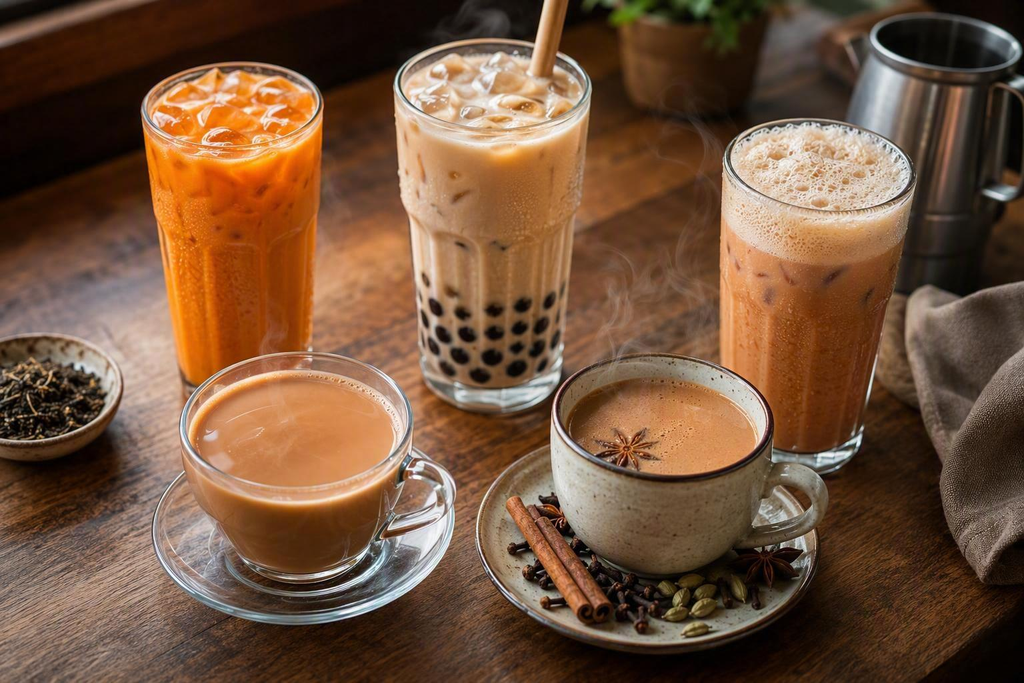
Taiwanese Pearl (Boba) Milk Tea — The Global Icon
Origin: Taiwan, popularized in the 1980s.
If one version of milk tea conquered the planet, it’s this. Taiwanese pearl milk tea (zhenzhu naicha) layers a sweet, creamy tea base — often black tea with milk or non-dairy creamer — over chewy tapioca pearls. The original was a simple iced milk tea made with black tea and creamer; the chewy pearls arrived a little later and turned a drink into a global phenomenon, as the broader history of milk tea recounts.
What makes it distinctive: The texture. The dessert-like sweetness is balanced by the pleasant chew of the tapioca, and shaking with ice gives it a smooth, slightly foamy body. Because it’s endlessly customizable, it’s why the whole bubble tea category now spans fruit teas, matcha, and dozens of flavor powders.
Flavor profile: Sweet, creamy, and comforting, with a clean maltiness from the black tea that lets a hundred toppings and syrups shine.
Adding it to your menu: As the best-known type of milk tea, it’s your anchor drink. Pick a strong, milk-friendly black tea, a consistent creamer or fresh-milk system, and properly cooked pearls with a short hold time so they stay soft. Because sweetness and toppings are highly customizable, this type of milk tea adapts easily to local taste — which is exactly why taro, matcha, and dozens of fruit flavors have built their own followings on top of it.
Hong Kong-Style (Silk-Stocking) Milk Tea — The Silky Classic
Origin: Hong Kong, mid-20th century, shaped by British tea culture.
Hong Kong silk-stocking milk tea (gangshi naicha) looks simple — black tea and milk — but it’s one of the most technically demanding styles on earth. The tea is brewed very strong from a blended black tea (often Ceylon), then repeatedly strained or pulled through a long cloth filter that looks like a stocking. That’s where the nickname comes from — a method documented in the history of Hong Kong-style milk tea
.
What makes it distinctive: The preparation. The cloth-strain method removes bitterness and draws out a velvety, almost creamy mouthfeel while keeping the tea bold and full. It’s typically served hot or iced with evaporated milk and often a touch of condensed milk for sweetness.
Flavor profile: Strong, rich, malty, and silky — unmistakably tea-forward, far less sweet and less dessert-like than boba.
Adding it to your menu: It’s a great premium or classic cafe offering that differentiates you from competitor boba shops leaning hard on sugar. You’ll want a strong Ceylon or blended black tea base and evaporated milk; a dedicated brewing and filtering step makes it a showcase item. Our black milk tea ingredient guide covers the tea strength and milk specs you’ll need for this style.
Thai Milk Tea — The Vivid, Sweet Southeast Asian Star
Origin: Thailand.
Thai milk tea (cha yen) is the drink that turns heads before it ever touches your lips, glowing a vivid orange from the spices and coloring in traditional Thai tea mix. The tea is brewed very strong, sweetened heavily, and lightened with condensed milk, then often topped with evaporated milk and poured over crushed ice.
What makes it distinctive: That signature color and a warm, aromatic, almost buttery note from the spiced tea base, plus the contrast between strong tea and generous sweetness.
Flavor profile: Bold, sweet, creamy, and aromatic — a sensory standout that photographs beautifully.
Adding it to your menu: Thai milk tea is one of the most reliable menu additions because it’s visually distinctive and unmistakably flavorful. Brew from a Thai tea mix, sweeten with condensed milk for authenticity, and offer it plain iced with boba on request.
Masala Chai — The Spiced, Simmered Everyday Drink
Origin: India (and broadly South Asia).
Masala chai — usually just chai in practice — is a spiced milk tea where loose black tea is simmered directly in a mix of water and milk with warming spices: cardamom, cinnamon, ginger, cloves, sometimes black pepper.
What makes it distinctive: The method and the spice. It’s not strained or pulled; it’s simmered and steeped at a rolling boil so the tea and spices fully infuse into the milk, creating a thick, intensely aromatic brew.
Flavor profile: Bold, warming, and spicy-sweet — a far cry from the clean, minimalist milk teas of East Asia.
Adding it to your menu: Chai is a bridge drink; it appeals to coffee-shop customers who already love chai lattes, not just boba fans. Brew a chai concentrate with black tea and a standard spice blend, then finish with milk to order. It holds well and does double duty hot or iced.
Teh Tarik — The Frothy Malaysian Pulled Tea
Origin: Malaysia and Singapore.
Teh tarik literally means pulled tea. A strong black tea is blended with condensed milk, then pulled — poured back and forth between two containers held high above each other — to aerate the drink, cool it, and whip up its signature frothy head in a style celebrated as Malaysia’s pulled tea
.
What makes it distinctive: The signature froth from the aeration, and the theatrical serving. It’s sweet, creamy, and robust, often thick enough that the foam crowns the cup.
Flavor profile: Sweet, milky, and full-bodied, with a satisfying creamy foam — closer to a dessert drink than a plain milk tea.
Adding it to your menu: Teh tarik is a fun cafe spectacle you can feature at the counter or as a specialty item. It needs just a strong black tea and condensed milk plus a pair of tall cups, and no expensive equipment. The pulling is the differentiator — and it’s a skill your baristas can learn in an afternoon. If you don’t want the show, you can simulate the foam with a quick shake or a few seconds in a blender and still capture most of the mouthfeel.
Japanese Royal, Hokkaido and Okinawa Milk Teas — The Milk-Forward Family
Origin: Japan.
Japan offers a softer, more refined take on milk tea. Royal milk tea steeps the tea leaves directly in hot milk rather than water, yielding a smooth, milk-forward drink with reduced astringency. Hokkaido milk tea leans on the region’s famously rich dairy for an extra-creamy cup. Okinawa milk tea adds kokuto salt — Okinawan brown sugar — for a deep, caramel-like sweetness.
What makes them distinctive: The milk-first philosophy. Where East and Southeast Asian styles push the tea and sugar forward, Japanese milk teas treat milk as the star, giving a mellow, silky, comforting profile.
Flavor profile: Creamy, round, and gently sweet — smooth and luxurious rather than bold or bitter.
Adding it to your menu: These suit cafe and specialty menus well. A creamy Japanese-style milk tea or an Okinawan brown-sugar variant gives you a softer, premium-feeling option that contrasts nicely against the bolder Taiwanese and Thai styles.
The Minimalist Grandparent: British and Everyday Milk Tea
Origin: Britain.
Finally, the style that arguably started the whole tradition of putting milk in tea dates to 17th-century Britain. British milk tea is just a robust black tea with a splash of milk and often sugar — a plain, milky, low-key everyday drink.
Why it matters: It’s the minimalist reference point that throws the other styles into relief. Where Hong Kong strains for velvet and Thai and teh tarik reach for sweetness, British milk tea is content to let the tea and milk balance quietly.
Adding it to your menu: Not a headline item on its own, but useful as the inspiration behind a British breakfast milk tea or an Earl Grey milk tea-latte, and a reminder that sometimes the simplest build sells best.
How to Pick a Global Milk Tea for Your Menu
The world of milk tea is broad, but you don’t need to add ten new drinks at once. A smart menu picks one or two differentiated global styles on top of a solid classic anchor. A few lenses help with the decision:
- Volume and familiarity: Taiwanese pearl milk tea and, increasingly, Thai milk tea carry the most demand and recognition.
- Differentiation: Hong Kong silk-stocking, teh tarik, and spiced chai set you apart with distinctive flavors and stories customers remember.
- Operational fit: Chai concentrate, Thai tea mix, and Japanese-style milk teas reuse your existing tea-and-milk infrastructure. Only Hong Kong-style and true teh tarik ask for a dedicated brewing or pulling step.
- Shared foundation: All of them start with great tea and a consistent dairy or non-dairy system. Nail that base and adding a regional style is mostly a matter of swapping a tea or a sweetener. For a closer look at how the same base extends across best-sellers, our comparison of classic vs. brown sugar vs. Thai milk tea is a handy reference.
Key takeaway: Milk tea is one category but dozens of distinct regional traditions. Understanding how each is built — tea base, milk system, sweetener, and signature technique — lets you adapt the world’s flavors to a menu that runs consistently.
Ready to stock the building blocks of these global milk teas? From robust Ceylon and Assam bases to Thai tea mix, non-dairy creamers, condensed milk systems, and tapioca pearls, our wholesale ingredient range and shop SOPs are built for operators who want authentic flavor without the guesswork. Browse the catalog and turn a foot-traffic classic into a truly global menu.