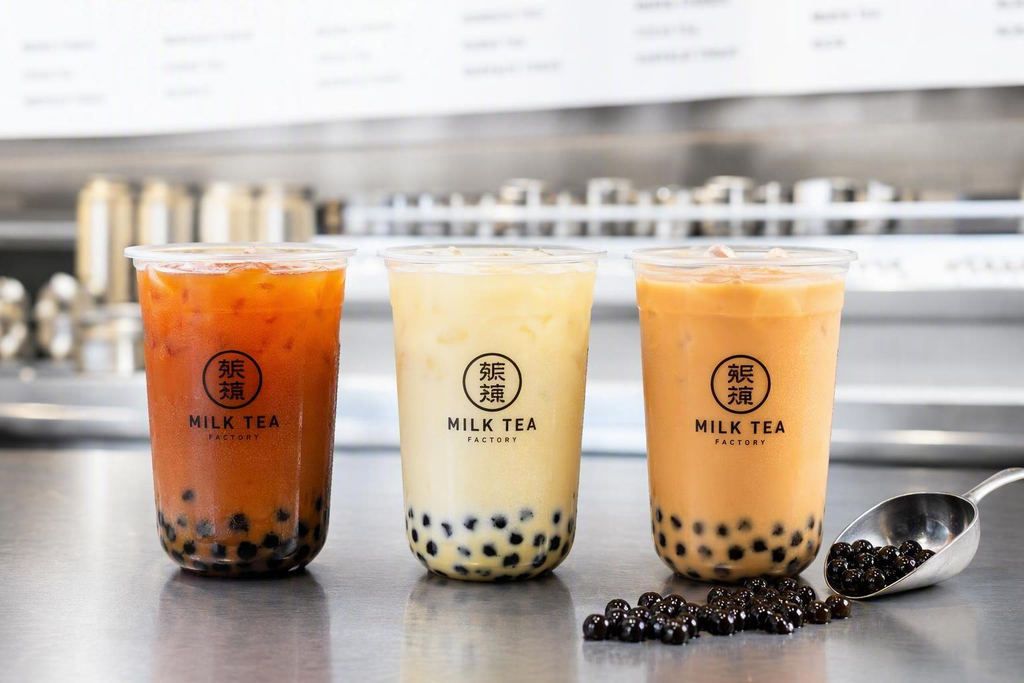
A customer orders the same milk tea twice and gets two different-looking drinks — one amber, one washed-out beige. Even without a complaint, that visual inconsistency quietly erodes trust and makes your menu photos look like fiction.
Milk tea color isn’t magic. It’s the product of a handful of controllable variables: the tea you brew, the milk or creamer you add, the ratio between them, and how much ice dilutes the cup. Once you understand what drives the appearance, you can lock in a signature color and hit it every batch, every shift.
Here’s what actually determines milk tea color and how production-minded shops keep it consistent. Along the way we’ll answer the question most people start with — what color is milk tea? — and then go deeper into the operators’ version: how do you hold that color steady on a busy Saturday?
What Determines Milk Tea Color
Milk tea color comes from tea pigments, modified by milk or creamer opacity, and tuned by ratio, brewing strength, and dilution. Understanding each piece tells you exactly which lever to pull when the color drifts. For most milk tea color boba builds, the drink starts as the brewed tea’s natural hue, gets lightened and thickened by the dairy system, and then settles into its final shade once ice and shaking are done.
Tea type is the starting point
The biggest single factor is the tea itself. Black teas carry the most color because oxidation produces compounds that read as red and brown. Two of them matter most:
Thearubigins — push the drink toward brown and dark amber.
A peer-reviewed study on the color of milky tea found that the redness of the final drink is strongly correlated with these pigments in the black tea infusion. In plain terms: darker, more oxidized teas give darker milk tea. Assam CTC and other robust black teas brew into a deep reddish-amber base, while lighter green or jasmine bases stay pale.
Milk and creamer control opacity
Milk does two jobs in appearance: it dilutes the tea’s color and makes the drink more opaque. When casein proteins bind with tea polyphenols, the drink shifts from a translucent reddish-brown toward a calm, creamy tan.
The type of dairy component changes the look:
Whole milk — richer, more opaque, softer cream color.
Skim or lighter milk — thinner, more translucent.
Non-dairy creamer — engineered to emulsify and whiten; often the most uniform, shop-style, café-au-lait appearance. This is why many commercial programs prefer it: predictable color, batch after batch.
Pro Tip: If your signature drink keeps coming out a slightly different shade each batch, the fastest fix is usually switching from fresh milk to a standardized creamer or premixed milk tea base — built-in reproducibility beats re-tuning fresh dairy daily.
The tea-to-milk ratio is the strongest lever
Of all the brewing variables, the tea-to-milk ratio has the most influence on milk tea color and taste. A study on brewing conditions for milk tea showed that increasing the tea amount and the brewing temperature produced a darker drink, and that the ratio itself correlated strongly with the final color values. That’s why the tea-to-milk ratio is the first number to write down when you’re chasing a specific milk tea appearance.
The practical takeaway: if your milk tea is too pale, your default fix shouldn’t be “add more tea powder to the cup.” It should be raising the ratio of brewed tea concentrate to milk or creamer — and doing it against a written spec, not by eye.
Ice dilution sneaks into the cup
Every milk tea build depends on ice. Ice isn’t just cold — it’s water that melts and thins the ratio over time. A drink built with a fixed color at the counter will look lighter and cloudier minutes later as the tea-to-milk ratio effectively drops. Consistent ice portioning is part of consistent color.
Milk Tea Color by Tea Base and Milk Type
Different tea bases and dairy systems produce a predictable range of colors. Here’s a quick reference you can use to set menu expectations — and to train staff on what “right” looks like.
Tea base
Milk / creamer
Expected milk tea color
Black tea (Assam / Ceylon)
Non-dairy creamer or whole milk
Deep reddish-amber to rich caramel-tan
Black tea, high tea-to-milk ratio
Creamer
Darker, tea-forward amber-brown
Jasmine green tea
Creamer or whole milk
Pale yellow-green to light cream / ivory
Green oolong
Creamer
Light tan with a warm tint
Thai tea mix
Condensed milk or creamer
Signature bright orange
Matcha
Milk / oat milk
Soft green latte
Taro powder + milk
Creamer base
Light lavender-purple
Two examples from the field show how wide the range can be. A classic black milk tea and a jasmine milk tea comparison shows a deep reddish-amber base and rich caramel-tan milk tea for black, versus a pale yellow-green base and light cream-to-ivory milk tea for jasmine. Same cup format, completely different signature.
Key Takeaway: Your menu should document an expected color per drink. If staff can’t describe what “right” looks like — and catch “wrong” before serving — you’re relying on luck, not process.
How to Match the Color You Want
Once you know the levers, matching a target color is a series of controlled adjustments:
Pick the tea base for the hue you want — black for amber and brown, green/jasmine for pale and ivory.
Set the ratio — the larger the share of tea concentrate, the darker and more tea-forward the drink.
Choose the dairy system — creamer for stable, uniform opacity; whole milk for a richer cream tone.
Control brewing strength — a practical ingredient guide for shops and buyers recommends brewing concentrates around a 1:10 to 1:15 leaf-to-water ratio by weight so the strong tea can survive the milk and ice.
Catch drift with a reference batch — keep a color sample of a passing brew and compare against it.
An operator-oriented framing: consistency doesn’t come from a magic ingredient. It comes from standardizing the whole buil — tea strength, tea-to-milk ratio, dairy, build order, and shake time — then checking color like you check taste.
Locking It Down with Spec Sheets
A written spec sheet turns “make it look right” into measurable numbers. Here’s a base template for a classic amber black milk tea and a pale jasmine green milk tea. These are starting points — adjust to your flavor profile, then fix them as your recipe.
16 oz classic black milk tea
Component
Spec
Brewed black tea concentrate
180 ml
Non-dairy creamer (premixed base)
60 ml
Simple syrup
25–35 ml
Ice
120 g
Tapioca pearls
60 g
Expected color
Caramel-tan, uniform after shake
22 oz jasmine green milk tea
Component
Spec
Brewed jasmine green tea concentrate
260 ml
Whole milk or creamer base
90 ml
Simple syrup
30–40 ml
Ice
170 g
Tapioca pearls
80 g
Expected color
Light cream to ivory, pale green tint
Pro Tip: Add a “done when — color is uniform after shaking” line to your build cards. It’s the same discipline great kitchens use for plating: the drink isn’t finished until it looks right.
A Visual QC Routine
Color checks belong in your daily workflow, not just new-hire training. A simple pattern that works in high-volume shops:
Shift start: build one reference drink and check color + sweetness against your spec before the rush.
Per batch: run the 10-second tea-base pass/fail check (smell, taste, and color must all match your reference batch) as covered in our consistency guide above.
During service: the drink’s color should be uniform after shaking. If it looks separated or muted, stop and fix the build, don’t serve it.
Troubleshooting Color Problems
When the color is off, chase the variable that most likely caused it:
Symptom
Likely cause
Fix
Drink too pale
Tea-to-milk ratio too low
Increase tea concentrate share or reduce milk/creamer
Drink too dark or bitter
Tea brewed too strong / over-steeped
Reduce steep time or tea amount in the brew
Washed-out, dull look
Too much active ice melt
Portion ice consistently; reduce melt time
Batch vs batch differs
No brew spec or dairy changes
Standardize brew ratio/time; switch to premixed creamer
Separating or cloudy
Fresh milk + aged tea base
Use creamer or re-batch fresh; shake fully
Next Steps
Milk tea color is one of the most visible “free” quality signals in your shop — customers judge a drink before they taste it. Start by documenting an expected color for every milk tea on your menu, then lock in the ratio, dairy, and brew spec that hits it.
When you’re ready to standardize, get sample kits and review the ingredient catalog
to compare tea bases, creamers, and premixed milk tea systems side by side. A one-page spec per drink beats a month of guessing — and your next batch will prove it.