
Core bubble tea ingredients are the essential building blocks of boba drinks in foodservice: a robust tea base, a dairy or non‑dairy milk or creamer system, a sweetener (often a syrup), toppings led by tapioca pearls, optional flavorings or powders, and clean water and ice to finish.
What are the core bubble tea ingredients
Below is a compact taxonomy of categories you’ll specify, source, and standardize in a professional shop.
Category
What it is
Common options
Key operator notes
Tea base
Strong brewed tea providing structure
Black (Assam/Ceylon styles), green (jasmine), oolong; matcha is dispersed, not brewed
Brew strong to cut through milk and sugar; batch for consistency
Milk or creamers
Dairy or plant systems for body
Whole/evaporated/condensed milk; oat, soy, coconut; powdered creamers
Balance flavor, stability, allergens; powdered options aid standardization
Sweeteners
Syrups or sugars for sweetness
Simple/brown sugar syrups, flavored syrups, fructose, honey
Verify Brix for consistency; set house targets
Toppings
Chewy or popping textures
Tapioca pearls, crystal boba, popping boba, jellies, puddings
Cook/hold windows matter; label allergens
Flavorings
Flavor carriers beyond tea
Taro, matcha, fruit powders; purées; concentrates
Powders/concentrates speed service; purées need cold chain
Stabilizers
Texturizers in mixes/toppings
Hydrocolloids in popping boba membranes or mixes
Be transparent for clean‑label expectations
Water & ice
Final diluters shaping mouthfeel
Filtered water; consistent ice size
Control dilution and taste with filtration and ice program
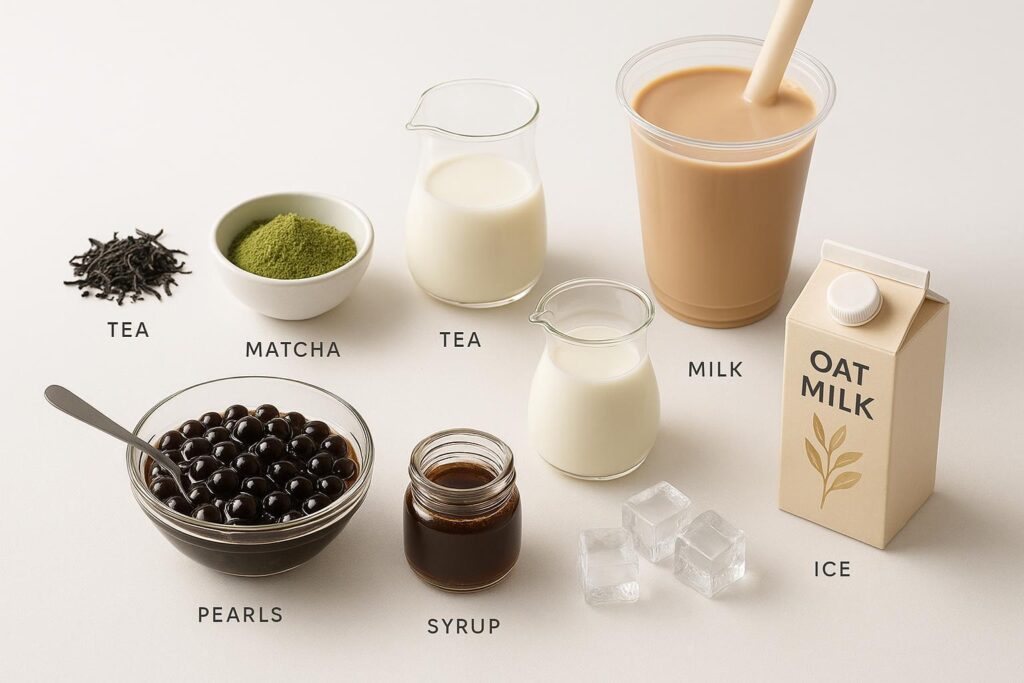
Tea base: building a strong backbone
A milk tea lives or dies on extraction. For milk‑tea applications, aim for a robust brew that can stand up to dairy and sugar. Practical shop ratios generally land around 1:10 to 1:15 by weight for black and oolong when brewing concentrates for batching. Recipe‑style operator guidance from The Flavor Bender suggests shop‑strength dosing on the order of 6 g tea per 200–240 mL water per serving (about 2.5–3% w/w), with stronger batch ratios for concentrates to keep flavor when diluted with milk and ice; see the publisher’s milk tea method and recipe notes for context in 2024–2025. Examples include the detailed method in the The Flavor Bender boba milk tea recipe (2024) and the companion brewing guidance (2025). What’s the quickest way to dial this in for your store? Run a small triangle test at 1:10, 1:12, and 1:15, then lock the winner in your SOP.
Taste for bitterness and astringency during R&D. Longer steeps can increase extraction, but milk tempers tannins; build your SOP so staff time steeps precisely and cools batches quickly. Remember that matcha is not brewed; it’s dispersed and depends on grade and whisking for texture and flavor.
Milk and creamers: dairy, plant, and powdered systems
Milk systems define body and aroma. Dairy choices include whole, evaporated, or condensed milk for richer sweetness. Plant systems trade flavor neutrality and stability: oat tends to be neutral and creamy, soy is heat‑stable with a characteristic note, and coconut brings distinct aroma. Powdered creamers are common in high‑throughput shops because they dissolve fast, travel easily, and keep formulas consistent.
For allergen and dietary labeling, flag milk and soy, and verify nut‑based options like almond. The FDA lists nine major allergens in the U.S.; sesame was added in 2023, which may appear in specialty toppings or crumbs and must be labeled. See the FDA’s consumer overview in 2024 for a clear summary: Food Allergies: what you need to know (FDA, 2024).
If you’re comparing dairy vs. plant performance side‑by‑side, an operations‑focused overview of milk choices for boba can help your staff align on one system before scaling. For a neutral, vendor‑style primer, see the brand’s guide on milk systems: what kind of milk to use for a boba tea shop.
Sweeteners and syrups: consistency with Brix
Shops usually standardize sweetness with syrups: simple syrup, brown sugar syrup, or flavored syrups. Consistency improves when you verify concentration using a refractometer and document a house Brix. In general beverage practice, a 1:1 simple syrup lands near ~50 °Bx and a 2:1 “rich” syrup near ~66 °Bx; set your target, record it, and spot‑check each batch. For background on Brix in sweeteners and how operators reference it, see WebstaurantStore’s primer on syrup concentration within a corn‑syrup alternatives guide: Brix measurement context (WebstaurantStore, 2026). Think of Brix like a speedometer for sweetness: if it’s off, every cup will taste a little different.
From a clean‑label standpoint, cane‑sugar syrups with short ingredient lists are easy to explain to customers. If you offer reduced‑sugar options, pre‑test mouthfeel and aftertaste at your target dilution—you want sweetness to integrate rather than sit on top.
Toppings and textures: pearls, jellies, and popping boba
The signature chew comes from tapioca pearls made primarily of cassava starch; when cooked, starch gelatinization creates the characteristic translucent, springy texture. Encyclopedic references summarize composition and behavior; for quick grounding, see tapioca pearls on Wikipedia (last updated 2026), and for a science‑oriented overview of bubble tea texture mechanisms, see FoodGrads’ explainer on the science behind bubble tea (2023).
Cook and hold windows are critical for quality control. Many supplier product sheets advise best‑quality service within roughly four hours after cooking, with opened raw pearls needing refrigeration and quick use cycles. Representative product pages from industry distributors communicate windows like “best within ≈4 hours after cooking” and “use opened raw pearls within ~48 hours; follow your SKU’s label.” For a marketplace snapshot, consult WebstaurantStore’s product guidance on tapioca pearls and its topping taxonomy: types of boba and toppings (WebstaurantStore, 2025).
Beyond classic pearls, toppings include crystal boba (often konjac‑based for a clearer, bouncy chew), popping boba (liquid cores that burst), grass or coffee jellies, fruit jellies, puddings, red bean, and sago. Store opened toppings per label (refrigeration is common) and build FIFO into your closing checklist.
Flavorings and powders: speed versus freshness
Flavor layers often come from powders (taro, matcha, cocoa), concentrates, syrups, or fruit purées. Powders and concentrates support speed and uniformity, especially during peaks, while purées deliver fresher fruit notes but demand cold chain and can complicate mouthfeel if pulp settles. If your team uses taro powder, standardize dispersal and sweetness so color, aroma, and viscosity remain consistent across shifts.
Stabilizers and texture agents: use and transparency
Hydrocolloids show up most visibly in popping boba membranes, where sodium alginate gels with a calcium salt to form the thin skin; a representative spec sheet confirms the alginate–calcium system along with texturizers: Blueberry bursting boba ingredients (WebstaurantStore PDF).
Some commercial milk‑tea or pudding mixes also include stabilizers (e.g., carrageenan, CMC, xanthan) to manage viscosity and suspension. Practices vary by brand, so verify each ingredient panel. If you’re aiming for clean‑label positioning, disclose when stabilizers are used and explain their function plainly.
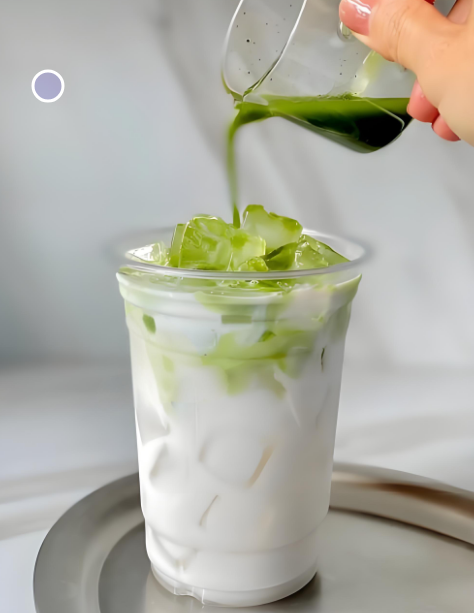
Water and ice: quiet drivers of flavor and mouthfeel
Taste clarity and equipment protection start with filtration. NSF/ANSI certifications indicate what a system is tested to reduce; for example, Standard 42 covers aesthetic effects like chlorine taste and odor, and Standard 53 covers health‑related contaminants. For an operator‑friendly overview, see NSF’s page on water treatment standards (accessed 2026).
Ice program choices affect dilution and texture. Larger, clear cubes melt more slowly thanks to lower surface‑area‑to‑volume ratios, helping keep sweetness and tea character intact over the drink’s lifespan. Whatever cube you choose, keep it consistent so recipes scale without guesswork.
Commercial considerations: standardization, shelf life, and labeling
Standardization and throughput: Batch strong tea concentrates; pre‑mix syrups with documented Brix and keep refractometers at the bar; choose quick‑cook pearls if your volumes spike and train staff on discard windows.
Shelf life and storage: Maintain label‑specific storage (ambient vs. refrigerated) for unopened vs. opened toppings and powders. Build QC checks into open/close SOPs.
Allergen and dietary labeling: Map recipes to the nine major U.S. allergens and train on cross‑contact controls, especially with dairy foams, soy milks, nut‑based milks, eggs in puddings, and sesame where used.
Clean‑label expectations: Prefer short ingredient lists where possible; when stabilizers are present, say what they do. Customers appreciate clear, accurate naming.
A quick practical workflow example
Here’s one way a shop might standardize a taro milk tea for speed and consistency: brew a strong black‑tea concentrate (1:10 by weight), disperse a measured scoop of taro powder in hot water, blend with your chosen milk system, sweeten to a house Brix, then build over measured ice and finish with freshly cooked pearls within their quality window. For a neutral supplier catalog reference when comparing formats and SKUs, see the bubble tea ingredient catalog.
Where to go next
Train staff to measure, not guess: codify brew ratios, syrup Brix, pearl hold times, and ice volumes in one-page SOPs at the bar.
Pilot clean‑label swaps during slower periods, gather feedback, and lock revisions before menu‑wide rollout.