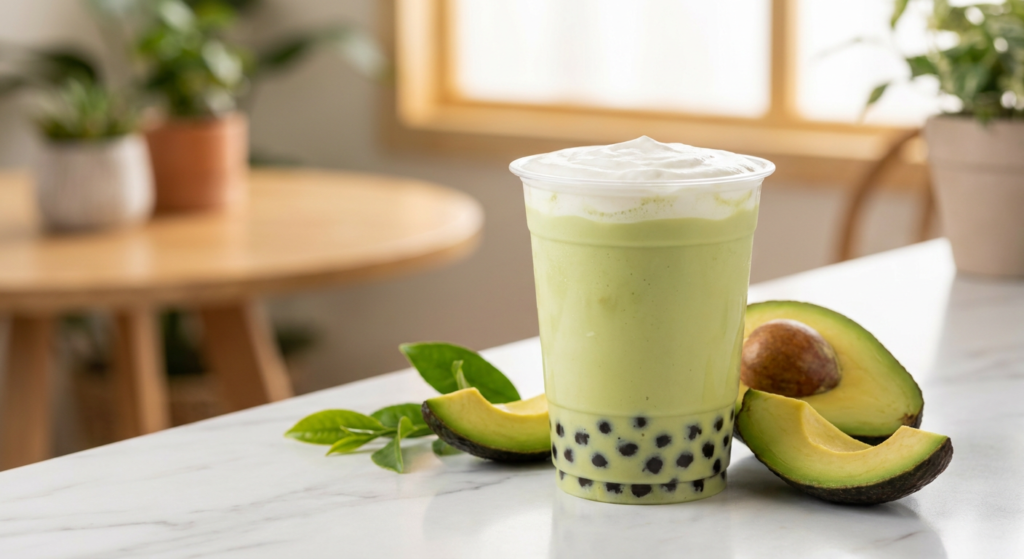
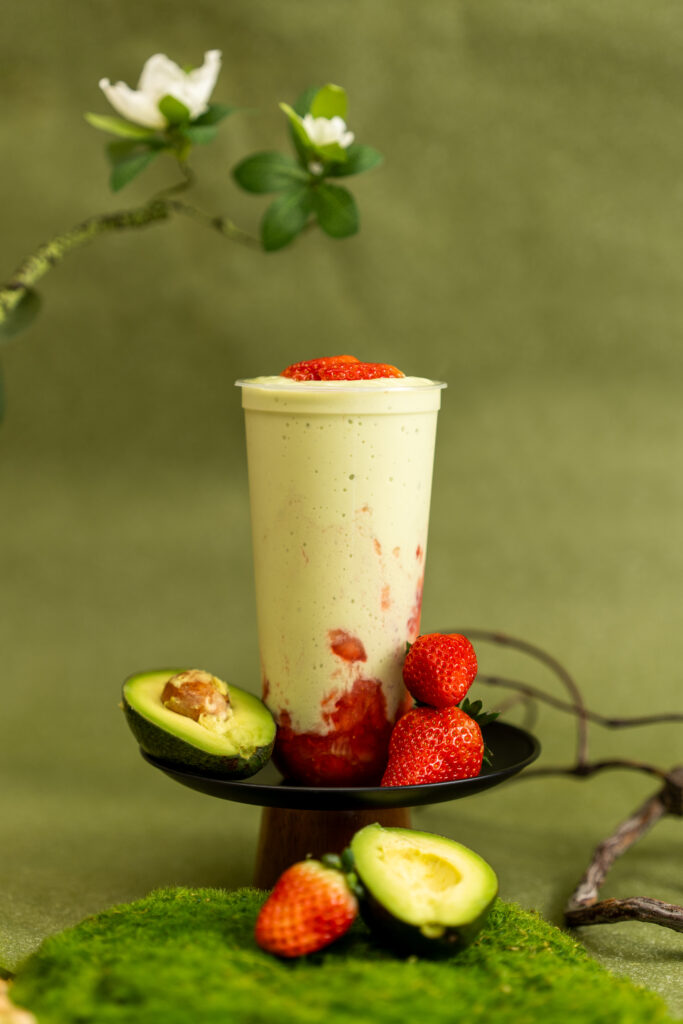
Avocado milk tea has evolved from a niche specialty offering into a top-performing seasonal limited-time offer (LTO) and permanent core menu item for commercial boba shops across North America. Driven by consumer demand for healthy fats, decadent velvety textures, and premium botanical flavor pairings, avocado beverages command higher menu prices—often $6.50 to $7.75 per cup—delivering exceptional gross margins when formulated correctly.
However, scaling a consumer avocado recipe for commercial boba shop operations introduces steep operational challenges. Fresh avocado flesh oxidizes rapidly when exposed to air, turning unappealingly brown within 20 minutes. High lipid content can cause fat-water phase separation in iced tea, leaving baristas with a grainy or curdled drink. Furthermore, unstandardized fruit portioning leads to erratic Cost of Goods Sold (COGS) and unpredictable speed of service during peak rush hours.
This guide provides a complete commercial avocado milk tea recipe and Standard Operating Procedure (SOP) tailored for bubble tea shop owners, beverage R&D managers, and barista trainers. You will find precise gram and milliliter spec sheets for 16 oz and 22 oz cups, tea pairing chemistry, Back-of-House (BOH) anti-browning holding protocols, and a detailed unit economics model.
Why Avocado Milk Tea Requires a Dedicated Commercial SOP
Standard milk tea recipes rely on liquid syrups, soluble powders, or brewed tea concentrates that blend seamlessly with simple agitation. Fresh fruit milk teas, particularly those built on high-fat avocado flesh, behave under entirely different physical and chemical rules. Without a standardized operational protocol, drink quality varies wildly between barista shifts.
Flavor & Fat Profiles: Balancing Avocado Lipids with Tea Tannins
A medium Hass avocado contains approximately 15 grams of natural plant lipids (monounsaturated fatty acids), giving it a rich, buttery mouthfeel. When combined with milk or creamer, these fats coat the palate and mute subtle flavor notes. If you pair avocado with a weak tea base, the beverage tastes like a plain fruit smoothie rather than an authentic tea-forward boba drink.
To maintain a distinct tea profile, commercial shops must utilize a concentrated, highly aromatic tea base. A high-grade, cold-chilled Jasmine Green Tea or Green Oolong brewed at a 1:30 leaf-to-water ratio provides the bright floral astringency needed to cut through dense avocado lipids. The natural tea tannins cleanse the palate after each sip, creating a refreshing balance between creamy indulgence and botanical clarity.
Emulsion Stability: Eliminating Separation in Cold Blended Drinks
Because oil and water naturally repel one another, blending raw avocado flesh directly with ice and cold tea creates an unstable suspension. Within 10 to 15 minutes of standing on a pickup counter, the heavy plant fats float to the top while watery tea liquor settles at the bottom, creating an unappetizing separated drink.
Achieving a permanent, silky emulsion requires an emulsifying agent that binds plant fats to liquid tea. Sweetened condensed milk and non-dairy creamer containing sodium caseinate act as natural surfactants. When spun in a high-speed commercial blender for 15 to 20 seconds, these dairy and non-dairy proteins encapsulate the avocado fat globules, suspending them evenly throughout the chilled tea base.
Key Takeaway: Never blend fresh avocado with cold liquid tea alone. Always combine avocado flesh with a protein-rich emulsifier—such as condensed milk or non-dairy creamer—before adding ice to ensure a smooth, non-separating texture.
Raw Material Evaluation: Fresh Avocado vs. Frozen Puree vs. Avocado Powder
Choosing the right avocado ingredient format directly impacts your store’s labor cost, ingredient waste, freezer footprint, and customer perception. Commercial boba shops typically evaluate three primary raw material formats:
Evaluation Dimension
Fresh Hass Avocado Flesh
Blast-Frozen Avocado Puree
Commercial Avocado Powder
Flavor & Color Authenticity
Superior natural buttery taste; bright vibrant green color.
Excellent natural flavor; slightly darker green hue.
Artificial or muted flavor; relies on food coloring and starches.
BOH Prep Labor Overhead
High (slicing, pitting, scooping, and weighing per shift).
Low (thaw sealed bags in refrigerator 24 hrs prior).
Zero prep (scoop dry powder directly into shaker/blender).
Ingredient Waste & Spoilage
High (15%–25% waste from bruising, uneven ripening, and pit weight).
Near Zero (100% yield from sealed commercial pouches).
Zero (12–18 month ambient shelf life).
Speed of Service (Peak Hour)
Moderate (requires pre-portioned containers or scoop scale).
Fast (squeeze bottle or portioned pump dispenser).
Extremely Fast (dry powder dissolving sequence).
Estimated COGS per 16 oz Cup
$0.38 – $0.48 (varies by seasonal produce market).
For premium boba shops targeting high customer retention and authentic menu positioning, a hybrid approach yields the best balance. Combining 60% frozen avocado puree (for consistency, speed, and cost stability) with 40% fresh Hass avocado flesh (for fresh aromatic notes and visual appeal) delivers an exceptional drink at an optimized cost point.
Batch Brewing the Tea Base: Jasmine Green Tea SOP
The foundation of a world-class avocado milk tea is a properly brewed, rapidly chilled jasmine tea concentrate. To review broader sourcing standards across tea bases, non-dairy powders, and liquid sweeteners, consult our guide to core bubble tea ingredients and creamer bases.
Follow this BOH batch brewing SOP to yield 3 liters of concentrated Jasmine Green Tea base:
Equipment & Raw Materials Required
90 g Premium Loose Jasmine Green Tea Leaves
3,000 ml Filtered Water (divided into 2,000 ml hot brewing water + 1,000 g solid ice)
Commercial Stainless Steel Tea Brew Bucket with spigot
Fine-mesh filter bag (200 mesh)
Digital gram scale and timer
Step-by-Step Batch Brewing Sequence
Water Temperature Calibration: Heat 2,000 ml of filtered water to exactly 80°C (176°F). Water above 85°C extracts harsh, bitter tannins that ruin the delicate avocado pairing.
Steeping Phase: Place 90 g of loose jasmine tea leaves into the filter bag and submerge into the 80°C water. Cover the brew bucket and steep for exactly 7 minutes.
Leaf Extraction & Filtration: Remove the filter bag at 7 minutes. Allow the tea liquor to drain completely without squeezing or wringing the bag, which releases excess bitter astringency.
Thermal Shock Chilling: Immediately stir 1,000 g of solid ice cubes into the hot tea liquor until fully melted. Rapidly cooling the tea base from 80°C down to below 15°C locks in volatile floral aromatics and prevents oxidation.
Cold Storage Holding: Transfer the chilled tea base into sanitized, covered containers and store in the BOH walk-in refrigerator at 2°C to 4°C (36°F–39°F). Use within 12 hours for peak flavor.
Pro Tip: Rapid thermal chilling is non-negotiable. Allowing hot green tea to cool slowly at room temperature causes dark brown enzymatic oxidation and turns aromatic jasmine tea bitter within two hours. For a deeper breakdown of chilling physics, see our commercial cold milk tea brewing and chilling SOP.
The following recipe specifications are calibrated for standard commercial service using a 16 oz (500 ml) or 22 oz (700 ml) cup build. All measurements are provided in exact grams (g) and milliliters (ml) to enable precise inventory tracking and digital scale portioning on the bar line.
16 oz (500 ml) Standard Cup Build
Ingredient Component
16 oz Cup Spec
Target Function & Operational Notes
Bottom Sinker Topping
50 g Cooked Tapioca Pearls or Sago
Warm brown sugar tapioca or chilled crystal boba.
Fresh Ripe Avocado Flesh
80 g (or 45 g Puree + 35 g Fresh)
Ripe Hass avocado, pitted and scooped.
Chilled Jasmine Green Tea Concentrate
120 ml
Brewed at 1:30 leaf-to-water ratio, cold.
Sweetened Condensed Milk
25 ml
Emulsifier and primary richness provider.
Non-Dairy Creamer Powder (or Whole Milk)
25 g dissolved (or 40 ml whole milk)
Binds fats and enhances creamy mouthfeel.
55% Liquid Cane Sugar / Fructose
15 ml
Calibrated for 100% standard sweetness.
Solid Ice Cubes
180 g
Standard ice fill for blender processing.
22 oz (700 ml) Standard Cup Build
Ingredient Component
22 oz Cup Spec
Target Function & Operational Notes
Bottom Sinker Topping
70 g Cooked Tapioca Pearls or Sago
Warm brown sugar tapioca or chilled crystal boba.
Fresh Ripe Avocado Flesh
110 g (or 65 g Puree + 45 g Fresh)
Ripe Hass avocado, pitted and scooped.
Chilled Jasmine Green Tea Concentrate
170 ml
Brewed at 1:30 leaf-to-water ratio, cold.
Sweetened Condensed Milk
35 ml
Emulsifier and primary richness provider.
Non-Dairy Creamer Powder (or Whole Milk)
35 g dissolved (or 60 ml whole milk)
Binds fats and enhances creamy mouthfeel.
55% Liquid Cane Sugar / Fructose
20 ml
Calibrated for 100% standard sweetness.
Solid Ice Cubes
240 g
Standard ice fill for blender processing.
Sweetness & Ice Customization Matrix (16 oz Cup)
Customers frequently request custom sweetness levels. Use this automated fructose dispenser calibration table to maintain flavor consistency across custom orders:
Sweetness Level Target
Liquid Cane Sugar / Fructose (ml)
Sweetened Condensed Milk (ml)
Operational Adjustment
100% Standard Sweetness
15 ml
25 ml
Standard balanced recipe.
70% Less Sweet
10 ml
20 ml
Slightly reduced fructose; retains creamer body.
50% Half Sweet
5 ml
18 ml
Cuts added sugar while preserving essential emulsifiers.
30% Low Sweet
3 ml
15 ml
Accentuate natural green tea and avocado flavors.
0% Unsweetened
0 ml
15 ml (Condensed) or Whole Milk
Condensed milk required for emulsion; substitute non-sweetened creamer if strict 0g sugar requested.
Step-by-Step Commercial Bar Assembly SOP
To maintain an assembly speed under 40 seconds per drink during peak service hours, train bar staff to execute this strict 4-stage workflow:
Stage 1: Cup Prep → Stage 2: Blender Chamber Build → Stage 3: High-Speed Blend → Stage 4: Pour & Seal
Place a clean 16 oz or 22 oz commercial cup on the scale.
Using a perforated portion scoop, add 50 g (16 oz) or 70 g (22 oz) of cooked tapioca pearls or sago to the bottom of the cup. Set the staged cup aside near the sealing machine.
Place a clean commercial blender jar on a digital scale.
Zero (tare) the scale and add 80 g of ripe avocado flesh (or pre-blended avocado paste).
Pour 120 ml of chilled Jasmine Green Tea base directly over the avocado.
Dispense 25 ml of sweetened condensed milk, 25 g of non-dairy creamer, and 15 ml of liquid cane sugar from automated dispensers.
Add 180 g of solid ice cubes into the blender jar.
Stage 3: Blending & Emulsification Sequence
Place the lid securely on the blender jar and lock it into the sound enclosure station.
Engage Program Cycle 2 (Medium-to-High speed variable blending for 18 seconds).
The blender cycle must completely crush the ice and emulsify the avocado lipids with the liquids, producing a uniform, thick frappe consistency with no unblended fruit chunks.
Stage 4: Pouring, Sealing, and QC Verification
Remove the blender jar and pour the creamy green avocado blend directly over the staged tapioca pearls in the cup.
Check that the liquid level leaves a 0.5-inch gap below the rim to ensure a leak-proof seal.
Pass the cup through an automatic cup sealing machine (or cap with a dome lid).
Hand the drink to the customer with a wide-diameter boba straw.
⚠️ Warning: Never pour hot or warm tea directly into the blender jar with fresh avocado and ice. Thermal shock rapidly melts the ice, creating a thin, watery drink that separates within minutes. Always verify that your tea base is fully chilled below 4°C prior to assembly.
BOH Holding SOP & Oxidation Control Science
Enzymatic browning is the single greatest cause of ingredient waste when operating a fresh avocado drink program. Understanding the underlying chemistry allows boba shop owners to establish foolproof preservation rules.
When avocado flesh is sliced or mashed, plant cells rupture, exposing natural phenolic compounds to atmospheric oxygen. An enzyme called Polyphenol Oxidase (PPO) acts as a catalyst, rapidly converting clear phenols into dark brown pigments called melanins.
PPO activity is heavily influenced by three environmental factors:
Oxygen Exposure: PPO requires gaseous oxygen to trigger the browning cascade.
Temperature: PPO activity peaks between 20°C and 30°C (68°F–86°F) and drops to near zero below 2°C (35°F).
pH Level: PPO thrives at a neutral pH of 6.5 to 7.0. Dropping the pH below 5.0 significantly slows enzyme activity.
To prevent pre-cut avocado from browning during a 6-hour shift, implement these three operational controls:
Micro-Acidification Solution: When prepping fresh avocado flesh into BOH holding containers, mist the fruit with a 1% ascorbic acid (Vitamin C) or fresh lemon juice solution. Adding 5 ml of lemon juice per 500 g of mashed avocado lowers the pH to ~5.2, deactivating PPO enzymes without altering the drink’s taste.
Vacuum & Contact Sealing: Store pre-scooped avocado in food-grade plastic containers. Press a layer of food-grade plastic wrap directly onto the surface of the fruit flesh before closing the lid, eliminating the air gap.
Cold Line Chilling: Store all active avocado holding containers inside an iced prep rail or cold-line refrigerator maintained strictly at 1°C to 3°C (34°F–37°F).
Pro Tip: Prepare fresh avocado in small 2-hour batch volumes based on sales forecasting. Never prep more than 1.5 kg of fresh avocado at a time during low-volume morning shifts.
Unit Economics & Profitability Analysis
Introducing an avocado milk tea to your boba shop menu offers superior profit metrics due to high perceived value. Consumers routinely pay premium prices for avocado-based items.
The following cost breakdown models a standard 16 oz (500 ml) Avocado Milk Tea with tapioca pearls, based on wholesale ingredient prices in the US market:
Detailed 16 oz Cup COGS Model
Ingredient / Packaging Line Item
Quantity / Spec
Unit Wholesale Cost
Cost per 16 oz Serving
Jasmine Green Tea Concentrate
120 ml
$0.00067 / ml
$0.08
Fresh Hass Avocado Flesh
80 g
$2.20 / lb ($0.0048 / g)
$0.39
Sweetened Condensed Milk
25 ml
$0.0040 / ml
$0.10
Non-Dairy Creamer Powder
25 g
$0.0032 / g
$0.08
Liquid Cane Sugar / Fructose
15 ml
$0.0026 / ml
$0.04
Tapioca Pearls (Topping)
50 g
$0.0020 / g
$0.10
Custom PP Cup, Sealing Film & Wide Straw
1 Set
$0.13 / set
$0.13
Total Unit COGS
—
—
$0.92
Gross Margin Calculations & Pricing Strategy
Target Retail Price (16 oz): $5.95
Unit COGS: $0.92
Gross Profit Dollars per Cup: $5.03
Gross Profit Margin Percentage: 84.5%
If your store sells an average of 45 cups of avocado milk tea per day, monthly financial performance projects as follows:
Can you make avocado milk tea ahead of time in large batches?
No. Pre-blended avocado milk tea stored in bulk dispensers will experience fat separation and subtle flavor degradation within 45 to 60 minutes. While individual ingredients (chilled tea base, simple syrup, cooked boba) should be prepped in bulk, the actual blending of avocado, milk, and tea must be executed on-demand per customer order.
Which tea base works best if Jasmine Green Tea is out of stock?
Four Seasons Oolong or High Mountain Oolong are the best alternatives. Their lightly oxidized, floral, and sweet roasted notes pair exceptionally well with rich avocado. Avoid heavy, deeply roasted Black Teas (such as Assam), as their intense malty tannins tend to clash with the subtle creaminess of green avocado.
How do you prevent tapioca pearls from hardening in cold avocado drinks?
Because avocado milk tea is served cold and thick like a frappe, tapioca pearls exposed to ice can harden (crystallize) within 15 minutes. To prevent this, always scoop warm tapioca pearls held in brown sugar syrup (at 45°C–50°C) into the bottom of the cup before pouring the cold blended avocado tea over them. Alternatively, recommend Crystal Boba or Sago, which retain a soft, chewy texture in ice-cold beverages.
Is non-dairy creamer or fresh milk better for avocado milk tea texture?
A combination yields the best results. Non-dairy creamer powders contain emulsifiers and corn syrup solids that provide superior mouthfeel and prevent ice separation. Fresh milk provides a clean, natural dairy note. Using 25 g of non-dairy creamer combined with a splash of fresh whole milk (or oat milk) delivers maximum stability and flavor appeal.
Next Steps: Standardizing Your Boba Menu for High Profit
Standardizing your avocado milk tea recipe with exact gram/mL spec sheets, cold-chilled tea bases, and strict anti-browning BOH protocols transforms a challenging fresh-fruit beverage into a reliable, high-margin revenue driver for your store.
To request commercial tea samples, non-dairy creamer powders, sago, or custom cup packaging for your bubble tea shop, visit BubbleTeaSuppliers.com today and connect with our wholesale beverage specialists.
Commercial Action Plan:
Download and print the 16 oz and 22 oz spec sheets for your BOH bar stations.
Train baristas on the 18-second high-speed blending and micro-acidification protocols.
Order wholesale sample kits at BubbleTeaSuppliers.com to test jasmine green tea pairing bases in your store.