
Popping boba, those colorful, juicy pearls that burst with flavor when you bite into them, have become one of the most exciting ingredients in modern beverages. Found in bubble tea shops, yogurt drinks, frozen desserts, and fruit teas around the world, popping boba adds a fun, sensory twist that turns any drink into an experience.
But while most consumers enjoy the satisfying “pop” in every sip, few actually know how popping boba is made — especially at a commercial scale. The process is far more advanced than what can be done in a home kitchen. In this article, we’ll take you inside the commercial production process of popping boba, explore the science behind its creation, and explain how manufacturers ensure consistency, safety, and irresistible flavor in every pearl.
If you’re in the beverage business and looking for reliable boba suppliers, visit Bubble Tea Suppliers to explore high-quality popping boba and other bubble tea ingredients.
What Is Popping Boba?
Before diving into how it’s made, let’s first understand what popping boba is.
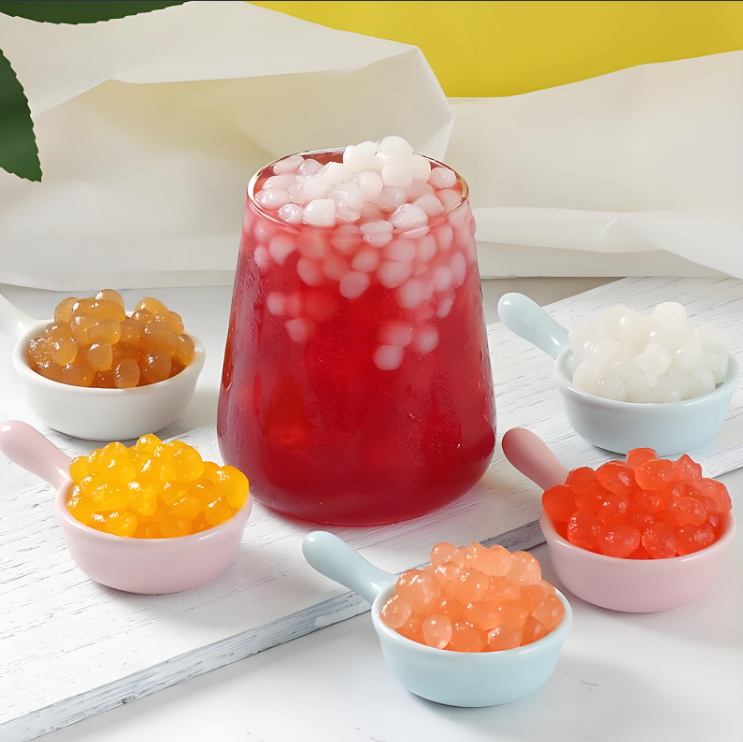
Popping boba (also called bursting boba or juice balls) is a type of topping made through a process called molecular gastronomy, specifically a method known as spherification. Each pearl consists of a thin, gel-like outer membrane that encases a flavored liquid center. When pressure is applied — whether by teeth or a straw — the thin shell bursts open, releasing the juice inside.
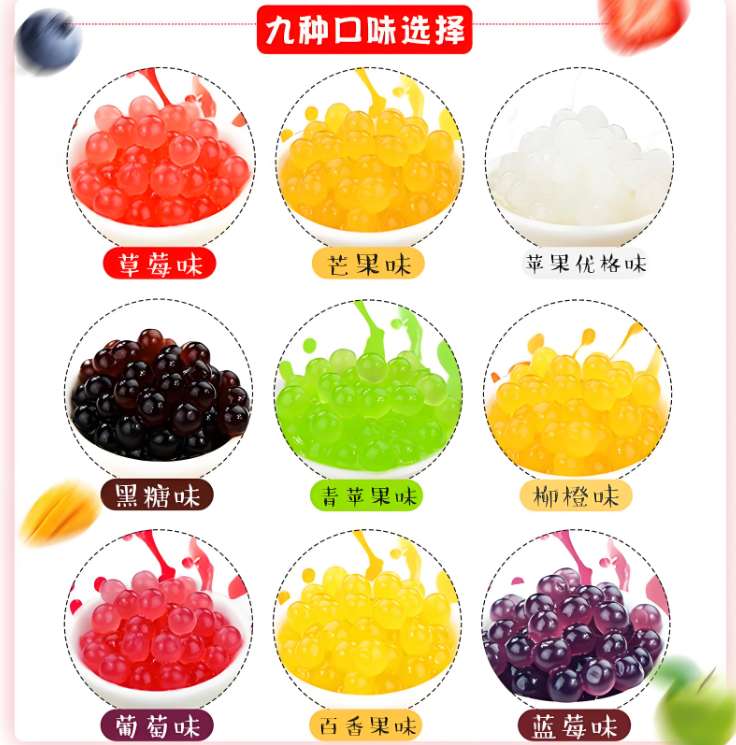
Unlike traditional tapioca pearls (made from cassava starch and cooked in sugar syrup), popping boba is not chewy. Instead, it delivers a bursting sensation and comes in a wide range of fruit flavors such as mango, strawberry, lychee, passion fruit, and green apple.
The Science Behind Popping Boba: Spherification
The foundation of popping boba lies in spherification, a food science technique popularized by molecular gastronomy chefs. This process involves the reaction between sodium alginate (a natural polysaccharide derived from brown seaweed) and calcium ions, which together form a thin gel around a liquid core.
When sodium alginate meets calcium, it instantly creates a gel membrane — a reaction known as ionic cross-linking. In simple terms, it means that calcium ions replace sodium ions, binding the alginate molecules together to form a jelly-like texture.
This same scientific principle is used in commercial production — but on a much larger, more precise, and more hygienic scale.
Step-by-Step: How Popping Boba Is Made in Factories
Producing popping boba commercially requires food engineering expertise, specialized equipment, and strict hygiene standards. Here’s a breakdown of how it’s done in professional manufacturing facilities.
1. Preparation of the Juice Mixture
The first step in making popping boba is creating the core liquid — the juice that will fill the inside of each pearl.
Manufacturers carefully blend fruit juice concentrate, sugar, water, natural flavoring, and stabilizers. Depending on the desired flavor, they may use purees from real fruit or natural extracts.
The mixture is filtered to remove pulp and impurities, ensuring smooth consistency. The final product is then pasteurized to kill any microorganisms and maintain food safety.
2. Adding Sodium Alginate
Next, sodium alginate is mixed into the juice base.
Sodium alginate serves as the gelling agent — it will react with calcium to form the outer shell later in the process. This ingredient must be evenly dispersed throughout the juice to ensure consistent texture.
Industrial high-shear mixers or homogenizers are used for this step to prevent clumping and to achieve uniform distribution. Once fully dissolved, the alginate-infused liquid is stored in holding tanks, ready for the next stage.
3. Calcium Bath Preparation
While the juice mixture is being prepared, a calcium solution (usually made from calcium chloride or calcium lactate) is also mixed separately.
This calcium bath is the environment where the spherification will take place. When the alginate-infused juice is dropped into the calcium bath, the outer surface immediately reacts, forming a thin gel layer that traps the liquid inside.
Maintaining precise calcium concentration and pH is essential to achieving the perfect membrane — too much calcium and the pearls become rubbery; too little, and the shell will be too fragile.
4. Spherification Process: Droplet Formation
This step is where the magic happens
The alginate-juice mixture is pumped through automated droplet nozzles that carefully drip the liquid into the calcium bath. These machines are calibrated to produce uniform-sized pearls, often ranging from 8 mm to 10 mm in diameter (similar to traditional tapioca pearls).
As the droplets fall into the calcium bath, the outer layer instantly gels, while the inside remains liquid. The duration of exposure in the calcium bath determines how thick or thin the membrane will be.
Advanced production lines can produce hundreds of thousands of perfectly round pearls per hour with precise size control.
5. Rinsing and Neutralization
Once the popping boba spheres are formed, they are collected and transferred to a rinsing tank.
This step removes excess calcium residue and stops further gelling reactions. Clean water or a mild neutralizing solution is used to ensure that the boba doesn’t continue to harden.
Proper rinsing is vital for maintaining the delicate balance between the soft shell and the juicy center.
6. Flavor Enhancement and Sweet Syrup Soaking
After rinsing, the boba pearls are soaked in a flavored syrup that complements their core juice flavor. For instance, mango popping boba may be immersed in a sweet mango syrup to boost aroma and sweetness.
This soaking process not only enhances flavor but also helps preserve freshness and provides the glossy appearance that makes popping boba so visually appealing.
7. Sterilization and Packaging
The final step involves sterilization and packaging under sanitary conditions.
Popping boba is typically packed in airtight containers or vacuum-sealed pouches filled with syrup. Some factories use heat pasteurization or UV sterilization to ensure microbial safety without compromising texture.
Modern manufacturing facilities often operate under HACCP (Hazard Analysis Critical Control Point) and ISO standards to guarantee product quality and safety for export markets.
Types of Popping Boba Flavors in the Market
Commercial producers offer a wide range of popping boba flavors to meet global demand. Some of the most popular options include:
Mango Popping Boba
Strawberry Popping Boba
Lychee Popping Boba
Passion Fruit Popping Boba
Green Apple Popping Boba
Blueberry Popping Boba
Peach Popping Boba
Yogurt Popping Boba
These flavors are commonly used in bubble tea, fruit teas, frozen yogurt toppings, cocktails, and even desserts. Manufacturers also develop custom flavors for large beverage chains, helping them create unique drink menus.
Quality Control in Popping Boba Manufacturing
Producing popping boba commercially isn’t just about flavor — it’s about consistency, safety, and texture. To ensure these standards, manufacturers perform rigorous quality control checks throughout production.
Key quality control parameters include:
pH and Viscosity Testing – Ensuring the juice mixture and alginate solution meet ideal ranges.
Membrane Thickness Measurement – Guaranteeing the popping texture feels just right.
Microbial Safety Tests – Preventing contamination by harmful bacteria or yeast.
Shelf-Life Stability – Testing the product under different temperature and light conditions.
Flavor Uniformity – Ensuring every pearl tastes the same from batch to batch.
By maintaining tight quality control, suppliers can deliver popping boba with a consistent “pop” experience across global markets.
Commercial Equipment Used for Popping Boba Production
Industrial popping boba production lines usually include:
Mixing tanks for juice and alginate blending
Peristaltic or gear pumps for accurate dosing
Droplet-forming machines with multiple nozzles
Calcium reaction tanks
Washing and filtration systems
Flavoring and syrup tanks
Automatic filling and sealing machines
Automation not only boosts production efficiency but also ensures hygiene, consistency, and scalability for export markets.
How Manufacturers Achieve Shelf Stability
Unlike homemade popping boba, which should be consumed within a few days, commercial popping boba has a shelf life of 6–12 months.
To achieve this, manufacturers use techniques such as:
Pasteurization or UV sterilization
pH adjustment to create a less favorable environment for bacteria
Sealed, oxygen-reduced packaging
Preservative syrups for long-term freshness
Proper storage at cool temperatures extends product life without the need for freezing.
Global Market Demand and Trends
Popping boba has grown beyond the bubble tea niche to become a global sensation. The rise of Instagrammable drinks, customized beverages, and DIY dessert culture has fueled strong demand across North America, Europe, and the Middle East.
Many international bubble tea suppliers, like Bubble Tea Suppliers, now export popping boba worldwide to meet this growing demand.
In addition, health-conscious consumers are showing increasing interest in popping boba made with natural fruit juices, reduced sugar, and plant-based ingredients. Some brands are also developing vegan-certified and organic popping boba options.
The Future of Popping Boba Production
As technology evolves, so does popping boba manufacturing. The future will likely bring:
Automated AI-based quality control systems for perfect texture monitoring
Eco-friendly packaging using biodegradable materials
Sugar-free or low-calorie formulations
New textures (such as dual-layer boba or multi-flavor cores)
The combination of innovation and consumer demand ensures that popping boba will remain a major player in the beverage industry for years to come.
Conclusion
The creation of popping boba is both a science and an art. From the precise chemistry of spherification to the large-scale engineering of production lines, every step requires expertise and precision.
Understanding the commercial production process gives us new appreciation for the effort that goes into every bursting pearl of flavor. Whether you’re sipping a mango fruit tea or adding boba to frozen yogurt, each pop represents a carefully crafted balance of chemistry, taste, and texture.
If you’re looking to source high-quality popping boba or other bubble tea ingredients, explore Bubble Tea Suppliers — a trusted partner for premium boba products designed for global beverage brands.