
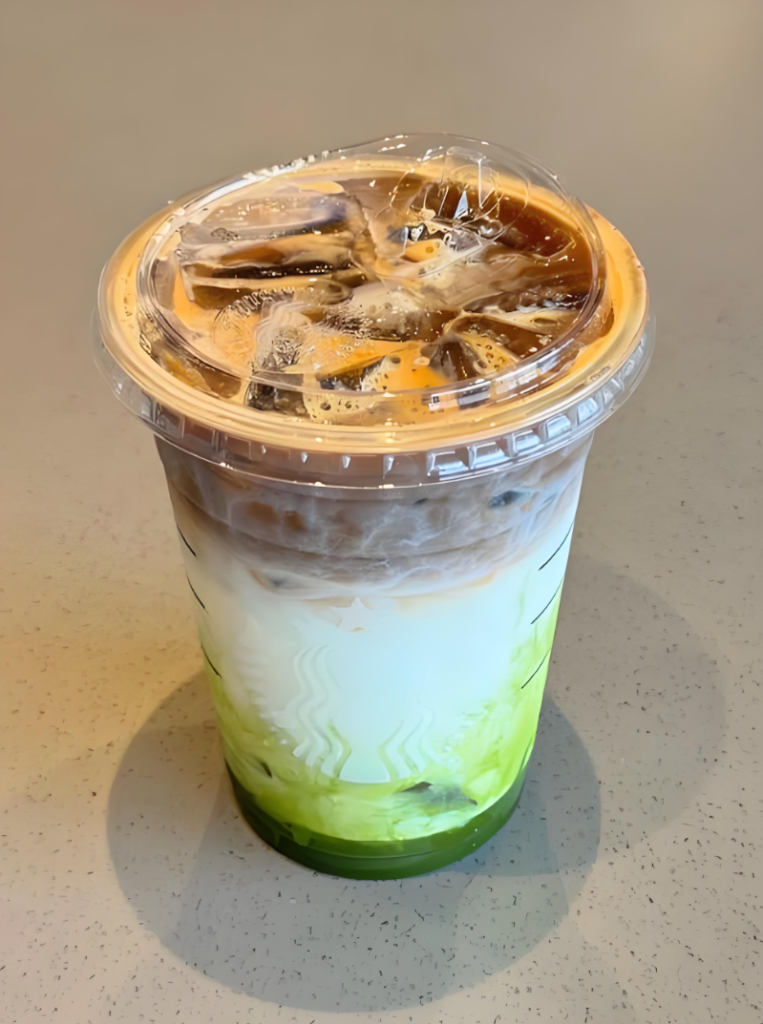
A dirty matcha latte is matcha + milk “dirtied” with espresso or coffee. It looks premium, photographs well, and sells to two crowds at once.
The catch is operational: if your matcha clumps, your coffee strength drifts, or your build order is inconsistent, you get a drink that tastes muddy one day and sharp the next. That’s how you end up with remakes and “this doesn’t taste like last time” reviews.
This guide is written for US bubble tea shop owners and managers. It’s a consideration-stage SOP: how to choose ingredients, set a baseline spec, train staff, and keep quality tight.
(And yes, we’ll cover iced as the default, decaf options, and caffeine transparency so you can answer customer questions without guessing.)
What customers expect from a dirty matcha latte
Most guests are buying one of two experiences:
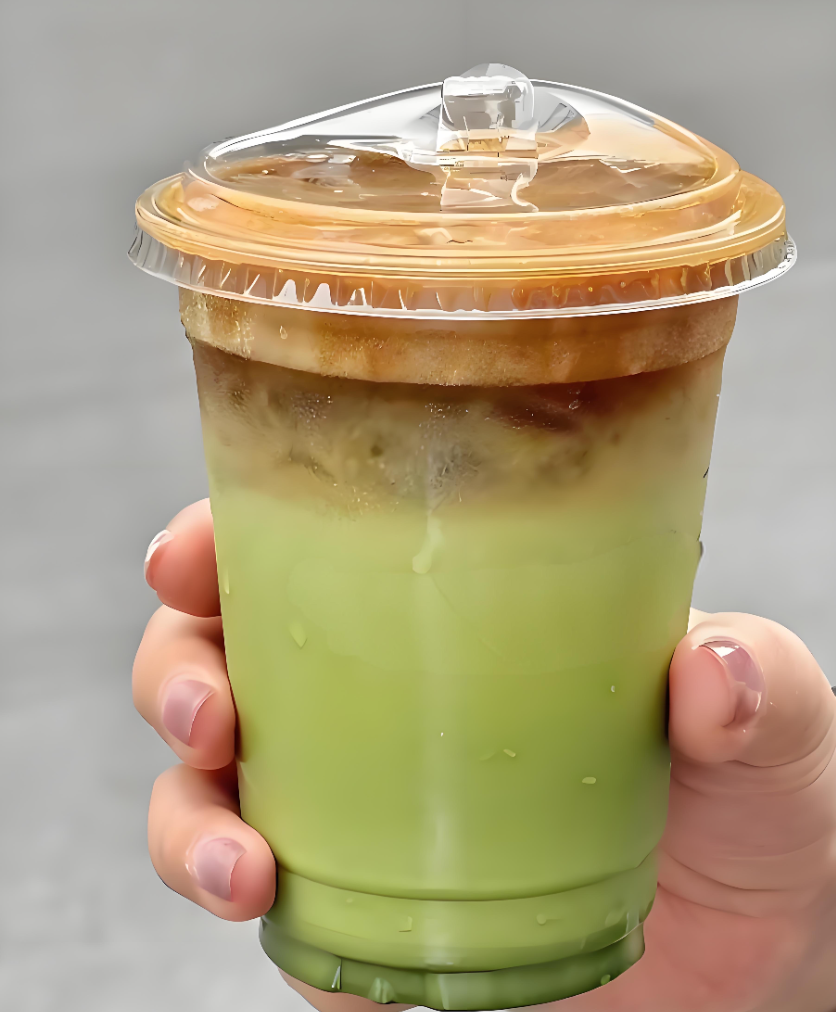
The layered look: green matcha milk with a coffee layer on top.
The flavor contrast: creamy matcha first, then a roasty coffee finish.
If they take a sip and taste bitter matcha or burnt coffee, the “premium” story collapses.
A clean version delivers:
Matcha that tastes smooth and grassy, not dusty or harsh
Coffee that tastes roasty and aromatic, not scorched
A finish that stays creamy, not watery or chalky
The operator’s ingredient checklist (what actually changes the drink)
1) Matcha: buy for milk drinks, not labels
Ignore unregulated labels like “ceremonial” as your buying decision. For shops, matcha success is more basic:
Color: brighter green powder tends to look better in milk; dull olive powders go swampy fast.
Bitterness: harsh matcha forces you to add more sweetener, which raises cost and sugar.
Mixing behavior: clumpy matcha creates waste because staff over-scoops and re-blends.
If you want a practical selection framework, use BubbleTeaSuppliers.com’s guide on how to choose matcha powder for bubble tea shops:
Matcha powder: how to choose the right one for your bubble tea shop
Quick test that saves money: test the powder in cold milk + ice, not just in warm water. A matcha that looks fine hot can fall apart when it hits dilution.
2) Coffee: espresso is ideal, but you can standardize a substitute
Espresso is the cleanest operator choice because it gives intensity without adding much water.
But plenty of bubble tea shops don’t run an espresso machine all day, or they want a backup for rushes. You can still do a consistent dirty matcha latte if you treat coffee as a measured add-in and standardize strength.
Rule: your coffee add-in needs to behave like a “shot.” If the volume is large, your drink turns watery.
Practical options:
Espresso shot (ideal)
Decaf espresso shot (your default decaf option)
Cold brew concentrate (fast, consistent, no machine)
Strong brewed coffee (acceptable only if you lock the strength and portion)
Instant espresso (not glamorous, but it can be consistent if you measure it)
If you do use brewed coffee, the biggest risk is variability. Two batches brewed at different strengths make the same matcha recipe taste like two different drinks.
3) Milk: whole milk is the easiest default
Whole milk is a smart baseline because fat rounds off matcha bitterness and softens coffee sharpness.
If you offer alternatives, treat them like variants with their own spec so staff doesn’t freestyle:
Oat milk: often tastes sweeter; some brands separate faster with coffee.
Half-and-half: richer, but can overpower matcha unless you bump matcha grams.
Lactose-free dairy: usually easy swap, but still test for sweetness differences.
4) Sweetener: keep it liquid and measured
Use liquid sweeteners (simple syrup, honey syrup) so you don’t introduce grit.
The goal is not “dessert sweet.” Your sweetener should do two jobs:
soften bitterness
help matcha read as round instead of dry
Baseline recipe specs (12 oz and 16 oz iced) + acceptable ranges
You can run dirty matcha two ways operationally:
To-order paste method (best for quality)
Small blender method (fast, consistent, especially if staff struggles with clumps)
Below are baseline specs you can treat as your house standard. The ranges are your controlled adjustment knobs.
Matcha paste standard (for both cup sizes)
Matcha + warm water blended or whisked into a smooth paste.
Use hot but not boiling water.
A common operator range is 160–176°F / 70–80°C. Hotter water can push bitterness.
For a deeper matcha latte technique reference, see:
Iced matcha latte recipe: ratios, techniques, and SOPs
12 oz iced dirty matcha latte (default build)
Matcha base
Matcha: 3.0 g (range: 2.5–3.5 g)
Water for paste: 30 ml at 160–176°F / 70–80°C (range: 25–35 ml)
Cup build
Whole milk: 8 oz (range: 7–9 oz depending on ice fill)
Simple syrup: 10 ml (range: 0–15 ml)
Coffee add-in (choose one):
1 espresso shot
1 decaf espresso shot
1 measured “coffee shot” (see coffee shot standard below)
1 measured cold brew concentrate shot
Ice: fill cup fully
16 oz iced dirty matcha latte (default build)
Matcha base
Matcha: 3.5 g (range: 3.0–4.0 g)
Water for paste: 40 ml at 160–176°F / 70–80°C (range: 30–45 ml)
Cup build
Whole milk: 10 oz (range: 9–11 oz)
Simple syrup: 15 ml (range: 0–20 ml)
Coffee add-in (choose one):
1 espresso shot (or 2 only if you create an “extra dirty” variant and staff follows it)
1 decaf espresso shot
1 measured “coffee shot”
1 measured cold brew concentrate shot
Ice: fill cup fully
Coffee shot standard (when you’re not using espresso)
If you want consistency without an espresso machine, standardize a coffee add-in like this:
Choose a fixed volume for the add-in (example: 1 oz / 30 ml) so you don’t water the drink.
Choose a fixed coffee type (cold brew concentrate is easiest).
Taste and lock the strength. The goal is “espresso-like” intensity, not drip coffee in a bigger pour.
Once you lock it, treat it like an ingredient: portion it, label it, and train it.
SOP: iced dirty matcha latte (two workflows)
Workflow A: paste-to-order (best texture, least waste)
Use this when you want the cleanest matcha and you can train staff to do the paste step.
Measure matcha in grams. No teaspoons.
Add matcha + warm water to a shaker/blender cup.
Blend/whisk briefly until no dry pockets remain.
Add milk + sweetener.
Add ice and shake (or quick blend if that’s your standard).
Pour into the serving cup.
Add espresso/coffee last if you want the layered look.
Done-check: no visible clumps, color is bright, coffee layer is distinct if you’re layering.
Workflow B: small blender method (fast for training, consistent in rush)
Use this when staff consistency matters more than perfect layering.
Matcha + warm water into blender cup.
Blend briefly to form paste.
Add milk + sweetener + ice.
Blend on a fixed setting/time.
Pour into cup.
Add espresso/coffee last (optional) for a layered visual.
Done-check: texture is smooth, no bitter dust notes, sweetness hits your spec.
Decaf option: how to offer it without confusing staff
Decaf only works if it’s a clear switch, not a separate drink.
Best decaf approach
Offer decaf espresso as a direct swap.
Keep everything else identical.
If you don’t have decaf espresso
Use one of these and keep it measured:
Decaf cold brew concentrate (if available)
Instant decaf espresso (measured, consistent)
Avoid making “decaf” by simply using less coffee. That creates a third flavor profile staff can’t consistently reproduce.
Caffeine transparency: a simple way to answer customers
You don’t need perfect lab numbers. You need a clear range and a disclaimer that it varies by brand, dose, and prep.
Here’s a practical operator script:
A typical 1 oz espresso shot is about 63 mg caffeine.
Decaf espresso can still contain a small amount.
Source reference for espresso caffeine: Mayo Clinic’s caffeine chart lists espresso, 1 oz (30 ml): 63 mg.
For matcha, caffeine varies by powder and dose. Many matcha brands report roughly 20–45 mg caffeine per gram of matcha, depending on grade and serving size.
Example reference:
A transparent estimate for your menu (based on the baseline spec)
If your 12 oz drink uses 3.0 g matcha and 1 espresso shot:
Matcha: about 60–135 mg (assuming ~20–45 mg/g)
Espresso: about 63 mg
Total: roughly 120–200 mg
If you offer decaf espresso, the total drops substantially, but it will not be “zero caffeine.”
Important: publish this as an estimated range and train staff to say “it depends on the matcha brand and espresso shot.”
QC: what to standardize, what to allow, and what to taste-test
Standardize these (non-negotiables)
Matcha in grams
Water temperature range for paste
Coffee add-in volume and type (espresso vs substitute)
Ice fill level
Sweetener pump amount
Allow these as controlled variants
“Extra dirty” (2 shots or stronger concentrate) as a separate POS button
Oat milk variant with its own spec
Unsweetened variant (0 ml syrup) with staff warning: more bitterness
Your 30-second QC check during training
Teach staff to check four things before handing it out:
Color: bright green, not gray-green
Texture: no grit, no matcha clumps
Balance: coffee is present but not dominant
Dilution: taste after 2–3 minutes; does it collapse?
Cost control: where dirty matcha lattes quietly get expensive
1) Clumps drive hidden matcha waste
When matcha clumps, staff uses more powder to compensate. That’s a silent food cost leak.
Fix:
enforce the paste step
choose a matcha that disperses well in milk
2) Over-sweetening is usually a matcha quality problem
If you need heavy syrup to make it palatable, you’re paying twice:
more syrup
more matcha because sweetness can’t hide a thin matcha base
Fix:
test 2–3 matchas and choose the one that stays smooth at your target grams
3) Coffee variability causes remakes
If one batch of coffee is stronger, guests get a sharper drink. If the next batch is weak, it tastes like watered milk.
Fix:
lock your coffee add-in standard (volume + strength + hold time)
label it and train it like any syrup
Troubleshooting: common failure modes and fixes
Problem 1: “It’s bitter”
Why it happens:
paste water is too hot
matcha is harsh
coffee dose dominates
Fix:
keep paste water in the 160–176°F range
test a smoother matcha intended for milk drinks
reduce coffee intensity before adding more syrup
Problem 2: “It tastes like coffee milk, not matcha”
Why it happens: coffee add-in overpowers the matcha base.
Fix:
bump matcha +0.5 g
reduce coffee add-in strength/volume
move the drink into a labeled “extra dirty” variant instead of letting staff improvise
Problem 3: “It separates fast”
Why it happens:
incomplete matcha dispersion
inconsistent ice
certain non-dairy milks separate when combined with coffee
Fix:
enforce paste step
standardize ice fill
test and lock a specific non-dairy milk brand if you offer it
Problem 4: “It looks muddy or gray-green”
Why it happens:
matcha is dull to begin with
matcha is old or stored poorly
Fix:
switch to brighter matcha and store airtight away from light
tighten first-in/first-out rotation on matcha
Optional: hot version (if you want it on the menu)
Iced should stay your default for speed and consistency.
If you offer hot:
keep the same matcha grams
use less dilution from extra water
add coffee after the matcha is fully dispersed
Train it as a separate SOP so staff doesn’t guess.
Helpful operator resources (BubbleTeaSuppliers.com)
If you want deeper references for your matcha program, these are worth bookmarking:
Matcha powder: how to choose the right one for your bubble tea shop
Iced matcha latte recipe: ratios, techniques, and SOPs
Matcha vs hojicha: which belongs on your bubble tea menu
Matcha bubble tea (shop-style formula + process)
If you want this turned into a one-page training sheet for staff, say the word and I’ll convert the SOP + QC checks into a printable format.