
Tiramisu is one of those flavors customers think they know — which is exactly why it can sell. But it’s also one of the easiest “dessert” concepts to mess up in a bubble tea shop: too sweet, not enough coffee, too heavy, or a recipe that’s impossible to execute consistently on a Friday night.
This guide is built for operators. You’ll get a simple system to create a tiramisu milk tea series (3–5 drinks) without multiplying your prep list or retraining your staff every time you add a new SKU.
What “tiramisu” has to taste like in a tiramisu milk tea drink
Before you name anything, lock the flavor target. Classic tiramisu is defined by coffee, mascarpone-style creaminess, and a cocoa finish — with sweetness that supports those notes, not a sugar bomb that hides them. That’s consistent across reputable tiramisu recipes that center espresso/strong coffee, mascarpone, and cocoa powder as the signature cues (for example, Butternut Bakery’s “Classic Tiramisu” (2026) and Preppy Kitchen’s “Tiramisu Recipe” (2023)).
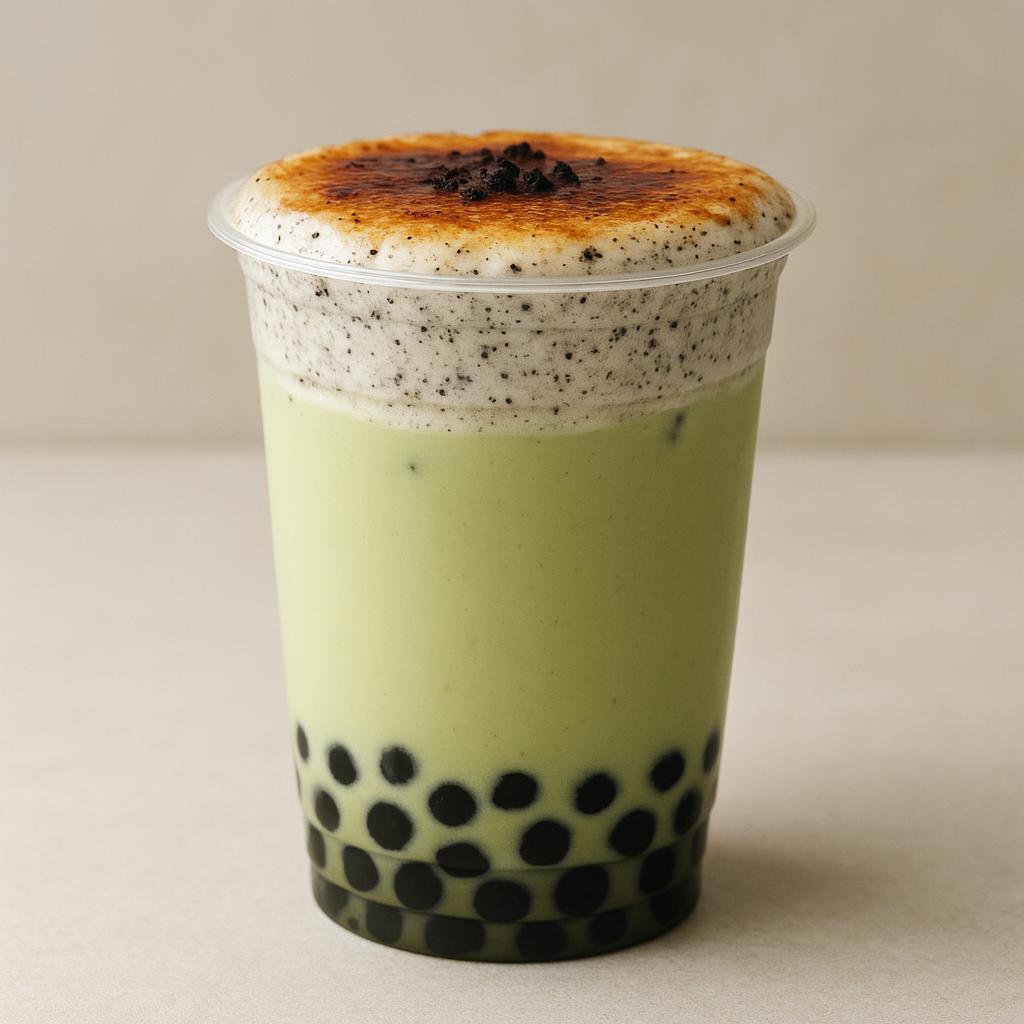
For a bubble tea shop, that translates into three non-negotiables:
1.Coffee reads first (or at least clearly). Weak coffee = “vanilla chocolate milk.”
2.Cream feels like a topping layer, not a full cup of heavy dairy.
3.Cocoa finishes bitter-sweet, not syrupy.
Pro Tip: Treat “tiramisu” like a flavor identity, not a single recipe. If your lineup keeps those cues, you can swap tea bases, sweetness levels, and textures without confusing customers.
Choose your base system (so you can scale to 3–5 SKUs)
A series works when the base is stable.
Start by choosing one primary base method for the whole line. Your goal is that staff only has to learn one build, then you create variations through controlled changes.
Here are three operator-friendly base systems (pick one):
Option A: Coffee-forward milk tea base
This is the safest “tiramisu” read for most customers.
·Use your existing coffee workflow (cold brew, coffee base, or strong brewed coffee).
·Keep tea in the background (or optional).
If you want a shop-oriented reference for a coffee-based build with quality checks, use this internal guide: coffee boba milk tea SOP (without espresso).
Option B: Black tea + coffee hybrid (lighter, more “milk tea”)
This keeps you in “milk tea” territory while still feeling tiramisu.
·Black tea gives structure and tannin.
·Coffee adds the tiramisu signature.
This is a good choice if your customers strongly associate your shop with tea-forward drinks.
Option C: Latte-style base (no tea)
This is basically a tiramisu latte in bubble-tea form.
·Easiest for customers to understand.
·Can be polarizing if your brand is tea-first.
If you’re unsure what “counts” as milk tea in the first place (and what customers expect when they see “milk tea” on a menu), this internal explainer helps clarify the base expectations: what counts as milk tea (with or without boba).
Build a 3-layer flavor architecture (coffee, cream, cocoa)
This is the part most shops skip — and it’s why dessert drinks drift into “random sweet drink.”
Think in layers:
Layer 1: Coffee backbone
Job: deliver bitterness + aroma so the drink doesn’t taste flat.
Operator checkpoints:
·Coffee must be strong enough to survive milk + ice.
·Aim for consistency across batches: same brew ratio, same steep time, same dilution.
If you need a baseline workflow for consistent builds across drinks (tea strength, sweetener handling, assembly), use this internal fundamentals piece: bubble tea build fundamentals: tea, milk, sweetener, boba.
Layer 2: Cream layer (your “mascarpone moment”)
Job: make the drink feel like tiramisu without turning it into a heavy milkshake.
In beverage adaptations, cafes often use a mascarpone-style cream/foam layer to recreate tiramisu’s signature texture (you’ll see this pattern in tiramisu latte and tiramisu cold brew recipes, like Baran Bakery’s tiramisu latte and The Little Epicurean’s tiramisu cold brew).
Operational approach:
·Build one “tiramisu cream top” for the entire series.
·Standardize: mix method, portion size, and what counts as “correct texture.”
Layer 3: Cocoa finish
Job: signal tiramisu fast — visually and aromatically.
Cocoa is the classic top-note that gives tiramisu its bitter-chocolate finish (again, it’s a consistent cue in canonical recipes like What’s Gaby Cooking’s classic tiramisu (2026)).
Make it operationally clean:
·Cocoa dusting or a cocoa-forward drizzle.
·One approved garnish method.
⚠️ Warning: Don’t let cocoa become “just decoration.” If customers can’t smell it on the first sip, you’ll get “it doesn’t taste like tiramisu” reviews.
Toppings and textures that make it feel like tiramisu
A tiramisu drink succeeds when it feels like a dessert without becoming messy to execute.
In practice, this is a milk tea toppings decision: you’re choosing texture (chewy vs silky), speed of service, and what travels well.
Use a simple topping logic:
Pick one chewy texture and stick to it
Chewy pearls work because they add body and keep the drink firmly in bubble tea territory.
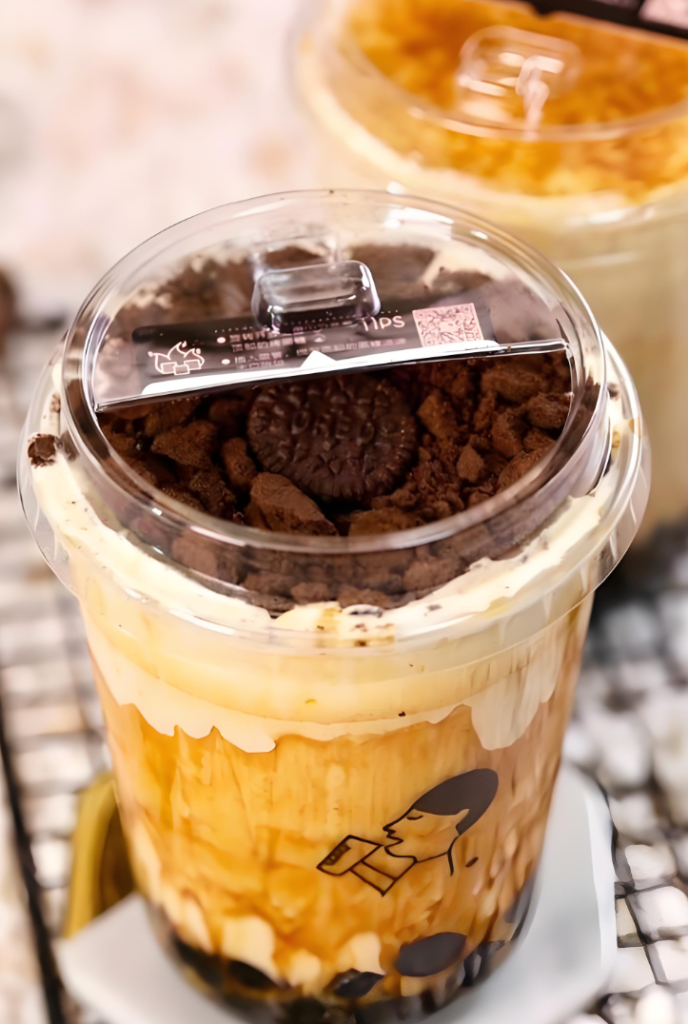
If you want a quick internal refresher on how to choose texture (and how customers experience it), use: choosing chewy boba vs popping boba for texture.
Add one “dessert texture” option
This is your menu lever for upsells and personalization.
Examples (choose one):
·pudding-style topping
·a cream-top add-on
·a cookie crumble garnish (only if it holds up and doesn’t turn soggy instantly)
Avoid topping stacks that fight the tiramisu profile
Tiramisu is coffee + cocoa + cream. So avoid:
·bright fruit toppings
·sour flavors
·too many competing aromatics
That’s the fastest path to “confusing dessert drink.”
Naming + menu design that sells without confusing guests
A good tiramisu line is easy to order in under 10 seconds.
This is also where most shops win “bubble tea menu ideas”: not by adding endless drinks, but by making a few ideas easy to understand, fast to build, and consistent across shifts.
Use a naming system that makes the series obvious:
Use a consistent series label
Examples:
·“Tiramisu Series”
·“Tiramisu Cream Top”
·“Tiramisu Latte Line”
Then your SKU names become the variation:
·Tiramisu Milk Tea (Original)
·Tiramisu Coffee Milk Tea
·Tiramisu Cream Top Latte
·Tiramisu Cocoa Crunch
Keep the modifiers functional
If a modifier doesn’t change how the drink tastes or feels, it doesn’t belong in the name.
Good modifiers:
·“Cream Top” (signals texture)
·“Cold Brew” (signals coffee base)
·“Blended” (signals format)
Bad modifiers:
·vague dessert adjectives (“dreamy,” “velvet,” “indulgent”) as the only descriptor
Use customization to create variety (not more SKUs)
A lot of big bubble tea brands win because they make customization feel simple and intentional. Gong cha’s U.S. site, for example, teaches customers how to match toppings to tea profiles (like pairing bold teas with pearls or milk foam) in their customization guide.
You can borrow the principle without copying the menu:
·Keep 3–4 tiramisu SKUs.
·Let toppings and sweetness create the “fifth drink.”
Pricing the tiramisu line without guessing
Dessert drinks usually cost more — they use richer components and often take more care in build.
Instead of guessing a number, use a simple pricing structure:
Step 1: Decide what’s “standard” vs “premium” in your shop
·Standard: classic milk teas with your usual toppings
·Premium: drinks with specialty cream tops, extra steps, or premium components
Step 2: Use base price + clear add-ons
A base-plus-add-on structure keeps the menu readable and lets customers self-select value. Fanale Drinks recommends keeping pricing clear and using add-ons for flavors and toppings in their guide to building a boba menu.
Operationally, this also helps you:
·keep portion control tight
·protect margin when customers add “just one more thing”
Step 3: Price by effort and waste risk, not just ingredients
Tiramisu-style cream layers can increase:
·remake risk (texture wrong)
·waste risk (holding time)
·training time
If it adds real complexity, it needs a pricing lane that acknowledges that.
Consistency controls: what to standardize, label, and discard
Dessert drinks fail in ops for predictable reasons: drifting sweetness, inconsistent coffee strength, foam that breaks, and staff improvisation.
Set your “non-negotiables”:
Standardize these specs
·coffee base strength and batch process
·sweetness default for each SKU (and what “less sweet” means in your shop)
·ice level and cup fill line
·cream-top portion size and target texture
·cocoa finish method (dusting vs drizzle) and quantity
If you want your team to understand why big brands emphasize consistency and streamlined execution, Gong cha’s U.S. blog discusses operational focus and standardization as part of its market approach in “Gong cha’s 4-step approach to conquering the competitive U.S. market”.
Label and time-stamp anything dairy-based
Even without getting into jurisdiction-specific regulations, the operational best practice is clear: keep dairy components cold, control time out of refrigeration, and use documented discard times.
For a general, prevention-focused safety framing in dairy handling, the Center for Dairy Research provides training and guidance under its Safety & Quality resources.
Key Takeaway: If staff can’t answer “when was this made?” in one second, the item is not controlled.
Build a 30-second shift QC check
Make it easy to catch drift:
·Does the drink smell like coffee first?
·Is the color even (no unmixed syrup layer)?
·Does the foam hold for a few minutes?
·Does cocoa read on the first sip?
Launch plan: pilot → train → promote → iterate
A tiramisu line is perfect for a controlled launch because customers already understand the flavor story.
If you’re brainstorming beyond tiramisu, it helps to keep a running list of dessert-inspired bubble tea concepts you can rotate seasonally (instead of adding permanent complexity).
1) Pilot with one hero drink
Start with:
·“Tiramisu Milk Tea (Original)”
Run it for a short window and watch for:
·remake frequency
·customer confusion (“what is this?”)
·topping attachment rate
2) Add two variations that reuse the same prep
Good series expansions that don’t blow up ops:
·Coffee-forward version (same cream top)
·Blended version (same flavor cues)
3) Train with “build logic,” not memorization
Train staff on:
·the 3-layer architecture (coffee / cream / cocoa)
·the non-negotiables (portion sizes, texture check)
4) Promote the series with simple cues
The best dessert drink marketing is plain:
·“Coffee + cocoa + cream top”
·“Not too sweet”
·“Pairs with boba or pudding”
Avoid over-writing. If you need a visual-style reference for layered builds, this internal page has multiple drink construction ideas: new drink build ideas for layered beverages.
FAQ
Is tiramisu boba tea better with pearls or no pearls?
If “tiramisu boba tea” is on your menu, pearls usually help because they anchor the drink in bubble tea (not just a latte). That said, pearls aren’t mandatory — what matters is that your topping choice supports the tiramisu cues and doesn’t slow down your line.
Should tiramisu milk tea be tea-forward or coffee-forward?
Coffee-forward is usually the safest customer read because tiramisu is strongly associated with espresso. If your shop is known for tea-first milk tea, a black tea + coffee hybrid can keep the “milk tea” identity while still hitting the tiramisu cues.
What’s the easiest way to create a “mascarpone” effect without making drinks heavy?
Use a controlled cream-top layer (portion-size it) rather than increasing dairy across the entire cup. Customers experience it as “tiramisu” because the first sip hits cream + cocoa, but the drink still feels drinkable.
What toppings work best for a tiramisu series?
Pick one chewy texture (classic pearls are the default) and one dessert texture (like pudding or cream top). Keep the rest of the topping menu optional, but don’t design tiramisu SKUs that rely on five toppings to make sense.
Next steps
If you want to turn this into a real “series,” do one thing next: write a one-page spec sheet for your hero tiramisu drink with the non-negotiable build specs, then use it as the template for the other SKUs.
Once your team can execute the hero drink perfectly, the rest of the series becomes a controlled variation — not a new training problem.