
If you’ve ever launched a matcha drink and felt like it looked amazing one week and “meh” the next, you already know the problem: matcha quality swings show up fast.
A dull green latte doesn’t sell itself. Bitter matcha needs extra sugar to survive. And if the powder clumps or goes stale in the back of the fridge, your food cost quietly climbs.
This guide is built for bubble tea operators. It’ll help you choose matcha powder that holds up in milk tea, lattes, and blended drinks, and it’ll give you a simple way to compare suppliers without getting tricked by labels.
Start with the job: what are you using the matcha powder for?
Before you get pulled into “ceremonial vs culinary” debates, decide where matcha sits on your menu.
Signature matcha drink where the tea flavor is the star (matcha latte, matcha cream top, lightly sweetened builds)
Milk tea builds where milk + sugar do a lot of the work (matcha milk tea with boba)
Blended or flavored builds (frappes, strawberry-matcha, mango-matcha)
The more you mask matcha with dairy, sugar, and fruit, the more you can trade “top-tier drinking matcha” for “great performance in recipes.” Your goal isn’t to impress tea purists. Your goal is consistent drinks customers reorder.
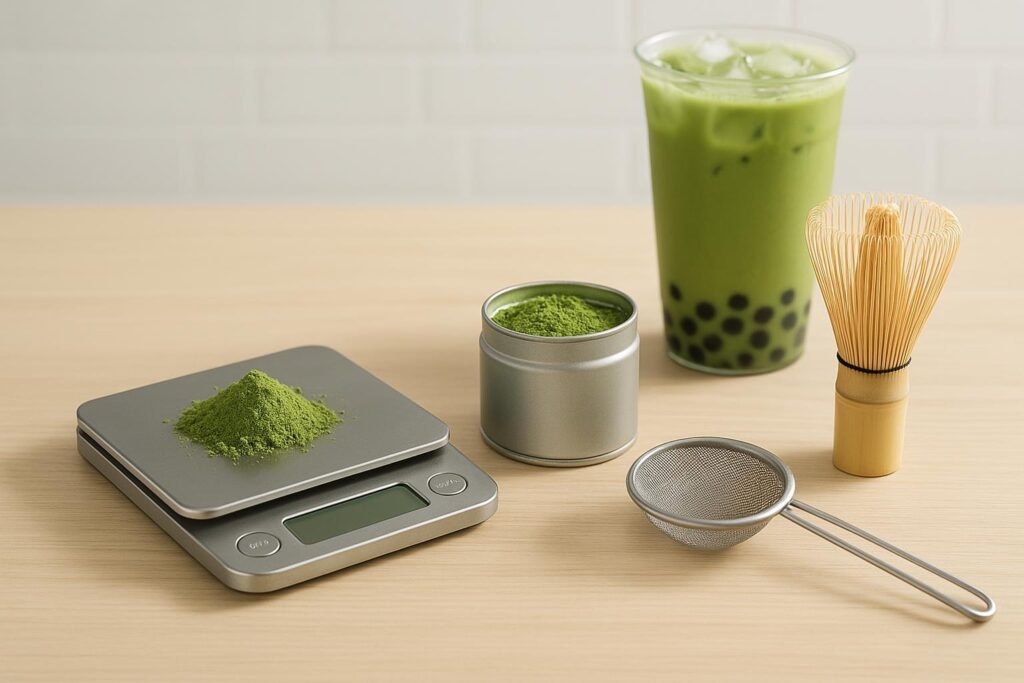
If you’re still building out your matcha menu, the BubbleTeaSuppliers.com bubble tea ingredients and supplies hub is a good place to scan what other shops typically stock alongside matcha.
Ceremonial vs culinary grade matcha: what it usually means (and what it doesn’t)
Most suppliers will sort matcha into “ceremonial” and “culinary.” In practice, it usually means:
Ceremonial grade: intended to drink with water (or in lighter milk builds). It’s typically brighter green, smoother, and less bitter.
Culinary grade: intended for recipes. It can be a bit more assertive or bitter, but it’s usually cheaper and can work well in milk tea.
Here’s the catch.
“Ceremonial grade” isn’t regulated. There’s no universal standard that forces brands to use the term honestly. Matcha Yū Tea explains this clearly in “The Truth About Ceremonial Grade Matcha” (2025), and First Agri’s B2B guide also notes that the label doesn’t have a standard definition in “How to Choose Matcha for Your Café” (2026).
Pro Tip: Treat “ceremonial” as a starting hint, not a decision. Make suppliers prove it with harvest, origin, milling, and a sample that tastes right in your actual drink.
The quality checks that matter for bubble tea shops
You can’t taste-test every batch forever, but you can build a repeatable process that catches most bad matcha before it hits your menu.
A lot of quality cues are simple sensory checks: color, aroma, texture, taste. Soar Organics lays out those practical cues in “6 Foolproof Ways to Identify High Quality Matcha Powder” (2023).
Below is the shop version, with a focus on what shows up in milk tea.
If you’re asking “how to tell if matcha is good quality” quickly, this is the short list.
1) Color: bright green beats olive every time
Pour a small amount of dry matcha on white paper.
Good sign: vibrant green.
Red flag: yellow-green, olive, or brownish tones.
Color isn’t just aesthetics. When matcha looks dull dry, it usually looks dull in the cup too.
2) Texture: silky powder, not gritty dust
Rub a pinch between your fingers.
Good sign: soft and silky.
Red flag: sandy, gritty, or “grainy.”
A coarser grind tends to settle faster, feel chalkier, and fight you during mixing.
3) Aroma: fresh vegetal, not stale or fishy
Open the bag or tin and smell it.
Good sign: fresh, grassy/vegetal, slightly sweet.
Red flag: musty, flat, or unpleasantly “ocean/fishy.”
A stale aroma usually means stale flavor.
4) Taste: balanced, not harsh
Even if your matcha is mostly used in milk tea, you should taste it once in water.
Whisk a tiny test bowl (details below). You’re looking for a matcha that tastes smooth enough that milk doesn’t need to rescue it.
5) Solubility: clumps are cost
If your matcha clumps easily, you’ll over-scoop trying to hit the flavor target. You’ll also burn time remaking drinks.
Sifting helps, but if you have to fight the powder every shift, it’s the wrong product for high-volume service.
A 10-minute matcha powder acceptance test you can run in your shop
When you’re comparing suppliers (or checking a new lot), don’t rely on “it seems fine.” Run the same quick test every time.
You only need:
scale (grams)
small whisk or milk frother
fine mesh sifter
thermometer (helpful)
plain water and plain milk
Step 1: Water test (reveals bitterness fast)
Sift 2 g matcha into a cup.
Add 60–80 ml warm water.
Mix until smooth.
If you’re using temperature guidance, many matcha resources suggest staying below boiling to avoid harshness. Use a warm, not boiling, range (around 70–80°C / 160–175°F is commonly recommended in matcha prep guidance).
What to note:
color (does it stay bright?)
bitterness/astringency (does it scrape the tongue?)
residue (is there grit at the bottom?)
Step 2: Milk test (the real menu moment)
Make a small “mini latte” sample:
2 g matcha (sifted)
a small splash of warm water to make a smooth paste
add milk, mix, then taste
What to note:
does it taste clean, or muddy?
does it hold flavor after a minute, or collapse?
how much sweetener would you need to make it pleasant?
Step 3: Ice test (dilution check)
If you sell iced matcha drinks, test it iced.
A matcha that barely survives hot will disappear over ice.
⚠️ Warning: If a matcha needs heavy syrup to cover bitterness, it can still “work,” but you’re locking your recipe into higher sugar and higher cost. That’s fine if it’s intentional. It’s a problem if it’s accidental.
What to ask matcha suppliers before you buy in bulk
If a supplier can’t answer these clearly, you’re taking a bigger risk than you need to.
Harvest and freshness
Ask:
Which harvest is this (first flush vs later harvests)?
What are the harvest and milling dates?
How long has this lot been stored before shipping?
Freshness matters because matcha’s color and flavor fade over time, especially after opening.
Shade-growing and raw material
Matcha is made from shade-grown leaves processed into tencha, then ground into powder.
Ask:
How long were the leaves shaded pre-harvest?
Is it 100% tencha-based matcha (not just “green tea powder”)?
Origin and traceability
Ask:
What country and region is it from?
Do you have lot numbers that trace back to a specific producer/processing run?
Grinding method and particle size
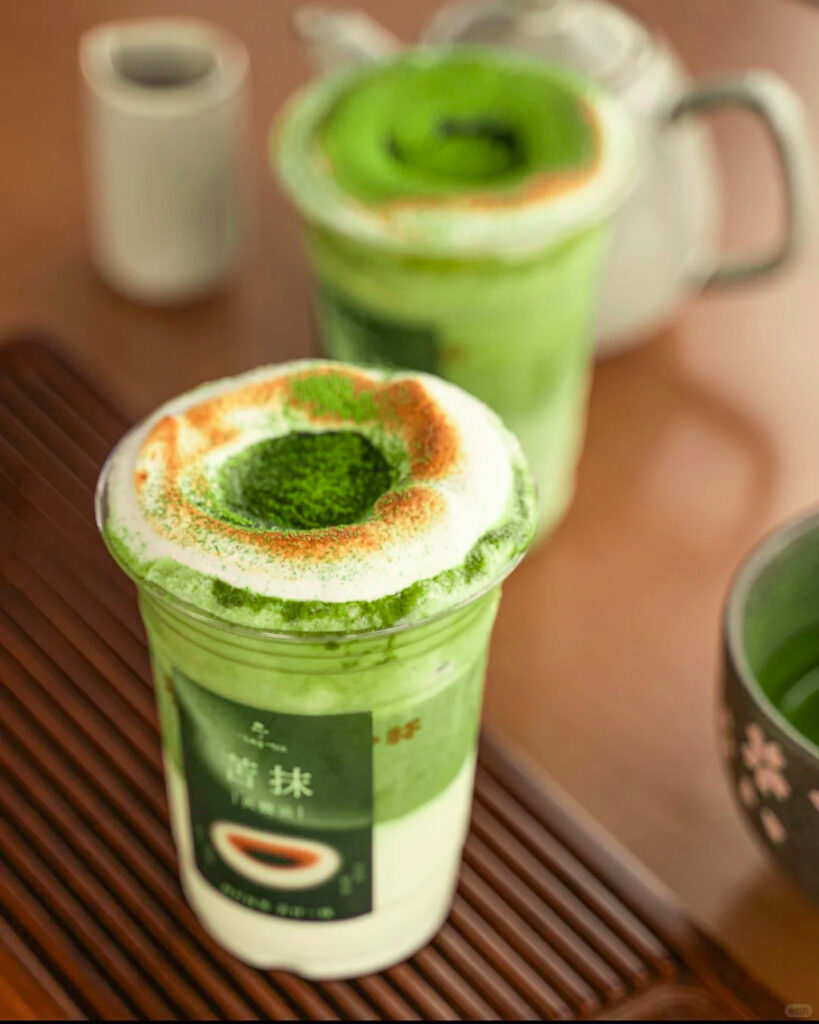
Ask:
How is it ground (stone-milled vs other methods)?
Do you have a particle size or fineness spec?
You’re not looking for perfection. You’re looking for consistency and a supplier who can control the process.
Packaging and shipping
Ask:
Is it packed in opaque, airtight packaging?
Is it nitrogen-flushed?
Is it shipped cold or protected from heat?
Food safety, allergens, and what documentation to request
For most shops, the real risk isn’t that matcha itself is a common allergen. The risk is cross-contact (in your shop or at a facility), and buying a product that isn’t what the label implies.
Allergen statements and ingredient purity
Request:
Ingredient statement confirming it’s 100% matcha (no fillers)
Allergen statement (shared facility info, cross-contact controls)
If you need a clear refresher for staff training, FoodAllergy.org has a straightforward guide to avoiding cross-contact.
COA and contaminant testing
If you’re buying at scale, ask for a Certificate of Analysis (COA) for the lot, plus any available third-party testing.
Depending on your supplier and origin, useful documentation can include:
heavy metals testing (lead, cadmium, arsenic)
pesticide residue testing
basic microbiological testing
You don’t need to turn this into a lab project. You just want proof the supplier takes safety and traceability seriously.
How to store matcha powder in a bubble tea shop (SOP)
Most matcha “mystery quality drops” are storage problems.
Matcha degrades from oxygen, light, moisture, and heat. Matchaful’s guide on how to store matcha fresh (2026) is a good overview.
If you’ve been wondering how to store matcha powder without losing color and flavor, here’s the shop SOP version.
Store bulk matcha like it’s a perishable ingredient
Keep it airtight and opaque.
Keep it cool.
Keep it dry.
Avoid condensation when using refrigerated matcha
If you store matcha in the fridge, don’t pop the lid immediately after pulling it out.
Let the container come closer to room temp before opening so moisture doesn’t condense inside.
Portion daily to reduce air exposure
Instead of opening your bulk container all day:
portion a small amount into a service container at the start of the shift
keep the bulk container sealed
This single change can protect quality and reduce clumping.
Matcha caffeine content: notes for menus and staff training
Customers ask “how strong is it?” all the time.
Caffeine in matcha varies by product and serving size, but for practical ops planning, Matcha.com notes an average range of about 20–45 mg caffeine per gram of matcha powder (2026).
What that means in plain shop terms:
If your recipe uses 2 g, you’re roughly in the 40–90 mg range.
If your recipe uses 3.5 g, you’re roughly in the 70–158 mg range.
For consistency, measure matcha in grams, not teaspoons.
Where Bubble Tea Supplier fits (if you want a shortcut)
If you want to browse options built for boba use cases, start with BubbleTeaSuppliers.com matcha powder (a good starting point when you’re sourcing wholesale matcha powder) and the wholesale matcha collection.
If you’re deciding whether matcha is the right “green” anchor flavor for your menu (or if hojicha would sell better), their comparison post on matcha vs hojicha is useful context.
FAQ
Is ceremonial grade matcha worth it for bubble tea?
Sometimes. If matcha is a signature flavor and you want a smoother tea-forward drink with less bitterness, paying more can make sense. If your matcha is mostly going into milk tea with toppings and sweetener, a solid culinary or cafe-grade matcha can be the smarter margin play.
How can I tell if matcha powder is good quality quickly?
Check the dry color (bright green), texture (silky), aroma (fresh vegetal), then run a fast water test and a milk test. If it tastes harsh in water, you’ll usually have to fix it with sugar in the final drink.
How should a bubble tea shop store matcha powder?
Airtight, opaque, cool, and dry. If refrigerated, avoid condensation by letting it warm slightly before opening. Portion daily so the bulk container isn’t opened all shift.
Does matcha have caffeine?
Yes. It varies, but a practical range is about 20–45 mg per gram of matcha powder, so your caffeine per drink depends mostly on how many grams your recipe uses.
Next steps
If you want, tell me the drink sizes you sell (16 oz vs 24 oz, hot vs iced) and your target food cost per cup. I can help you set a matcha grams-per-drink target and a supplier comparison sheet you can reuse.