
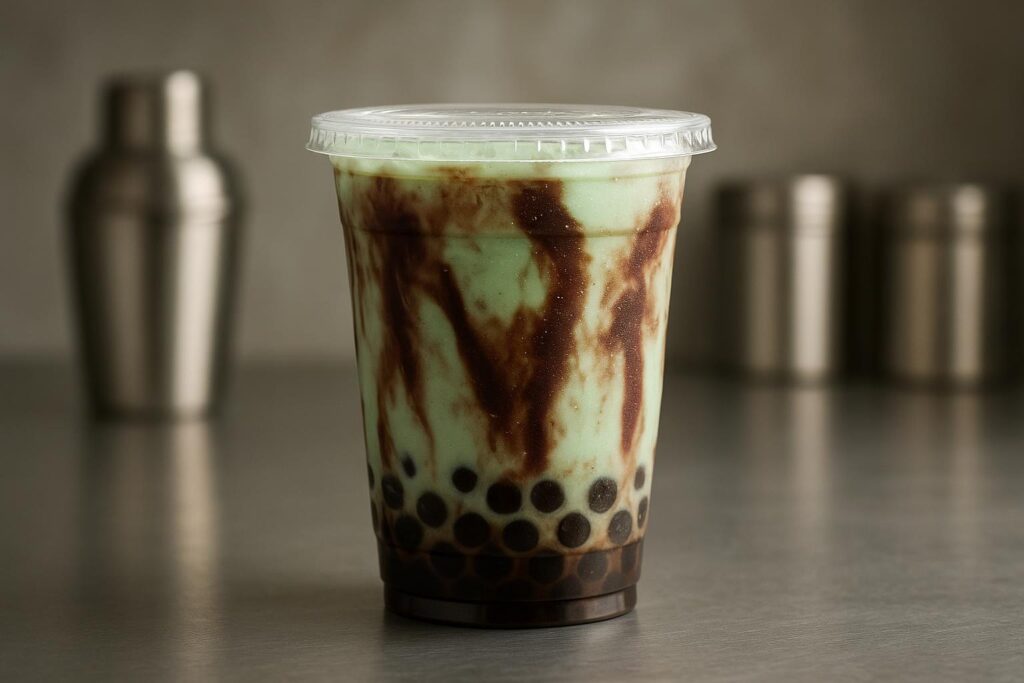
Mint chocolate is one of those flavors customers think they know. That’s great for sales—but it’s also why execution matters. If the mint is too sharp or the cocoa turns gritty and settles, the drink goes from “mint chocolate chip” to “toothpaste cocoa” fast.
This guide is written for shop owners and operators who want a repeatable mint chocolate milk tea SOP: clear ingredient choices, a 16 oz build spec, batching options, QC targets, and quick troubleshooting.
If you’re in menu-development mode, you can also pull ideas from BubbleTeaSuppliers’ library of new bubble tea drink ideas and SOPs
.
What “good” mint chocolate milk tea tastes like (your QC target)
Before you pick ingredients, define what you’re trying to hit:
- Mint: cool and clean, not medicinal. It should lift the aroma, not dominate the finish.
- Chocolate: cocoa-forward and slightly bitter-sweet (not syrupy).
- Tea: present enough to keep it from drinking like straight chocolate milk.
- Texture: smooth, not chalky. No visible cocoa specks floating or a thick sludge layer at the bottom.
Pro Tip: Train staff to smell the drink before serving. If mint hits first and chocolate disappears, the mint dose is too high.
Ingredient decision framework (mint, chocolate, creamer, tea)
You can make mint chocolate milk tea a few ways. For shops, consistency and speed matter more than “romantic” ingredients.
Mint: syrup vs extract vs mint tea
Best for shops: mint syrup
- Mint syrup is easy to dose and stays consistent between staff.
- Peppermint extract is powerful, but it’s easy to overdo (and mistakes are expensive).
- Mint tea bags/leaves create variability (steep time, leaf age) and can introduce herb bitterness.
Operational rule: pick one mint method and standardize it across all mint SKUs.
Chocolate: sauce vs cocoa powder vs hot chocolate mix
You’re choosing between speed, cost, and texture.
Option A: chocolate sauce/syrup (fastest)
- Pros: mixes fast, less settling, easy to pump.
- Cons: can taste “dessert syrup” if too sweet.
Option B: cocoa powder (best chocolate flavor, needs technique)
- Pros: real cocoa finish.
- Cons: clumps and settles if you skip the slurry step.
Option C: hot chocolate mix (most forgiving)
- Pros: usually contains sugar + stabilizers.
- Cons: taste can skew artificial; sweetness control is harder.
If you want a more “real cocoa” profile while staying operator-friendly, use cocoa powder—but treat mixing as part of the SOP (more on that below).
Creamer/milk: dairy vs non-dairy creamer
- Non-dairy powdered creamer is common in milk tea because it’s stable, fast, and consistent.
- Dairy milk/half-and-half can taste richer but can separate/curdle if your tea is too hot or if acids are involved.
If you already run a powdered creamer base for classic milk tea, keep it. Mint chocolate should be a flavor variation, not a whole new system.
Tea base: black tea wins for chocolate
Chocolate needs a backbone.
- Use black tea for a clean, strong base.
- Brew strong enough that it still reads after cocoa + dairy.
One practical warning: don’t over-steep. Over-steeping increases bitterness.
Mint chocolate milk tea SOP (16 oz / 500 mL)
This is a shop-ready spec you can test, then lock into your recipe binder.
Equipment
- Shaker cup (preferred) or blender
- Scale + jigger
- Fine mesh sieve (if using cocoa)
Targets
- Cup size: 16 oz / 500 mL
- Ice fill: 60–70%
- Shake time: 10–15 seconds
Ingredients (starting point)
Choose one chocolate path.
Tea base
- Strong black tea, cooled: 120–150 mL (about 4–5 oz)
Mint
- Mint syrup: 15–22 mL (start low)
Sweetness
- Simple syrup or fructose: 10–20 mL (depends on chocolate format)
Creamer/milk
- Milk or milk + creamer base: 200–250 mL (fill line depends on your ice and tea)
Chocolate (choose one)
- Chocolate sauce: 20–30 mL (0.7–1.0 oz)
- Cocoa powder: 8–12 g (plus your sugar/syrup)
- Hot chocolate mix: 15–25 g (adjust sweetness down)
Toppings (optional)
- Tapioca pearls: 40–60 g cooked
Step-by-step build
Step 1: Brew and cool the tea
Brew black tea and cool it to room temp before service.
Cooling matters: warm tea can cause dairy to separate/curdle in cold builds, which is why many chocolate milk tea recipes explicitly cool the tea first, like this note to cool the tea before adding dairy (to avoid curdling)
.
Done when: tea is room temp and tastes strong but not bitter.
Step 2: Prepare the chocolate base (the “no clumps” step)
If using chocolate sauce:
- Add sauce into the shaker first.
If using cocoa powder (recommended flavor):
- Sift cocoa into a small cup.
- Add 20–30 mL warm water (or warm milk) and whisk into a smooth paste.
This “paste first” technique is one of the most reliable ways to reduce cocoa clumps; it’s essentially the same idea described in guides that recommend you make a cocoa paste first to eliminate lumps.
Done when: paste is glossy, no dry pockets, no gritty balls.
Step 3: Build the drink in the shaker
Add to shaker:
- Tea base
- Chocolate base (sauce or cocoa paste)
- Mint syrup
- Sweetener (if needed)
- Milk/creamer base
- Ice
Shake 10–15 seconds.
Done when: color is even from top to bottom (no streaks), and mint aroma is present but not sharp.
Step 4: Pour + add toppings
- Add pearls to cup.
- Pour shaken drink over pearls.
Serve immediately.
Batch components (what you can prep ahead)
Mint chocolate is easiest to run as a “base + build” system.
Batch 1: Tea concentrate
- Brew black tea stronger than you would for hot service.
- Cool quickly and hold cold.
Example 2L tea concentrate spec (operator starting point)
- Water: 2,000 g
- Black tea: 18–24 g loose leaf or 18–24 standard tea bags (calibrate to your tea)
- Steep: 5–7 minutes
- Strain, then chill rapidly.
Done when: chilled tea tastes strong enough that you can still taste tea after cocoa + dairy.
Batch 2: Chocolate base (2 options)
Option A: Chocolate syrup base (fastest)
- Pump per order. No batch needed.
Option B: Cocoa concentrate (recommended for consistency)
- Make a cocoa paste/concentrate and store cold.
- Use it like a pumpable base.
Example 1L cocoa concentrate spec (for cold builds) This is designed to reduce clumps and make the line build faster.
- Warm water: 500 g
- Cocoa powder (sifted): 120–160 g (start at 140 g)
- Sugar: 120–180 g (start at 150 g, then adjust to match your shop sweetness)
- Optional: xanthan gum 1.0 g (0.1% w/v) only if you’re fighting rapid settling (see stabilizer notes below)
Method
- Pre-mix cocoa + sugar dry.
- Whisk into warm water to form a smooth slurry.
- (Optional) Sprinkle in xanthan very slowly while whisking to avoid fish-eyes.
- Chill.
Service use (starting point)
- Dose: 20–30 g concentrate per 16 oz drink (then adjust)
Why this works: cocoa settling is driven by particle size and viscosity, and you can slow it by increasing viscosity slightly and using finer particles (explained clearly in Food Crumbles’ explainer on preventing cocoa sedimentation).
⚠️ Warning: Don’t “fix” settling by overdosing thickeners. Too much can turn your drink into pudding.
Holding guidance (simple, safe defaults)
Exact regulations vary by jurisdiction. Operationally:
- Keep tea concentrate cold and labeled.
- Keep any dairy-based mix cold and rotate in smaller pitchers.
- If a chocolate base is showing separation, shake/stir it before service.
If you want more operator-friendly drink development ideas to rotate seasonally, browse BubbleTeaSuppliers’ New Drinks collection for inspiration.
Preventing cocoa clumps and settling (science + shop tactics)
Cocoa doesn’t dissolve—it suspends. That’s why it sinks.
Here’s the operator playbook:
Tactic 1: Always slurry/paste cocoa first
If you do only one thing, do this.
- Sift cocoa.
- Mix with a small amount of warm liquid to make a paste.
- Then dilute.
Tactic 2: Pre-mix cocoa with sugar
If you run granulated sugar (instead of syrup), mix cocoa and sugar before wetting. Food science explains this can reduce clumping because the sugar particles help separate cocoa particles, as noted in Food Crumbles’ explainer.
Tactic 3: Choose cocoa that disperses well
- Finer cocoa = less settling.
- If your cocoa is stubborn, switch format (a different cocoa powder, or use sauce).
Tactic 4 (optional): Use a stabilizer only if you need it
If you’re getting visible settling in under 3–5 minutes (and shaking isn’t acceptable), a tiny amount of stabilizer can help.
For example, a PubMed paper on cocoa beverage stability reported that xanthan gum at about 0.1% w/v improved cocoa drink stability
.
Operational note: stabilizers change mouthfeel. Test carefully and keep your spec tight.
Toppings and upsells that work with mint chocolate
Mint chocolate is rich. Keep toppings simple and compatible.
Good pairings:
- Pearls (classic chew)
- Chocolate pudding (dessert vibe)
- Oreo crumbs (mint-chocolate-chip meets cookies)
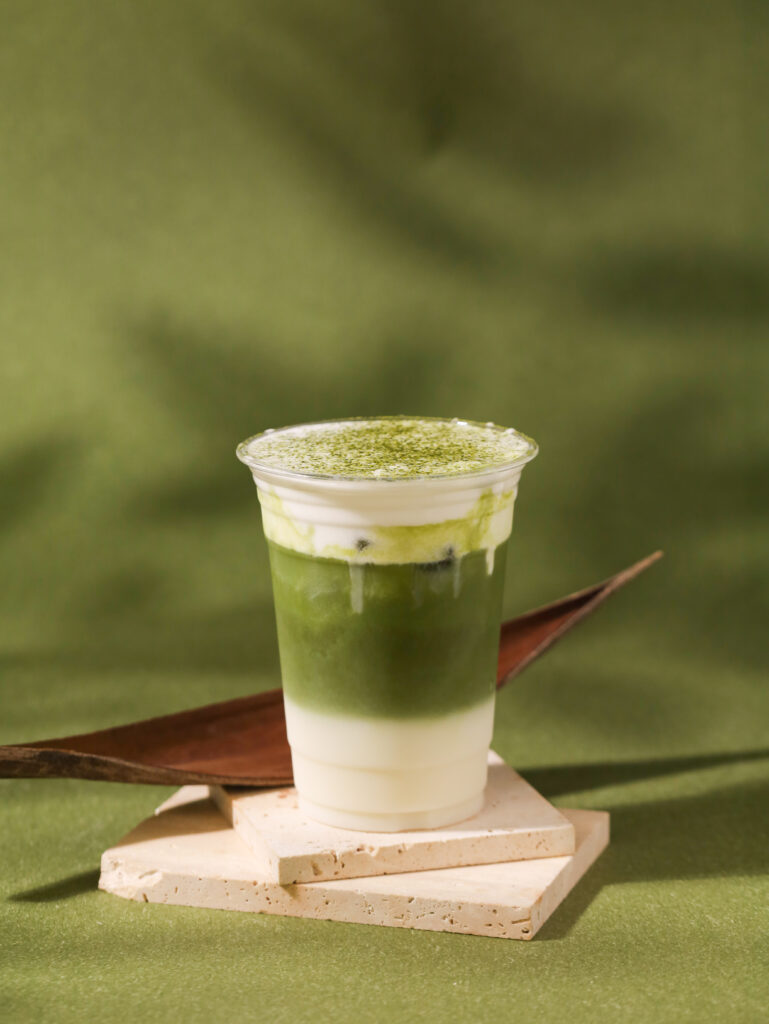
- Whipped cream cap + chocolate drizzle (premium look; easy upsell)
Avoid:
- Very acidic jellies (they can clash with cocoa + dairy)
- Too many textures at once (slows line speed)
A simple upsell ladder (easy for staff to remember)
- Standard: pearls
- Plus: pearls + pudding
- Premium: pearls + pudding + whipped cream cap
If you want a broader topping strategy, BubbleTeaSuppliers has a solid operator read on menu strategy for milk tea toppings that sell
.
Troubleshooting checklist (fast fixes)
“It tastes like toothpaste”
- Reduce mint by 20–30%.
- Increase chocolate slightly.
- Increase tea strength slightly (tea helps balance sweetness and mint).
“Chocolate settles fast”
- Confirm staff is making the cocoa paste.
- Switch to finer cocoa or chocolate sauce.
- Consider a tiny stabilizer test batch.
“It’s chalky/gritty”
- Sift cocoa.
- Increase whisking in the paste step.
- Reduce cocoa dose slightly; increase sauce instead.
“Tea is bitter”
- Shorten steep time.
- Lower brew temperature if using loose leaf.
FAQ (operator questions)
Can I use peppermint extract instead of mint syrup?
Yes, but treat it like a high-risk ingredient: it’s easy to over-dose. If you do use it, standardize “drops per serving” and keep it locked.
What tea works best?
Black tea is the safest default for chocolate-forward milk tea. It holds up under cocoa and dairy.
Do I need a blender?
Not necessarily. A shaker is usually enough if you use sauce or do the cocoa paste step.
How do I make this into an LTO without slowing down service?
Keep one base build and change only one variable (mint dose or topping). Standardize the rest.
If you want a good SOP format to copy, BubbleTeaSuppliers’ shop-ready SOP format for bubble tea menus
is a helpful template.
Next steps
- Run a 10-cup test (same SOP, different mint doses) and pick the “mint reads but doesn’t bite” winner.
- Lock a written spec with grams/mL and a QC smell/taste check.
- Build your seasonal pipeline with BubbleTeaSuppliers’ New Drinks collection.