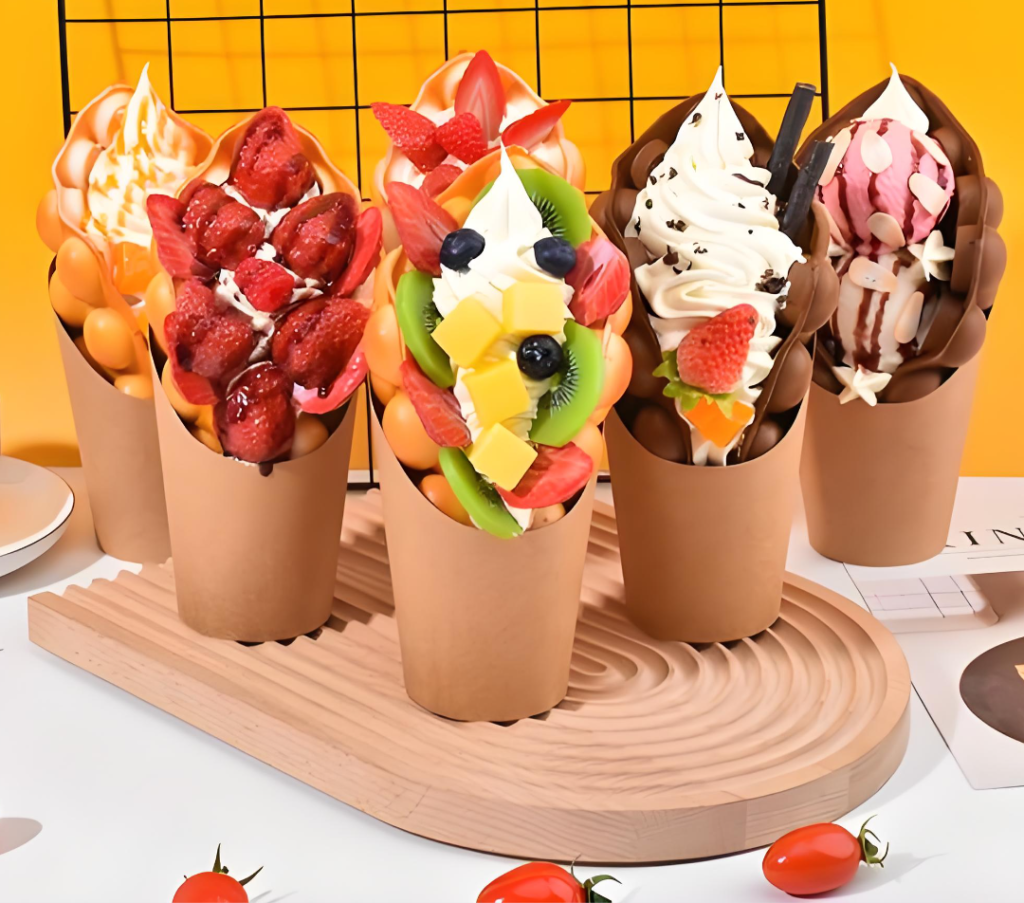
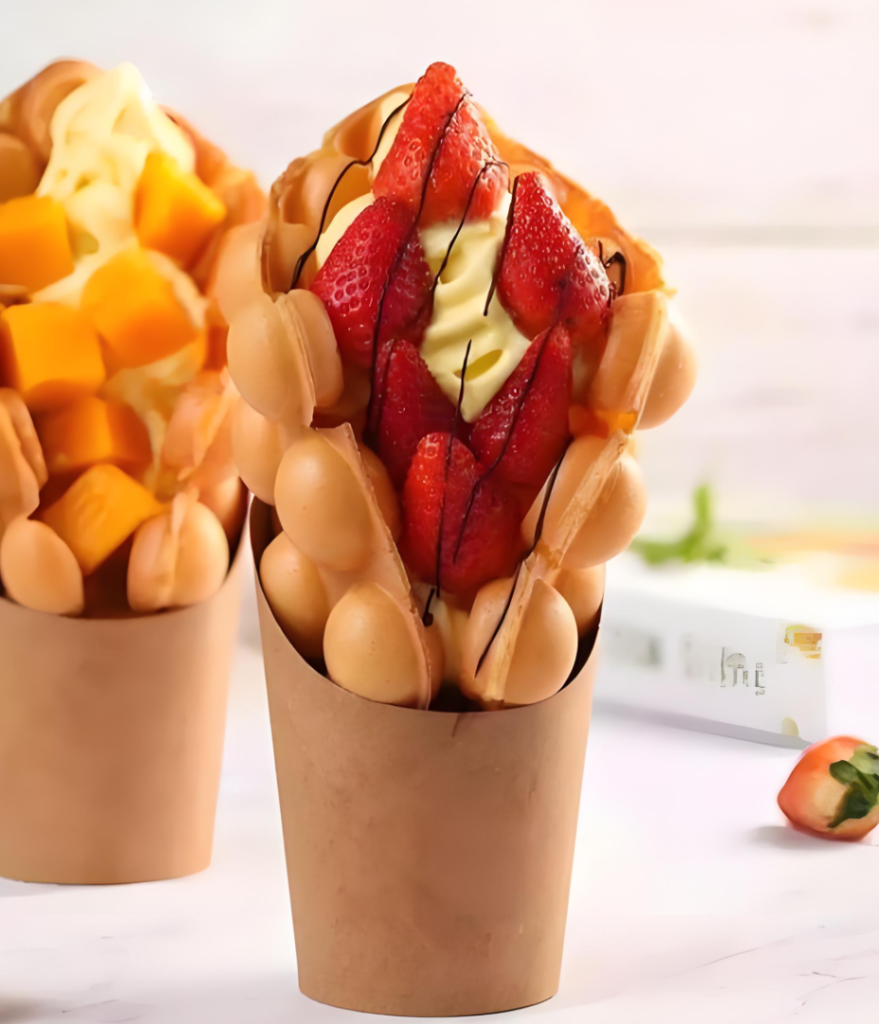
If you’re thinking about adding egg waffles (Hong Kong-style gai daan jai) to your boba menu, you’re already asking the right question: can we execute this consistently during rush without wrecking drink speed?
This is an operator-focused guide to running an egg waffle in boba tea shop station without sacrificing ticket times.
This guide is built for that “planning” stage. You’ll get:
a realistic equipment and workflow checklist
a staff-trainable bubble waffle SOP (with checkpoints)
holding and packaging rules to keep waffles crispy
simple menu ideas that pair naturally with milk tea
For a related, rush-tested workflow, you can also reference BubbleTeaSuppliers’ bubble waffle SOP that holds up in a rush
.
Decide if egg waffles fit your shop (quick checklist)
Before you buy a machine or print a menu insert, confirm these four things:
Space + power You need a stable counter area and dedicated electrical capacity.
Throughput expectation Answer: How many waffle orders could you get in 15 minutes at peak? If the answer is “more than we can make to order,” you’ll need either:
multiple irons, or
a strict “short-hold” system (more on that below)
Your finishing style Egg waffles can be sold:
plain + sugar (fastest)
folded in a cone with a drizzle and one topping (fast, good margin)
dessert build (ice cream, fruit, heavy toppings) — higher ticket, but slower and messier
Who owns the station The easiest win is making egg waffles a defined station with a simple rule:
One person makes waffles; drink bar doesn’t stop.
Pro Tip: If you’re unsure, run a 2-week test with one “signature” build and one “simple” build before you expand the menu.
Choose the right bubble waffle maker (commercial)
You don’t need the fanciest machine. You need a setup that’s repeatable.
When you’re selecting equipment, WebstaurantStore’s waffle maker buying guide
is a good checklist for power requirements and operational fit.
Look for these features
Temperature control you can set and repeat
Even heating (top and bottom)
A flip/rotary mechanism (helps batter spread and brown evenly)
Plates that are easy to wipe clean between batches
Commercial safety certification (UL/ETL/CE where applicable)
Electric vs. stovetop
For most US boba shops, electric wins for consistency and training. Stovetop irons can work, but they demand more attention and tend to be harder to standardize across staff.
The texture rule that makes or breaks egg waffles
Egg waffles should be crispy outside and chewy inside.
Two things control that more than any “secret ingredient”:
heat stability (fully preheated iron)
steam management (cooling/venting after cooking)
Hong Kong egg waffle recipes often emphasize batter rest and proper heat. WhatToCookToday explains egg waffles as a honeycomb-pattern waffle cooked in a special iron, typically rested and cooked hot enough to crisp the shell (see Hong Kong egg waffles guide
). HungryHuy also highlights batter-rest timing for texture (see Hong Kong egg waffle recipe
).
Egg waffle in boba tea shop SOP (Hong Kong-style)
This SOP is written to be trainable. Each step includes an input → action → output, plus a “done when…” check.
Prerequisites (before service)
Egg waffle iron fully working + timer ready
Neutral high-smoke-point oil (for light greasing)
Ladle or portion tool (don’t eyeball)
Wire cooling rack
Cone sleeves / paper bags that allow venting
Prep labels + marker
Key Takeaway: Your first week goal isn’t “new dessert hype.” It’s hitting the same waffle color, crispness, and ticket time with three different staff members.
Step 1: Set your service rule (made-to-order vs short-hold)
Input: your peak waffle orders per 15 minutes.
Action: choose one:
Made-to-order (best quality): only sell waffles when a station is staffed.
Short-hold (best speed): allow a brief hold window on a rack with airflow during rush.
Output: one clear sentence staff can repeat.
Done when: every shift lead can answer, “Are we making to order right now?”
Step 2: Standardize your batter (recipe + mixing rule)
Input: your chosen egg waffle batter recipe.
Action:
Weigh ingredients for consistency.
Mix until just combined (avoid overmixing).
Rest batter 30–60 minutes when your recipe calls for it.
Output: batter with consistent viscosity that pours smoothly.
Done when: batter looks the same every batch and cooks in the same time range.
Step 3: Preheat the iron fully (don’t rush this)
Input: clean, dry plates; machine powered on.
Action: preheat until the machine cycles and holds steady at your target setting.
Output: stable cooking surface temperature.
Done when: the first waffle of the day releases cleanly and browns evenly.
Step 4: Lightly grease the plates
Input: preheated plates.
Action: lightly brush or wipe oil across both sides.
Output: thin oil film that prevents sticking without pooling.
Done when: you can cook a waffle without tearing on release.
Step 5: Portion batter consistently
Input: rested batter; portion tool.
Action: portion the same amount each time (aim to fill the mold most of the way without overflow).
Output: uniform waffles with full “bubbles.”
Done when: you stop getting thin patches or messy overflow.
Step 6: Close immediately and flip (if your model flips)
Input: batter loaded; iron lid open.
Action: close immediately and flip/rotate as your iron requires.
Output: batter spreads across both plates.
Done when: the waffle has even bubble shape on both sides.
Step 7: Cook on a timer (no guessing, no peeking)
Input: closed iron; timer.
Action: cook using a set time range, flipping as needed mid-cycle.
Output: deep golden waffle that feels set and crisp on the surface.
Done when: staff can hit the same color/texture three batches in a row.
Step 8: Release cleanly and move to a rack
Input: timer finished.
Action: open and release with heat-safe tools, then move waffle to a wire rack.
Output: waffle vents steam immediately.
Done when: waffles stay crisp instead of steaming soft on a plate.
Step 9: Crisping/venting window (the “steam is the enemy” rule)
Input: cooked waffle on rack.
Action: let it vent briefly before bagging/serving.
Output: crisp shell that doesn’t collapse in packaging.
Done when: your packaged waffle still has crunch 3–5 minutes later.
A Hong Kong-focused explainer from KongHub notes that vendors often cool/vent egg waffles and use packaging that lets steam escape (see why egg waffles are blow-dried and packed in vented bags
).
Step 10: Finish fast (1 drizzle + 1 topping)
Input: vented waffle; toppings staged.
Action: use a “one drizzle + one topping” rule for speed.
Output: consistent presentation and predictable ticket times.
Done when: new staff can build the waffle without asking questions.
⚠️ Warning: Don’t seal a hot waffle in an airtight container. It will steam itself soft.
How to keep egg waffles crispy (holding and packaging)
If you sell waffles during rush, your holding system is everything.
The non-negotiables
Cool on a wire rack, not a plate.
Avoid stacking hot waffles.
Use vented packaging (paper cone sleeve, vented bag, or a box with vents).
A practical short-hold rule
Hold single layer on a rack.
Set a max hold time (for example, 5 minutes) and discard after.
If you need to re-crisp, use dry heat with airflow (never a microwave).
Simple egg waffle menu ideas that pair with milk tea
If you want a tighter dessert menu strategy, link your waffle builds to the same toppings customers already recognize in drinks (pearls, pudding, cheese foam). BubbleTeaSuppliers has a practical guide on best boba toppings to boost your average order value
that you can use to keep add-ons profitable and easy to execute.
Keep your menu tight at first. Two to four builds are plenty.
Build 1: Classic Hong Kong sugar egg waffle
finishing: light sugar dust
best pairing: black milk tea or Hong Kong-style milk tea
Build 2: Brown sugar crème egg waffle
finishing: brown sugar drizzle + light cream/foam (if you already run foam)
The fastest way to lose money on waffles is “freehanding”:
batter portion changes cooking time (and waste)
sauce drizzles creep bigger
toppings turn into “handfuls”
Create a one-page station sheet with:
batter portion size
cook time range
vent time
approved drizzle + topping portions
Train the top 3 failure modes
Soggy waffle → not vented; packaged too hot; iron too cool
Uneven browning → inconsistent pour/flip; batter separation; hot spots
Tearing on release → not preheated; not enough oil film; opened too early
Food safety and allergens (quick, conservative note)
Egg waffles contain common allergens like eggs, wheat, and dairy (depending on recipe). If you operate in a shared kitchen, treat toppings and powders as potential cross-contact risks.
Use ingredient labels, train staff to avoid cross-contact between stations, and follow local health department guidance for your area.
Next steps: launch with a 2-week egg waffle pilot
If you want a low-risk rollout:
pick one signature build + one simple build
run made-to-order for the first week
only add short-hold after you hit consistency
review ticket times and waste daily
When you’re ready to expand, BubbleTeaSuppliers is a useful hub for boba-shop SOPs and menu execution resources.