
If you want a drink that reads as “luxury dessert” without turning your bar into a science project, pistachio + coconut is a strong pairing. Pistachio gives a toasted, buttery vibe. Coconut makes it creamy and aromatic.
This SOP is built for one very specific constraint set:
No nut powders (no pistachio powder bases)
No nuts (nut-free “pistachio-style,” not real pistachio)
Low sugar program (repeatable, trainable)
Permanent menu item (not a one-week viral special)
If you’re building your milk tea program from scratch, start with the fundamentals on Bubble Tea Supplier so your tea strength, ice, and topping holds don’t fight your flavor.
What you’re building (and what “pistachio-style” means)
Because you want no nuts, you’re not making “real pistachio milk tea.” You’re making a pistachio-style milk tea: a nut-free flavor built to resemble pistachio’s warm, roasted notes.
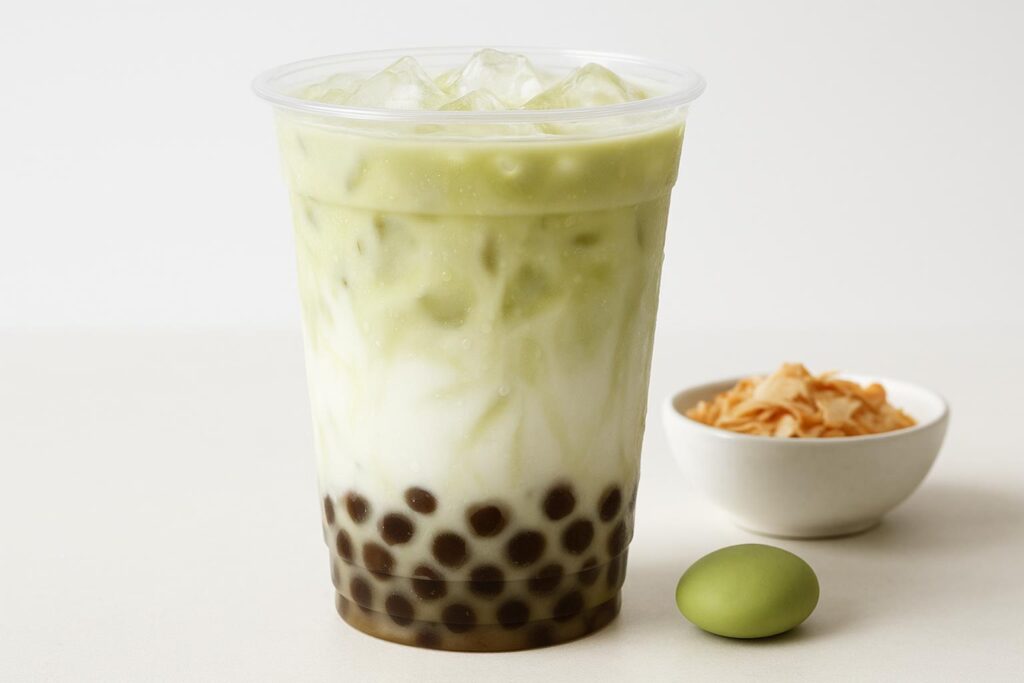
That distinction isn’t just semantics—it affects:
how you name it on the menu
how you talk about allergens
what you ask for from suppliers (documentation matters)
⚠️ Warning: Don’t promise “allergen-free.” In a beverage shop with shared tools, you can reduce risk, but you can’t honestly guarantee zero cross-contact. Even major chains communicate this limitation (see the Food Allergy & Anaphylaxis Connection Team’s write-up of Starbucks’ pistachio allergen statement).
Ingredients and equipment (operator list)
Core ingredients (permanent-menu friendly)
Tea base (choose one):
Jasmine green tea (bright, floral)
Light oolong (toasty, pairs naturally with “nutty” flavors)
Black tea (classic milk tea body)
Coconut component (choose one):
Coconut milk beverage (lighter, easier to shake)
Canned coconut milk (richer, but can separate; needs good shaking)
Coconut cream (dessert-level richness; use small doses)
Creaminess + body (choose one):
Dairy milk (2% or whole)
Oat milk (usually best texture among non-dairy)
Non-dairy creamer (only if it fits your brand; keep it consistent)
Pistachio-style flavor (nut-free):
Nut-free “pistachio-style” syrup or extract (supplier-verified)
Sweetener system (low sugar):
Zero/low-calorie sweetener syrup (monk fruit/stevia blends are common), or
Reduced-sugar simple syrup
Optional but recommended for “pistachio” illusion:
Tiny pinch of salt (makes “roasted” notes pop)
Vanilla (rounds edges)
Toppings (keep it simple)
Tapioca pearls (classic)
Coconut jelly (reinforces coconut)
Grass jelly (pairs with roasted notes)
If you want upsell logic, steal the phrasing and pairing ideas from BubbleTeaSuppliers.com’s topping guide and train staff to recommend one topping per order.
Equipment
Tea brewer or tea urn + timer
Gram scale (for batching) + measuring spoons (for line work)
Shakers
Portion pumps for syrups
Refractometer (optional, but best-in-class) for °Brix consistency
If you want a reference point for how an operator SOP reads, mirror the level of detail in this shop-ready milk tea SOP example—then customize it to your bar flow.
Picking a nut-free pistachio-style flavor base (how to choose without gambling)
Here’s the practical reality: “pistachio” flavor in shops is often a powder. You’re avoiding that—and you’re also avoiding real nuts. So your base choice matters.
What to ask your supplier for (non-negotiable)
Allergen statement and “may contain” notes
Ingredient list (so you’re not accidentally buying almond/cashew derivatives)
Documentation that supports your menu language (especially if you plan to say “nut-free”)
Pro Tip: If you cannot confidently verify nut-free status, do not market this as nut-free. Market it as “pistachio-inspired” and manage expectations.
Syrup vs extract: which is better for ops?
Syrup: easiest for staff, built-in sweetness, fast line speed.
Extract: strong flavor with minimal sugar—but it’s easy to overdo and make the drink taste like perfume.
For most shops, syrup wins on speed. For low sugar, extract (or a low-sugar syrup) gives you more control.
Tea base + coconut specs (so it doesn’t taste flat)
Tea strength target
Your tea is the backbone. If it’s weak, “pistachio-style” reads as vague sweetness.
General operator target:
Brew tea slightly stronger than you would for hot drinking.
Chill quickly and store cold.
If you need a refresher on tea bases that perform well in boba programs, use BubbleTeaSuppliers.com’s tea base overview as your starting point.
Coconut choices (and what can go wrong)
Coconut milk beverages are stable and shake well.
Canned coconut milk can separate (fat rises) and needs aggressive shaking.
Coconut cream is powerful—use it like a seasoning, not like “the milk.”
For a deeper breakdown of milk options (including coconut and other non-dairy), reference what kind of milk to use for a boba tea shop.
Step-by-step SOP for pistachio coconut milk tea (batch + per-cup build)
This SOP is written to be trainable: inputs → action → output → done when.
Step 0 — Set your standard cup (input for everything)
Input: Your standard size (e.g., 16 oz) and ice level.
Action: Lock one default build for training (same cup, same ice, same topping portion).
Output: A repeatable baseline recipe.
Done when: Two different staff members make it and it tastes the same.
Step 1 — Brew and chill the tea base
Input: Tea leaves/bags + water + timer.
Action: Brew, then chill fast (ice bath or rapid cool).
Output: Cold tea base ready for service.
Done when: Tea is cold and consistent; no bitterness from over-steeping.
Step 2 — Prep the coconut milk mix (your “milk line”)
Input: Coconut component + your chosen milk/creamer.
Action: Create a consistent coconut milk blend you’ll use all day (example: 50/50 coconut milk beverage + dairy/oat milk). Keep it refrigerated.
Output: A single “coconut milk base” that staff can pour without thinking.
Done when: It pours smoothly (no clumps) and tastes the same from morning to rush.
Step 3 — Set your pistachio-style flavor dose (and write it down)
Input: Nut-free pistachio-style syrup/extract + measuring spoon or pump.
Action: Choose a default dose that’s flavorful but not candy-like.
Output: A standard “pistachio-style dose” per cup.
Done when: You can scale it up/down reliably (e.g., 100% / 50% / 25%).
Step 4 — Choose your low-sugar sweetness tiers
Input: Sweetener syrup + pumps.
Action: Offer sweetness tiers that staff can execute quickly:
0% (no added sweetener)
25% (light)
50% (half)
100% (your shop’s standard low-sugar default)
Output: A menu that supports “low sugar” without custom math.
Done when: Each tier is defined in pumps, not “a little.”
Step 5 — Cook and hold tapioca pearls (if you’re serving boba)
Input: Pearls + water + timer + holding syrup (reduced sugar).
Action: Cook per your established standard; hold warm; refresh on schedule.
Output: Pearls with good chew, not crunchy centers.
Done when: Pearls pass your chew test at peak time.
Step 6 — Build the drink (per cup)
Input (per drink):
Cup + ice
Tea base
Coconut milk base
Pistachio-style flavor dose
Sweetener (per chosen tier)
Toppings (optional)
Action (service flow):
Add topping to cup (if used).
Add pistachio-style flavor + sweetener.
Add tea base.
Add coconut milk base.
Add ice.
Shake 10–15 seconds.
Output: A creamy, aromatic pistachio-coconut milk tea.
Done when: Color is uniform, aroma is coconut-forward with a toasted “pistachio-style” finish, and sweetness matches the order.
Low sugar milk tea standard (use °Brix so staff can’t drift)
“Low sugar” isn’t a vibe—it’s a standard.
°Brix is a measurement of dissolved solids (often used as a practical proxy for sweetness). A refractometer makes consistency easy.
A simple shop framework:
0–2° Brix: no-sugar / very light
3–5° Brix: light
6–8° Brix: moderate
If you’re using alternative sweeteners, the perceived sweetness may not match °Brix perfectly, but Brix still helps you spot drift when staff start free-pouring.
For a plain-language overview of common low/zero-calorie sweeteners (monk fruit, stevia, sugar alcohols), see GoodRx’s updated guide to natural sweeteners and sugar alternatives.
QC checks + troubleshooting (what breaks first)
Quick QC checklist (line leader)
Tea base tastes clean (not bitter)
Coconut base is shaken (no fat cap)
Pumps dispense consistently
One staff member makes it; another staff member tastes it blind and agrees
Common issues
Problem: Tastes “flat” or watery
Fix: strengthen tea base slightly and/or reduce ice or increase shake time.
Problem: Coconut flavor dominates everything
Fix: reduce coconut cream; use coconut milk beverage instead of cream.
Problem: “Pistachio” reads as generic sweetness
Fix: add a micro-dose of vanilla and a tiny pinch of salt; make sure tea base isn’t too weak.
Problem: Separation (oil slick or layers)
Fix: shake longer; reduce canned coconut milk; keep coconut base cold and homogenous.
Costing + menu description (keep it sellable)
Costing (simple method)
Calculate:
Tea cost per cup
Coconut base cost per cup
Pistachio-style flavor cost per cup
Sweetener cost per cup
Topping cost per cup
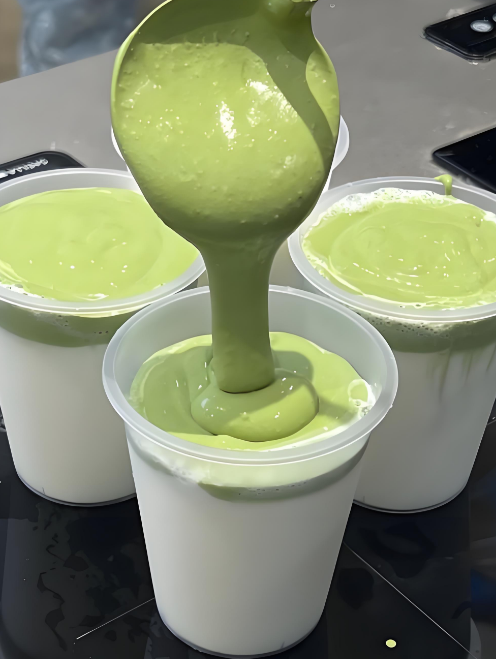
Then price using your normal margin targets.
Menu description (copy you can use)
Pistachio Coconut Milk Tea (Nut-Free) Creamy coconut milk tea with a toasted pistachio-style aroma—shaken over ice. Available low sugar.
(If you’re strict about allergen language, swap “nut-free” for “nut-free pistachio-style flavoring” and keep staff trained to explain it.)
Allergen, labeling, and cross-contact controls (don’t skip this)
Even if your pistachio-style flavoring is nut-free, tree nut allergies are serious. FARE’s consumer-facing guidance on tree nut allergy basics is a good reference for what customers worry about.
Practical shop policy
Keep pistachio-style flavoring in a clearly labeled bottle.
Use dedicated pumps when possible.
If you process nuts in-house (even for other items), assume cross-contact risk.
Train staff to say: “We can share ingredients, but we can’t guarantee no cross-contact.”
What not to say
“Allergen-free”
“Safe for everyone with nut allergies”
“No risk”
You’re building trust by being precise.
Variations that stay nut-free (menu expansion without chaos)
Coconut jelly version: add coconut jelly instead of boba for a lighter chew.
Oolong version: use oolong for a more roasted finish.
Salted version: tiny pinch of salt + vanilla to amplify “toasted” notes.
Keep variations limited. A permanent menu item should be boring to make.
Next steps
If you want to standardize this drink across your team, build one laminated SOP card and train it the same way you train your core milk teas. Start with BubbleTeaSuppliers.com’s shop-friendly milk tea SOP cards as your template.
Need a broader foundation for ingredients, tea bases, and toppings before you roll out new flavors? Use Bubble Tea Supplier as your internal training hub and keep your menu consistent as you scale.