
A fruit tea frappe is the summer crowd‑pleaser that never really goes out of season. It’s bright, cold, lightly foamy, and easy to customize with whatever fruit is tasting its best this week. For consumers, it’s a refreshing alternative to dairy‑heavy shakes. For operators, it’s a fast, high‑margin category—if you lock in the right SOPs and ratios.
This guide brings both perspectives together. If you’re here to try or order a fruit tea frappe, you’ll learn what to expect in flavor and texture, plus smart ordering tips. If you run a café or tea bar, you’ll get standardized, scalable SOPs, a defendable costing framework, and a flavor playbook you can roll into seasonal menus without bloating SKUs.
No hype, just practical technique. Let’s dig in.
What Is a Fruit Tea Frappe: Texture and Category Fit
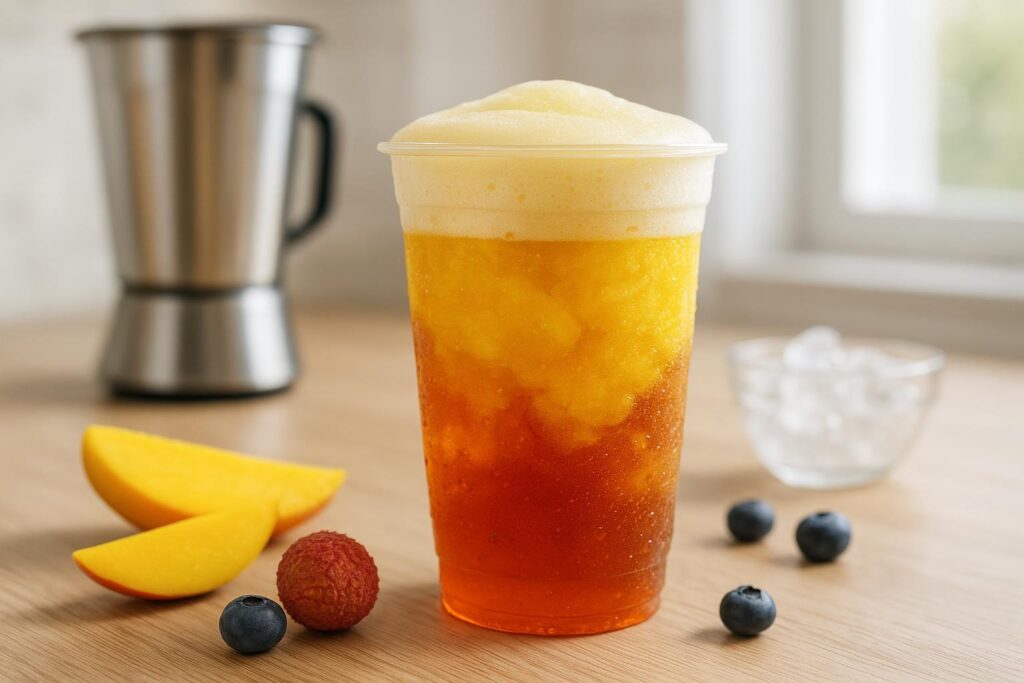
A fruit tea frappe is a blended iced drink built on a tea base (green, jasmine, oolong, black, rooibos, etc.) with fruit components and ice, typically finished with a lightly aerated head from blending. It inherits the “foamy blended” lineage of the classic Greek frappé—an iced drink whose hallmark is persistent foam—documented in Wikipedia’s overview of frappé coffee.
How it differs from adjacent categories:
Smoothie: usually a uniform puree of fruit and liquid with minimal foam and a thicker, creamier body.
Milkshake: ice‑cream‑led, dessert‑like, dairy‑forward thickness without a distinct foam cap.
Coffee and beverage brands commonly define a frappé as a shaken or blended chilled drink with or without dairy; see Nescafé’s explainer on what a frappé is for consumer‑friendly context. The same technique applies cleanly to tea bases and fruit flavors, producing a fruit tea frappe with a crisp tea backbone and bright fruit aroma.
For consumers, think of it this way: a fruit tea frappe should drink like an iced tea slush—cold, smooth, and slightly airy on the first sip—rather than a heavy milkshake.
Equipment and Ice Science for a Stable Fruit Tea Frappe
Consistency starts with the blender and the way you load the jar. Major commercial manufacturers agree on fundamentals:
Load order: liquids first, then soft solids, with ice last to prevent cavitation and stalling and to keep the flow around the blades. See the principles in Vitamix’s how‑to guide on using a blender.
Ice form and quantity: crushed or nugget ice blends faster than large, dense cubes. Vitamix guidance for The Quiet One notes you generally don’t need as much ice; if a recipe locks up, reduce ice instead of forcing more time. Reference: Vitamix The Quiet One documentation PDF.
Blend window: high‑power presets for frozen beverages commonly land in the 20–30 second range for café‑class blenders. Where presets aren’t available, medium‑to‑high manual speed in short, staged ramps protects cold temps. See Blendtec’s use and care guidance for general operating ranges.
Practical implications for operators:
Start from chilled bases (tea, purees, syrups) to slow melt and separation.
Standardize ice weight and particle size; a few grams’ swing can tip texture from pourable slush to thin iced tea.
Keep jar fill at or below about 70% of capacity so blades can draw a vortex and incorporate a light, stable foam.
Standardized Fruit Tea Frappe SOPs for Everyday Service
Below is a proven template you can calibrate to your equipment and cup sizes. It’s written for speed, repeatability, and training.
Core technique notes first: Load liquids and soft components, then ice on top. Lock the lid. Use the shop’s preset for frozen beverages or blend on high about 20–30 seconds, stopping once the drink is uniform, pourable, and just able to mound for a second or two.
Baseline template per size (example recipes to calibrate in R&D):
12 oz build
Chilled tea base: 120 ml (green, jasmine, oolong, or black)
Fruit component: 60 g puree or 80 ml fruit blend/concentrate
Sweetener: 10–20 ml syrup, to taste and fruit acidity
Ice: 180–200 g (target roughly 1.2–1.4:1 ice to liquid by weight)
Blend: 20–25 seconds high; stop early if flow tightens
QC: No large shards; light foam head; stable 2–3 minutes
16 oz build
Chilled tea base: 160 ml
Fruit component: 80 g puree or 100 ml fruit blend/concentrate
Sweetener: 15–25 ml
Ice: 230–270 g (about 1.2–1.4:1 ice to liquid)
Blend: 22–28 seconds high; jar at ≤70% capacity
QC: Smooth slush, pourable ribbon; foam present but not airy
24 oz build
Chilled tea base: 240 ml
Fruit component: 110 g puree or 140 ml fruit blend/concentrate
Sweetener: 20–30 ml
Ice: 360–420 g (about 1.3–1.5:1 ice to liquid, if blender maintains flow)
Blend: 25–30 seconds high; watch motor load and sound
QC: Even color, no separation on pour, cap with 10–20 ml milk or milk‑foam only if it won’t mask tea character
Troubleshooting quick hits:
If the fruit tea frappe pours thin, increase ice by 10–15 g increments or reduce total liquid slightly.
If the jar cavitates or stalls, reduce ice 10–20 g and check that liquids were added first.
If separation appears within 1–2 minutes, start from colder bases and shorten blend time to reduce heat pickup.
Note: Exact grams and timing depend on your blender’s jar geometry and program. Manufacturers don’t publish fixed “ice‑to‑liquid ratios”; treat the above as starting points and finalize in shop trials—then lock them on laminated SOP cards.
Speed, Batching, and Consistency Across the Line
Service speed and reproducibility make or break fruit tea frappe sales at peak.
Batch tea concentrates at a strength that survives dilution from ice. Chill to ≤41°F/5°C before service and hold cold with date/time marks per local code. For general cold‑holding, the FDA Food Code 2022 requires Time/Temperature Control for Safety foods to be held at 41°F (5°C) or below.
Pre‑portion purees and syrups in small squeeze bottles or cups to reduce station motions and variance. Add fill lines to cups to curb overpouring.
Station setup: scale and jigger at hand, clean towel stack, and a quick‑rinse jar protocol between flavors to prevent carryover.
Training: photo‑backed, step‑by‑step SOPs at the station; brief mid‑shift QC tastes maintain alignment on sweetness and texture.
Maintenance: sharp blades matter. Dull edges lengthen blend time and warm the mix, which flattens foam and thins body.
Costing and Pricing You Can Defend
A fruit tea frappe should pay its way without guesswork. Use a simple worksheet that converts every input into a per‑drink cost, adds a small waste buffer, and compares the sum to your menu price. Broad restaurant guidance places food cost percentage targets in the high‑20s to mid‑30s; this frames a reasonable band for non‑alcoholic beverages, subject to local tests. See Lightspeed’s overview of COGS and food cost percentage and the National Restaurant Association’s 2024 commentary on cost ratios for context.
Worked example for a 16 oz mango jasmine fruit tea frappe:
Component Unit Cost Amount Used Per-Drink Cost
Jasmine tea concentrate $0.04/oz 5.4 oz (160 ml) $0.22
Mango puree $0.10/oz 2.8 oz (80 g) $0.28
Syrup $0.20/oz 0.7 oz (20 ml) $0.14
Ice $0.02/8 oz 9 oz (250 g) $0.02
Cup, lid, straw — — $0.18
Waste buffer (3%) — — $0.02
Total per drink — — $0.86
If you sell at $3.25, product cost is ~$0.86 and cost percentage is ~26.5%. If your market supports $3.95, the same build sits near ~21.8%. Adjust pricing to your labor, overhead, and competitive set, and revisit inputs quarterly as supplier prices change.
Operator guardrails that protect margin:
Portion by weight for fruit components and ice; tiny variances compound over a rush.
Standardize sweetness by dose, not by “squeeze length.”
Use cup fill lines to avoid a hidden 5–10% overpour on busy tickets.
Regional Flavor Playbook for Seasonal Menus
Keep the build consistent—tea base plus one hero fruit plus one accent—to minimize training while offering variety. Here are field‑tested directions to prototype:
Asia Pacific: lychee with jasmine green and a lime zest accent; mango with oolong and a whisper of cardamom.
Americas: hibiscus with passionfruit and orange zest; blueberry with rooibos and a touch of vanilla.
Europe and MENA: Earl Grey with elderberry and lemon oil; pomegranate with mint tea and a restrained rosewater accent.
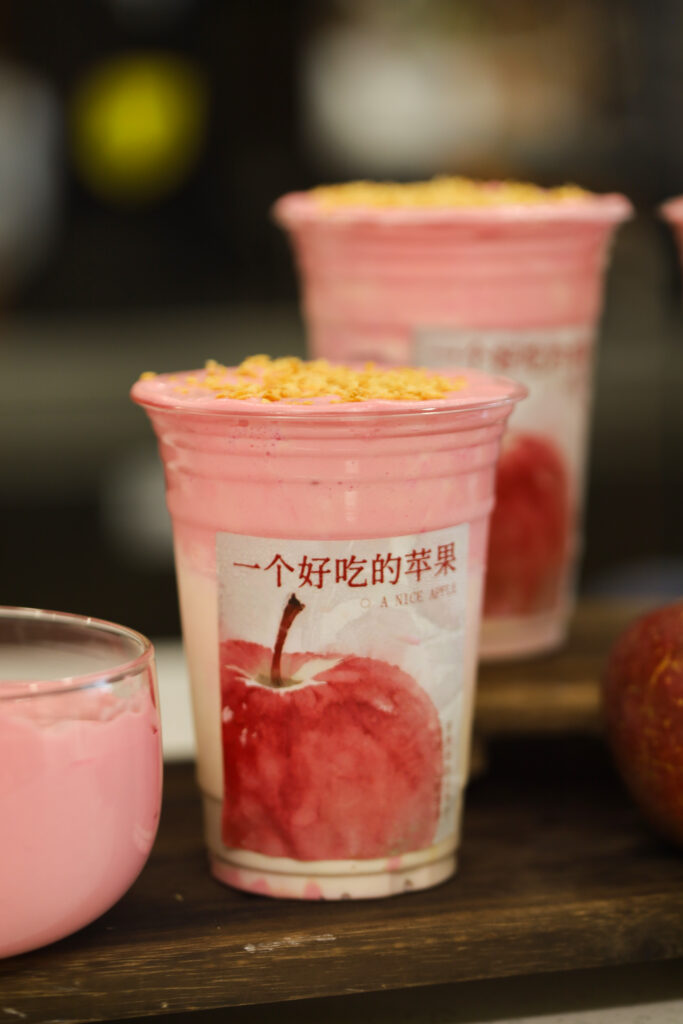
Write menu names that highlight the hero fruit and tea first. Consumers decide in seconds; clear, evocative names boost trial without extra marketing copy.
Quality Control, Delivery, and Packaging That Protects Texture
A fruit tea frappe starts dying the second it leaves the blender jar. Your job is to keep the slush cold and the foam intact as it travels.
QC at pour: check for uniform color, a light foam cap, and a ribboning pour. If the drink sheets flat, you either under‑iced or over‑blended.
Packaging: choose double‑walled cold cups or use insulating sleeves; dome lids minimize headspace over the foam. For delivery, separate cold beverages from hot foods and stage upright. Merchant resources emphasize insulation, stable carriers, and shorter dwell time before pickup; see DoorDash’s packaging and temperature guidance for merchants for practical tips.
Ops tweaks that help: pre‑chill cups during peak heat, keep a freezer pack in the handoff area for driver staging, and print “enjoy within 20 minutes” on beverage labels.
FAQs for Consumers and Bar Teams
Is a fruit tea frappe dairy‑free by default?
Usually, yes. The base is tea, fruit, ice, and optional syrup. Some shops add a small milk cap or cream for body. If you need dairy‑free, ask for no dairy add‑ons.
How much caffeine is in a fruit tea frappe?
It depends on the tea. Green, jasmine, oolong, and black teas contain caffeine; rooibos and many herbals don’t. Ask which base is used and request an herbal alternative if needed.
Can I ask for less sugar or a different sweetener?
Absolutely. Because a fruit tea frappe is built to order, you can reduce syrup, switch to a zero‑sugar syrup if available, or lean on the fruit’s natural sweetness.
What should operators do if foam collapses fast?
Start colder, reduce blend time slightly, and verify ice weight. Over‑blending warms the mix and knocks out microfoam. Dull blades also flatten texture; maintain equipment.
Any quick advice for first‑time consumers ordering delivery?
Pick familiar fruits at first, then branch out. If you’re traveling more than 20 minutes, request extra ice for a thicker start so the fruit tea frappe arrives at the right texture.
Closing Thoughts
The fruit tea frappe shines when your technique is tight and your flavors are deliberate. Lock in your SOPs, train to the gram, and use the regional playbook to rotate seasonal heroes without retraining the whole team. If you’re a consumer, now’s the perfect time to try a seasonal fruit tea frappe at your local café—or order one for delivery and taste how the tea base keeps it crisp rather than heavy.
References and notes: Category and technique context draw on Wikipedia’s entry on frappé coffee; consumer‑friendly definitions from Nescafé’s overview of what a frappé is; blending and load‑order guidance from Vitamix’s blender how‑to, Vitamix The Quiet One documentation, and Blendtec’s use and care page; food‑safety cold holding per the FDA Food Code 2022; costing context from Lightspeed’s COGS and food cost guidance and the National Restaurant Association’s 2024 analysis commentary; and delivery packaging from DoorDash’s merchant packaging guide.