
If you want a snack add-on that feels “fresh” without turning your boba tea shop into a full bakery, Asian milk bread buns (tangzhong-style) are a smart place to start.
They’re soft, lightly sweet, and easy to sell as a warm pairing with milk tea, fruit tea, or matcha. The texture comes from an enriched dough technique called tangzhong milk bread (a cooked flour-and-liquid starter that helps the crumb stay soft).
And because you’re using a par-baked frozen bread finishing model, you can bake in tiny batches around your rushes instead of guessing how many pastries will sell.
This guide is built for the reality you described: US boba shops, par-baked/frozen supplier, finish-bake in shop, and customers asking for halal-friendly and “free-from” options (dairy-free, egg-free, gluten-free). In other words: it’s built for boba shop snacks to increase AOV, not a full pastry program.
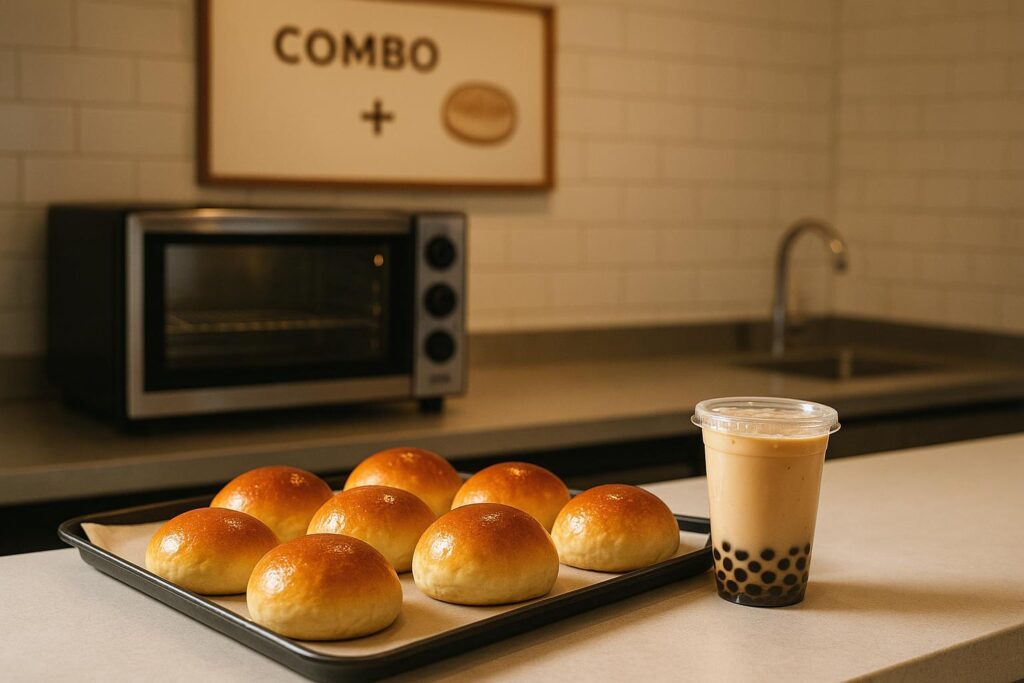
Why milk bread works as a boba add-on (and where it doesn’t)
Milk bread is an upsell win because it hits three things at once:
·It pairs naturally with drinks. Customers already understand “drink + snack.”
·It smells like value. Fresh-baked aroma does a lot of selling for you.
·It’s forgiving. Soft buns stay pleasant longer than crisp pastries if your timing isn’t perfect.
The operational catch: milk bread only helps AOV if you run it like a program, not a random pastry case.
If you bake a big tray in the morning and let it sit, it becomes a slow-moving item that quietly eats your margin. If you treat it as a rush-based, micro-batch add-on with bundling, it can become one of your most reliable “yes” items.
Key Takeaway: You’re not trying to become a bakery. You’re trying to create a repeatable “warm add-on” that staff can execute during peak.
Milk bread buns for bubble tea shop: decide your program in 15 minutes
Before you pick flavors, answer these five questions:
1) What’s your success metric?
For an average order value (AOV) play, track two numbers for 2 weeks:
·Attachment rate: % of drink orders that include a bun
·Waste rate: buns baked vs. buns sold
If you don’t track these, you’ll argue about “how it feels” instead of fixing what’s broken.
2) What’s your bake window?
You said you have no special kitchen constraints, which is great. Still, be honest:
·Can your oven handle one small tray every 20–30 minutes during rush?
·Can one staff member load/unload and package without killing drink speed?
3) What’s your max SKU count?
Start with 2–4 SKUs. Not eight. Variety looks good on Instagram, but it’s brutal on waste.
4) Will you sell it as an add-on or as a bundle?
Bundles win because they reduce decision friction.
5) What claims are you willing to make?
If you want halal-friendly and free-from options, you need a clear policy on ingredients and cross-contact (more on that later).
Best practice #1: Choose 2–4 SKUs that travel and upsell well
Why it matters
Milk bread can be a high-margin add-on, but only if it’s consistent.
The fastest way to lose money is to carry too many versions that sell unpredictably.
How to implement it
Pick one “hero” SKU that sells all day, then add one rotating flavor and (optionally) one savory option.
A practical starter set:
·Original glazed milk bun (simple, kid-friendly, lowest training)
·Honey butter milk bun (easy premium upcharge)
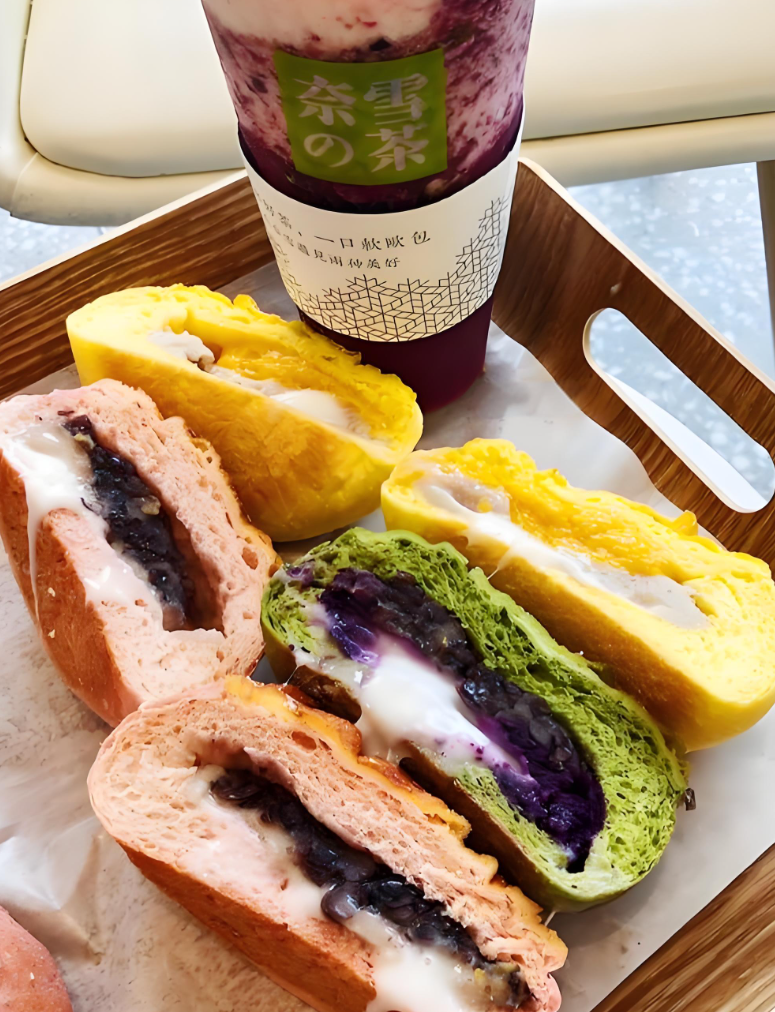
·Red bean or custard-filled bun (dessert vibe without being messy)
·Savory: scallion/garlic butter bun (pairs with tea and attracts lunch traffic)
If you don’t want fillings (to keep ops simpler), do two textures instead:
·one plain/soft bun
·one topped bun (crumb, sesame, sugar crust)
What failure looks like
·You add 6+ SKUs, staff can’t explain them, and customers hesitate.
·You pick a bun that tastes great fresh but gets dry fast, so the afternoon product disappoints.
Example in a boba shop
Your menu board shows:
·“Add a Warm Milk Bun +$2.50”
·“Make it a Combo: Any Milk Tea + Milk Bun (Save $0.50)”
That’s it. Simple beats clever.
Best practice #2: Build a par-baked frozen bread finishing workflow around your rushes
Why it matters
The par-bake model is valuable because you bake to completion at the point of service. That keeps the product tasting fresh while letting you control waste. BAKERpedia describes par-baked items as partially baked and then “baked to completion at the point of sale or service” in its guide to baking frozen par-bake products (2025).
How to implement it
Build a schedule around your actual dayparts. A simple baseline:
·Open (first 30 minutes): bake a tiny “signal batch” (enough for the first wave)
·Peak rush: bake in micro-batches (e.g., every 20–30 minutes)
·Between rushes: stop baking and push bundles of remaining warm product
·Last bake time: set a hard cutoff so you’re not closing with leftovers
Operational tips that keep this realistic:
·Keep a “next tray” staging area so staff isn’t hunting for product.
·Use a timer system everyone can see.
·Write down your first 2 weeks of batch sizes. Don’t trust memory.
Pro Tip: If one person can’t run drinks and the oven at the same time, assign “oven + packaging” to the register side during rush. Drinks stay fast, and add-ons don’t get forgotten.
What failure looks like
·You bake one big batch “to be safe,” then spend the rest of the day discounting or tossing.
·You wait until you’re sold out to bake again, so customers stop asking.
Example micro-batch math (simple)
If you average 60 drinks/hour during peak, and you want a 15% attachment rate, you need about:
·60 × 0.15 = 9 buns/hour
So a tray of 12 buns is roughly a 60–90 minute window—depending on how strong your upsell is.
Best practice #3: Packaging + holding so it stays “soft + fresh”
Why it matters
Milk bread’s main selling point is texture. If it gets soggy, tough, or dried out, the repeat purchase disappears.
Frozen/par-baked bread quality is sensitive to moisture and frost. Munters notes frost prevention as a quality concern in its 2024 spotlight on par-baked frozen bread.
How to implement it
Focus on three control points: freezer, post-bake hold, to-go packaging.
Freezer and staging
·Keep cases sealed until needed.
·Don’t let product sit open in a humid back room (condensation is the enemy).
·Stage only what you can bake in the next cycle.
Post-bake holding
·Aim to sell “warm” within a defined window (set a house rule).
·If you have a warmer, keep it low and avoid steam-heavy heat that softens crust too much.
To-go packaging
You want packaging that:
·protects the bun
·doesn’t trap too much steam
·is fast for staff
A practical combo is a paper sleeve or vented bag plus a sticker label.
What failure looks like
·You bag buns while they’re piping hot in non-vented plastic. Condensation turns the bun surface sticky.
·You hold product too long “because it’s still edible,” and regulars notice the quality drop.
Example: “warm bun” standard
Train staff to describe it consistently:
·“Fresh-baked this hour.”
·“Warm and soft right now.”
Consistency sells.
Best practice #4: Bundles, menu placement, and staff scripts that feel natural
Why it matters
AOV doesn’t increase because the bun exists. It increases because customers are reminded at the right moment—and the offer feels easy.
Menu placement and suggestion timing matter. Checkmate’s 2024 menu optimization tactics highlights how design and placement influence what people notice. If you use digital menus, Calisto also outlines how visual suggestions and bundling can lift AOV in its 2026 overview of digital menu AOV levers.
How to implement it
Put the offer where the customer is already saying yes
Three easy placements:
·next to your best-selling milk tea
·at the register (“Warm bun add-on”)
·at checkout in online ordering
Use one script, not five
Train one default line:
·“Want to add a warm milk bun today? It pairs really well with that drink.”
If you want a stronger nudge, make it about value:
·“We have a drink + bun combo that’s a better deal than buying them separately.”
Bundle design that protects margin
Instead of discounting heavily, do one of these:
·small bundle discount (just enough to feel real)
·bundle with a premium drink (protects margin)
·tiered bundles (drink only / drink + bun / drink + bun + topping)
What failure looks like
·Staff forgets to ask because it isn’t part of the routine.
·The bundle is complicated (customers ask questions, line slows down).
Example: a clean bundle ladder
·“Add warm bun +$2.50”
·“Combo: Any Milk Tea + Warm Bun (Save $0.50)”
·“Combo+: Milk Tea + Warm Bun + Add topping (Save $0.75)”
Best practice #5: Handle halal-friendly + free-from requests without risky claims
Why it matters
These requests are real revenue opportunities—but they also create risk if you over-promise.
You can offer options, but you need to communicate clearly about ingredients and cross-contact.
FoodAllergy.org explains why accidental transfer (cross-contact) is a core risk in shared environments in its guidance on avoiding cross-contact.
How to implement it
Start with “ingredient truth,” not marketing labels
When you bring in a par-baked product, require:
·ingredient list
·allergen statement
·facility statement (if available)
·halal certification documentation (if you plan to claim certified halal)
If you can’t get documentation, don’t make strong claims.
Use clear, conservative language
Good phrasing in a shared kitchen:
·“Made with no dairy ingredients” (if true)
·“No egg ingredients” (if true)
·“Gluten-free ingredients” (if true)
·“Halal-friendly ingredients” (if no pork/alcohol-derived ingredients are used)
If cross-contact is possible, say so.
⚠️ Warning: “Gluten-free” means different things to different customers. If you can’t run dedicated equipment and storage, don’t imply zero risk. Be honest about your process.
Reduce cross-contact where it matters most
Even in a small shop, you can dramatically lower risk by having:
·a dedicated tong
·a dedicated tray
·a dedicated holding area
·a clear staff rule: glove change + surface wipe before handling
If you choose to offer a true gluten-free option, treat it as its own program:
·separate storage
·separate tools
·separate bake surface (if possible)
What failure looks like
·Staff guesses when asked about ingredients.
·Your menu uses strong labels with no process behind them.
Example: a simple counter response
·“We can show you the ingredient and allergen sheet for this bun. It’s made without dairy ingredients, but we do handle dairy in the shop, so cross-contact is possible.”
That’s honest, and it builds trust.
Troubleshooting: the 7 most common ways milk bread fails in shops
1) It’s tasty—but it doesn’t attach to drinks
Fix: bundle it with your top 3 drinks and make staff ask every time.
2) Waste is creeping up
Fix: drop SKU count, shrink batch size, and set a hard “last bake time.”
3) The bun is soft, but packaging ruins it
Fix: avoid trapping steam. Use vented paper packaging for warm items.
4) Staff avoids it during rush
Fix: simplify the workflow. Pre-label. Pre-stage trays. Assign oven ownership.
5) Customers ask for gluten-free/dairy-free and you freeze up
Fix: keep a printed (or digital) allergen sheet and train staff to never guess.
6) Quality is inconsistent between shifts
Fix: write the bake time/temp, tray size, and “sell-by window” as an SOP.
7) You tried to do too much too fast
Fix: start with 1–2 SKUs and one bundle. Earn the right to add variety.
Next steps: make this a repeatable AOV lever
If you want more practical operator guides for bubble tea shops—ingredients, menu ideas, and SOP-style tips—use BubbleTeaSuppliers.com as a resource hub.
And if you’re building (or refreshing) your core drink menu, start with a clean baseline on Bubble Tea basics, then explore flavor positioning ideas like Matcha Bubble Tea to design bundles that feel natural.