
If you run a café, milk tea shop, or premium beverage bar, you know the challenge: clumps, dull color, inconsistent strength, and a queue that won’t quit. This guide gives you plug-and-play SOPs for hot and iced matcha drinks that your team can learn in a single shift—while keeping visual appeal high and food cost predictable. We’ll anchor on grams and degrees, show when to use a steam wand vs. a shaker, outline batch options, and include pragmatic QC so every cup looks and tastes dialed.
The café-ready matcha base: sifting, paste, and temperature
Matcha behaves differently from espresso: it doesn’t dissolve; it suspends. That’s why dispersion and temperature control matter as much as dose.
Sift first. Storage compacts fine powder and traps static; sifting breaks clumps so water can coat particles evenly. Waterloo Tea explicitly starts with a fine-mesh sieve to achieve a smooth, frothy base, noting that hotter water can increase bitterness while cooler water protects color and flavor (60–70°C) — see the guidance in the How to Make the Perfect Cup of Matcha article by Waterloo Tea.
Make a paste (a small “shot”). Instead of dumping water onto dry powder, add a short pour of warm water to sifted matcha, then whisk or shake until glossy and lump-free. Ippodo’s café recipes consistently target ~80°C/176°F water and doses around 3 g for a latte, which is a reliable center point for service — see the Ippodo Tea matcha latte recipe.
Mind your temperature band. Boiling water mutes aroma and turns greens olive; too cold can reduce dispersion. For a practical service window, use 140–180°F (60–82°C) to form paste, leaning 160–175°F (70–80°C) for robustness. Barista Magazine’s café-focused primer echoes that sub‑boiling range to preserve sweetness, umami, and color — outlined in A Beginner’s Guide to Café‑Quality Matcha (Barista Magazine).
Principle: Sifting improves dispersion; moderate heat protects chlorophyll and reduces bitterness. Think of sifting as “pre-breaking the rocks” so your water doesn’t have to do it under pressure.
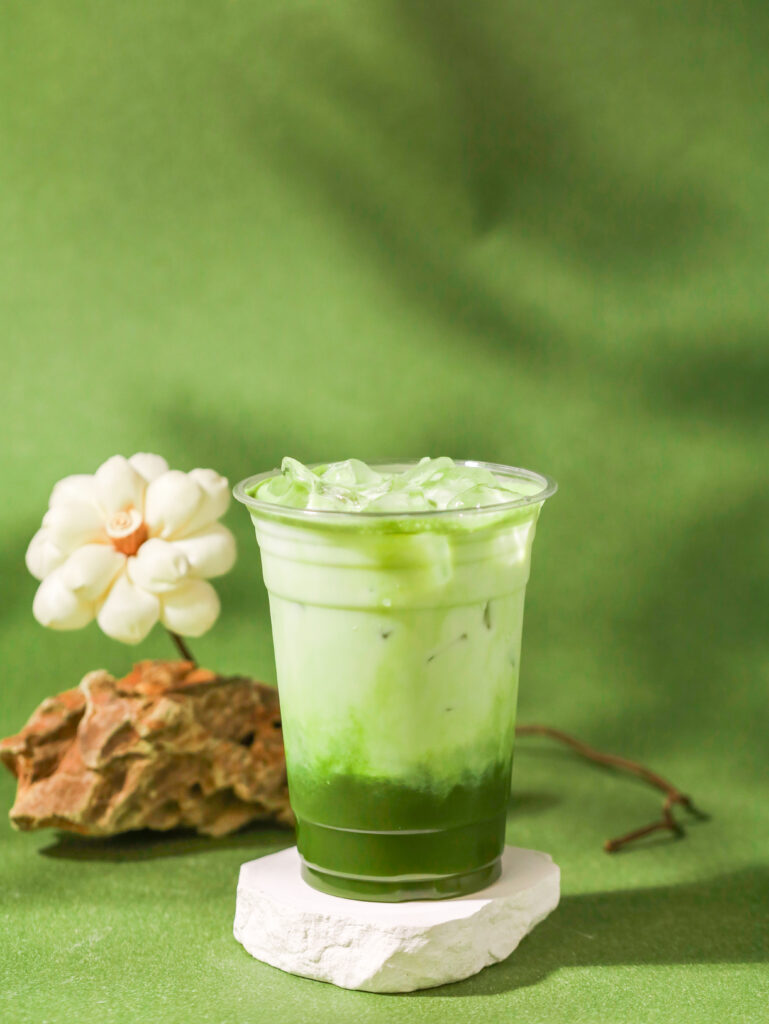
Easy matcha drink recipes for cafes — three SOPs
These standard builds prioritize repeatability and speed. Use a 0.1 g scale and calibrate dose by taste once, then lock it.
Hot Matcha Latte (Steam‑Wand Method, 12 oz)
Intensity target: balanced, tea‑forward.
Ingredients and specs (per cup):
Matcha: 2.5–3.0 g (about 1 to 1.5 tsp), sifted
Water for paste: 30–60 ml at 160–175°F (70–80°C)
Milk: 180–200 ml (to 12 oz total yield), steam to 130–140°F (55–60°C) with fine microfoam
Optional syrup: 10–20 ml (vanilla, brown sugar, honey simple)
Steps:
Sift matcha into a small pitcher. Add measured hot water and whisk to a smooth paste (10–15 seconds).
Dose syrup into the serving cup if using.
Steam milk to 130–140°F (55–60°C) with a silky microfoam suitable for latte art. Milk sweetness peaks in this band; avoid scalding above ~158°F/70°C. Best‑practice milk targets are covered by Barista Hustle’s temperature guidance and their microfoam lessons.
Combine: Pour matcha paste into the cup, then add steamed milk. Finish with a gentle swirl or art.
Timing: 2–3 minutes per cup once mise en place is set. If you run an espresso bar, this workflow slides into your latte rhythm.
Calibration note: If the cup tastes thin, add 0.5 g matcha; if it reads bitter/astringent, drop water temp toward 150–160°F or reduce dose by 0.5 g.
Iced Layered Matcha Latte (Shaker Method, 16 oz)
Intensity target: visually layered, milk‑forward.
Ingredients and specs (per cup):
Matcha: 3.0–3.5 g (about 1.5 to scant 2 tsp), sifted
Water for shake: 60 ml (room temp to cool)
Cold milk: 200–240 ml
Syrup: 10–25 ml, to market preference
Ice: fill a 16 oz clear glass
Steps:
In a shaker, combine sifted matcha and water. Shake vigorously 15–30 seconds to form a smooth, slightly foamy base. This fast shaker approach is widely recommended in iced recipes such as the Naoki iced matcha latte method.
In a clear glass, add syrup (if using), then load with ice and pour in cold milk.
Float the matcha: Pour the shaken matcha slowly over a bar spoon or against the inside wall to create clean layers.
Serve as‑is for the “ombre” look or offer a straw for blending.
Timing: About 90–120 seconds per cup with practice; batch your syrup and keep matcha tins close to reduce motion.
Principle: Layering follows density. Sweetened milk sits heavy at the bottom; a well‑aerated matcha + water mix can float if poured gently. Want a uniform look? Skip the float and do a short 5–10 second second shake with the milk.
Minimal‑Tools Workflow (Frother or Bottle‑Shake)
No steam wand? No problem. For hot service, sift 2.5–3.0 g matcha into a mug, add 30–50 ml water at ~160°F/70°C, and blend with an electric frother for 10–15 seconds until glossy. Warm milk separately (stovetop or pitcher steamer/nano‑foamer) to ~140°F/60°C and combine. For iced, lean on the shaker method above; if you don’t have a bar shaker, a lidded protein bottle works—just ensure the lid seals tightly, and rinse immediately to avoid staining.
Batch prep and mise en place for rush hours
Batching is your friend when the line hits the door. Create a smooth base you can portion by the ounce, then finish hot or iced.
10‑cup matcha paste concentrate (short‑hold, refrigerated):
Matcha: 20–30 g, sifted (dose depends on intensity and grade)
Water: 300 ml at cool to tepid temperatures (≤104°F/40°C)
Method and handling:
Add sifted matcha to a sanitized container. Add measured water (≤40°C) and blend gently with an immersion blender or whisk until uniform.
Rest 2–3 minutes, then pass through a fine strainer if micro‑clumps remain.
Transfer to an opaque, airtight bottle; label with date and time; refrigerate promptly at ≤40°F/4°C. Agitate before use.
Use a conservative holding policy aligned with your HACCP plan (many operators choose same‑day to 24 hours). For café‑minded best practices around batching and temperature control, see Batching Matcha – Best Practices for Cafes (Matcha Program).
Serving from concentrate: Portion 25–30 ml per 12–16 oz drink as your “shot,” then build with milk and syrup per the hot or iced SOPs above.
Simple syrup mise en place (speed and sweetness control):
1:1 simple syrup is fast and versatile: equal parts sugar and water, dissolved and chilled.
2:1 rich syrup is sweeter per milliliter and can extend refrigerated life but may crystallize; re‑warm gently to fix. For a concise comparison of 1:1 vs 2:1 ratios, see Difford’s Guide on simple vs rich syrup.
Label every batch, date it, and discard at the first sign of spoilage. If your local code mandates fixed timelines (e.g., 7 days), follow that over generalized advice.
Visual appeal and plating for premium service
Presentation sells—especially in milk tea and premium bars. To stage a clean ombré iced latte, build syrup and milk first, pack the ice, then slow‑pour the matcha. If the top layer sinks immediately, your matcha base may be too warm or under‑aerated; cool it and shake longer. Clear, straight‑sided glassware amplifies the gradient; double‑walled glasses keep condensation tidy.
Garnishes should be light, dry, and food‑safe: a fine matcha dusting through a tea strainer, a whisper of citrus zest using a microplane, or a pinch of toasted coconut. Avoid wet garnishes that bleed color or fall into the straw path. For hot lattes, hold dusting to a minimal veil to protect microfoam texture.
Principle: Contrast drives perceived value. Color contrast (emerald over white milk), texture contrast (microfoam vs. liquid), and clean edges create “I’ll have what they’re having” moments.
Consistency, QC, and troubleshooting
Locking consistency is easier when you measure by weight and set a few non‑negotiables.
Dose bands by size and intensity: As a starting point, use ~2 g for 8 oz mild, 3 g for 12–16 oz standard, and 4 g for strong. These ranges mirror common café practice compiled from sources like Soar Organics and Ippodo’s latte dosing; see Soar Organics’ dose guide and the Ippodo latte spec. For iced builds with lots of milk and ice, bump toward the high end.
Temperature checkpoints: Keep paste water between 140–180°F (60–82°C) and milk at 130–140°F (55–60°C) for hot service. Above these, you risk dull color, bitterness, or flat milk texture. Barista Magazine and Barista Hustle each support these sub‑boiling/latte‑sweetness targets.
Color QA: Target vibrant, saturated green. If the drink looks dull or olive, diagnose in this order: water too hot; powder stale or oxidized; insufficient sifting/dispersion; prolonged warm holding or light exposure. Storage FAQs from Ippodo emphasize airtight, cool, and dark storage after opening, which helps preserve color and aroma — see Ippodo’s storage FAQ.
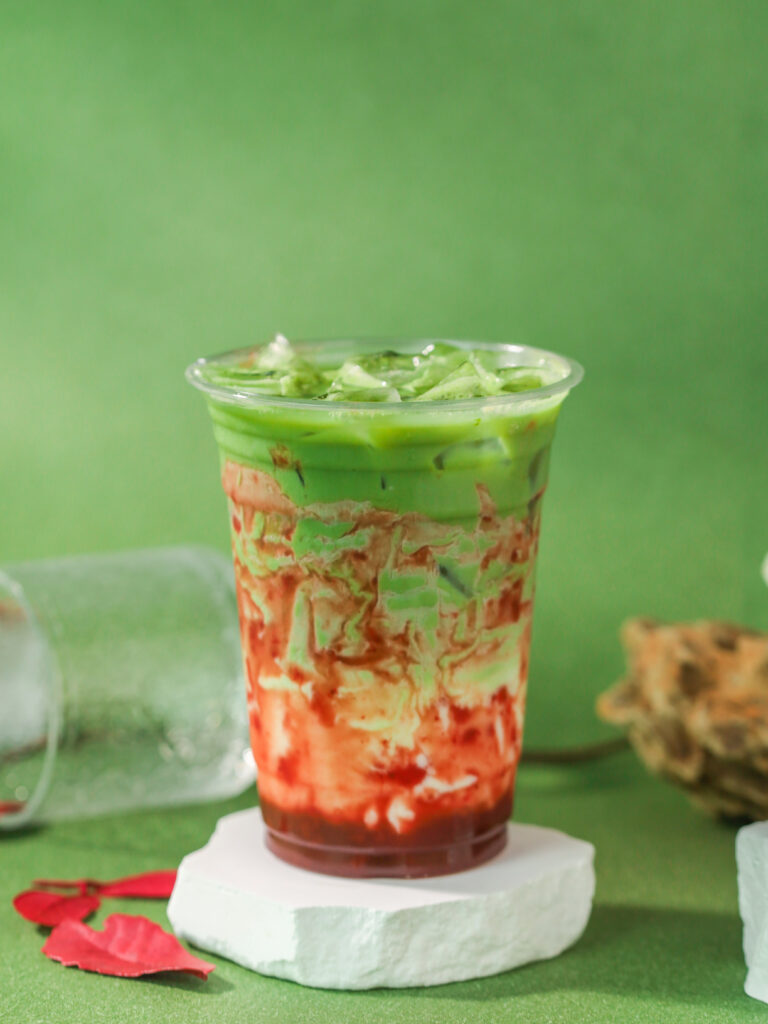
Taste calibration: Bitterness or astringency usually means overheated water or overdosing. Reduce water temp into the 150–165°F band and/or trim matcha by 0.5–1 g. Thin flavor? Increase dose or shorten milk volume by 20–30 ml. Separation in iced drinks? Shake the matcha base longer and serve promptly.
Service QC: Weigh matcha (0.1 g resolution), time your shakes (15–30 s hard, 5–10 s gentle if blending with milk), and spot‑check milk temps at the wand. One quick daily calibration—taste a standard hot latte and a standard iced—keeps the whole team on the same page.
Regional adaptations and menu engineering
Different markets lean toward different sweetness, sizes, and add‑ons. Use the same SOPs, then tune the sugar and garnish.
North America (NA): Larger iced formats (16–24 oz) and sweetness tolerance—especially in boba contexts—are common. Brown sugar, vanilla, and fruit pairings sell well. Layered ombré visuals drive social shares, an angle echoed in café media coverage of “Instagrammable” drinks such as those discussed by Barista Magazine’s visual trends.
Europe (EU): Smaller sizes (8–12 oz) and lower sweetness. Keep lattes tea‑forward; consider oat or lactose‑free milk options. Offer a 2 g “espresso‑size” hot latte for flavor clarity.
Middle East (ME): Climate favors iced service and non‑alcoholic sweets; ensure syrups are halal‑friendly. Pistachio or rose accents fit local tastes; robust ice programs matter during peak heat.
Southeast Asia (SEA): Strong iced/boba demand with openness to plant‑based milks. Coconut milk and pandan or palm‑sugar syrups pair nicely; keep shaker and blender lines efficient.
Menu engineering notes: Let dose guide cost. If your matcha costs, say, $0.40 per gram, a 3 g standard latte carries about $1.20 in matcha cost alone; a 4 g strong build adds $0.40. Calibrate retail prices and upsells (alt‑milks, boba, whipped toppings) around that sensitivity. While exact price bands vary by city, this dose‑to‑cost framing keeps decisions grounded.
Training and service flow
The fastest bars script roles. One efficient two‑staff dance during rush:
Station A (Steam Wand): Builds hot lattes—sifts matcha into a small pitcher, forms paste, steams milk, and pours.
Station B (Shaker): Preps iced line—builds glasses with syrup/ice/milk, shakes matcha base, and floats it to finish.
Batch support: A third, off‑peak role preps and labels matcha concentrate and syrups, restocks ice, and audits color/texture with a quick daily tasting.
Time expectations: Once trained, hot lattes should run ~2–3 minutes per cup and iced layered builds ~1.5–2 minutes. For a two‑person bar, that supports steady 40–60 cups/hour across mixed formats when mise en place is tight and recipes are locked. Your numbers will vary, but the cadence is achievable.
Documentation habit: Print SOP cards for each station (dose, water temp, shake times, milk temp). Tape them inside cabinet doors at eye level. Label every batch with product, ratio, date, time, and preparer initials. Small rituals prevent big errors.
Frequently asked technique questions (quick hits)
Do I have to use a bamboo whisk? No. A fine‑mesh strainer plus a good shake or an electric frother yields café‑quality dispersion. A traditional whisk is nice but not mandatory.
What if I only have boiling water? Cool it quickly by pouring into a room‑temp pitcher first, then measure. Aim for the 160–175°F band before it touches matcha.
Why does my iced latte turn khaki after an hour? Oxidation and temperature. Build to order, minimize warm holding, and keep concentrates cold and opaque.
Can I pre‑mix matcha with milk? It’s possible but less stable and harder to QC. Keep concentrate water‑based and add milk to order.
Further reading and sources
Sifting and cooler water for smoother flavor and color: Waterloo Tea’s step‑by‑step guide (temperature band 60–70°C).
Latte dosing and water temp baseline around 80°C/176°F: Ippodo’s matcha latte recipe and storage FAQ.
Café‑style matcha temperature ranges and color/bitterness notes: Barista Magazine’s café‑quality matcha primer.
Shaker workflow for iced builds: Naoki’s iced matcha latte method.
Milk steaming targets and microfoam principles: Barista Hustle on latte temperature and microfoam.
Batching and handling guidance for cafés: Matcha Program’s batching best practices.
Simple vs. rich syrup ratios: Difford’s Guide on 1:1 vs 2:1 syrup.
Closing thought: Standardize once, then teach the pattern. With a sift‑paste base, disciplined temps, and a shaker or steam wand, you’ll get the color, the flavor, and the speed—day after day. Ready to calibrate your team and lock the spec?