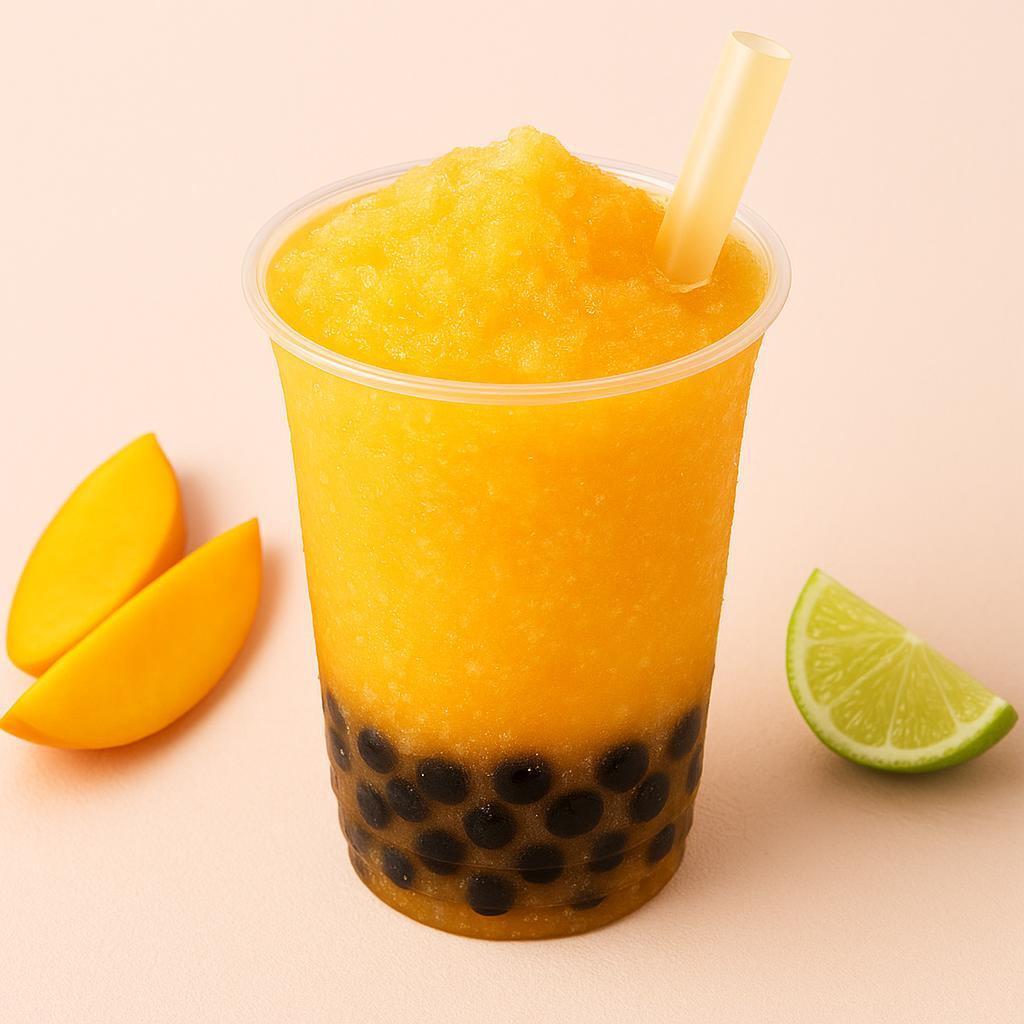
Slush boba tea is one of those drinks that should feel like a frozen dessert: bright flavor, tiny ice crystals, and chewy boba at the bottom.
But if you’ve ever tried making it and got something chunky, watery, or separated after two minutes, you’re not alone. The good news: a smooth boba slush isn’t about secret ingredients—it’s about controlling temperature, sweetness, and blending time.
This guide is written like an SOP: the ratios that work, a step-by-step build, plus a troubleshooting table for the most common failures.
What “slush boba tea” actually means (so you hit the right texture)
A boba slush (also called a bubble tea slush or boba slushie) is a tea- or fruit-based drink blended with ice until it becomes partially frozen—tiny ice crystals suspended in liquid.
Two important notes before you start:
Don’t blend tapioca pearls. Cook them separately and add them to the cup after.
A “good” slush is not a smoothie. It should be pourable, but thick enough that it holds its shape for a short window.
Equipment you need (and what actually matters)
You can make a boba slush at home with a basic blender, but if you want consistently smooth texture, blender power matters.
Essential
High-speed blender (best): makes smaller ice crystals faster, which helps texture.
Wide boba straws: standard straws won’t work.
Scale or measuring cup: consistency comes from repeatable ratios.
Pot + strainer: for cooking boba.
Optional, but helpful for shops
Shaker cup (for non-slush builds and fast mixing)
Refractometer (for Brix): if you’re serious about frozen consistency, it’s the quickest way to dial in sweetness.
Pro Tip: If you’re using a slush machine (or aiming for machine-like texture), sugar concentration matters. Many operators target a mix around 13–15 Brix for slush consistency, as described in Jeffrey Morgenthaler’s slushie machine guide
.
Ingredients (and why they matter)
The base (choose one)
Chilled tea (black, jasmine green, oolong)
Fruit juice (mango, passionfruit, grape, etc.)
Milk + tea (for milk tea slush)
The texture lever: sweetener
If your slush keeps turning icy, this is usually the reason.
Sugar doesn’t just make the drink sweet—it helps keep the mixture partially liquid at freezing temperatures through freezing point depression, which helps control ice crystal formation. A clear explanation is in FoodCrumbles’ overview of freezing point depression
, and a slush-specific explanation is in GSEICE’s “How Slushy Machines Work”
.
Practical options:
Simple syrup (1:1 sugar and water): easiest at home.
Use fresh, hard ice straight from the freezer. If you can use crushed or pebble ice, blending is faster and you’ll get less “watery” melt.
Boba (tapioca pearls)
Cooked boba has a short quality window. If you want a quick primer on the category, see What’s the difference between boba and tapioca?
.
The core ratio (start here)
Use this boba slush recipe baseline for one 16–20 oz serving.
Chilled base liquid (tea/juice/milk mix): 180–240 ml (¾ to 1 cup)
Sweetener: 25–45 ml (about 1–1½ oz) or to taste
Ice: 250–350 g (about 2–3 cups), depending on blender strength
Cooked boba: 60–80 g (about 2–3 oz / ¼ cup)
Quick check: If your slush is chunky or separates fast, it’s usually either (1) your base liquid wasn’t cold, (2) you didn’t have enough dissolved sugar/syrup, or (3) you blended too long and melted the ice.
Step-by-step: slush boba tea SOP
If you’re looking for exactly “how to make boba slush” without guesswork, follow the steps below and adjust only one variable at a time (ice, syrup, or base strength).
Step 1: Chill your base (don’t skip)
Brew your tea or prep your juice, then chill it.
Done when: the base is fridge-cold (or at least room temp), not warm.
Step 2: Cook and sweeten the boba
Cook boba according to package directions. (Brands vary.) After cooking, rinse briefly and soak in syrup to keep it sweet and prevent sticking.
For holding/discard habits commonly used in shops, this practical guide emphasizes labeling batches and keeping boba coverage with syrup: Fanale Drinks’ boba cooking and holding guide
.
Done when: pearls are chewy all the way through (no hard core), glossy, and not clumped.
Step 3: Pre-load the cup
Add boba to the cup first.
Add 60–80 g cooked pearls.
Optional: add a small spoon of syrup from the boba container.
Done when: pearls cover the bottom in a single layer.
Step 4: Blend the slush (fast)
In the blender:
Add chilled base liquid.
Add sweetener.
Add ice.
Blend on high until smooth and pourable.
Keep it quick—over-blending heats the mixture and melts the ice.
Done when: you see a consistent slushy texture with no big ice chunks, and it pours in a thick stream.
Step 5: Assemble and serve immediately
Pour the slush over the boba and serve with a wide straw.
Done when: the slush is thick, the boba moves through the straw, and the drink doesn’t separate in the first minute.
Three flavor templates you can repeat (instead of reinventing every recipe)
If you run a shop, templates are how you scale consistency.
Template A: Fruit tea slush (bright, non-dairy)
Best for: mango, passionfruit, lychee, grape, citrus.
Tea base: jasmine green tea or green tea
Fruit component: juice/syrup/puree
Sweetener: syrup as needed
For shop-style slush builds and blend times, see New Drinks
.
Template B: Milk tea slush (dessert-like)
Best for: classic black milk tea, roasted oolong, caramel notes.
Strong tea base (chilled)
Milk or non-dairy creamer
Sweetener (syrup)
Ice
Pro Tip: Milk tea slushes often taste “flat” if you don’t brew tea strong enough. Make your tea a little stronger than your iced version because ice will dilute it.
Template C: Creamy “treat” slush (taro-style or ice-cream style)
Best for: taro, matcha dessert vibes, seasonal LTOs.
Water or tea base
Flavor powder/paste
Sweetener
Ice
Optional: small scoop of ice cream for richer mouthfeel
Why slush gets icy (and how to fix it fast)
If you only remember one thing: smooth slush = sugar + motion + cold ingredients.
A slush works because sugar lowers freezing point and constant mixing keeps crystals small. That’s why slush machines continuously stir while freezing, as explained in GSEICE’s slush machine breakdown.
Here’s the practical translation:
Not sweet enough → freezes into bigger crystals → icy texture
Warm base → melts ice while blending → watery separation
Blended too long → blender heat melts ice → thin drink
Troubleshooting: fix the 8 most common problems
Slush is chunky / icy
Likely causes:
Base wasn’t cold
Not enough dissolved sugar/syrup
Blender not powerful enough for big cubes
Fixes:
Chill your base harder.
Add a little more syrup next time (small adjustments).
Use crushed/pebble ice.
Slush separates fast (ice floats, liquid sinks)
Likely causes:
Over-blended (melted too much)
Not enough solids/syrup to stabilize
Fixes:
Blend faster.
Increase syrup slightly.
Serve immediately.
Slush is watery
Likely causes:
Too little ice
Base was warm
Fixes:
Add more ice.
Pre-chill the base and blender pitcher.
Slush is too thick to pour
Likely causes:
Too much ice
Not enough liquid
Fixes:
Add a splash of tea/juice and pulse 1–2 seconds.
Boba is hard in the center
Likely cause:
Undercooked or insufficient resting/steeping
Fix:
Cook longer and taste-test; follow your pearl brand’s instructions.
Boba is mushy
Likely cause:
Overcooked or held too warm too long
Fix:
Shorten cook/rest time and reduce holding time.
Boba clumps together
Likely causes:
Not enough syrup coverage
Not stirred during holding
Fix:
Keep pearls covered in syrup and stir occasionally; see holding guidance in Fanale Drinks’ boba guide.
Drink tastes “weak” after blending
Likely cause:
Dilution from ice
Fix:
Brew tea stronger (or increase fruit concentration) before blending.
Service + food safety notes (important for shops)
Cooked boba is not a “make it once and forget it” ingredient.
Many operators label boba batches and hold them for only a few hours for quality.
Avoid holding cooked tapioca pearls at room temperature overnight; for a safety-focused discussion, see Risky or Not’s episode on cooked tapioca left out overnight.
If you need a broader operational framing of bubble tea categories (fruit tea vs bubble tea, and how pearls fit into each), this guide is a good internal reference: Fruit Tea vs Bubble Tea: A Clear Guide for North America
.
FAQ
Can I make slush boba tea without a high-speed blender?
Yes, but use smaller ice (crushed/pebble) and expect a shorter “perfect texture” window. Blend in short bursts so you don’t melt the drink.
Should I sweeten before blending or after?
Before. Dissolved sugar/syrup helps texture during freezing and blending.
Can I store the slush mix for later?
Not really. The slush texture is time-sensitive; it will separate as ice melts. Make to order.
Can I refrigerate cooked boba?
You can, but texture usually hardens and becomes unpleasant. Most shops treat boba as a fresh, same-day ingredient.
Next steps
If you’re building a slush menu (not just one recipe), start collecting 3–5 “templates” your staff can repeat reliably: fruit tea slush, milk tea slush, and one dessert-style slush.
For more shop-friendly recipe builds and menu ideas, use BubbleTeaSuppliers.com as a practical resource hub—especially the slush builds in New Drinks.