
If you’re here for a clean, repeatable iced matcha latte recipe you can run at home or scale on a busy bar, you’re in the right place. This guide gives you barista-level ratios (in grams and ounces), anti-clumping technique, and cafe-ready SOPs—so your drink pours smooth, tastes balanced, and stays consistent cup after cup. We’ll start with an at-a-glance recipe for 8/12/16 oz, then go deeper into dispersion methods, milk and sweetener choices, ice dilution control, batching, and 2026-friendly food-safety notes.
—
Iced Matcha Latte Recipe (8/12/16 oz) — At a Glance
The secret to an iced matcha latte that doesn’t taste thin after a few minutes on ice is building a small, strong “matcha shot,” then adding cold milk over a full cup of ice. This structure mirrors what many baristas do and aligns with widely used guidance to make a paste first with warm water before chilling, as shown in the neutral how‑to approach from the team at Naoki on matcha lattes (2026 reference check).
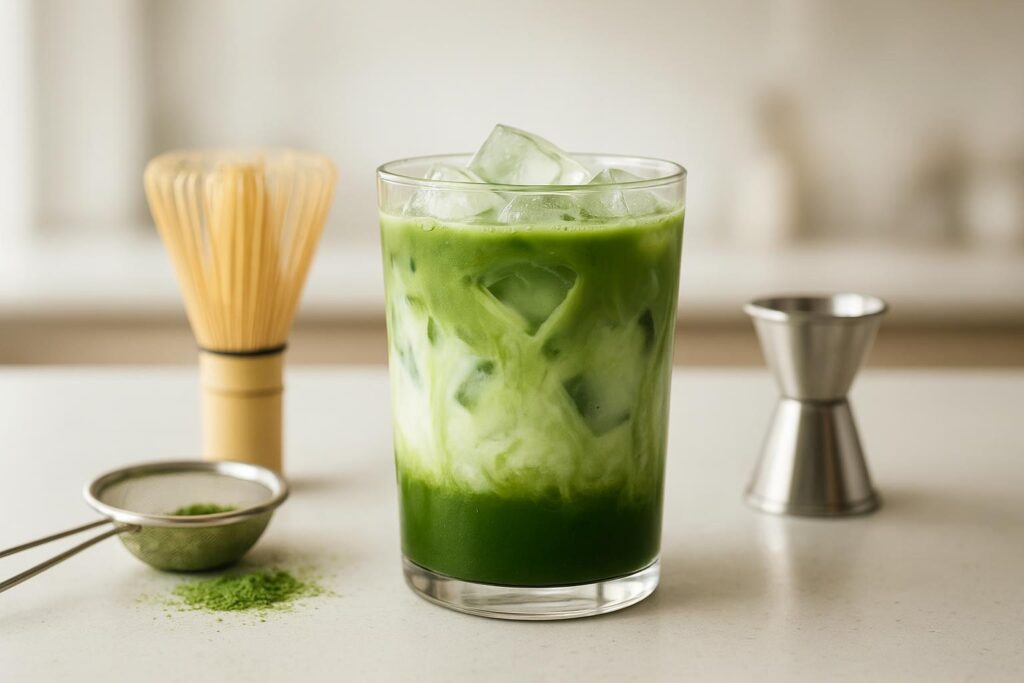
Two quick notes before you begin:
Water temperature for the paste: aim for 160–176°F (70–80°C). This balances dispersion and flavor.
Use full-ice-fill in the serving cup for predictable dilution and stable taste.
Cup size Matcha (g) Water for paste (ml) Target water temp Milk (oz / ml) Notes
8 oz 2.0–3.0 g 25–35 ml 160–176°F (70–80°C) 6–7 oz / 180–210 ml Fuller flavor at 3 g
12 oz 2.5–3.5 g 25–40 ml 160–176°F (70–80°C) 8–10 oz / 240–300 ml Most cafes use 3.0 g
16 oz 3.0–4.0 g 30–45 ml 160–176°F (70–80°C) 10–12 oz / 300–360 ml Start strong for melt
Sift matcha into a small pitcher or shaker.
Add warm water (from the table) and whisk or shake into a smooth paste—no dry pockets.
Add cold milk (dairy or barista oat). If using sweetener, mix it in now.
Fill the serving cup completely with ice and pour over. Taste; if it’s thin after 5 minutes, bump matcha +0.5 g or reduce paste water 5–10 ml next time.
Here’s the deal: those tiny changes—sifting and a proper paste—turn a “good enough” iced matcha into a cafe-quality pour.
—
Barista-Level Techniques that Change the Drink
Great iced matcha is mostly technique. You can use budget tools and still get gorgeous color, clean aroma, and a creamy texture.
Sift first, always
Sifting breaks up electrostatically clumped particles so water reaches more surface area on contact. That’s why many tea educators insist on sifting as step one; it’s a reliable way to avoid wall-stuck clumps and chalky pockets. For example, comparisons of whisking methods note less clumping and finer microfoam with proper prep versus dumping powder into cold milk.
Make a paste in a warm window (160–176°F / 70–80°C)
Warm water helps particles disperse and reduces gritty texture. A cluster of sources recommends ~175°F for a smooth paste and stable color, which matches common barista practice. This range shows up in practical guides like the Naoki temperature baseline and general tea temperature explainers.
Choose the right agitation for iced service
Bamboo whisk (chasen): Most control and a fine texture; best if you can whisk in a small bowl or pitcher.
Cocktail shaker: Excellent for iced builds—vigor breaks up micro-clumps and chills fast.
Blender or immersion blender: Fastest dispersion for batches or staff training scenarios; avoid over‑aeration. Practical roundups often highlight blender/shaker success for cold builds; the key is short bursts and immediate pour.
Control dilution like a pro
Pre‑chill milk and the matcha paste or concentrate; fill the cup fully with ice; and start with a slightly stronger “shot” for 12–16 oz sizes. Specialty coffee education points to strategies like full-ice-fill and stronger bases to manage ~15–25% expected melt. Cafe guides that build iced matcha on a 3 g matcha : 30 ml water paste (or similar) illustrate why strength up front matters, as seen in Five Senses’ iced matcha builds (2026 review).
Taste calibration tip
Swirl, sip, and wait. Take one taste right after pouring and another at the 5‑minute mark. If the second sip feels hollow, adjust next time by increasing powder or reducing paste water slightly. Small, systematic tweaks are how bars lock in a house profile.
—
Ingredient Decisions: Matcha Grades, Milks, and Sweeteners
Matcha selection (what “grade” really means for lattes)
There’s no universal grading standard. In practice, look for vivid green color, fresh oceanic aroma, very fine texture, and a taste that is low in bitterness with present umami. For iced lattes, many operators choose high culinary or “latte grade” for bolder flavor and better cost control, while ceremonial grades can deliver a brighter hue and silkier finish but may taste too subtle once diluted with milk. For a neutral industry walkthrough of these trade‑offs, see the impartial explainer on ceremonial vs. culinary considerations from DoMatcha’s overview (2026 check).
Milk choices (flavor, body, and cold stability)
Whole dairy: Rich, round mouthfeel that softens astringency and supports umami; extremely reliable in cold builds.
Barista oat milk: Creamy and lightly sweet; “barista” editions are formulated for better emulsion and cold stability, making them a favorite non‑dairy option in 2026.
Soy: Protein-rich and steady in cold service; neutral to lightly beany flavor.
Almond: Thinner body and more prone to separation; strengthen the matcha base.
Coconut: Aromatic and rich; can dominate the flavor unless blended. For a neutral survey of milk behavior in matcha, see the plain‑language comparison from Tealeavz on best milks for matcha lattes (reviewed 2026).
Sweeteners and cold solubility (skip gritty sugar)
Use liquid sweeteners in iced builds: simple syrup, honey, maple, or agave dissolve instantly and won’t leave grit. Beverage formulation references align on syrups for cold solubility; see the neutral primer on liquid sweeteners from WhatSugar’s syrup guide (accessed 2026). If you prefer very low sugar, non‑nutritive options (stevia or monk fruit) are fine; liquid drops blend most cleanly.
Health-forward tweaks, without the hype
“Healthier” here simply means lower added sugar and/or dairy‑free. Choose barista oat or soy for body without lactose, and dose simple syrup at 25–50% of standard if you prefer a greener, more tea‑forward profile.
—
Cafe SOPs and Batching (Service-Proven)
Single‑serve SOP (12 oz reference)
Sift 3.0 g matcha into a small pitcher or shaker. Add 30 ml water at 160–176°F (70–80°C) and whisk or shake to a perfectly smooth paste. Add 8–10 oz cold milk (dairy or barista oat). Sweetener (if any) goes in now. Fill the serving cup completely with ice; pour over; lid and serve. If the 5‑minute taste check feels thin, increase matcha to 3.5 g or reduce paste water to 25 ml next round. This mirrors the concentrated “shot” patterns found across professional recipes, such as the 3 g : 30 ml build highlighted in Five Senses’ iced matcha examples (reviewed 2026).
Batch concentrate (back‑of‑house)
Target strength: 3 g matcha per 30 ml water. Scale up (e.g., 300 g matcha + 3,000 ml water). Combine sifted matcha with tempered water using quick, controlled agitation (e.g., immersion blender on low). Strain if needed for the silkiest pour. Rapid‑chill in an ice bath or blast chiller, then hold cold in opaque, airtight containers with minimal headspace.
Portioning (front‑of‑house): Use a 30 ml jigger/ladle per 12–16 oz drink; 20–25 ml for 8–12 oz. Shake the container before each service block to re‑suspend fine particles.
Quality window: Best flavor and color same day; many cafe educators suggest a technical upper bound of 2–3 days refrigerated if handled carefully. For an operations‑focused perspective, see the practical batching guidance from Matcha Program on best practices (accessed 2026).
Labeling, rotation, and food-safety alignment (2026 context)
Label each batch with prep date/time, initials, and concentration (e.g., “30 ml per 12–16 oz”). Keep sealed and refrigerated when not on the line. If you pre‑mix dairy or other TCS (time/temperature control for safety) ingredients, hold at 41°F/5°C or colder in line with the FDA Food Code 2022 cold‑holding standard. If you choose Time as a Public Health Control for service speed, §3‑501.19 allows up to 4 hours with proper procedures and time marking before discarding; see FDA training materials summarizing TaPHC in 2026 via the agency’s Time as a Public Health Control overview. Always confirm local adoption and any state/county variations.
—
Costing, Yield, and Pricing Examples (2026)
Why include costs in an iced matcha latte recipe? Because predictability wins: you can set margins, plan promos, and train staff with confidence.
Ingredient price anchors to help you model (verify your local figures):
Conventional whole milk often averages near the low‑to‑mid $4s per gallon in the U.S. based on 2025–2026 snapshots; for example, market summaries reported a 2025 average of about $4.42/gal, a useful benchmark for 2026 costing according to Cheese Reporter’s 2025 retail average (published 2026 referencing 2025 data). Weekly USDA AMS Dairy Market News can help you update inputs.
Matcha itself has seen price pressure in 2025–2026, with major outlets noting tighter supply and higher demand. For industry context (not a price quote), see the Associated Press report on matcha price surges (2025) cited in 2026.
Illustrative 12 oz COGS (replace with your numbers):
3.0 g matcha at $0.28/g = $0.84
9 oz whole milk at ~$0.033/oz = ~$0.30
Sweetener and cup/lid not included here Approximate subtotal: ~$1.14 per drink in ingredients. That’s a starting point for menu pricing and promo planning.
Waste and yield controls that save money
Full‑ice‑fill reduces over‑pouring and keeps taste stable longer, which cuts remakes.
Batch small and often; aim to sell through a concentrate within the best‑flavor window.
Ladle/jigger standards prevent creeping portion sizes. A 5 ml over‑pour per drink adds up fast on a busy shift.
Troubleshooting and QC — Quick Reference
Clumps or chalky pockets: Sift first and use the paste method within 160–176°F (70–80°C). Whisk thoroughly before adding cold milk. A brief shake at service can smooth texture without over‑aerating.
Bitter or astringent edge: Lower your paste temperature slightly (toward 160–165°F), switch to milk with a rounder profile (whole dairy or barista oat), or add 3–5 ml simple syrup. Many practical guides note that temperature control and a touch of sweetness tame rough edges.
Separation in the cup: Strengthen the matcha base, ensure a complete paste, and consider milks with better cold stability (barista oat or whole dairy). Shake or swirl gently right before the pour.
Thin after melt: Start stronger (e.g., add +0.5 g matcha for 12–16 oz) or reduce paste water by 5–10 ml; keep the serving cup fully iced and pre‑chill milk when possible. Cafe recipes that concentrate at ~3 g per 30 ml water are a solid model.
—
FAQs (Fast Answers for Baristas and Home)
Can I make an iced matcha latte recipe without hot water? You can, but you’ll sacrifice dispersion. At minimum, make a tiny paste with warm water in the 160–176°F (70–80°C) window, then add cold milk and ice.
What’s the best milk for an iced matcha latte recipe? Whole dairy and barista oat lead for cold stability and body; soy is a close third. Almond and coconut can work but need ratio tweaks.
How long can I hold a matcha concentrate in the fridge? For peak flavor and color, plan same‑day use; with airtight, opaque storage and gentle agitation before service, many operators set an internal limit of 2–3 days. If pre‑mixed with dairy, follow cold‑holding rules or documented Time as a Public Health Control procedures.
Can I use non‑nutritive sweeteners in an iced matcha latte recipe? Yes. Liquid drops (stevia/monk fruit) blend most cleanly. Erythritol‑heavy granules can feel gritty or “cooling.”
Why does my latte turn dull green? Excess heat, exposure to air/light, and long storage can dull the hue. Keep to the warm‑paste window, reduce exposure, and batch small.
Do I need a bamboo whisk for an iced matcha latte recipe? It’s great, but not required. A cocktail shaker or brief blender pulse also achieves excellent dispersion for iced builds.
Can I add flavored syrups? Yes—simple syrups integrate easily. Vanilla, honey, maple, or yuzu‑citrus pair well with matcha’s umami and light bitterness.
—
Appendix: Conversions and References
Fast conversions and scaling
1 level teaspoon of many latte‑grade matchas ≈ 2 g (verify with your brand’s scoop). For consistent drinks, weigh in grams.
Scaling shot strength: Keep the matcha:water paste near 3 g : 30 ml for 12–16 oz cups, then adjust milk volume and sweetness to taste.
Selected references cited in this 2026 guide
Technique and temperature baselines adapted from the practical explainers at Naoki on common matcha errors and temperature and their iced matcha latte method.
Iced build strength patterns similar to Five Senses’ iced matcha recipes (3 g : 30 ml) with another example build here.
Milk behavior overview: Tealeavz’s best milks for matcha lattes.
Syrups and cold solubility: WhatSugar’s guide to liquid sweeteners.
Batching and handling: Matcha Program’s batching best practices for cafes.
Food safety (cold holding and TaPHC): FDA Food Code 2022 landing and FDA’s TaPHC training overview.
Cost anchors: Cheese Reporter’s 2025 average retail whole milk price and current USDA AMS Dairy Market News weekly summaries.
This iced matcha latte recipe playbook should help you move from “pretty good” to truly dialed‑in—whether you’re pouring one at home or a hundred during a lunch rush. Taste, log your small tweaks, and you’ll land on a signature profile you can repeat all year