
Lychee drinks are an easy “yes” for a boba menu: the flavor reads premium, the aroma is distinct, and customers recognize it fast.
But lychee is also one of those flavors that gets messy in real operations. Two different staff members make it two different ways, the tea base swings from floral to bitter, and the same drink tastes wildly different depending on ice and syrup pour.
This SOP fixes that.
You’ll get two shop-ready builds—lychee fruit tea and lychee milk tea—plus batching notes and the “done when…” checks that keep quality consistent during rush.
The core rule: standardize the base, then customize the cup
If you want lychee to be a best-seller instead of a consistency problem, standardize these four things first:
- Tea base strength (same recipe, same steep time)
- Lychee flavor dose (measured—no free-pouring)
- Ice load (ice is an ingredient; it changes the final strength)
- Mixing method (shake/stir until the drink is uniform)
After that, you can still offer customization (less sweet, extra boba, add jelly)—without breaking the drink.
Pro Tip: Treat “ice level” as a pricing/recipe choice, not a casual preference. If you allow “light ice,” you need a defined adjustment (more tea base, not more syrup).
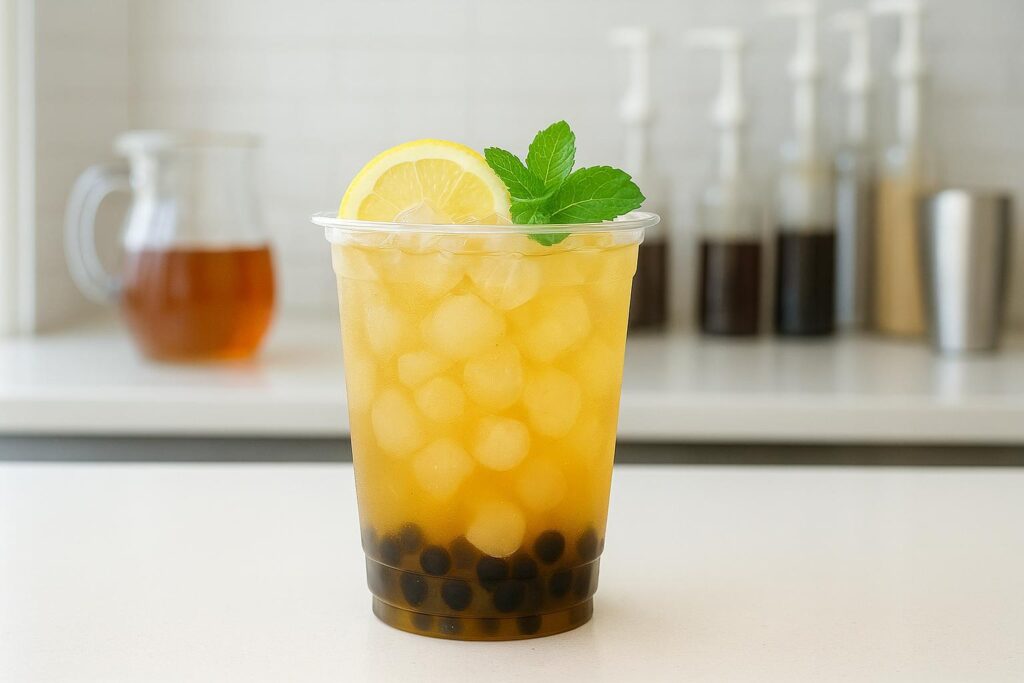
Ingredients: what to stock (and what to decide once)
Tea base (pick 1 for each drink)
Lychee is floral and delicate, so it generally performs best with a light, aromatic tea base (most shops use jasmine green tea or another light green tea).
- Lychee fruit tea: jasmine green tea is your default.
- Lychee milk tea: jasmine green tea for a lighter drink; black tea if you want a deeper, creamier profile.
Lychee flavor format (pick your “house” option)
You can build lychee with several ingredient formats. The key is to pick one “house standard” for consistency.
- Lychee syrup: fastest for service; easy to measure.
- Lychee puree: richer fruit impression; can add body.
- Canned lychee + syrup: strong aroma; can be cost-effective, but requires consistent straining/portioning.
If your team is still debating formats, use this guide to make the decision once and document it: puree vs syrup vs powder (shop guide)
.
Recommended toppings (choose 1–2 defaults)
Lychee plays nicely with toppings that don’t overpower the aroma:
- tapioca pearls (classic)
- lychee jelly
- popping boba (for a “fruit tea” vibe)
For internal inspiration and a ready-made reference drink, keep a lychee build like this in your training binder: Lychee oolong tea SOP
.
Lychee tea SOP: fruit tea build (16–24 oz cup) — fast, bright, and high-volume
This is usually the top seller because it drinks “clean” and refreshing.
Step 0 — Prerequisites
- Tea base is brewed and fully chilled (or brewed ahead and held cold).
- Lychee flavor component is prepped (syrup ready; puree portioned; canned lychee strained if needed).
- Staff has a jigger/scale and uses it.
Step 1 — Prepare the cup
Input: serving cup + standard ice scoop + chosen toppings
Action:
- Add toppings (if used).
- Fill cup with your standard ice load.
Output: cup is ready for liquid build.
Done when: ice level matches your SOP photo line.
Step 2 — Add tea base
Input: chilled jasmine green tea (your house fruit-tea strength)
Action: add the tea base to your standard fill level.
Output: tea base + ice is in the cup.
Done when: liquid level is consistent before syrups.
Step 3 — Add lychee flavor + sweetness
Input: lychee syrup/puree (measured), optional sweetener
Action:
- Add your measured lychee component.
- If your lychee ingredient is low-sugar or inconsistent, add a small, measured sweetener dose.
For a simple fruit tea build framework (tea base + syrup + sweetener + ice), Cup49 outlines the basic assembly pattern in their fruit tea recipe guide
.
Output: the drink has flavor and sweetness.
Done when: one quick sip tastes like lychee first, tea second—no bitterness.
Step 4 — Brighten (optional, only for fruit tea)
Input: lemon/lime (measured)
Action: add a small citrus dose if the drink tastes flat or overly sweet.
Output: the drink tastes “lifted,” not sour.
Done when: aroma pops; sweetness feels cleaner.
Step 5 — Mix
Input: shaker tin or long spoon
Action: shake/stir until uniform.
Output: syrup/puree is fully integrated.
Done when: no syrup layer at the bottom and no foam clumps.
Lychee milk tea SOP (16–24 oz cup) — creamy, aromatic, not cloying
Milk tea sells when it’s balanced: tea presence + creamy body + lychee aroma.
Step 0 — Prerequisites
- Tea base is brewed slightly stronger than your fruit tea base (milk will soften the tea).
- Dairy/alt-dairy is stocked cold and standardized.
Step 1 — Prepare the cup
Input: cup + ice + boba (optional)
Action:
- Add boba if used.
- Add your standard ice load.
Output: cup is staged.
Done when: boba portion is consistent and ice is at SOP line.
Step 2 — Add tea base
Input: chilled tea base (jasmine green or black)
Action: pour tea base into the cup.
Output: tea base + ice in cup.
Done when: tea aroma is noticeable before adding milk.
Step 3 — Add lychee flavor
Input: measured lychee syrup/puree
Action: add lychee component.
Output: tea + lychee integrated.
Done when: the drink smells like lychee before milk goes in.
Step 4 — Add dairy
Input: milk/alt-milk (measured)
Action: add dairy to target color/body.
Output: milk tea is built.
Done when: color matches your training photo and the drink isn’t chalky or thin.
Step 5 — Mix (non-negotiable)
Input: shaker/spoon
Action: shake/stir until uniform.
Output: smooth, consistent milk tea.
Done when: no separation; flavor is even top to bottom.
⚠️ Warning: Avoid citrus in lychee milk tea. Keep “brightness” coming from tea choice and proper lychee dosing—not acid.
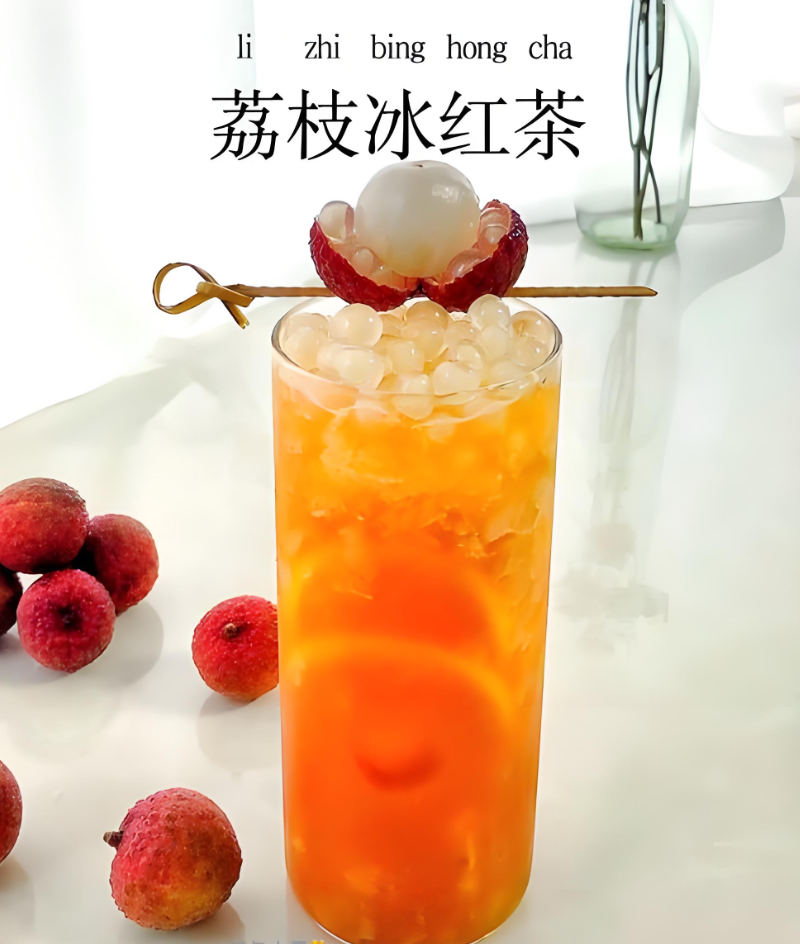
Batching & station setup (how to survive rush without quality loss)
Batch what’s stable; build what’s sensitive
To keep speed high:
- Batch tea base (brew → chill → hold cold)
- Keep lychee syrup/puree pre-portioned (or use measured pumps)
- Build the final drink to-order so ice dilution stays consistent
Labeling & shift handoff
Standardize a simple label system on your tea base:
- tea type (jasmine green / black)
- brew time and “use by” time
- intended drink use (fruit tea vs milk tea)
Consistency check you can actually do
Once per shift (or whenever you brew a new batch):
- Build one fruit tea and one milk tea.
- Taste for three markers: aroma, tea bitterness, sweetness.
- If it’s off, adjust one variable at a time (tea strength or lychee dose or sweetener)—never all three.
Troubleshooting (what staff should fix first)
“It tastes watery”
Most common causes:
- too much ice
- tea base brewed too weak
- staff “tops up” with water instead of tea
Fix:
- lock the ice scoop size
- brew tea base to spec and chill before service
“It’s bitter”
Most common causes:
- over-steeped tea
- tea base held too long warm
Fix:
- shorten steep time
- chill faster and hold cold
“Lychee flavor is weak”
Most common causes:
- under-dosed lychee ingredient
- tea base too strong or too dark for the format
Fix:
- increase lychee dose slightly (measured)
- consider switching fruit tea base to jasmine green tea
“Milk tea tastes weirdly sour or ‘off’”
Most common cause:
- acid (citrus) added to a milk build
Fix:
- remove acid from the milk tea SOP
Next steps (resources + ingredient options)
If you want to tighten this SOP even further, pick one house lychee format (syrup vs puree) and document your exact pump/gram dose by cup size.
- For a practical SOP framework you can adapt across fruit flavors, use this as your template: shop-ready fruit tea SOP framework.
- If you’re standardizing around syrups, use a consistent dosing range and pump calibration guide like this: lychee syrup dosing ranges for iced teas.
If you’d like, I can convert this into a one-page printable training sheet (same SOP, just condensed) for behind-the-bar use.