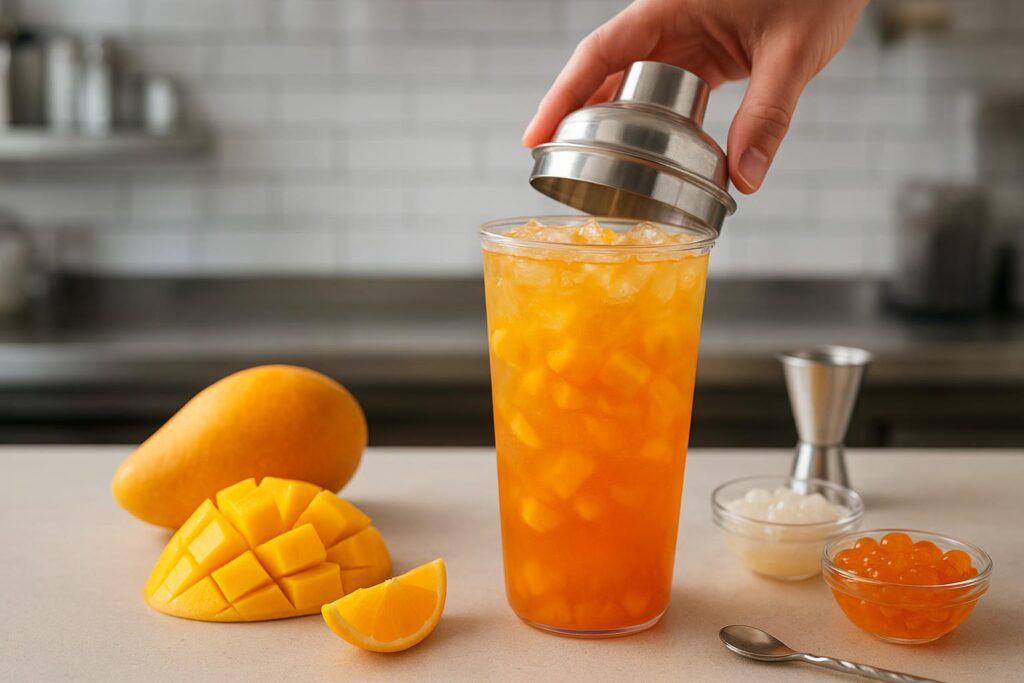
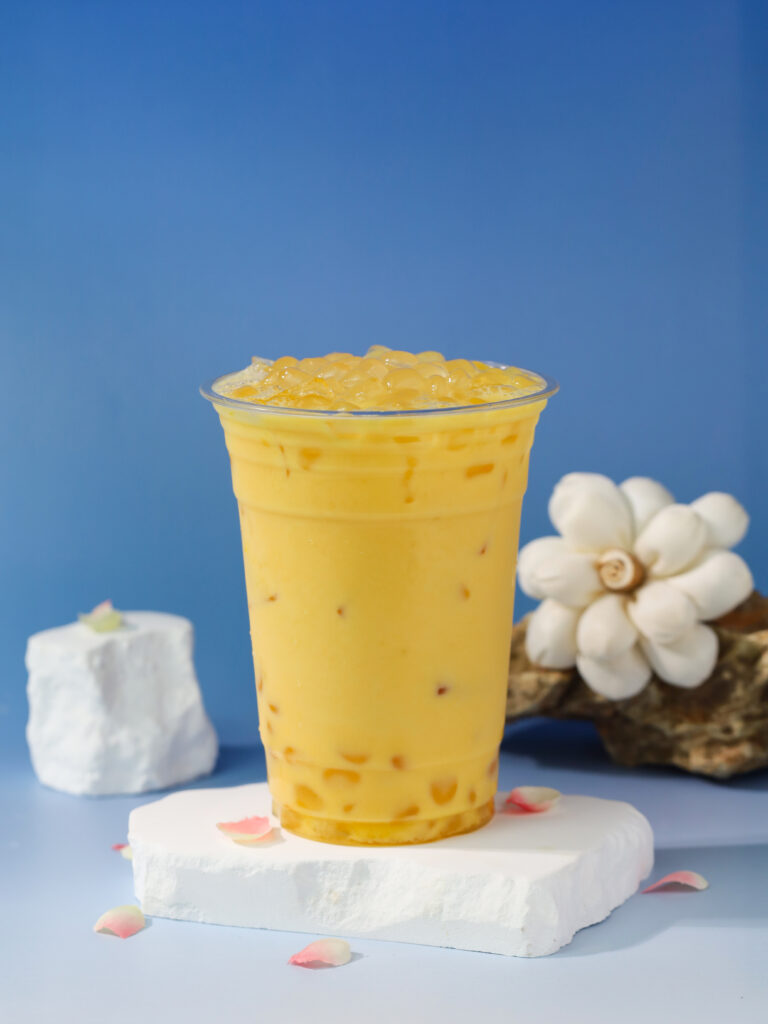
Mango fruit tea is one of those “easy yes” flavors: familiar, bright, and flexible enough to show up as a classic, a tropical blend, or a premium seasonal special.
But here’s where shops get stuck: they add too many mango variations, end up with ingredient sprawl, and suddenly mango is slowing down the line instead of boosting sales.
This guide is built for operators. You’ll get a simple way to design a mango fruit tea lineup that:
feels big to customers (more choices)
stays easy for staff (shared bases + repeatable builds)
gives you room for upsells (toppings, size ladder, premium add-ons)
First: make sure you’re selling “fruit tea” (not “mango everything”)
In most boba menus, bubble tea is the umbrella category. Fruit tea is the subcategory: typically non-dairy, brewed tea + fruit flavor, shaken with ice, with optional toppings like popping boba or jellies.
If you want a clean definition you can train new staff on, BubbleTeaSuppliers.com has a clear breakdown in Fruit Tea vs Bubble Tea: A Clear Guide for North America
.
Pro Tip: On menus, label mango fruit tea as “refreshing, non-dairy” by default—and offer dairy add-ons as optional. It reduces order confusion and keeps prep consistent.
The operator’s framework: build a mango lineup like a system
If you want menu variety without chaos, stop thinking in “drinks.” Start thinking in modules.
The 4 modules of a mango fruit tea menu
Tea base (what everything is built on)
Mango core (your main mango flavor component)
Modifier (what makes it feel new: tart fruit, citrus, floral notes, or texture)
Toppings (your upsell engine)
When you standardize those four modules, you can confidently offer 8–15 mango fruit tea “options” with only a few ingredients.
Your simplest “starter kit” (high-volume, low-stress)
If you’re a typical US shop trying to grow sales without adding labor:
Tea base: jasmine green tea + black tea
Mango core: pick one (puree or syrup or concentrate)
Modifiers: passionfruit + lemon (or lemonade)
Toppings: mango popping boba + lychee jelly (plus your standard boba if you already stock it)
That’s enough to build classics + seasonal specials.
Mango fruit tea variations that sell (with positioning + ops notes)
Below are the variations that tend to work well in boba shops because they’re easy to explain, easy to execute, and easy to upsell.
1) Mango green tea (your “default” mango fruit tea)
What it is: Mango fruit tea built on green tea (often jasmine green tea).
Why it sells: It tastes clean and refreshing. It’s also the fastest to teach—especially if your fruit teas already use a green tea base.
How to run it: Standardize the build by weight/volume (not “scoops” and “splashes”). Your goal is the same color and sweetness every shift.
Failure mode: A mango profile that tastes “flat” or overly sweet.
Fix: Add a small tart modifier (passionfruit or lemon) and lower the default sweetness level.
2) Mango black tea (for a bolder, less delicate profile)
What it is: Mango fruit tea built on black tea.
Why it sells: It tastes a little more “grown up” and holds up better to strong sweetness.
How to run it: Use this as your “alternative base” for customers who say mango green tea is too light.
Failure mode: Tea tastes bitter or mango disappears.
Fix: Brew black tea slightly lighter for fruit teas (less astringency), and keep the mango dose consistent.
3) Mango passionfruit tea (the sweet + tart bestseller)
What it is: Mango plus passionfruit on a tea base.
Why it sells: Mango is sweet; passionfruit brings tartness. The pairing feels “tropical” and balanced.
BubbleTeaSuppliers.com includes this kind of pairing logic in The Best Fruit Bubble Tea Combinations: A Flavorful Guide
.
How to run it: Treat passionfruit as a modifier (not a second full flavor). You want “mango first, passionfruit lift,” not “two competing fruits.”
Failure mode: Drink becomes sour or inconsistent because staff eyeballs the tart component.
Fix: Pre-batch a “tropical modifier” (mango + passionfruit ratio) for the day, label it, and train staff on one pump count / one measured pour.
⚠️ Warning: Tart modifiers are where inconsistency sneaks in. If one shift pours heavy, your customers will taste it immediately.
What it is: Mango fruit tea with a lemon/citrus lift.
Why it sells: It reads like a “refresher” to customers who don’t want milk tea.
How to run it: Decide whether lemonade is a modifier (small citrus lift) or the main base (more like a mango lemonade drink). Don’t let staff improvise.
Failure mode: Too sweet, no brightness.
Fix: Lower sweetness and ensure citrus is doing real work.
For sugar guidance that fits warm-weather menus, see BubbleTeaSuppliers.com’s Summer-Friendly Bubble Tea Recommendations
Why it sells: Lychee reads as premium and slightly floral, which gives you a reason to price it a bit higher.
How to run it: Keep lychee as the top note (a smaller modifier dose). This prevents the drink from becoming perfume-like.
Failure mode: Lychee dominates and the drink tastes artificial.
Fix: Reduce lychee dose, and pair with jasmine green tea to keep the profile airy.
6) Mango pineapple tea (tropical, approachable, easy to merch)
What it is: Mango + pineapple.
Why it sells: Customers understand it immediately.
How to run it: If you already stock pineapple for other drinks, this becomes an easy “new item” without new inventory.
Failure mode: Both fruits taste “same-y” and overly sweet.
Fix: Add a small citrus acid (lemon) or switch tea base to bring contrast.
7) Mango slush (the frozen version that moves in hot months)
What it is: A blended mango drink with an icy texture.
Why it sells: Frozen options stand out on menu boards, and customers are willing to pay more.
How to run it: Keep it limited. One frozen mango item is usually enough unless frozen drinks are your shop identity.
Failure mode: Slow ticket times and inconsistent texture.
Fix: Use a standardized ice-to-liquid ratio, and avoid adding too many toppings that slow down assembly.
Puree vs syrup vs powder: choose the mango core that fits your shop
Your mango core decides speed, consistency, and whether the drink tastes “real fruit” or “bright and punchy.”
BubbleTeaSuppliers.com breaks down the operator trade-offs in Fruit Milk Tea Ingredients: Puree vs Syrup vs Powder (Shop Guide)
. Even though it’s written through a fruit milk tea lens, the decision logic maps well to fruit tea operations.
Quick decision guide
Choose syrup if your priority is speed and repeatability.
Choose puree if your priority is premium “real fruit” character (and you have the storage/discipline).
Choose powder if your priority is simple storage and consistency (and you can manage mixing/humidity).
The practical “menu engineering” move
Pick one primary mango core for your standard mango fruit tea.
Then (optionally) add a second mango core only if it supports a premium tier.
Example structure:
Standard: mango syrup build (fast)
Premium seasonal: mango puree build (premium)
That lets you upsell without retraining every drink.
Toppings that increase AOV without slowing down service
Toppings can increase your average order value, but they also add steps.
A simple approach:
Default topping for mango fruit tea: mango popping boba (on-theme, fast)
Secondary topping: lychee jelly (adds chew, still fast)
Optional classic: tapioca pearls (only if your pearl program is already strong)
Upsell scripts staff can actually use
“Do you want mango popping boba with that? It’s our most popular add-on for mango fruit tea.”
“If you like a chewier texture, lychee jelly pairs really well with mango.”
Keep it simple. If the script is long, it won’t happen during a rush.
Common mistakes (and how to avoid them)
Mistake 1: Too many mango SKUs
If you have mango green tea, mango black tea, mango passionfruit, mango lychee, mango pineapple, mango lemonade, mango slush, mango yakult… you’re not offering variety. You’re creating training debt.
Tart modifiers are powerful—and they’re where inconsistency starts.
Fix: Standardize modifier ratios and measure them.
Mistake 3: Sweetness defaults that don’t fit fruit tea
Fruit tea is supposed to feel bright. Too sweet and it becomes heavy.
Fix: Set your default sweetness for fruit teas lower than milk teas, and train staff to recommend 50% as a starting point.
FAQ
Is mango fruit tea the same as mango bubble tea?
Not always. “Bubble tea” is often used as the umbrella term. Mango fruit tea is typically a non-dairy, fruit-forward drink made with brewed tea and mango flavor—often served with toppings like popping boba or jellies.
What tea base is best for mango fruit tea?
Many shops use jasmine green tea for a clean, refreshing profile. Black tea can work when you want a bolder base that stands up to sweetness.
What’s the easiest mango fruit tea to add to a menu?
Start with mango green tea (or jasmine green tea). It’s familiar, easy to train, and gives you a base to create other variations.
What’s the best topping for mango fruit tea?
Mango popping boba is an easy match and an easy upsell. Lychee jelly is a good secondary option that adds texture without much extra complexity.
Next steps
If you want to expand beyond mango without reinventing your menu every time, use the same “modules” approach and build a small lineup of fruit pairings.
For more operator-focused guides, ingredient comparisons, and fruit tea pairing ideas, explore BubbleTeaSuppliers.com—especially the fruit tea vs bubble tea guide and the fruit tea combinations guide.