
Matcha fruit drinks can be fantastic on a bubble tea menu—or a total headache.
When they’re done right, you get a bright, refreshing top note (citrus/berry/tropical) with matcha’s creamy, earthy backbone. When they’re done wrong, you get one of three failure modes:
- gritty matcha clumps at the bottom
- bitter, “overcooked” matcha flavor
- a weird muddy blend where neither matcha nor fruit tastes clean
This post is built for consideration-stage operators: you already know matcha sells. Now you want to choose a direction that fits your staff, your prep space, and your ingredient system.
The decision framework: how to choose the right matcha drink ideas for fruit tea hybrids
Before the recipes, here’s the operator reality check. The best matcha fruit drink for your shop is the one that:
- holds up in a 2-minute build during rush
- uses fruit bases you already stock
- stays visually attractive after 10 minutes (delivery + TikTok time)
- doesn’t create a “we have to remake this” situation
5 criteria to compare options quickly
1) Acidity risk (curdle / “muddy” risk)
- High risk: lemon/lime-heavy builds if dairy is mixed directly
- Lower risk: mango, peach, strawberry, passionfruit when balanced with syrup and proper layering
2) Build complexity
- Lowest: fruit base + ice + tea + matcha concentrate
- Medium: layered milk + matcha + fruit
- Highest: cheese foam + layered components + garnish standards
3) Visual payoff Layered matcha + fruit drinks sell because they look expensive. If you’re going to do it, commit to clean layers.
4) Ingredient cross-utilization Your best sellers are often the ones that reuse the same fruit base across 3–5 menu items.
5) Topping compatibility (your picks: cheese foam, pudding, crystal boba)
- Cheese foam: great with tea-like bases; adds margin; adds a station step.
- Crystal boba: excellent in fruit-forward drinks; light texture; easy upsell.
- Pudding: usually best in milk tea-style builds, and can break down in more acidic fruit teas (so treat it as “select recipes only”).
Pro Tip: If you’re testing these as LTOs, choose 4 drinks that share one matcha prep method and two fruit bases. Your team will execute faster and your inventory gets cleaner.
Your non-negotiables: matcha that doesn’t clump or turn bitter
Two practices solve most matcha problems:
- Don’t add matcha powder directly to cold liquid. It clumps. Dissolve it first. Chamberlain Coffee’s guide spells out the core issue: matcha doesn’t dissolve in cold liquid (and it also notes storage habits that prevent clumping).
- Don’t scorch it. Naoki Matcha notes that water that’s too hot can make matcha taste bitter. For shop use, treat “hot but not boiling” as your standard.
Standard shop prep: matcha concentrate (for iced drinks)
This is the operator-friendly default:
- Sift matcha
- whisk into a small amount of hot (not boiling) water until smooth
- use that concentrate to build the drink (instead of sprinkling powder into milk or tea)
You can do it to order, or batch a small bottle for a defined window if your matcha volume justifies it.
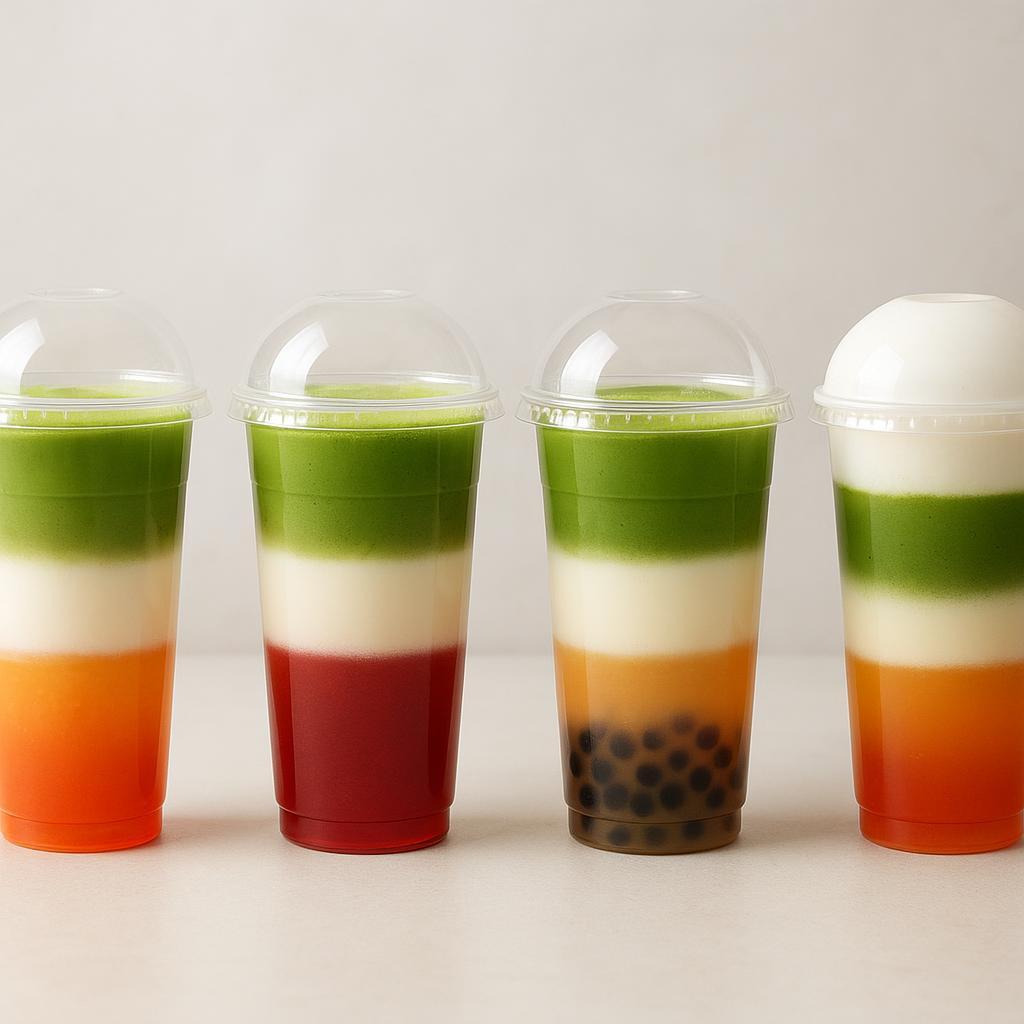
Toppings: how to make your three picks actually work
Cheese foam (milk cap): the “premium” lever
Cheese foam works because it’s a salty-sweet contrast on top of a cold tea. A common method is whipping cream cheese with dairy + sugar + salt into a pourable foam—see Yes Moore Tea’s guide to cream cheese + dairy whipped into a pourable foam
.
For texture/consistency targets (smooth and fluffy, not frosting-thick), China Sichuan Food has a practical reference on smooth, fluffy cheese foam (milk cap)
.
Layering: spoon/pour it gently on top of the iced drink so it stays distinct (a pourable foam that holds for service).
Crystal boba: best for fruit-forward hybrids
Crystal boba is lighter than tapioca, and visually fits the “clean, fresh” profile of fruit + matcha drinks.
If you ever make it in-house, Zhang Catherine has a clear reference on crystal boba made with agar (or konjac)
, and China Sichuan Food notes that soaking agar boba in iced water enhances texture
.
Pudding: use selectively
Pudding is usually a milk-tea topping. Operator-facing guidance like YenChuan’s breakdown says pudding fits premium milk teas
, so treat it as “best in creamy builds” rather than “universal fruit tea add-on.”
⚠️ Warning: If you add pudding to a high-acid fruit tea, it may break down or lose its texture. Use pudding where the drink is more milk-tea-like (or where fruit is in a sweeter, less acidic form).
16 matcha + fruit tea hybrid drink ideas (with mini SOPs)
Each idea includes a standardized mini SOP so you can compare them apples-to-apples.
1) Matcha Lemonade (crystal boba)
Profile: bright, sharp, refreshing. Lemon is popular with matcha because lemon’s tartness cuts through matcha’s intensity
.
Components
- lemonade base (or lemon syrup + water/tea)
- ice
- matcha concentrate
Build (order matters)
- Add crystal boba to cup.
- Add lemon base.
- Fill with ice.
- Pour matcha concentrate over the top.
Sweetness start point: medium-high (lemon needs support).
Ops note: keep lemon base consistent; this one sells visually when the green layer stays clean.
2) Strawberry Matcha (fruit tea hybrid) with cheese foam
Profile: dessert-leaning, still bright. If you want to market it as a strawberry matcha latte on your menu, keep the build milk-forward.
Components
- strawberry fruit base (puree or syrup)
- tea base (light green tea works well)
- milk layer (optional; depends on your system)
- matcha concentrate
- cheese foam
Build
- Strawberry base in cup.
- Add ice.
- Add tea (and/or milk if you’re making it latte-like).
- Pour matcha concentrate slowly.
- Top with cheese foam.
Sweetness start point: medium.
Ops note: cheese foam makes this feel premium; define a foam portion standard.
3) Mango Matcha Green Tea (crystal boba)
Profile: tropical, forgiving, easy to execute.
Components
- mango syrup/puree
- brewed green tea (chilled)
- matcha concentrate
Build
- Crystal boba.
- Mango base.
- Ice.
- Green tea.
- Matcha concentrate on top.
Sweetness start point: medium.
Ops note: mango is a “wide appeal” fruit; good first hybrid for stores new to matcha fruit drinks.
4) Peach Matcha Oolong (cheese foam)
Profile: floral + creamy top.
Components
- peach syrup
- chilled oolong tea
- matcha concentrate
- cheese foam
Build
- Peach base.
- Ice.
- Oolong tea.
- Matcha concentrate.
- Cheese foam.
Sweetness start point: medium.
Ops note: oolong gives structure; cheese foam is the margin lever.
5) Passionfruit Matcha Green Tea (crystal boba)
Profile: high-aroma tropical; tastes “summery.”
Components
- passionfruit syrup
- chilled green tea
- matcha concentrate
Build
- Crystal boba.
- Passionfruit base.
- Ice.
- Green tea.
- Matcha concentrate.
Sweetness start point: medium-high.
Ops note: passionfruit can dominate; keep matcha dose consistent so it doesn’t disappear.
6) Pineapple Matcha Jasmine Green Tea (crystal boba)
Profile: bright tropical + floral tea.
Components
- pineapple syrup
- jasmine green tea
- matcha concentrate
Build
- Crystal boba.
- Pineapple base.
- Ice.
- Jasmine green tea.
- Matcha concentrate.
Sweetness start point: medium.
Ops note: jasmine + pineapple reads “fresh,” good for afternoon refreshers.
7) Lychee Matcha Green Tea (cheese foam)
Profile: fragrant lychee, creamy-salty top.
Components
- lychee syrup
- chilled green tea
- matcha concentrate
- cheese foam
Build
- Lychee base.
- Ice.
- Green tea.
- Matcha concentrate.
- Cheese foam.
Sweetness start point: medium.
Ops note: this is a high-visual drink; keep layers clean and foam portion consistent.
8) Orange Matcha Green Tea (crystal boba)
Profile: citrus but softer than lemon.
Components
- orange syrup or juice-based mix (shop-standard)
- green tea
- matcha concentrate
Build
- Crystal boba.
- Orange base.
- Ice.
- Green tea.
- Matcha concentrate.
Sweetness start point: medium.
Ops note: orange is less risky than lemon for “too sharp” feedback.
9) Grapefruit Matcha Green Tea (cheese foam)
Profile: bitter-sweet citrus; more adult.
Components
- grapefruit syrup
- chilled green tea
- matcha concentrate
- cheese foam
Build
- Grapefruit base.
- Ice.
- Green tea.
- Matcha concentrate.
- Cheese foam.
Sweetness start point: medium-high.
Ops note: grapefruit needs enough sweetness to stay approachable.
10) Blueberry Matcha Green Tea (crystal boba)
Profile: berry-forward, color contrast.
Components
- blueberry syrup
- chilled green tea
- matcha concentrate
Build
- Crystal boba.
- Blueberry base.
- Ice.
- Green tea.
- Matcha concentrate.
Sweetness start point: medium.
Ops note: strong berry base keeps the drink from tasting “green-only.”
11) Raspberry Matcha Lemonade (crystal boba)
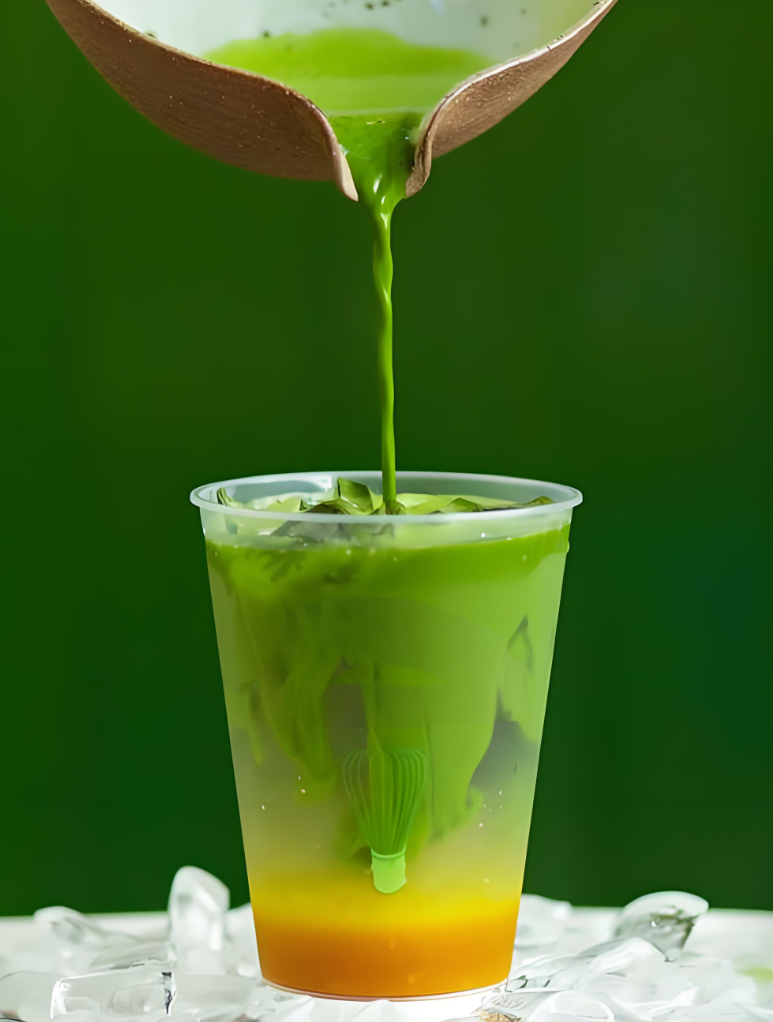
Profile: lemonade with a berry upgrade.
Components
- lemonade base
- raspberry syrup
- matcha concentrate
Build
- Crystal boba.
- Raspberry + lemon base.
- Ice.
- Matcha concentrate.
Sweetness start point: medium-high.
Ops note: this is a great LTO using two high-performing bases.
12) Strawberry Matcha Lemonade (cheese foam optional)
Profile: a “bridge” drink—fruit-tea people and matcha people both say yes.
Components
- lemonade base
- strawberry syrup/puree
- matcha concentrate
Build
- Strawberry + lemon base.
- Ice.
- Matcha concentrate.
- (Optional) cheese foam if you want a premium version.
Sweetness start point: medium-high.
Ops note: sell two sizes: standard vs “milk cap.”
13) Guava Matcha Fruit Tea (crystal boba)
This one is already operator-tested on BubbleTeaSuppliers.com: Matcha Guava Fruit Tea SOP (16 oz) for Bubble Tea Shops
.
Components
- guava base
- tea base
- matcha concentrate
Build
- Crystal boba.
- Guava base.
- Ice.
- Tea base.
- Matcha concentrate.
Sweetness start point: medium.
Ops note: use this as your benchmark SOP for training and QC.
14) Kiwi Matcha Green Tea (crystal boba)
Profile: bright green-on-green, very “fresh.”
Components
- kiwi syrup
- green tea
- matcha concentrate
Build
- Crystal boba.
- Kiwi base.
- Ice.
- Green tea.
- Matcha concentrate.
Sweetness start point: medium-high.
Ops note: kiwi reads tart; don’t under-sweeten.
15) Watermelon Matcha Green Tea (pudding — only if milk-tea-like)
Profile: summer special.
Components
- watermelon syrup
- green tea
- matcha concentrate
- pudding (optional, test carefully)
Build
- Pudding in cup.
- Watermelon base.
- Ice.
- Green tea.
- Matcha concentrate.
Sweetness start point: medium.
Ops note: if pudding breaks down in this build, replace with crystal boba and keep pudding for creamier hybrids.
16) Coconut-Passionfruit Matcha Green Tea (cheese foam)
Profile: tropical + creamy top; feels like a “signature.”
Components
- passionfruit syrup
- coconut syrup (or coconut milk cap direction)
- green tea
- matcha concentrate
- cheese foam
Build
- Syrups in cup.
- Ice.
- Green tea.
- Matcha concentrate.
- Cheese foam.
Sweetness start point: medium.
Ops note: this is a strong upsell candidate because it reads premium.
Pro Tip: If you want a blended version for summer, treat this as a light “matcha smoothie recipe” variant by blending the tea + fruit base with ice, then topping with matcha concentrate for the visual layer.
Next steps: how to test these without chaos
If you’re rolling these out as a menu test, here’s a simple approach:
- Pick 4 drinks: 2 “safe sellers” (mango, strawberry) + 1 citrus (lemonade) + 1 premium (cheese foam)
- Standardize one matcha concentrate recipe and train it hard
- Require one QC check: “no grit, clean top layer, tastes bright not muddy”
If you want two shop-tested baselines to train from, BubbleTeaSuppliers already has SOP-style references for matcha bubble tea recipes
and a detailed matcha latte recipe SOP for bubble tea shops
.
When you’re ready to source matcha, fruit bases, and toppings consistently, use BubbleTeaSuppliers.com
as a reference hub for shop-focused SOPs and ingredient guidance.