
Matcha baked goods are one of the few cafe “flavor stories” that can carry drinks and food at the same time. But in production, matcha is also the ingredient that exposes every weak link in your process: clumps, bitter finish, muddy color, inconsistent batches, and staff making it three different ways.
This guide is for US cafe and bakery operators who want matcha items that look green, taste clean, and can be executed on a busy shift.
What “matcha for baking” means in a cafe (and why it’s tricky)
In a home kitchen, you can get away with “a teaspoon here, a teaspoon there.” In a shop, matcha needs to behave like any other core ingredient: spec’d, portioned, and repeatable.
The tricky part is that matcha is a powdered tea leaf. That means:
- It clumps easily.
- It tastes bitter fast if you over-dose or scorch it.
- Its green color can dull in high heat.
- It varies a lot by grade, origin, freshness, and storage.
Your goal isn’t to chase the brightest green at any cost. Your goal is a consistent matcha signature customers can recognize—and your team can reproduce.
How to choose matcha for baking (specs that actually matter)
Most operators don’t need a “best matcha.” They need a matcha that hits the right balance of cost, color, flavor strength, and consistency.
Culinary vs ceremonial: what changes in baked goods
For baking, culinary-grade matcha is commonly recommended because it’s intended to be used as an ingredient and is typically more cost-effective while still tasting like matcha after sugar, fat, and heat. Ceremonial-grade matcha is usually positioned for drinking, where delicate notes matter more.
Encha’s overview of matcha grades is a helpful starting point if you want the broad framing: Encha’s matcha grade and taste guide
.
Operator rule of thumb:
- Daily production items (cookies, loaf cake, muffins): culinary-grade is usually the smart default.
- Premium, higher-margin desserts (showcase cake slice, special tart): you can test a higher grade if the color and finish justify the cost.
A simple buying checklist for cafe baking
Use this checklist when evaluating samples:
- Color (dry powder): vibrant green beats olive-brown. Dull powder often bakes up muddy.
- Aroma: fresh vegetal + slightly sweet/umami is ideal; stale matcha smells flat.
- Bitterness curve: does it taste harsh quickly, or does it stay smooth as you increase dosage?
- Texture: fine milling matters. Coarse matcha can leave grit.
- Purity: avoid “matcha mixes” with sugar/fillers unless you want a pre-sweetened product with less control.
- Pack size and re-order reliability: consistent reorders matter more than a one-time “perfect” sample.
If you want a more supplier-focused breakdown of standard vs ceremonial for cafe use, this internal guide can help frame your purchasing conversation: premium matcha powder wholesale guide
.
Pro Tip: Treat matcha like spices—buy smaller units more often. Freshness drift is real, and “same recipe, different matcha” is the #1 cause of inconsistent results.
Prep SOP: make matcha behave in batter and dough
Your first win is eliminating clumps. The second win is distributing matcha evenly so every bite tastes the same.
Step 1: Sift (always)
Sift matcha into your dry mix (flour/sugar/almond flour) before combining. This prevents green pockets and bitter hotspots.
Failure mode: dumping matcha straight into wet ingredients.
What you’ll see: tiny clumps that never dissolve, plus “bitter specks” in the finished crumb.
Step 2: Disperse (pick one method and standardize it)
Choose one dispersion method for your shop and teach it.
Option A: Warm-liquid slurry (best for cakes, muffins, fillings)
- Weigh matcha.
- Add a small amount of warm water or milk.
- Whisk until smooth.
Keep the liquid warm—not boiling—so you don’t push the flavor bitter before it even hits the batter. (This is a common matcha handling guideline across tea sources; you’ll also see the same theme in “avoid bitterness” advice like Mizuba Tea Co.’s matcha desserts tips & tricks
.)
Option B: Fat-coating (best for cookies, shortbread, loaf cakes)
- Mix matcha into melted butter or oil first.
- Then incorporate into the rest of the recipe.
This “fat coating” approach is commonly recommended in baking-focused matcha guidance to improve distribution and support color stability; see First Agri B2B’s matcha for baking guide
.
Failure mode: letting matcha sit in water too long.
What you’ll see: darker, duller color and a more astringent finish.
Taste SOP: avoid bitterness without hiding the matcha
Bitterness isn’t always “bad.” Some bitterness is part of matcha’s identity. The goal is to keep it clean, not harsh.
Use the “fat + sweet + salt” balancing formula
When a matcha item tastes sharp, fix the recipe using levers that don’t destroy the matcha character:
- Fat (butter, cream, white chocolate, cream cheese) rounds the edges.
- Sweetness lifts the aroma and smooths vegetal notes.
- Salt (a small amount) suppresses harsh bitterness and makes flavors read clearer.
Dosage: start low, test up
Because matcha varies, you’ll get better results by standardizing a testing method instead of relying on one magic number.
A practical way to test:
- Pick one base (e.g., your house cookie dough).
- Run a 3-point test batch:
- Batch A: light matcha
- Batch B: medium matcha
- Batch C: bold matcha
- Taste the next day (matcha flavor can settle).
⚠️ Warning: Too much matcha often creates a “short” or dry eating texture in baked goods—especially in cookies. If you want stronger matcha impact, increasing aroma (vanilla, citrus zest) can be a smarter move than pushing powder higher.
Heat SOP: keep the green color you’re selling
You can do everything right and still end up with a brown-green bake if your heat profile is too aggressive.
Bake lower when you can
If your product allows it, slightly lower temperatures with a bit more time can reduce browning and help preserve a greener appearance. (For deeper sourcing + process considerations, see the baking-focused guide mentioned earlier.)
Use “green insurance” finishes
A shop trick: don’t rely on the interior crumb alone for the visual.
- Matcha glaze
- Matcha-white chocolate drizzle
- Matcha dusting (use a fine mesh sifter)
- Matcha cream cheese frosting
These finishes also help carry aroma, which makes the matcha taste “stronger” without pushing bitterness.
7 matcha menu items that work in cafes (with production notes)
These are built for operator realities: easy batching, consistent portioning, and clear merchandising.
1) Matcha cookie (white chocolate or macadamia)
Why it sells: familiar format + obvious color payoff.
Production notes: fat-coating method works well. Use white chocolate to round bitterness.
Shelf life: 2–3 days room temp in an airtight container (your conditions may vary).
2) Matcha loaf cake (vanilla bean or lemon)
Why it sells: slices well, easy to display, easy to upsell with coffee/latte.
Production notes: slurry method for even crumb; consider a glaze for “green insurance.”
3) Matcha cream cheese muffin
Why it sells: cream cheese naturally balances matcha; great for morning traffic.
Production notes: portion with a scoop; standardize the cream cheese fill weight.
4) Matcha brownies (yes, brownies)
Why it sells: dense chocolate base makes matcha approachable.
Production notes: matcha + white chocolate is the cleanest pairing; avoid very dark cocoa if you want the green to show.
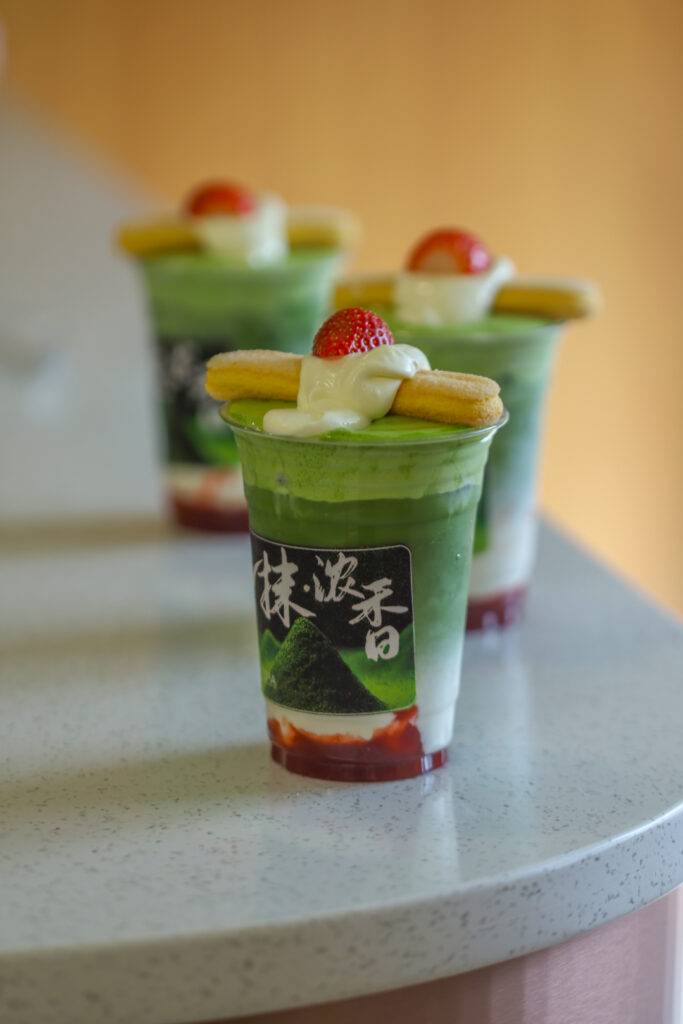
5) Matcha tiramisu cup (or no-bake matcha cream cup)
Why it sells: premium feel, strong margin potential, no oven variability.
Production notes: keep matcha in the cream layer; dust fresh right before service.
6) Matcha soft serve, gelato, or affogato-style dessert
Why it sells: matcha shines in cold formats; color stays vibrant.
Production notes: if you want a shop-style starting point, this internal resource is a useful benchmark: matcha gelato SOP-style guide
.
7) Matcha “pairing set”: one baked item + one drink
Why it sells: increases average order value and makes matcha a mini-program.
Production notes: standardize one drink recipe that pairs with your baked item.
If your shop also runs drinks, you can borrow dispersion discipline from beverage SOPs like this: iced matcha latte SOP for cafes
.
For more matcha flavor combinations and seasonal inspiration, this roundup is an easy internal browse: 3 matcha recipes to try this spring
.
A simple 1-week launch plan to test, price, and train staff
You don’t need ten items. You need two strong items executed perfectly.
Day 1–2: Pick your “core two”
A reliable starter set:
- One baked good (cookie or loaf)
- One drink pairing (latte)
Day 3: Run a controlled test batch
- Lock one matcha supplier + one lot.
- Test 2–3 dosage levels.
- Document weights and steps.
If you’re sourcing matcha and want a single place to start comparing options, keep your product page bookmarked: BubbleTeaSuppliers matcha collection
.
Day 4: Cost and price
- Calculate matcha cost per unit at each dosage.
- Choose the version that wins on flavor and margin.
Day 5: Write a one-page SOP
Your SOP should include:
- matcha weight per batch
- dispersion method (slurry or fat-coating)
- mixing order
- bake temp/time (target range)
- portioning tool (scoop size / slice weight)
- storage and label rule (opened date)
Day 6–7: Train and soft launch
- Train one shift.
- Soft launch as a limited run.
- Collect feedback on: bitterness, sweetness level, color, and portion size.
FAQ
Should I use ceremonial matcha for baking?
Usually, no. Ceremonial matcha is commonly positioned for drinking where delicate flavor notes matter most. For baking, culinary-grade matcha is typically the more cost-effective choice and is formulated to work as an ingredient. (For the general grade framing, see Encha’s matcha guide mentioned earlier.)
Why does my matcha baked good turn brown or olive?
Most often it’s a combination of:
- matcha quality/freshness (dull powder starts dull)
- bake temperature being too high
- relying on the crumb alone for color instead of adding a matcha-forward finish (glaze, frosting, dusting)
How do I stop gritty matcha clumps?
Standardize two rules:
- sift matcha into dry ingredients
- use one dispersion method (slurry or fat-coating) and teach it
Can I use the same matcha for drinks and baking?
Often, yes—especially if you’re using a robust culinary-grade matcha. The key is controlling your dispersion method so it behaves consistently across formats. If you want a drink-side SOP benchmark, use this: matcha powder guide
.