
Matcha sells because it’s familiar, photo-friendly, and easy to upsell. Pistachio sells because it tastes premium and reads “dessert” without going full candy.
Put them together—and you get a drink that looks expensive and drinks clean.
This guide is written for operators: one consistent spec, one repeatable workflow, and the controls that stop the three classic failures:
gritty or clumpy matcha
pistachio oil separating into a slick
boba going from chewy to “hockey puck” mid-shift
What this drink is (and what it isn’t)
Matcha pistachio milk tea is an iced milk tea-style drink built from:
a matcha shot (a small, well-whisked matcha slurry that won’t clump)
a pistachio milk base (pistachio paste/butter blended into milk so it doesn’t split)
tapioca pearls (boba) as the default topping
It is not a powder-based pistachio drink. This SOP avoids pistachio powder on purpose.
The flavor target (so every shift hits the same profile)
Your “done right” version should land here:
Aroma: fresh green tea + toasted nut
First sip: pistachio creaminess
Finish: clean matcha bitterness (not harsh)
Texture: smooth, not chalky; boba chewy, not gummy
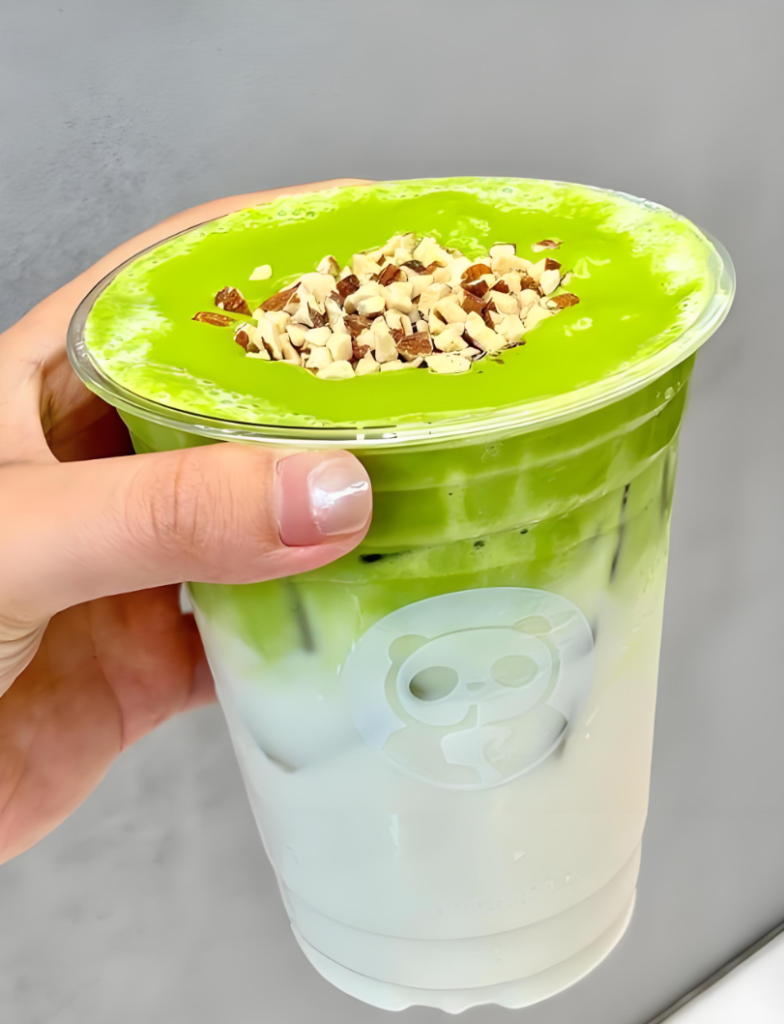
If it tastes flat, your matcha is under-dosed or drowned. If it tastes sharp, your water is too hot or your matcha shot is too concentrated.
Ingredient decisions that make or break the SOP
Before steps, lock the ingredient rules. That’s how you stop “everyone makes their own version.”
Matcha: pick a grade your team can’t accidentally ruin
Matcha is powdered tea. It doesn’t steep like black tea—it suspends. That means your mixing method is the product.
For matcha-specific handling (storage, pre-sifting, and slurry ratios), Bubble Tea Supplier’s guide to matcha operational tips for bubble tea shops is a strong baseline.
Pistachio: paste/butter is premium—but it comes with oil management
Real pistachio paste tastes better than syrups, but you need one of two workflows:
high-shear mix every drink (frother/shaker)
a concentrate you batch and portion
If you don’t do either, you’ll see separation.
Sweetness: decide where sweetness lives
Operators usually make this drink inconsistent by sweetening three places at once:
in the boba syrup
in the pistachio base
in the matcha shot
SOP rule: pick one primary sweetness source (usually the pistachio base), then keep the others minimal.
Step-by-step SOP overview (how your staff will actually execute)
This drink is two mini-SOPs plus one build:
cook + hold boba
make matcha shot
make pistachio milk base
assemble over ice (layered or blended)
If you try to “wing it” and mix everything in-cup, you’ll get clumps, separation, and inconsistent sweetness.
SOP Part 1: Boba (tapioca pearls) — cook + hold for chew
Boba is where drinks quietly fail. The pearl can be perfectly cooked at 11:00 and disappointing by 2:00 if you don’t control the hold.
Step 1 — Cook the pearls (follow your brand, then lock your numbers)
Input: dry pearls, boiling water, timer, stirring spoon.
Action (common pattern):
Bring a large pot of water to a rolling boil.
Add pearls and stir immediately to prevent sticking.
Boil/simmer per your supplier instructions.
Rest/steep off-heat (covered) to finish the center.
Drain and rinse briefly, then coat in syrup.
A reliable general reference for the “cook + rest” approach is Hungry Huy’s guide on how to cook tapioca pearls (cook + rest method).
Done when: pearls are chewy and mostly translucent, with no raw flour taste.
Step 2 — Hold the pearls so they stay chewy
Cooked boba hardens as it sits. One shop-focused reference on how long cooked boba stays chewy (holding guidance) notes a practical 4–6 hour window and recommends warm holding around 55–65°C (131–149°F) in a sealed container to extend chew.
Your shop SOP (simple and realistic):
Hold boba warm and covered.
Keep pearls lightly coated in syrup so they don’t glue together.
Set a discard time. (Many shops choose a conservative 4-hour spec; adjust to your product and customer expectations.)
Done when: pearls are still soft-chewy when tasted plain.
⚠️ Warning: Don’t refrigerate service boba during the shift. Cooling accelerates hardening and makes the texture inconsistent.
SOP Part 2: Matcha shot (clump-free, not bitter)
Step 3 — Set your matcha shot spec (start here)
Use grams if you can. Teaspoons vary too much.
Starting spec for 16 oz iced:
Matcha: 3–5 g
Water: 60–120 mL
Water temp: 160–175°F (70–80°C)
Those ranges match Bubble Tea Supplier’s shop recipe ratios in their matcha ops guide above and align with general matcha prep guidance like The Whistling Kettle’s how to prepare matcha (sift + whisk method).
Done when: smooth, foamy, no visible specks, no dry powder stuck to the cup.
Step 4 — Execute the shot (repeatable method)
Sift the matcha into a small cup.
Add measured water (hot-but-not-boiling).
Whisk/froth aggressively for 20–45 seconds.
Busy-shop shortcut: pre-sift matcha into a covered service jar at shift start.
Pro Tip: For iced drinks, you can build the matcha shot with room-temp water if your team struggles with temp control. The key is sifting + high-shear mixing.
SOP Part 3: Pistachio milk base (real-nut flavor without separation)
Pistachio paste/butter is oil-rich. If you just spoon it into cold milk and stir twice, you’ll get floating oil and gritty bits.
Step 5 — Choose one pistachio workflow
Workflow A (recommended): Batch a pistachio concentrate
Combine pistachio paste + a small amount of milk + your main sweetener.
Blend/froth until fully smooth.
Hold cold, labeled, and remix before each pour.
Workflow B: Per-drink mixing
Add pistachio paste + sweetener into milk.
Froth/shake hard, then pour.
Either one works. The failure mode is “half-mixed pistachio.”
Step 6 — Starter ratio for pistachio base (16 oz iced)
Pistachio paste/butter: 1–2 Tbsp (or a weighed dose you standardize)
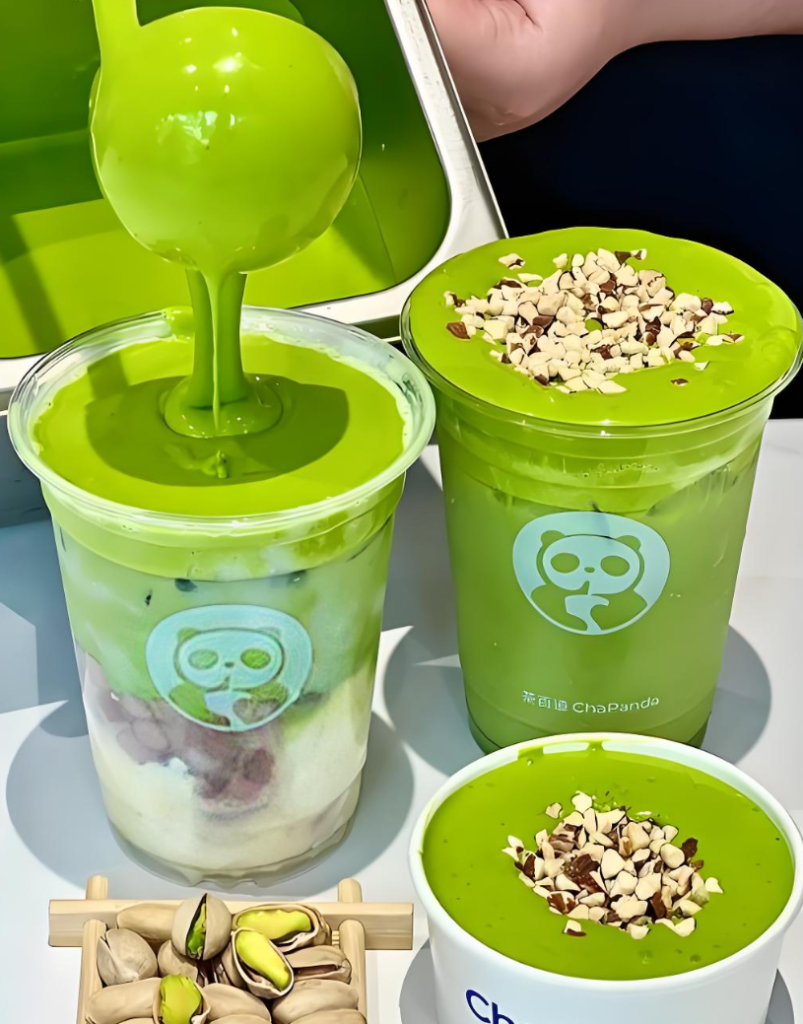
Milk: set your final drink volume
Sweetener: set to your house scale
Stability note: some sources recommend adding a small amount of oil to improve pistachio paste texture (see Tasting Table’s note on how to smooth pistachio paste for mixing). For most shops, treat this as an optional tweak—start with better mixing first.
Done when: pistachio base is uniform (no visible oil ring, no thick paste stuck to the bottom).
Step 7 — Storage + remix rules
Pistachio paste naturally separates; remix before use.
Keep lids tight to reduce oxidation and off flavors.
Pies and Tacos’ guide to pistachio paste storage and remixing is a clear reference for what “normal separation” looks like.
Final SOP: Iced matcha pistachio milk tea with boba (16 oz)
Step 8 — Layered build (photogenic, premium)
Add cooked boba to the cup (standard scoop).
Add ice.
Pour pistachio milk base.
Slow-pour matcha shot over the back of a spoon (or down the cup wall).
Done when: distinct layers, boba settled, no matcha specks.
Step 9 — Shaken build (fastest during rush)
Add pistachio milk base + ice to shaker.
Add matcha shot.
Shake 8–10 seconds.
Pour over boba.
Done when: uniform green color, silky texture, boba still warm-chewy.
Step 10 — Staff-facing spec card (copy/paste for training)
If you only standardize one thing this week, standardize this:
matcha grams per size
water temp range for the shot
pistachio dose
sweetness scale baseline
boba discard time
That’s how you stop shift drift.
Troubleshooting (the 5 problems you’ll see first)
1) Matcha clumps or gritty sediment
Cause: no sifting, water too hot, or weak mixing.
Fix: sift every dose, keep water in the 160–175°F range, and use a frother.
2) Pistachio oil ring on top
Cause: under-mixed paste or concentrate not remixed.
Fix: blend/froth pistachio base until uniform; remix the concentrate before each pour.
3) Drink tastes “heavy”
Cause: pistachio dose too high or sweetness stacked.
Fix: lower paste dose first, then simplify sweetening to one main source.
4) Boba turns hard mid-shift
Cause: boba held too cool or too long.
Fix: hold warm, covered, syrup-coated; enforce discard time.
5) Green looks dull or bitter tastes sharp
Cause: water too hot or matcha stored poorly.
Fix: tighten water temp control and portion/store matcha away from heat and moisture.
Quality control checklist (1-minute shift lead check)
Run this twice a day.
Matcha: no gritty sediment after 2 minutes
Pistachio: no visible oil ring
Sweetness: consistent with your scale
Boba: still chewy when tasted plain
Speed: staff can build it in under 60 seconds during rush
Allergen & labeling SOP (pistachio is a tree nut)
Pistachio is a tree nut. If you sell nut drinks, you need a cross-contact plan—not vibes.
At minimum:
dedicate a labeled pistachio scoop/spoon
use a dedicated mixing cup or wash/rinse/sanitize between nut and non-nut drinks
change gloves after handling pistachio paste
label the menu clearly (“contains tree nuts”)
For a broader overview of allergen control practices in foodservice, Food Safety Magazine’s article on allergen cross-contact prevention in foodservice is a solid starting point.
⚠️ Warning: If a customer asks for “nut-free,” don’t promise safety unless you have a real separation process. Be honest about shared equipment.
Menu positioning (how to sell it without changing the SOP)
This drink behaves like a pistachio matcha latte in terms of customer expectations: layered, premium-looking, and “green” in a way that feels trendy.
If your customers search “pistachio matcha bubble tea,” this SOP maps cleanly to that expectation—just with operator-grade specs and controls.
Operationally, position it as:
premium matcha drink
boba included by default
optional “topping upgrade” add-ons
If you want staff to explain boba quickly, Bubble Tea Supplier’s guide on what’s the difference between boba and tapioca? is a clean internal reference.
FAQs (questions customers and staff will ask)
Can we make iced pistachio matcha milk tea without boba?
Yes. Build the same drink and treat boba as an add-on. The SOP stays the same.
Is boba supposed to pop or be chewy?
Classic tapioca pearls are chewy. If customers ask, Bubble Tea Supplier’s explanation of whether boba is supposed to pop or be chewy helps set expectations.
Why is the matcha clumping at the bottom?
Usually one of three issues: matcha wasn’t sifted, water was too hot, or the shot wasn’t mixed hard enough. Re-train the shot step and consider a frother.
Why does the pistachio separate?
Either the paste wasn’t blended enough, the milk is too cold and mixing is weak, or your pistachio paste has natural oil separation and wasn’t remixed.
Can I call this a “matcha pistachio boba” on the menu?
Yes—customers will understand it. In your back-of-house recipe book, keep the formal name “matcha pistachio milk tea” so training stays consistent.
Next steps
When you’re ready to source matcha consistently, Bubble Tea Supplier’s Matcha Bubble Tea page is a useful starting point.