
If you’re running a bubble tea shop, toppings aren’t “extras.” They’re the part customers talk about, photograph, and come back for.
But toppings also create the fastest way to wreck a menu:
too many SKUs
too much prep
inconsistent texture
slow ticket times during the rush
This guide is a menu-strategy companion to BubbleTeaSuppliers.com’s breakdown of toppings that can boost average order value (AOV). Here, the focus is simpler: which milk tea toppings sell well, and why—with an operator lens.
The 6 criteria for choosing milk tea toppings that actually sell
Before we get into specific toppings, set your decision rules. The best bubble tea toppings usually win on a mix of customer psychology and operational reality.
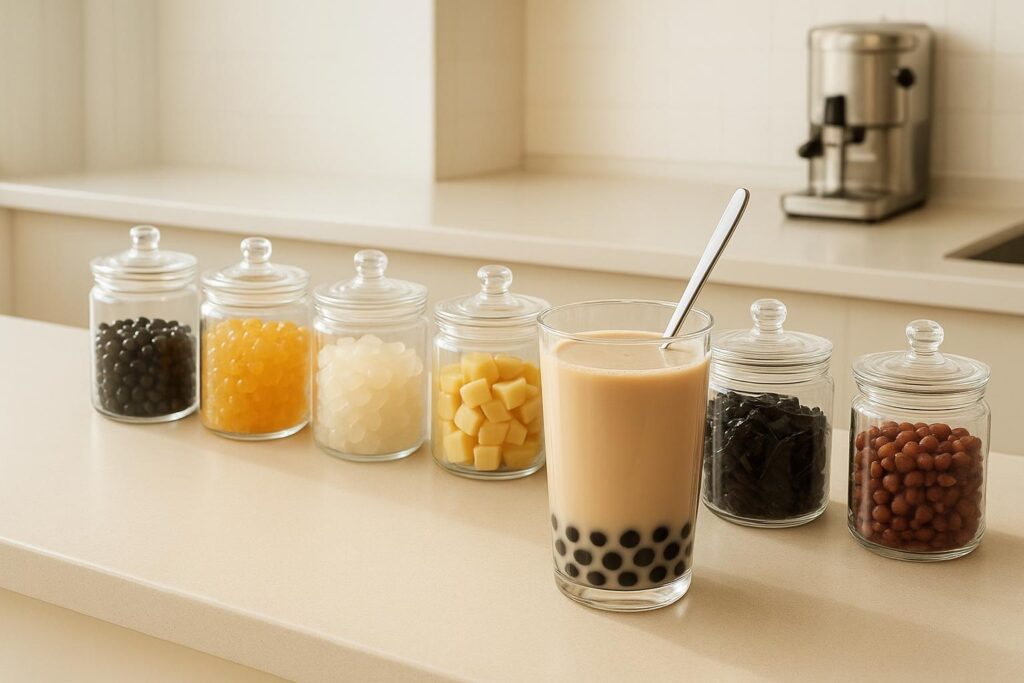
1) Texture that customers recognize instantly
Bubble tea is a texture drink. The classic appeal is chew—often described as “QQ,” meaning bouncy and satisfying. That’s a big reason tapioca pearls remain the default topping expectation for many customers, even when trend toppings come and go (see the boba texture discussion in “The Ultimate Guide to Boba” by i am a food blog).
2) Easy customization (without decision fatigue)
Customization is a major reason bubble tea keeps growing: customers want to pick sugar level, ice level, tea base—and toppings. Botrista’s restaurant trend breakdown highlights customization as a key driver in the boba wave (see Botrista’s “How to capitalize on the boba supertrend”).
Your job is to offer “enough” choices without turning every order into a 60-second conversation.
3) Menu fit with your top-selling milk tea bases
If most of your sales are classic black milk tea, brown sugar milk tea, taro, and matcha-style drinks, prioritize toppings that pair with creamy profiles (pearls, pudding, grass jelly, red bean, foam toppings). Save fruit-forward toppings for fruit tea and seasonal LTOs.
4) Speed of service
A topping that requires delicate handling, special utensils, or frequent re-stocking will show up in your ticket times. If two toppings sell similarly, the one that’s easier to portion wins.
5) Food cost and waste control
This is where “popular bubble tea toppings” can still be a bad decision for your shop. Ask:
Does it have a short quality window once opened or prepped?
Does it take up scarce fridge space?
Is it easy to over-portion?
6) Visual appeal that’s worth the operational tradeoff
Some toppings are basically marketing. Popping boba is a good example: it adds color and that burst-in-the-mouth effect. Market research on the category notes younger consumers’ preference for visually appealing, customizable drinks (see Grand View Research’s popping boba market coverage).
If a topping is mainly visual, it needs to be simple enough to execute all day.
Pro Tip: Think in tiers: Core toppings you can execute fast every day, Seasonal toppings that rotate, and Premium toppings that justify a higher price.
The best milk tea toppings that sell well (with operator notes)
Below are the toppings you asked to include, ordered roughly by how often they show up as “default” expectations in milk tea menus—then by how reliably they drive repeat orders.
Classic tapioca pearls (boba)
If you only keep one topping, keep pearls.
Why it sells
It’s the classic bubble tea experience. Many customers mentally equate “boba” with the chewy pearls.
It delivers the texture people are chasing (that bouncy chew).
Where it fits best
Classic black milk tea
Brown sugar milk tea
Taro milk tea
Matcha-style milk tea
Operator notes
Pearls are high-demand but also high-risk: if the texture is off, customers notice immediately.
If you need a quick explainer for staff and customers, BubbleTeaSuppliers.com has a clear definition on the difference between boba and tapioca.
Popping boba
Popping boba sells because it feels new—even to customers who’ve had bubble tea for years.
Why it sells
It’s fun. The “pop” is a distinct sensory moment.
It’s visual: bright colors read as “custom” and social-media-friendly.
Where it fits best
Fruit teas and lighter drinks (but it can work in milk tea when the flavor pairing is tight—think strawberry, mango, lychee).
Operator notes
Treat it as your “visual topper.” It helps you create premium-looking drinks with minimal extra labor—if portioning is standardized.
For a broader topping overview that includes popping boba, BubbleTeaSuppliers.com has a solid “best bubble tea toppings” guide.
Crystal boba (agar)
Crystal boba earns its spot because it gives customers a different texture without fighting the milk tea base.
Why it sells
It’s a texture alternative for customers who don’t want classic pearls.
It’s often perceived as lighter than tapioca pearls.
Where it fits best
Jasmine milk tea
Honey or vanilla-style milk teas
Milk teas where you want a cleaner finish
Operator notes
Crystal boba can help you diversify your topping lineup without adding a totally new flavor profile.
It’s also a good “second topping” option when customers want variety beyond pearls.
Pudding
Pudding turns milk tea into a dessert.
Why it sells
It adds richness and a familiar custard vibe.
It makes the drink feel more filling—great for afternoon and evening traffic.
Where it fits best
Classic milk tea
Thai tea-style milk tea
Brown sugar and caramel profiles
Operator notes
Pudding is one of the easiest ways to create a premium-feeling drink without complex recipes.
If you’re building a “high-quality toppings” positioning, you can point readers to BubbleTeaSuppliers.com’s guide to high-quality bubble tea toppings.
Grass jelly
Grass jelly is a sleeper hit: not flashy, but it earns repeat orders.
Why it sells
It adds a clean, herbal note that balances sweetness.
Texture is softer than pearls, so it’s a good option for customers who want chew without heaviness.
Where it fits best
Roasted oolong milk tea
Classic black milk tea
Milk teas that skew sweet (grass jelly adds contrast)
Operator notes
Position it as the “balance” topping: it makes rich drinks feel less cloying.
It’s also a strong pairing when customers want two toppings (pearls + grass jelly is a classic combo).
Red bean
Red bean sells when it’s treated like a deliberate flavor choice—not a random add-on.
Why it sells
It’s familiar for customers who like Asian dessert flavors.
It signals “dessert drink” immediately.
Where it fits best
Matcha milk tea
Taro milk tea
Black milk tea when you want a dessert twist
Operator notes
Red bean is a great seasonal lever: it pairs well with winter-style, comfort-drink marketing.
It also helps you differentiate from shops that only offer pearls + popping boba.
Cheese foam
Cheese foam is one of the easiest ways to make a milk tea feel premium.
Why it sells
It adds salty-sweet contrast and a creamy top layer.
It looks elevated, especially in clear cups.
Where it fits best
Jasmine or green tea milk teas
Black tea milk teas where you want more aroma and contrast
Operator notes
Foam toppings can become a consistency problem if training is weak. Standardize the portion and the build.
If you want a food-safety reminder for staff training (without turning this post into a full SOP), a solid general reference is the Hong Kong Centre for Food Safety’s “Trade Guidelines on Safe Production of Non-prepackaged Beverages” (PDF).
⚠️ Warning: If a topping requires “special handling” in your store, it needs a written mini-SOP (portion, holding, discard rules). Otherwise, it will drift by shift.
Whipped cream
Whipped cream sells because it’s instantly understandable—even for first-time bubble tea customers.
Why it sells
It’s familiar and visually obvious.
It helps turn milk tea into a dessert beverage.
Where it fits best
Chocolate milk tea
Strawberry milk tea
Any “dessert” LTO build
Operator notes
Whipped cream works best when you treat it as a premium add-on, not a default topping.
Keep it for a smaller subset of drinks so it stays special.
Mochi
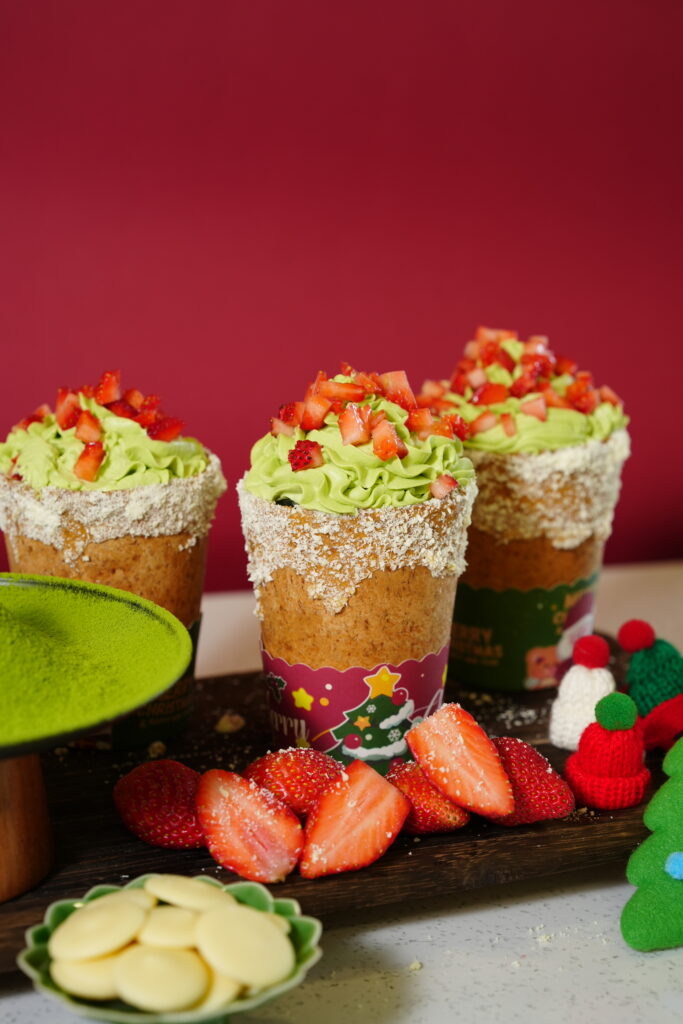
Mochi is a texture flex: it makes your menu feel more “dessert-forward” without being complicated to explain.
Why it sells
It adds a chewy bite that’s different from pearls.
It reads as a treat.
Where it fits best
Brown sugar milk tea
Taro milk tea
Milk teas that lean dessert (cookies & cream-style profiles)
Operator notes
Mochi sells best when it’s paired with a drink that already has a dessert positioning.
It can also be your “premium chew” alternative for customers who don’t want pearls.
How to build a topping lineup that sells (without slowing you down)
If you’re choosing boba toppings for milk tea, the goal is a lineup that feels customizable to customers but predictable for staff.
If you want this to be actionable, here’s a simple lineup rule many operators can execute:
2 core toppings (always in-stock, fastest to portion): pearls + one secondary (grass jelly or pudding)
2 seasonal toppings (rotate quarterly): red bean + crystal boba (or swap based on demand)
1 premium topper (higher price point): cheese foam
Everything else becomes an optional add-on, not a menu requirement.
Next steps (keep this low-friction)
If you’re thinking about toppings primarily as a revenue lever, use this companion guide next: Best boba toppings to boost your average order value.
If you want a broader topping list to compare against your current menu, browse BubbleTeaSuppliers.com’s overview of popular bubble tea toppings.
If your team still gets tripped up by terminology, here’s a quick clarifier on the difference between boba and tapioca.