
A “pineapple banana milkshake” flavor sounds like a smoothie, but it can work surprisingly well as a tea-based milk tea if you treat it like a layered build:
- pineapple brings the bright tropical top-note
- banana brings the creamy, dessert-like body
- tea keeps it from tasting like melted candy
This guide is for shop owners and managers who want to launch a drink that looks good on the menu board, holds up on delivery apps, and doesn’t blow up your prep list.
Why pineapple + banana works (and when it doesn’t)
Before you pick toppings or write a name, decide what you want customers to notice first: pineapple brightness, banana creaminess, or the tea base.
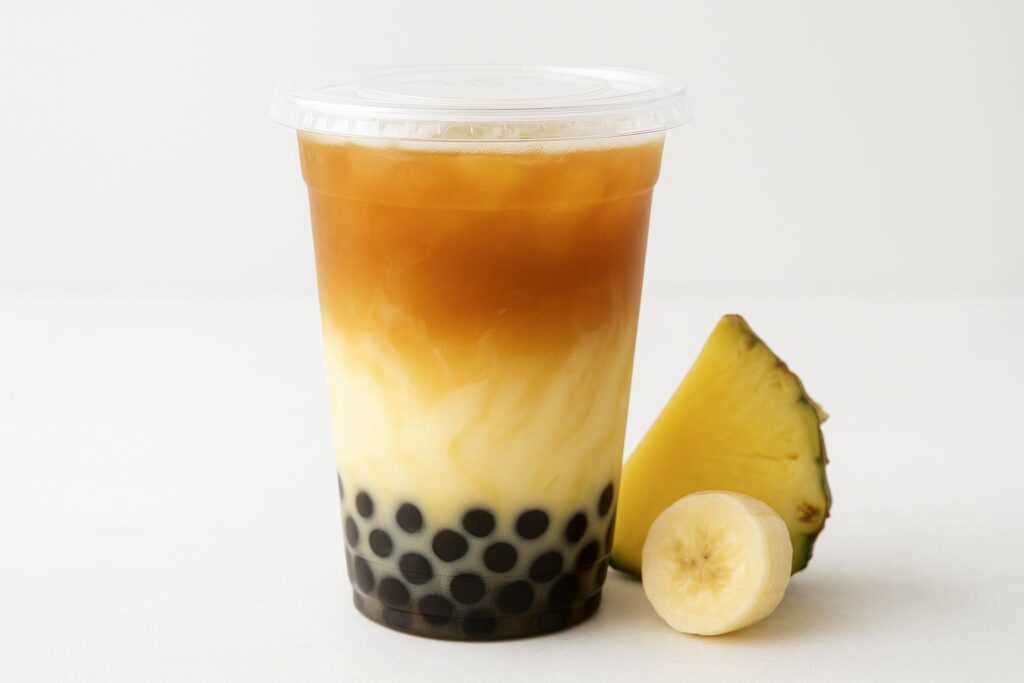
Pineapple milk tea: decide what you want it to be on your menu
Pineapple and banana are basically doing opposite jobs.
Pineapple is sharp and loud. Banana is sweet and round. When you balance them, you get something that reads like “tropical cream” instead of “random fruit salad.”
Where shops get burned is in one of these two ways:
- Banana takes over and the drink becomes a banana shake with tea hiding in the background.
- Pineapple goes too acidic and the drink tastes thin, or it clashes with your dairy.
Pro Tip: Treat banana as a “texture + sweetness” ingredient and pineapple as the “flavor pop.” If both are trying to be the star, the cup gets messy fast.
Start with a base system (so ops stay simple)
You can market this as a tropical milk tea without calling it that in the name. It signals “creamy + fruit + tea” in a way customers understand.
Before you name anything, decide what the drink is operationally.
You’re aiming for one repeatable system that can support a few variations without adding five new SKUs.
Tea base options: black, jasmine green, or oolong
A quick pairing rule that’s easy to teach:
- Black tea holds up well with richer tropical flavors like pineapple, and it’s a natural fit if you want a dessert-like “milkshake” vibe.
- Jasmine green tea keeps it lighter and more fragrant if you want “tropical, clean, and refreshing.”
- Oolong is a good middle option when you want more depth than green tea without the heaviness of black.
BubbleTeaSuppliers.com’s fruit pairing guide calls out that black tea tends to match richer tropical fruits like pineapple, while green tea works well with lighter fruit profiles. If you want a refresher, use BubbleTeaSuppliers.com’s fruit tea pairing guide as your “base pairing cheat sheet.”
Dairy vs non-dairy (pineapple can be the troublemaker)
You said you don’t have constraints, so this is about risk management and flavor.
- If your pineapple component is bright/acidic, non-dairy can be easier to keep clean and consistent.
- If you want the drink to feel dessert-like, dairy can help, but keep an eye on how your pineapple ingredient behaves with milk.
If you want to keep testing simple, offer one default (your standard milk or creamer system) and one optional swap (like coconut or oat) only if your customer base asks for it.
Sweetener strategy: standardize the “sweetness ladder”
For a new LTO, you don’t need five sweetness levels. You need consistency.
A practical default:
- 0%, 50%, 100% sweetness options
- staff training note: pineapple usually tastes better with at least some sweetness; banana gets cloying fast if you push too sweet
Cup 49’s build framework for fruit bubble tea is basically “tea base + syrup + sweetener + ice + toppings.” Even if you’re building milk tea, that structure is useful because it forces you to standardize what changes and what stays fixed. See Cup 49’s fruit bubble tea base-and-syrup framework
if you want a simple way to think about tea base options and sweetening in a fruit milk tea.
Build three menu-ready versions (standard, premium, clean)
You don’t need ten versions. You need three that make sense to customers and make money:
- a standard version that’s easy to execute
- a premium version that creates a clear upsell
- a clean version for customers who want “lighter” drinks
Version 1: Pineapple Banana Milk Tea (standard)
Positioning: your default LTO.
What to emphasize on the menu: “tropical + creamy.”
Topping: classic tapioca pearls if you want the most predictable seller.
Why this matters: It’s the easiest version to train and easiest to forecast.
How to implement: Use one tea base (start with black tea if your shop’s core menu leans classic milk tea), one pineapple component, and one banana component. Keep the fruit “notes” clear; don’t turn it into a blended smoothie.
What failure looks like: The drink tastes like banana candy and the pineapple disappears. Fix by lowering banana and increasing the pineapple top-note (or adding a topping that reads “pineapple”).
Version 2: “Tropical Cream” Milk Tea (premium)
Positioning: same flavor, higher perceived value.
Add one premium element:
- a cream-top / foam layer, or
- a syrup swirl, or
- a premium topping (pudding, popping boba, specialty jelly)
Why this matters: A premium version gives you margin without changing the entire base system.
How to implement: Keep the base identical to the standard drink. Only change the finish.
A good shortcut is to pick a topping that signals “dessert.” WebstaurantStore’s 2026 topping guide lists egg pudding as a rich, custard-like add-on that pairs well with classic milk tea profiles. That’s a useful “premium cue” even when your base flavor is fruit-forward. Reference: WebstaurantStore’s guide to popular boba toppings (2026)
.
What failure looks like: You add too many premium elements at once (foam + pudding + pearls) and the drink becomes heavy, slow to build, and hard to finish.
Version 3: Pineapple Banana “Light” Milk Tea (clean build)
Positioning: tropical, refreshing, not dessert.
How it differs:
- choose jasmine green or oolong
- keep sweetness moderate
- use a lighter topping (aloe-style jelly or a fruitier topping)
Why this matters: It catches customers who like tropical flavors but don’t want a heavy milkshake feel.
What failure looks like: It tastes watery. Fix by strengthening the tea base and choosing a topping that adds body (even a small amount of jelly can help the drink feel finished).
Toppings + textures that sell this flavor
Texture is how you make pineapple-banana feel intentional.
If you want topping inspiration that’s already operator-focused, start with BubbleTeaSuppliers.com’s fruit tea pairing guide and build your topping list from what you already stock.
Pineapple-leaning toppings (bright, tropical)
Use these when pineapple is the hero:
- popping boba (fruit “pop”)
- aloe-style jelly for a clean tropical vibe
- coconut-style jelly for a pina-colada direction
BubbleTeaSuppliers.com includes pineapple-tropical combinations like “pineapple coconut,” and points out toppings like coconut jelly or aloe as natural fits. That’s a clean direction when you want pineapple to read clearly.
If you want more ideas for pairings across fruits, tea bases, and toppings, here’s the reference once: BubbleTeaSuppliers.com’s fruit tea pairing guide
Banana-leaning toppings (dessert and creamy)
Use these when banana is the hero:
- tapioca pearls (classic, high attach rate)
- egg pudding for a custard finish
- brown sugar boba if you’re deliberately going “dessert LTO”
WebstaurantStore highlights how egg pudding adds a silky, custard-like texture and how brown sugar boba signals indulgence. Those toppings can turn “banana + pineapple” from a novelty flavor into something that feels like a real dessert drink.
Bridge toppings (make both fruits taste like one idea)
When you want a single cohesive flavor story, choose toppings that connect “tropical” and “cream”:
- coconut jelly (tropical + creamy)
- mango-leaning popping boba (tropical direction that customers already understand)
- a light cream-top layer (if your bar can handle it)
Naming that works on a menu board and a delivery app
Naming is where a lot of good drinks die.
Your name should do three jobs fast:
- tell customers what it tastes like
- tell them what category it’s in (milk tea)
- sound clean on a receipt
Simple name formulas
Use one of these templates:
- [Fruit] [Fruit] Milk Tea
- [Descriptor] [Fruit] Milk Tea (Golden, Island, Tropical, Cream)
- [Fruit] Cream Milk Tea
- [Fruit] Milk Tea + [Topping] (if the topping is the hook)
20 name ideas you can use as-is
Short, pronounceable, and clear:
- Pineapple Banana Milk Tea
- Tropical Pineapple Milk Tea
- Island Cream Milk Tea
- Golden Pineapple Milk Tea
- Pineapple Cream Milk Tea
- Banana Cream Milk Tea
- Banana Oolong Milk Tea
- Pineapple Jasmine Milk Tea
- Tropical Cream Milk Tea
- Pineapple Banana Pearl Milk Tea
- Pineapple Banana Pudding Milk Tea
- Island Pearl Milk Tea
- Golden Tropics Milk Tea
- Pineapple Coconut Cream Milk Tea
- Banana Coconut Milk Tea
- Pineapple Banana Milk Tea (Light)
- Tropical Green Milk Tea
- Pineapple Banana Milk Tea (Cream Top)
- Island Banana Milk Tea
- Tropical Sunset Milk Tea
Key Takeaway: If you’re testing an LTO, name it like a menu item, not like a brand campaign. Clear beats clever for the first launch.
LTO positioning + merchandising (how to sell it without discounting)
This flavor works in two seasonal storylines. Pick one and keep your visuals consistent.
Seasonal storyline A: “Summer tropical”
Use this when you want it to feel refreshing:
- lighter tea base (jasmine green or oolong)
- brighter pineapple note
- fruit-forward topping (popping boba or jelly)
Tie it to a simple on-menu line: “Tropical and creamy, made with tea.”
Seasonal storyline B: “Dessert comfort”
Use this when you want it to feel indulgent:
- black tea base
- banana-forward creaminess
- pearls or pudding
You can also bundle it with dessert items (waffles, mochi, toast) if your shop already sells them.
Upsell ladder (make it easy for staff)
Keep upsells scripted:
- Standard → add a topping
- Standard → upgrade to premium finish (cream-top / foam)
- Standard → upgrade size
Avoid upsells that require a new build method.
What to photograph
For the hero shot:
- show a clear pineapple-golden color
- show pearls or a topping layer
- add one simple tropical prop (pineapple slice, banana slice) so customers “get it” instantly
How to test it without wrecking your line
Most LTO failures aren’t flavor. They’re execution.
A 7-day test plan
Days 1–2: Soft launch with one standard version only.
Days 3–5: Add one premium upsell (cream-top or pudding). Track attach rate.
Days 6–7: Add the clean version only if customers ask for “less sweet” or “lighter.”
What to standardize (so it tastes the same every shift)
Standardize:
- tea strength (brewed time and dilution)
- sweetness levels (0/50/100)
- fruit components (which syrup/puree, how much)
- topping portion sizes
If you need help defining your menu categories in a way customers understand, link staff to BubbleTeaSuppliers.com’s fruit tea vs bubble tea guide for North America
so everyone uses the same language at the counter.
Common failure modes (and quick fixes)
Failure mode: banana dominates
- Fix: reduce banana, increase pineapple top-note, use a pineapple-leaning topping
Failure mode: pineapple tastes harsh
- Fix: moderate sweetness, switch tea base, or choose a less acidic pineapple ingredient
Failure mode: tea disappears
- Fix: strengthen the tea base (especially if the drink is very creamy)
Failure mode: too many steps
- Fix: remove one optional element; keep the base identical between versions
Next steps
If you want more operator-friendly flavor pairing ideas and tropical drink inspiration, start with BubbleTeaSuppliers.com
and work backward from what you already stock.