
Your regulars don’t come back because you added one more syrup. They come back because a drink feels new—a little premium, a little surprising, but still easy to order again.
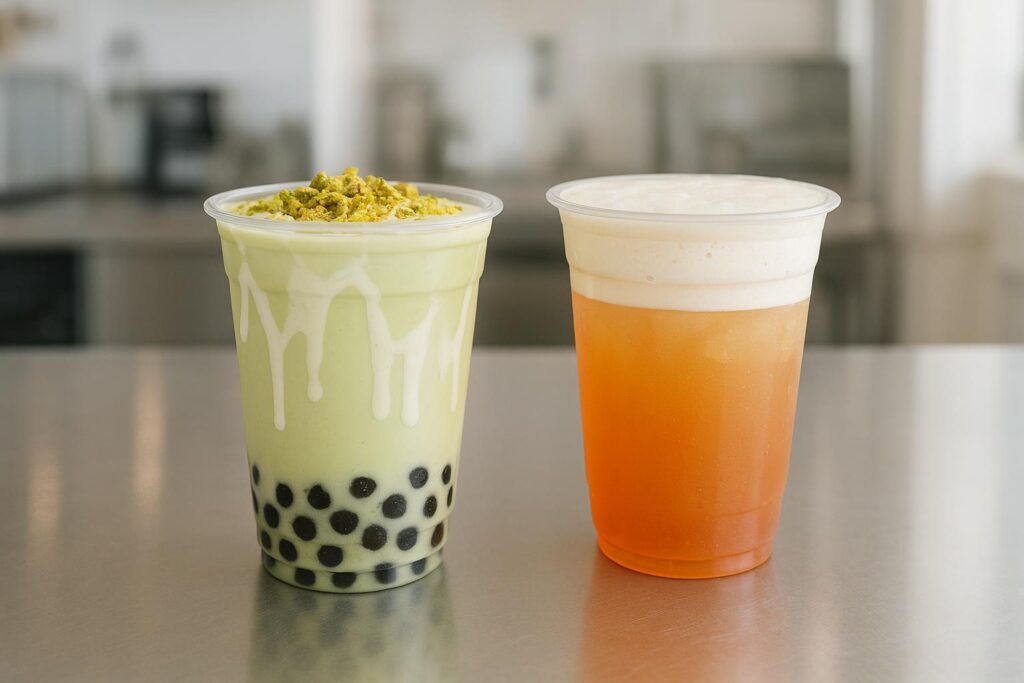
That’s the upside of layered drinks when they’re done well: a clean tea base, a creamy top, a nutty finish, a tart pop, and a chewy texture. Not chaos—architecture.
This post gives you an operator-ready way to build layered, complex flavors (without blowing up your prep), plus mini SOPs for:
Pistachio + white chocolate (dessert-luxury without being cloying)
Peach oolong (fruity-floral, clean, and social-friendly)
Six more “layered blend” templates you can keep remixing
Layered bubble tea flavors: the simple framework (top/mid/base)
When I say layered, I’m talking about three things working together:
Flavor layers (what the drink tastes like across the sip)
Base notes: what sticks around (tea body, roasted notes, nutty notes)
Mid notes: the main character (peach, pistachio cream, white chocolate)
Top notes: what hits first and finishes clean (citrus zest, floral aroma, a pinch of salt)
Texture layers (what makes it feel premium): foam, jelly, pearls, pudding
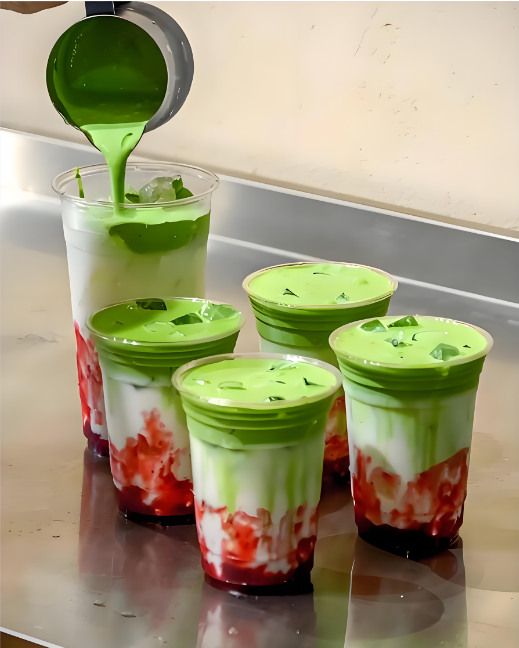
Visual layers (what sells online): gradient, drizzle, floating fruit, two-tone foam
Pro Tip: If a drink tastes “flat,” don’t add more sweetness. Add a top note (tiny citrus, floral aroma, or salt) so the sip has a beginning and an end.
The 3 baselines that keep complex drinks consistent
Complex doesn’t have to mean complicated. The trick is having a few baselines you never improvise.
1) Use a strong oolong base (so it doesn’t disappear under milk + syrup)
For iced builds, cold brew is your friend: it’s smoother and reduces bitterness.
Cold brew oolong baseline: 5–10 g loose leaf per liter, steep 8–12 hours refrigerated, then strain. This lines up with common guidance like Tavalon’s cold-brew oolong method (2025).
Hot brew backup: brew oolong around ~195°F for a few minutes, then chill fast (Whittard’s oolong brewing temperature reference).
If you want a broader refresher on tea bases and components, see BubbleTeaSuppliers.com’s bubble tea ingredients and tea bases.
2) Keep syrup math boring (so staff can execute)
For an operator line, you want one standard syrup and one “thick” syrup:
Standard simple syrup: 1:1 sugar-to-water for easy mixing
Thick syrup: 2:1 sugar-to-water for drizzles and “dessert” builds
Bubble Tea Supply has a straightforward walkthrough for a shop-style baseline: simple syrup for bubble tea.
3) Decide where fruit lives: puree in the drink vs puree as a layer
Fruit puree gives you “real fruit” perception fast, but it also introduces separation risk.
Practical baseline: keep puree around 10–20% of the drink volume (example: 2–4 oz puree in a 16–20 oz drink). That keeps the fruit present without turning the drink into a smoothie.
The menu innovation playbook: 8 layered blends you can run as LTOs
Ordering logic: Start with the two hero flavors you asked for (pistachio white chocolate + peach oolong), then move into other blends that reuse the same prep components.
To make these shop-usable, each includes:
a taste logic (“why it works”)
a mini SOP (16 oz baseline)
a quick standardization note
1) Pistachio White Chocolate Milk Tea (dessert-luxury, not cloying)
Why it works: Pistachio adds nutty, slightly savory depth that keeps white chocolate from tasting one-note. Dessert folks have paired these for years (see Jane’s Patisserie’s white chocolate + pistachio blondies), and the same “nutty + creamy” logic holds in drinks.
Mini SOP (16 oz, iced):
Cup: add tapioca pearls (standard serving)
In shaker:
4–5 oz strong oolong (cold brewed)
5–6 oz milk or non-dairy creamer
0.75–1.0 oz pistachio syrup (start lower)
0.5–0.75 oz white chocolate sauce (or white chocolate syrup)
Ice
Shake 10–15 seconds
How to keep it premium (and balanced):
White chocolate can get cloying. Balance it with either a pinch of salt or a tart micro-accent—the same logic dessert makers use when they add contrast (example: white chocolate pistachio cranberry bark).
Standardize it:
Pick one pistachio format (syrup or paste) for this LTO. Changing formats mid-run is where consistency breaks.
2) Peach Oolong Cream Milk Tea (clean, floral, and built for repeats)
Why it works: Peach + oolong tastes bright but not sharp. Peach oolong is widely described as a balanced fruity-floral blend (USTwoTea’s peach oolong overview).
Mini SOP (16 oz, iced):
Cup: add topping (recommend: lychee jelly or white peach popping boba)
In shaker:
6 oz strong peach oolong (cold brewed)
3–4 oz milk or non-dairy creamer
1.0–1.25 oz peach puree (or peach syrup if you’re going shelf-stable)
Ice
Shake 10–15 seconds
Optional: float a light cream foam (or a small cream cap) for a layered look
If you want a reference point for how BubbleTeaSuppliers.com frames the base, see White Peach Oolong Tea.
3) Peach Oolong + Citrus Zest (the easiest “top note” upgrade)
Why it works: Peach is sweet and round; a citrus top note makes it feel sharper and more “fresh.” It’s a fast way to turn a normal fruit tea into something that reads layered.
Mini SOP (16 oz, iced fruit tea):
7–8 oz peach oolong
1.25–1.5 oz peach puree
0.25 oz lemon syrup (or standardized lemon juice)
Ice
Shake
Standardize it:
If you can’t standardize fresh lemon, use a measured syrup. “A squeeze” varies wildly by staff.
4) Pistachio + Oolong “Roast & Cream” (less sweet, more tea-forward)
Why it works: Some markets are tired of candy-sweet drinks. This version lets the tea do more work and makes pistachio feel “grown-up.”
Mini SOP (16 oz, iced):
7 oz strong oolong
3–4 oz milk / creamer
0.5–0.75 oz pistachio syrup
0.25–0.5 oz simple syrup (only if needed)
Ice, shake
Topping: classic pearls or crystal boba
5) Peach Oolong + White Chocolate Cream Cap (dessert top on a clean base)
Why it works: The tea stays refreshing; the top turns it into an indulgent, photo-ready drink.
Mini SOP (16 oz, layered build):
Cup: ice + topping (recommend: peach jelly)
Add 8 oz peach oolong + 1 oz peach puree (shake first, then pour)
Add 1–2 oz white chocolate cream cap (light)
⚠️ Warning: If your cream cap is heavy + your base tea is warm, you’ll get ugly separation. Keep components cold.
6) “Perfume, not soap”: Peach Oolong + a micro floral lift
Why it works: Peach already leans aromatic. A small floral note can make it feel high-end—if you keep it tight.
Mini SOP (16 oz):
7 oz peach oolong
1.25 oz peach puree
0.1–0.2 oz rose syrup (or jasmine syrup)
Ice, shake
Standardize it:
Put floral syrup behind a “barista-only” modifier if your staff tends to free-pour.
7) Tart-finish pistachio: Pistachio + White Chocolate + berry accent
Why it works: Nutty + creamy is rich; a tiny berry note gives the sip a clean finish and keeps the drink from tasting heavy.
Mini SOP (16 oz):
4–5 oz strong oolong
5–6 oz milk / creamer
0.75 oz pistachio syrup
0.5 oz white chocolate sauce
0.25 oz berry syrup (raspberry/cranberry)
Ice, shake
8) The “bubble tea flavor combinations” template you can reuse forever
If you only keep one thing from this post, keep this:
Pick 1 from each column:
Base (tea): oolong / jasmine green / black
Body (main flavor): pistachio, peach, mango, lychee, brown sugar
Finish (top note): citrus, floral, salt, spice
Texture: pearls, jelly, popping boba, foam
Then build your drink so the customer can taste the layers in order.
Mini SOP (16 oz, generic):
7–8 oz strong tea
3–5 oz milk/creamer or keep it as fruit tea
1.0 oz syrup (start) + adjust
1–2 oz puree (if using)
Ice
Shake
Add texture + finish
How to pilot these as LTOs without creating prep chaos (7-day plan)
Day 1–2: Small-batch test (pick the winner)
Choose 2 drinks (one creamy, one fruit)
Run them at one sweetness default
Lock one topping option
Day 3–4: Standardize
Create a one-page build card for staff
Pre-batch what you can (tea base + simple syrup)
Decide if you’re using puree in drink or puree as a layer
Day 5–7: Measure (so you know what to keep)
Track two simple metrics:
Attach rate: how often the new drink is ordered with a topping add-on
Repeat signal: customers who come back and reorder within the week
Soft next steps (resources if you want them)
If you’re building an oolong bubble tea menu that stays consistent during rush, standardizing fundamentals pays off more than adding more flavors.
Start with the operator mindset on Milk tea ingredients + shop-ready SOP.
If you’re planning multiple LTOs, this guide to sourcing a bubble tea ingredients supplier in North America helps you avoid “five different vendors for five different syrups.”