
If you’re buying matcha in small tins for home use, “ceremonial” vs “culinary” is mostly a taste preference.
If you’re buying matcha powder wholesale for a café menu, it’s a purchasing decision with real consequences: drink color consistency, bitterness control, staff training time, and profit per cup.
This guide is for the consideration stage: you already know matcha sells. Now you need a clean way to compare options, set specs, and request quotes without getting trapped in vague “premium grade” talk.
For additional menu and sourcing context, you can also reference BubbleTeaSuppliers.com’s matcha bubble tea guide
and the matcha powder resource hub
.
1) “Ceremonial grade” isn’t a standard—so compare specs, not labels
Many suppliers use labels like “ceremonial” and “culinary,” but there isn’t an official grading body that enforces what those words mean.
Tea specialists have been blunt about it: Tezumi explains there’s no defined standard for “ceremonial grade,” and Naoki Matcha also notes there is no standardized matcha grading system with regulatory effect (meaning labels can vary widely by brand).
- Tezumi on why “ceremonial grade” isn’t regulated
- Naoki Matcha on the lack of standardized grading
So treat “grade” like an intent label (what it’s meant for), not proof of quality.
Bottom line: Your best defense as a buyer is a wholesale spec sheet—concrete requirements you can ask any supplier to meet.
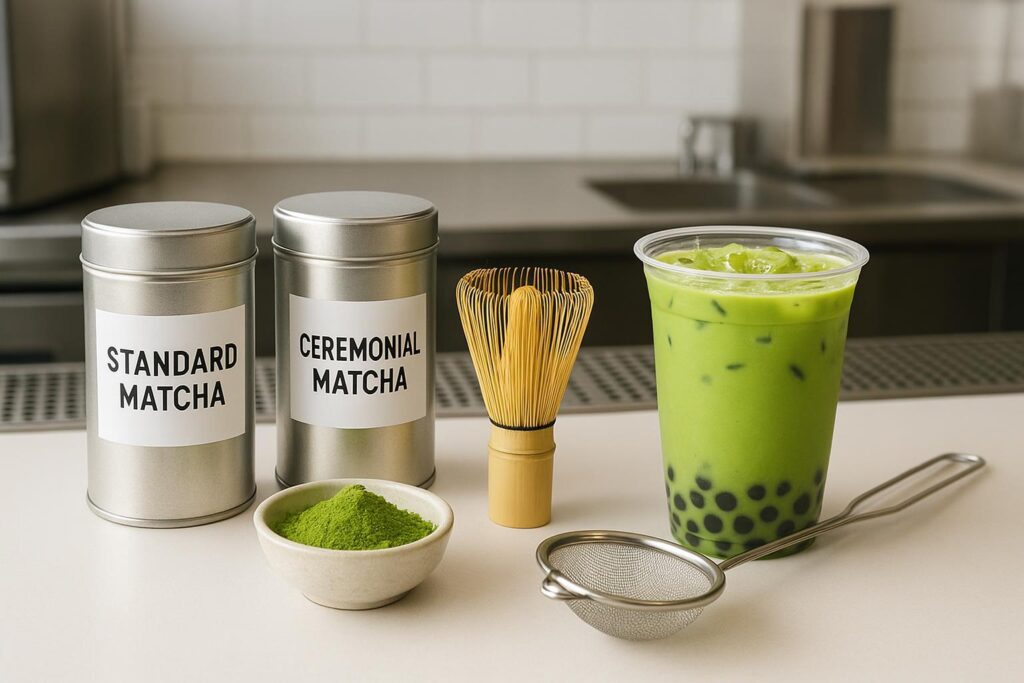
2) Standard vs ceremonial matcha: choose by menu use case
For cafés, the question usually isn’t “Which matcha is the best?”
It’s: Which matcha fits how customers will actually drink it?
When standard (culinary/latte) matcha is the better business choice
Standard matcha (often called culinary or latte-grade) is typically more robust and sometimes more bitter—which can be an advantage when your drink includes milk, sweetener, cold foam, or flavor layers.
Many matcha guides describe culinary matcha as better suited for mixing, while ceremonial matcha is smoother and intended for sipping.
- Ooika’s breakdown of ceremonial vs culinary matcha
Standard matcha is usually the right pick if:
- Your matcha drinks are milk-forward (matcha latte, matcha milk tea)
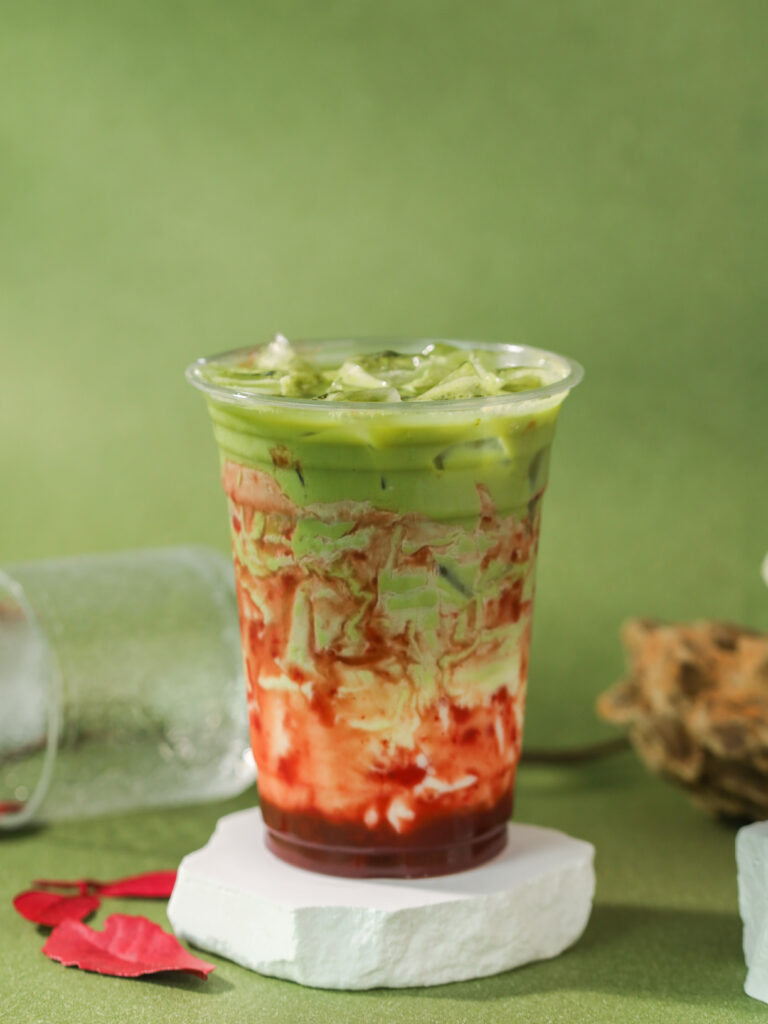
- You run flavored matcha LTOs (strawberry matcha, mango matcha)
- Matcha is used as one component inside layered drinks
- You need tight cost control at higher volume
If you want internal drink ideas to test “real-world performance,” start with BubbleTeaSuppliers.com’s matcha milk tea recipes
.
When ceremonial matcha makes sense for a café
Ceremonial matcha is usually described as brighter green, smoother, and less bitter—exactly what you want when matcha is the star, not just one ingredient in a sweet drink.
- Rikumo’s guide on when to use ceremonial vs culinary matcha (2026)
Ceremonial matcha is usually the right pick if:
- You sell a premium matcha latte at a higher price point
- You’re aiming for a cleaner taste profile (less sugar, less flavor masking)
- Your customers care about color, aroma, and smooth finish
- You’re using matcha in limited-ingredient drinks where defects can’t hide
A practical café strategy is to carry two matchas:
- Standard matcha for the bulk of the menu (milk-forward + flavored drinks)
- Ceremonial matcha for a premium signature item with higher margin
3) The wholesale matcha spec sheet (copy/paste for supplier quotes)
This is the part that saves you hours.
Use this as a copy/paste template when you email or message suppliers. You’re forcing the conversation onto measurable specs instead of fuzzy “premium” language.
A) Product identity & traceability
Ask:
- Country of origin (be specific—don’t accept “Japanese-style”)
- Region/prefecture (if Japan)
- Farm/co-op traceability details
- Cultivar(s) if available
Why it matters: traceability correlates with consistency. If they can’t tell you where it’s from, you can’t troubleshoot quality changes later.
B) Harvest & production details
Ask:
- Harvest season (first harvest/spring vs later harvest)
- Shade-growing period and method
- Tencha source (matcha should be made from tencha)
- Milling method (stone-milled vs other)
A café-focused wholesale checklist suggests confirming harvest and production details early, because those factors often show up as “bitterness problems” later.
- MatchaSense’s wholesale matcha for cafés checklist
C) Sensory and performance requirements (test it in your actual recipes)
Ask for a sample and test it in your real menu drinks.
Minimum checks:
- Color: should look fresh and green (not yellow-olive)
- Aroma: fresh, grassy, slightly sweet (not stale)
- Taste: manageable bitterness in milk, not just in water
- Mixability: clump resistance after sifting and whisking
Pro Tip: Run a “milk stress test.” Make your standard matcha latte/milk tea at the same sugar level you sell. If it tastes harsh or dull, you’ll end up compensating with extra sweetener—and that quietly rewrites your product.
D) Freshness & packaging
Ask:
- Harvest date and milling/production date
- Packaging format for wholesale (foil + airtight)
- Whether packaging is nitrogen-flushed
- Recommended shelf life unopened and after opening
Matcha is sensitive to air and light, so packaging matters more than many buyers expect.
- Aki Matcha’s bulk matcha buying guide (2026)
E) Safety documentation + vegan confirmation (non-negotiable)
If you want vegan matcha for cafés, matcha itself is plant-based—but your procurement process still needs verification. Cross-contact and processing aids can become an issue depending on the facility.
Ask for:
- COA (Certificate of Analysis) per lot/batch
- Heavy metals + pesticide residue testing approach
- Microbiology / food safety documentation (as applicable)
- Vegan statement (or third-party vegan certification, if that’s your standard)
- Any certifications you require (organic, non-GMO, etc.)
A practical reminder from Keicha: before buying in bulk, confirm testing/QC and don’t rely on marketing labels alone.
- Keicha’s “5 things to know before buying bulk matcha”
4) Cost-per-cup math: a simple framework (so you don’t overpay)
The cost mistake most cafés make is comparing matcha by “bag price.”
What matters is cost per finished cup.
- Decide your standard matcha dose per drink (in grams)
- Divide supplier price per kilogram by 1000 = price per gram
- Multiply price per gram × grams per drink = matcha cost per drink
Then sanity-check it against:
- Your menu price
- Your target gross margin
- Whether ceremonial matcha is reserved for a premium item
If you’re experimenting with blended programs, this internal resource can help you think through matcha in smoothies:
- Matcha tea smoothie recipes for businesses
5) Storage + prep SOP (keeps matcha green and smooth)
Buying good matcha doesn’t help if it goes stale at your bar.
Storage rules that prevent “dead matcha”
Matcha’s biggest enemies are air, light, heat, and moisture.
A café storage guide emphasizes airtight, opaque containers and careful cold storage practices.
- Pure Matcha Partners’ café matcha storage guide
Practical SOP:
- Keep bulk matcha sealed; only load a small working tin at the bar
- Store away from steam and heat sources
- If you refrigerate/freeze bulk, let it return to room temperature before opening to avoid condensation inside the powder
- Date-label opened tins and run FIFO
Prep rules for consistency
- Sift every dose. It’s faster than remaking clumpy drinks.
- Standardize water temperature. A café guide from Kyohayashiya recommends roughly 70–80°C (158–176°F) for whisking matcha.
- Kyohayashiya on ideal water temperature for matcha
- Standardize your method:
- For single drinks: whisk thoroughly (or blend briefly) until smooth
- For high volume: consider batching, but refresh often and train staff on separation control
Perfect Daily Grind notes batching can improve speed and consistency, but only if training and freshness controls are in place.
- Perfect Daily Grind on when cafés should batch matcha (2026)
6) Red flags when buying matcha powder wholesale
If you want to avoid expensive surprises, watch for these:
- “Ceremonial grade” used as the only proof of quality (no specs, no dates)
- No COA or refusal to discuss testing
- Vague origin claims (“Japanese style,” “premium grade”) with no traceability
- Packaging that isn’t airtight/opaque
- Samples that look dull or taste flat in your real recipe
⚠️ Warning: If you have to “fix” harsh matcha by adding more syrup, you’re not solving the problem—you’re rewriting your drink. Over time, that usually hurts repeat orders.
FAQ
Is ceremonial matcha always better for café drinks?
Not always. Ceremonial matcha can be smoother and greener, but café drinks often include milk, sweeteners, and toppings that reduce the value of “nuance.” Use ceremonial where customers will actually notice it.
Can I use standard matcha for premium drinks?
Sometimes—if the supplier’s “standard” blend still meets your spec (fresh, green, good aroma, and performs well in milk). That’s why the spec sheet and recipe testing matter.
Should I buy one matcha for everything?
If your menu is simple, yes. But if you run a high-volume matcha latte plus a premium signature item, using two matchas can make the economics and drink quality easier to control.
Next steps: request a quote using the spec sheet
Copy/paste the spec sheet above into your supplier message—and include your top 2–3 use cases (latte, milk tea, smoothie, etc.).
If you want more café-friendly matcha menu ideas, start here: matcha drinks