
Yogurt milk tea sells for the same reason fruit teas do: it’s bright, refreshing, and easy to customize. But it behaves more like a milk drink than a tea—meaning your consistency lives or dies by ratio control (tea strength, yogurt thickness, sweetness, and ice).
This playbook is built for shop owners who want yogurt-based drinks to be:
Menu-able (fast for staff, easy to explain)
Repeatable (same mouthfeel every shift)
Expandable (one base, multiple LTO flavors and toppings)
The 3 pairing rules that make yogurt boba drinks work
Before we jump into the menu ideas, lock in these rules. They’re the difference between a yogurt milk tea that tastes clean and balanced—and one that turns heavy, flat, or weirdly sour.
1) Pick one “house” tea base and don’t freestyle it.
Yogurt mutes aromatics. If your tea is weak or inconsistent, the drink tastes like sweet yogurt with a vague tea shadow. Choose a base you can brew the same way every time (jasmine green is a common winner for fruit-forward yogurt drinks).
2) Keep your yogurt choice consistent—then sweeten to that yogurt.
Plain yogurt, sweetened yogurt, and Greek-style yogurt all behave differently. The biggest training mistake is treating them as interchangeable.
3) Use toppings to control texture, not just flavor.
Yogurt drinks can feel “one-note creamy.” Add contrast:
Popping boba to brighten and add a burst
Coconut jelly / fruit jelly to lighten the chew
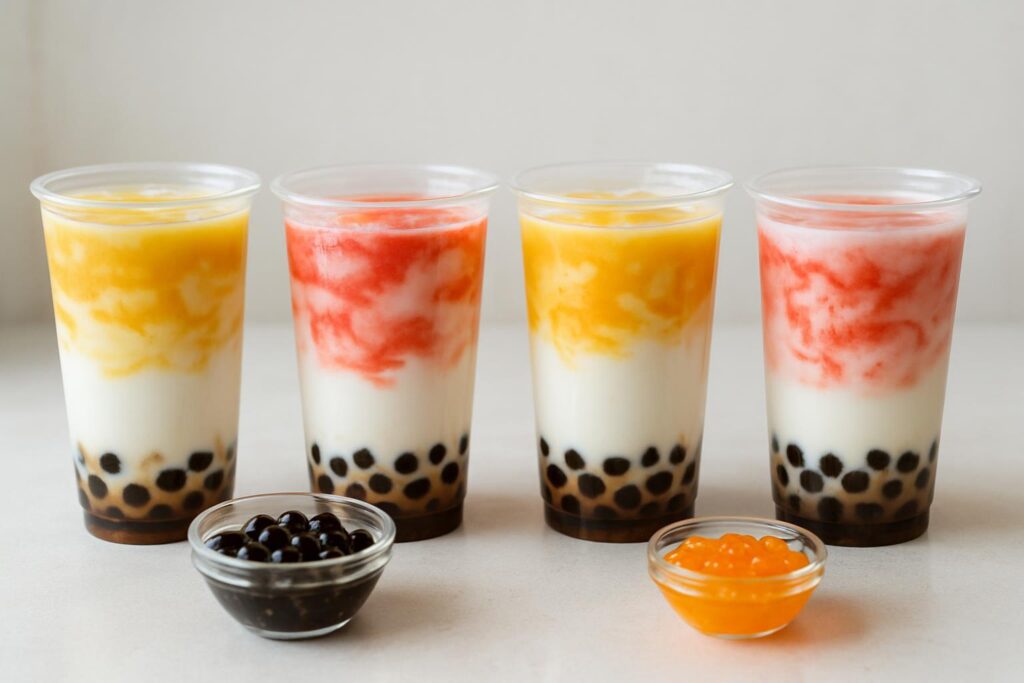
Classic tapioca pearls when you want dessert-weight and longer satisfaction
If your team needs a quick refresher on topping language, here’s a simple explainer on the difference between boba and tapioca pearls.
Pro Tip: Treat yogurt milk tea as a drink family with one base build + flavor modules. That keeps training simple and makes LTOs cheap to launch.
1) Mango Jasmine Yogurt Milk Tea (your “gateway” bestseller)
Why it sells: mango + yogurt is instantly understandable, and jasmine green keeps it from tasting like a smoothie.
Tea base: jasmine green tea
Flavor direction: mango puree / mango syrup profile
Best toppings: mango popping boba, classic boba, coconut jelly
Ops note: mango texture varies by product. Standardize one mango input and portion it. If you blend, blend the same number of seconds every time.
Upsell hook: “Add mango popping boba” or “add coconut jelly for a lighter chew.”
If you want a concrete reference build to train from, BubbleTeaSuppliers.com has an operator-style example for a mango yogurt drink with jasmine green tea.
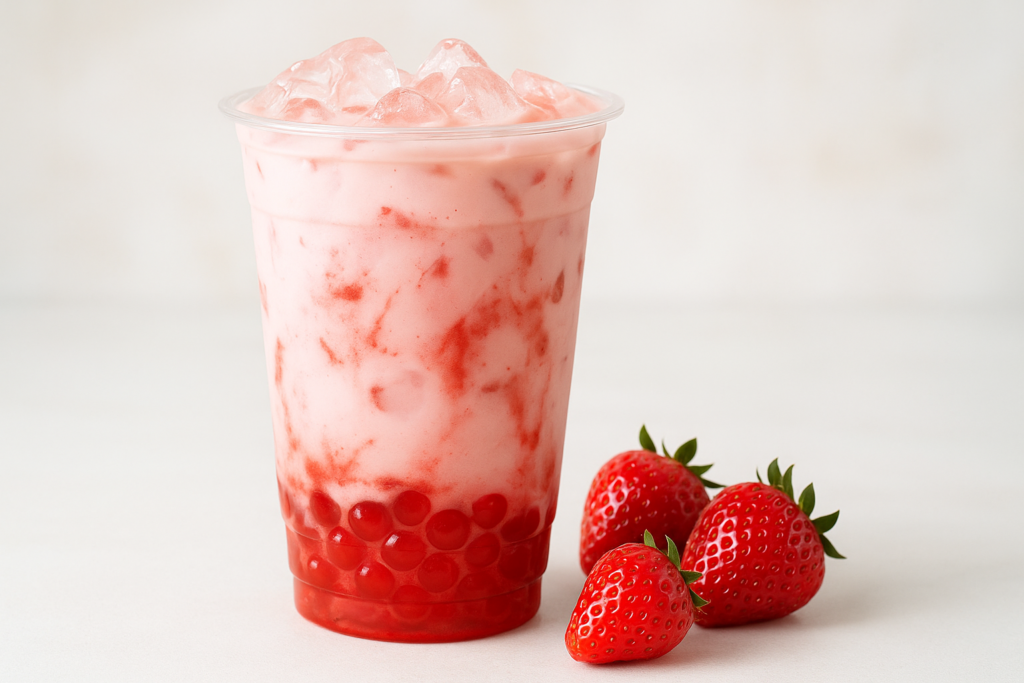
2) Strawberry Rose Yogurt Milk Tea (floral, not perfumey)
Why it sells: strawberry is familiar; rose makes it feel limited-time and premium.
Tea base: jasmine green or light oolong
Flavor direction: strawberry + tiny rose lift
Best toppings: strawberry popping boba, lychee jelly, crystal boba (if you run it)
Ops note: floral is easy to overdo. Pre-dilute your rose flavor module so staff can’t “free-pour” it into perfume territory.
Upsell hook: offer a “jelly combo” (popping boba + lychee jelly) for higher AOV.
3) Peach Oolong Yogurt Milk Tea (creamy + fragrant)
Why it sells: peach reads refreshing; oolong brings a toasted depth that keeps it from being candy.
Tea base: oolong
Flavor direction: peach
Best toppings: peach popping boba, aloe vera, coconut jelly
Ops note: oolong bitterness shows up fast when over-steeped. Brew by timer, not by vibe.
Upsell hook: “Add aloe” for a clean, spa-like texture.
4) Blueberry Vanilla Yogurt Milk Tea (dessert without being heavy)
Why it sells: it tastes like a blueberry cheesecake idea—but you’re not serving a thick milkshake.
Tea base: black tea or jasmine green (depending on your shop’s profile)
Flavor direction: blueberry + a soft vanilla roundness
Best toppings: classic boba, pudding, blueberry popping boba
Ops note: vanilla can mask tea. Keep vanilla as a background note, not the headline.
Upsell hook: add pudding for a “dessert build.”
5) Passion Fruit Yogurt Milk Tea (high-impact, low explanation)
Why it sells: passion fruit is loud, tropical, and pairs naturally with yogurt tang.
Tea base: jasmine green
Flavor direction: passion fruit
Best toppings: passion fruit popping boba, mango popping boba (tropical mix)
Ops note: this drink is sensitive to sweetness. Give staff a fixed sweetness spec and a “customer sweetness” dropdown (100/70/50).
Upsell hook: “Tropical popping boba mix.”
6) Green Apple Yogurt Milk Tea (the “bright and clean” LTO)
Why it sells: it’s tart, crisp, and different from the usual strawberry-mango loop.
Tea base: green tea
Flavor direction: green apple
Best toppings: lychee jelly, aloe vera, green apple popping boba
Ops note: too much green apple turns it into candy. Keep it crisp by using a lighter hand and a cleaner tea base.
Upsell hook: “Add aloe” as the default recommendation.
7) Pineapple Coconut Yogurt Milk Tea (piña-colada vibes, boba format)
Why it sells: coconut makes yogurt taste more “dessert” without adding heaviness.
Tea base: jasmine green
Flavor direction: pineapple + coconut
Best toppings: coconut jelly, pineapple popping boba
Ops note: coconut modules separate over time. If you batch anything, batch small and shake/whisk on a timer.
Upsell hook: “Coconut jelly included” as a premium build.
8) Lychee White Peach Yogurt Milk Tea (light, fragrant, high-margin)
Why it sells: this one feels expensive, even when the build is simple.
Tea base: jasmine green or light oolong
Flavor direction: lychee + white peach
Best toppings: lychee jelly, crystal boba
Ops note: don’t overload with toppings—this build is about clean finish. Make it your “less sweet, more fragrant” recommendation.
Upsell hook: crystal boba add-on.
9) Honey Yuzu Yogurt Milk Tea (tart-citrus adult profile)
Why it sells: yuzu reads premium and “not too sweet.” Honey rounds the edges.
Tea base: green tea
Flavor direction: yuzu + honey
Best toppings: aloe vera, light citrus jelly
Ops note: citrus + dairy-style drinks can taste sharp if over-acidified. Keep yuzu as a top note and test your exact ingredient combo.
Upsell hook: “Add aloe” for texture + refresh.
10) Matcha Strawberry Yogurt Milk Tea (for the matcha crowd)
Why it sells: matcha has a built-in fanbase, and strawberry gives it broad appeal.
Tea base: matcha
Flavor direction: strawberry
Best toppings: classic boba, strawberry popping boba, pudding
Ops note: matcha clumps. If you don’t have a consistent whisking/sifting method, this becomes a staff headache fast.
Upsell hook: “Add pudding” for a dessert-style version.
11) Taro Coconut Yogurt Milk Tea (sweet, nutty, very “boba shop”)
Why it sells: taro is familiar in boba culture; coconut adds aroma and helps the yogurt feel smoother.
Tea base: black tea or jasmine green
Flavor direction: taro + coconut
Best toppings: classic boba, coconut jelly
Ops note: taro-style mixes vary wildly by supplier. Pick one and build your recipe around its sweetness and thickness.
Upsell hook: “Add boba + coconut jelly” bundle.
12) Seasonal Berry Yogurt Milk Tea (your rotating LTO slot)
Why it sells: it gives you a “new” drink without re-training from scratch.
Tea base: jasmine green
Flavor direction: rotate by season
spring: strawberry
summer: mixed berry
fall: blackberry
winter: blueberry-vanilla
Best toppings: berry popping boba, fruit jellies
Ops note: keep the base build identical and only swap the berry module. That’s how you stay consistent.
Upsell hook: “Add popping boba” as the default recommendation.
If you need a broader set of seasonal cues, pull a few ideas from this roundup of summer bubble tea flavor ideas and convert them into yogurt-friendly builds.
A simple “base build template” (so every flavor tastes like your shop)
Your menu ideas will only sell if the drinks taste the same on Tuesday at 11am and Saturday at 8pm. The easiest way to get there is to standardize a base build and treat flavors as modules.
Here’s a practical template to start with:
Tea concentrate: one consistent recipe (same grams, water, time, and cooling method)
Yogurt component: one approved yogurt input (and one backup SKU), portioned the same way
Sweetness: one system staff can execute under pressure (fixed spec + customer sweetness options)
Ice: standard cup fill line (ice is an ingredient, not decoration)
Toppings: 1 “default” topping recommendation per drink + 1 optional upsell
The goal isn’t perfection on day one—it’s a system your team can follow without thinking.
Troubleshooting: the 4 most common yogurt drink problems (and the fixes)
1) “It’s too thick”
Cause: yogurt input varies (especially Greek-style), or your ratio drifted.
Fix: set an upper limit for yogurt portioning and lock one yogurt SKU; don’t swap brands mid-week.
2) “It tastes flat / the tea disappears”
Cause: tea base is too weak or inconsistent.
Fix: move to a stronger tea concentrate and brew by timer.
3) “It tastes too sour”
Cause: tart yogurt + acidic fruit module + not enough sweetness.
Fix: set a default sweetness spec for each drink family, then offer 70/50% as options.
4) “The texture separates”
Cause: certain flavor modules don’t emulsify well, and batching sits too long.
Fix: batch small, shake/whisk on a timer, and avoid long holds for blended components.
Rollout checklist (so your yogurt bubble tea stays consistent)
Use this checklist before you launch the LTO:
Choose your yogurt input (and lock it): plain vs sweetened vs Greek-style.
Define your house tea strength (grams + water + time). Make it non-negotiable.
Decide your sweetness system (a standard spec + optional customer sweetness).
Pick 3 toppings max you’ll recommend for yogurt-style drinks (keeps training clean).
Create a one-page build card for each menu item (ingredients + order of operations).
Run a 10-cup consistency test across two staff members. If the drinks don’t match, simplify.
If you’re building a more complete SOP program (batching, pearls holding, and training flow), this operator-focused milk tea SOP playbook for cafes is a good next read.
Next steps
If you want to turn these yogurt drink LTOs into a standardized training set (recipe cards, topping portions, and consistent tea bases), start with the bubble tea supplies hub and build your ingredient list from there.
For general background on common bubble tea ingredients and topping styles, The Spruce Eats has a helpful overview of popular bubble tea flavors and variations (2025).