
If you’ve ever launched a “mango fruit tea recipe” that sold great for a week… then turned into a watery, inconsistent drink once new staff started mixing it, you’re not alone.
In this guide, I’ll treat this as a true fruit tea SOP (standard operating procedure): one base formula, clear steps, and quick checks that keep quality stable across shifts.
The “best fruit tea recipe” for a bubble tea shop isn’t the fanciest one. It’s the one that stays bright, mango-forward, and repeatable at 4pm on a Saturday—when you’re slammed.
Below is a single base fruit-tea formula you can scale, teach, and control—using mango as the flagship example—plus variations your menu can build on.
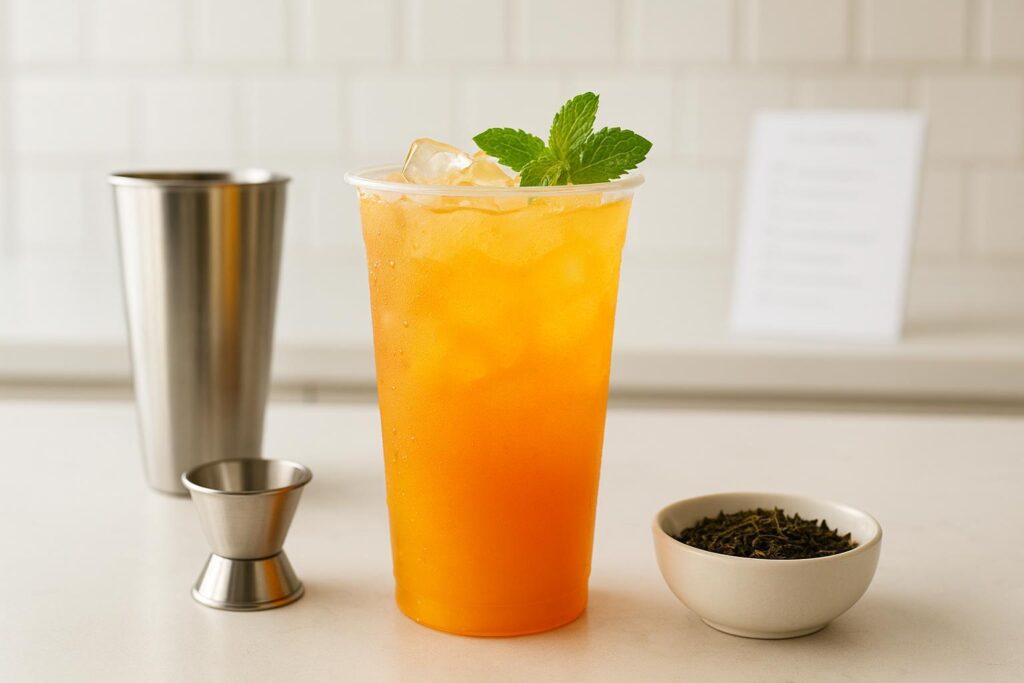
What makes a fruit tea recipe “the best” in a bubble tea shop
At home, “best” can mean tastes amazing once. In a shop, “best” means it still tastes amazing after:
ice dilution
different staff members
different mango batches
different sweetness requests
different rush-hour shortcuts
Here’s the operator-friendly definition:
Key Takeaway: The best fruit tea recipe is a formula (tea strength + fruit + sweetener + dilution) with built-in QC checks—not a one-off list of ingredients.
If you want a quick refresher on what counts as “fruit tea” on a boba menu, start with BubbleTeaSuppliers.com’s overview of fruit tea basics and common bubble tea fruit flavors.
The base formula (the part your staff should memorize)
Think of fruit tea as four parts:
Tea base (your structure)
Fruit flavor (your headline)
Sweetener (your balance)
Dilution (your consistency)
Recommended default build (16–18 oz cup)
Strong chilled tea: 6–8 oz
Mango component (syrup / puree / jam): enough for a clear mango “hit”
Sweetener: adjust to your shop’s sugar scale
Ice: fill cup to spec (your dilution control)
The exact ounce numbers vary by your cup size and ice standard. What matters is consistency: pick a standard build and train to it.
Your shop spec sheet (so the recipe scales without drama)
Before you train this, lock in two standards. They’re boring—but they’re what keeps the drink consistent.
Standard 1: Cup size + ice standard
Pick one ice standard per cup size (example: full ice for fruit teas unless a customer requests otherwise). If one shift uses “half ice” by habit, your drink will taste weak no matter how perfect your mango portion is.
Standard 2: Tea strength standard
Fruit tea needs a tea base that still shows up after mango + ice. Train staff to taste the tea base plain once per batch.
Here’s a practical starting spec you can copy into training docs and then adjust:
Cup size
Tea base (chilled)
Mango component
Sweetener add-on
Ice
16 oz
6–7 oz
1.5–2.0 oz
optional
to your line
18 oz
7–8 oz
~2.0 oz
optional
to your line
24 oz
10–12 oz
2.5–3.0 oz
optional
to your line
How to use the table: don’t treat these as “the only right ounces.” Treat them as your first dial-in, then lock your final numbers into your POS recipe card.
⚠️ Warning: If your mango flavor varies week to week, don’t chase it with “more syrup.” First confirm your ice scoop, cup fill line, and tea batch strength are consistent.
Quick batch math (2L and 8L tea base)
If you batch tea base daily, two volumes cover most shops:
2L tea base = great for test runs and slower weekdays
8L tea base = great for high-volume weekends (or multiple flavors using the same tea)
The key: keep the tea base fresh, labeled, and chilled, and don’t mix finished fruit tea in big batches unless you have a strong reason.
Best fruit tea recipe: Step-by-step mango SOP (16–18 oz)
This is written like an SOP on purpose: each step has an input, an action, and a “done when” check.
Step 0: Choose your mango format (this decision drives your workflow)
Before anyone starts shaking drinks, decide what “mango” means in your shop.
Option A: Mango syrup (fastest, most consistent)
Best for: high-volume shops, franchises-in-the-making, any store trying to reduce remake rates
Tradeoff: less “real fruit” marketing appeal
Option B: Mango puree (premium taste, higher separation risk)
Best for: premium positioning, LTOs, slower stores that can manage prep windows
Tradeoff: settles/separates; more batch variation
Option C: Mango jam/concentrate (middle ground)
Best for: consistent mango intensity with a more “fruit” feel than thin syrup
Tradeoff: needs mixing discipline (it’s thicker)
If you want a deeper breakdown on the cost/workflow tradeoffs, BubbleTeaSuppliers.com has a practical comparison of mango puree vs syrup vs powder and how to choose (the logic maps well to fruit tea even though it’s written for milk tea).
Step 1: Brew a tea base that won’t disappear behind mango
Input: jasmine green tea (most common for mango), filtered water, timer
Action: brew a slightly stronger-than-drinking tea.
If you’re using green tea, avoid boiling water (bitterness shows up fast).
Brew, then cool quickly and keep refrigerated.
Done when: the chilled tea tastes slightly stronger than you’d want to drink plain, but not bitter.
Pro Tip: A watery mango fruit tea is usually a tea strength problem or an ice standard problem—not “we need more syrup.” Fix the base first.
Step 2: Pre-portion your mango component for speed and consistency
Input: mango syrup/puree/jam, jigger or pump
Action: set a standard portion and stick to it.
If you’re syrup-based, you can anchor your starting point using a known shop-style ratio. For example, Bossen’s recipe uses 2 oz mango syrup in an ~18 oz build in Bossen’s Mango Green Tea recipe.
Done when: staff can pour/pump the mango portion without “eyeballing.”
Step 3: Add tea, then sweetener (if needed), then mix thoroughly
Input: chilled tea base, mango component, sweetener
Action: in a shaker, combine mango + tea first and mix until fully uniform.
If you use puree/jam:
mix longer than you think you need to
scrape the bottom (thicker mango settles there)
Done when: you can’t see streaks of mango concentrate or syrup at the bottom of the shaker.
Step 4: Add ice and shake to spec
Input: ice (standard scoop)
Action: add ice and shake hard.
This does three jobs:
chills fast
finishes mixing
creates your final dilution level
Done when: the shaker is frosty and the color looks even from top to bottom.
Step 5: Taste-check and adjust using a simple QC routine
Input: tasting straw/spoon (your shop’s sampling method)
Action: check three things in 10 seconds:
Mango intensity: does it read as “mango” immediately?
Tea backbone: can you still taste tea, not just sugar?
Sweetness balance: is it refreshing or syrupy?
Done when: the drink tastes like “mango tea,” not “mango sugar water.”
Step 6: Pour, top, and serve (with toppings that fit mango)
Input: cup, toppings, sealing machine
Action: pour the drink, add toppings, seal.
Mango plays well with:
popping boba (mango, passionfruit)
lychee jelly
coconut jelly
If your goal is to increase ticket size without slowing the line, BubbleTeaSuppliers.com has a useful operator-focused list of toppings that increase average order value.
Done when: the toppings match the drink’s “refreshing” identity (not every fruit tea needs heavy tapioca).
Two scalable batch options (so you can prep without guessing)
Most fruit tea inconsistency comes from making “random” batches. Use repeatable math instead.
Option 1: Keep it simple—batch the tea, not the final drink
Batch your tea base (daily), then build each fruit tea to order.
Why this works:
better freshness
less waste
easier to adjust sweetness per customer
Option 2: Batch a mango “base” for rush periods (with guardrails)
If you batch mango base, keep it tight:
label time + date
keep cold
train staff to re-mix (mango can settle)
If you’re deciding between fresh mango vs concentrate/jam for batching, BubbleTeaSuppliers.com’s breakdown of mango concentrate vs fresh mango for consistent fruit tea flavor is a solid starting point.
Variations you can launch without reinventing the SOP
Once the base is trained, you can add variety without adding chaos.
Variation 1: Mango + passionfruit
Works when you want a brighter, tangier top note
Keep the same tea base and ice standard
Variation 2: Mango lemonade-style
Add a controlled citrus component for a sharper finish
Watch bitterness if your tea is over-steeped
Variation 3: Mango tea slush
Same flavor logic, different texture
Treat it as a separate SOP (blender drinks have different dilution math)
If you want pairing inspiration, BubbleTeaSuppliers.com also has ideas on mango green tea as a proven menu staple and related fruit tea combinations.
Sweetness calibration (how to keep mango bright, not cloying)
Fruit tea is where “too sweet” happens fast—because mango is already perceived as sweet even before you add sugar.
Instead of guessing, pick one simple standard:
House standard: set the default as your “100%” sweetness
Customer options: 0% / 25% / 50% / 75% / 100%
Operationally, the easiest way to stay consistent is to make the mango portion your baseline flavor, then use a small, measured sweetener add-on only when needed.
Done when: two different staff members can make the drink at 100% and it tastes the same to your shift lead.
Separation control (only if you use puree or jam)
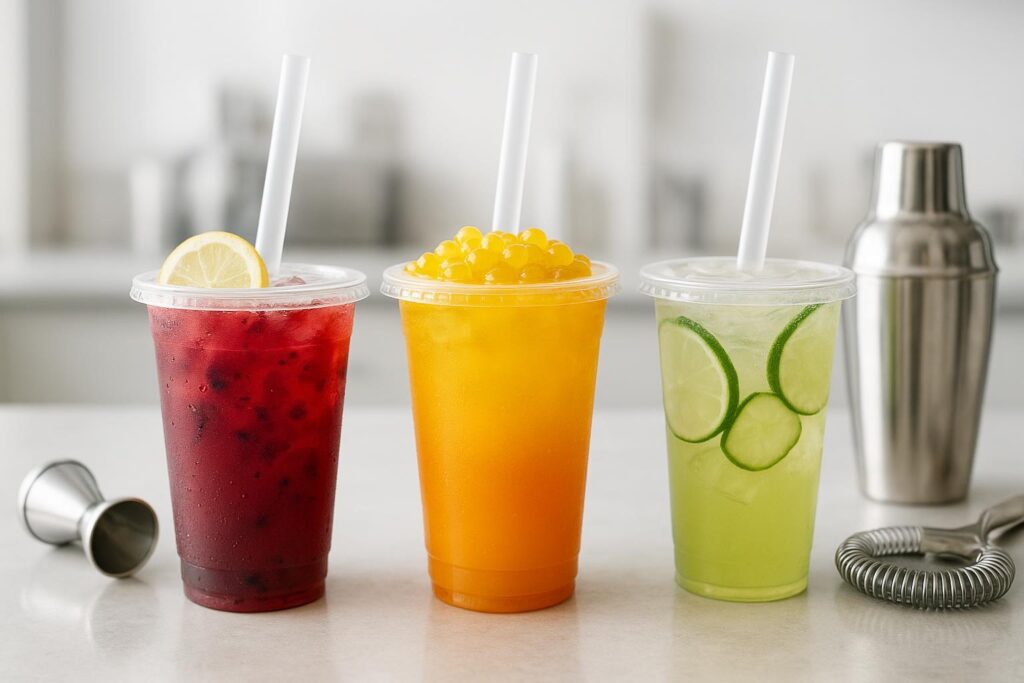
If you’re using puree/jam/concentrate, separation isn’t a mystery—it’s physics.
What works in real shops:
Mix in the right order: mango first, then tea; mix until uniform before ice
Mix long enough: count to 10 while stirring the bottom of the shaker
Reduce holding time: batch smaller and refresh more often
Done when: the last drink of the batch pours the same color as the first.
Troubleshooting: why your mango fruit tea stops tasting “best”
Problem: It tastes watery
Most common causes:
tea base too weak
too much ice (or different ice scoop usage across shifts)
staff topping off with extra water to “fill the cup”
Fix:
standardize ice
brew slightly stronger tea
make “no top-off” a rule unless it’s part of your spec
Problem: It’s bitter
Most common causes:
green tea brewed too hot or too long
using yesterday’s tea that oxidized
Fix:
tighten brew temperature/time
refresh tea more often
Problem: Mango separates or settles
Most common causes:
puree/jam not mixed long enough
holding mango base too long
Fix:
mix longer; re-mix before pour
reduce holding window; label and discard consistently
Problem: It tastes sweet but dull (no mango pop)
Most common causes:
sweetness masking mango aromatics
mango portion too low relative to cup size
Fix:
reduce sweetener first
then adjust mango portion in small, measured increments
Add boba responsibly (quality notes)
If you add tapioca pearls to fruit tea, treat boba as a same-day product for best chew.
Wekiva Culinary outlines a practical shop method including a 1:6 pearls-to-water cooking ratio and same-day handling guidance in their boba recipes and prep guide. Use that as a starting SOP, then align it with your local food-safety requirements.
5-minute staff training checklist (what to coach on)
If you only train one thing, train consistency inputs.
Ice scoop discipline: same scoop, same fill line, every time
Mango portioning: pumps/jigger only—no free-pour
Mixing time: puree/jam needs longer mixing; scrape the bottom of the shaker
Taste language: “mango-forward + clean tea finish” (give staff a target)
Remake triggers: watery, bitter, or separated = stop and fix the system, not the customer
Next steps
If you want to turn this into a staff-training one-pager (with your exact ounces, pumps, and ice scoop), pull the key workflow pieces into your training docs—and browse BubbleTeaSuppliers.com for more SOP and training resources, including the bubble tea training program and fruit tea series overview.