
If you run both a coffee bar and a bubble tea line (or you’re building a menu that borrows from both), iced matcha can be a deceptively tricky drink. It looks simple, but a rushed build turns into clumps, grit, a muddy bitter finish, or a drink that separates before the customer hits the door.
This SOP is written for operators. You’ll get:
A repeatable workflow your team can follow on shift
Two service paths: coffee bar and boba line
A clear decision rule for ceremonial vs culinary matcha (so you’re not overspending or underserving)
Troubleshooting for the failure modes that cause remakes
Iced matcha latte recipe for cafes: the operator overview
Here’s the big idea: matcha is a powder, not a syrup. To make it behave in an iced drink, you need to fully disperse it before you add milk and ice.
Your success comes down to four controllables:
Freshness + storage (oxidized matcha goes dull and flat)
Sifting (prevents bitter clumps)
Water temperature (too hot = harsh bitterness)
Mixing method (whisk vs shaker vs blender)
If your team nails those four, iced matcha becomes a low-drama, high-repeat menu item.
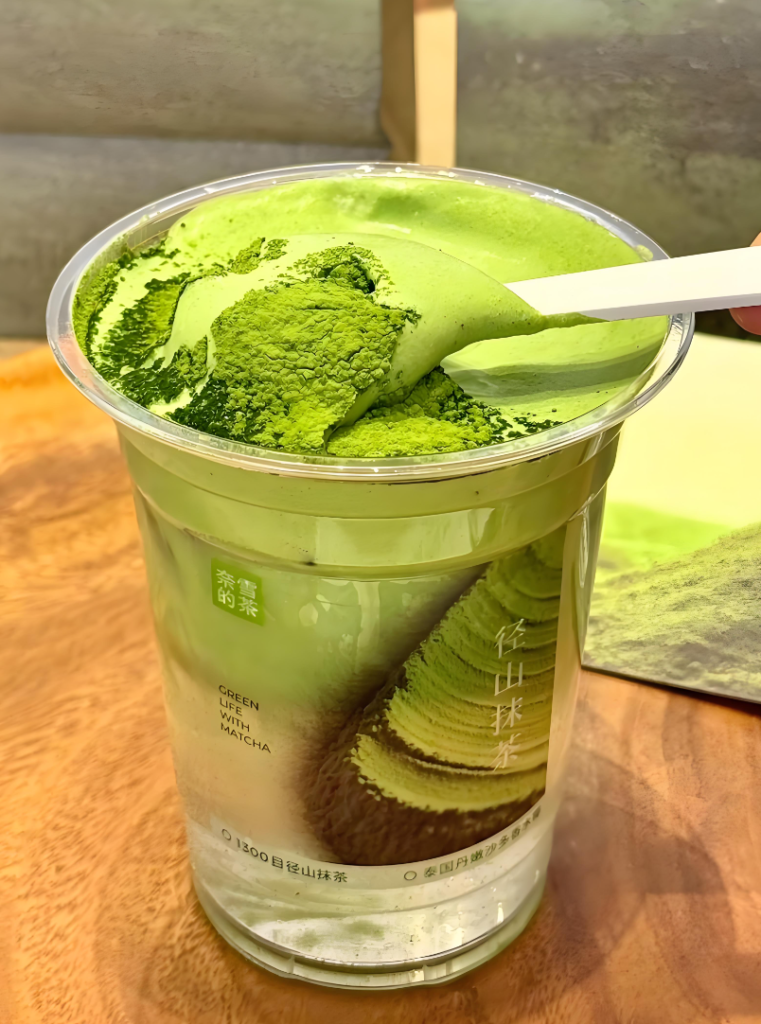
The operator decision: what kind of iced matcha are you selling?
Before you touch the recipe, decide which of these you’re aiming for. This changes what matcha grade you buy, how much sweetener you need, and what tools are “good enough.”
Option A: “Bright, premium, barely sweet” iced matcha
Flavor goal: smooth, creamy, lightly sweet with minimal bitterness
Typical buyer: specialty coffee customer, matcha fan
Matcha: higher-quality “ceremonial” or “latte-grade” style
Risk: more expensive; flavor nuance disappears if you drown it in syrups
Option B: “Bold, sweet, dessert-y” iced matcha
Flavor goal: strong matcha presence that holds up to syrups, foams, toppings
Typical buyer: boba customer, flavored latte customer
Matcha: culinary or robust latte blend
Risk: bitterness if you don’t control temperature + ratio
Pro Tip: Your menu can support both. Price them differently. “Premium ceremonial matcha” can be an upsell, while the standard build uses a robust latte/cooking grade.
Ceremonial vs culinary matcha for lattes (the practical buying guide)
“Ceremonial” and “culinary” aren’t tightly regulated terms, so treat them as signals—not guarantees. But suppliers and cafe guides are consistent on the real-world tradeoff: ceremonial is typically smoother and brighter; culinary is stronger and more cost-efficient once milk and sweetener enter the picture.
Taste and finish (what customers notice)
Ceremonial is often described as smoother, naturally sweeter, and more umami-forward.
Culinary is often described as more robust and can read earthy or bitter—which is useful when you want the matcha to show up through milk, ice, and flavor.
Senbird Tea’s guide to ceremonial vs culinary matcha frames this as a leaf-selection + harvest-timing outcome, not a “marketing label.”
Color (what sells on Instagram and across the counter)
Ceremonial tends to give you that bright green cup people expect. Culinary can skew darker/olive, especially as the drink dilutes.
Also worth training: sweetener can cover harshness, but it won’t fix aroma or color. JapaneseTea.sg says this directly in “Mastering Sweetness for Matcha: A Cafe Guide” (2026).
Cost and menu positioning (the operator math without the spreadsheet)
Use ceremonial when:
you can price the drink as premium
you keep flavors minimal (so customers actually taste the difference)
your staff will execute the SOP consistently
Use culinary or latte-grade when:
you offer flavored matcha drinks (strawberry, brown sugar, cheese foam)
your market expects sweetness
you’re scaling volume and need stable costs
Craver’s operator framing in “Coffee Shop Matcha: Should Your Café Add It to the Menu?” (2025) is useful for aligning ingredient choice with what you’re promising on the menu.
A simple purchase rule you can train your team on
Premium drink / light sweetness → choose ceremonial or a latte-specific ceremonial blend
Standard drink / flavored drink → choose culinary or a latte-grade matcha designed for milk
Tools and workflow: whisk vs shaker vs blender
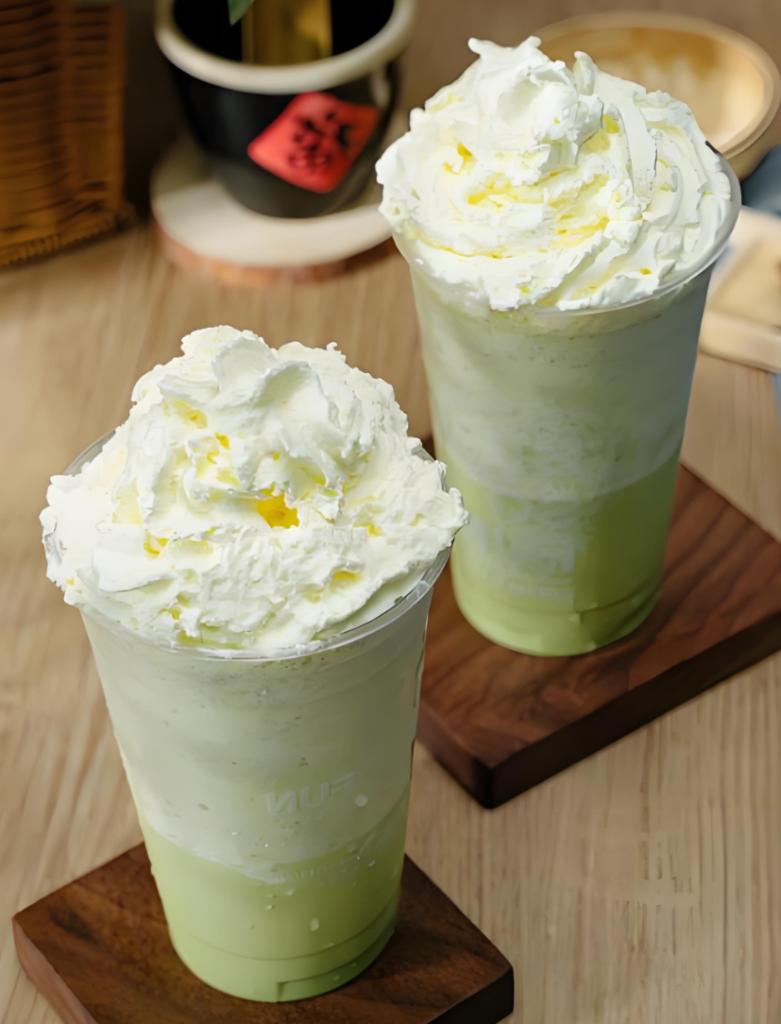
You can make a great iced matcha with different tools. What matters is the sequence:
Sift → make a slurry (“matcha shot”) → then build the drink.
Matcha mixing comparisons (like Matcha Nude’s overview of mixing methods) reinforce the same idea: the tool is less important than fully dispersing the powder.
Tool choice (operator pros/cons)
Bamboo whisk (chasen) or small wire whisk
Best texture, best suspension, least grit
Slower; needs a bowl or small pitcher
Shaker (boba shaker or sealed jar)
Fast and consistent for iced service
Works best when you add water first, then matcha (and shake hard)
Blender
Useful for batch prep or very high volume
Can over-aerate or warm the base if you blend too long
If you only pick one “workhorse” tool for a mixed coffee+boba operation, the shaker is usually the best ROI.
Prerequisites for a consistent iced matcha program
This is the part most “home recipe” content skips.
Water
Use filtered water if possible.
Keep a dedicated kettle temp target for matcha.
Sweetener
For iced drinks, liquid sweeteners are your friend:
1:1 simple syrup is the easiest standard
honey syrup works, but standardize it (same dilution every time)
Milk
You can keep this simple:
Dairy whole milk as default (best body)
One alt-milk option (oat is common)
Operational note: treat alt milks like their own ingredient. Different brands behave differently with matcha.
Matcha handling
Keep scoops dry.
Don’t let the matcha container sit open on a humid counter.
The base SOP: iced matcha “shot” (works for coffee bars and boba lines)
This is the core that eliminates clumps and controls bitterness.
Temperature rule
A common failure is boiling water. MatchaJP’s troubleshooting in “Bitter or Clumpy Matcha? Causes & Fixes” (2025) highlights water temperature as a major bitterness driver.
For training, set a workable standard: about 70–80°C (160–175°F).
Step-by-step SOP (with “done when” checks)
Step 1 — Set up and portion
Input: dry matcha, dry bowl/shaker, sieve, scale/scoop
Action:
Portion matcha for the drink size (see the spec section below)
Keep your tools dry
Output: matcha portion ready to sift
Done when: matcha is measured and your vessel is dry (no condensation)
Step 2 — Sift the matcha
Input: portioned matcha, fine sieve
Action:
Sift matcha into your bowl/shaker to break up static clumps
Output: fluffy, lump-free powder
Done when: no visible pellets or compressed clumps
⚠️ Warning: Skipping sifting is the #1 cause of “surprise bitter pockets.”
Step 3 — Make a slurry (“matcha shot”)
Input: sifted matcha + warm water
Action:
Add a small amount of warm water first
Whisk or shake hard until smooth
Output: smooth, glossy matcha slurry with light foam
Done when: you can’t see dry powder streaks on the sides or bottom
Step 4 — Sweeten while it’s still warm
Input: matcha slurry + liquid sweetener
Action:
Add syrup and mix
Output: fully dissolved sweetness
Done when: no sugar grit; base tastes balanced (not “green water”)
Step 5 — Build the iced drink
Input: matcha base + cold milk + ice
Action:
Fill cup with ice
Add milk
Pour matcha base over the top (layered look) or combine in shaker
Output: finished iced matcha latte
Done when: color is even after stir; no visible clumps; texture is smooth
Matcha latte SOP: recipe spec sheet by cup size (starting points)
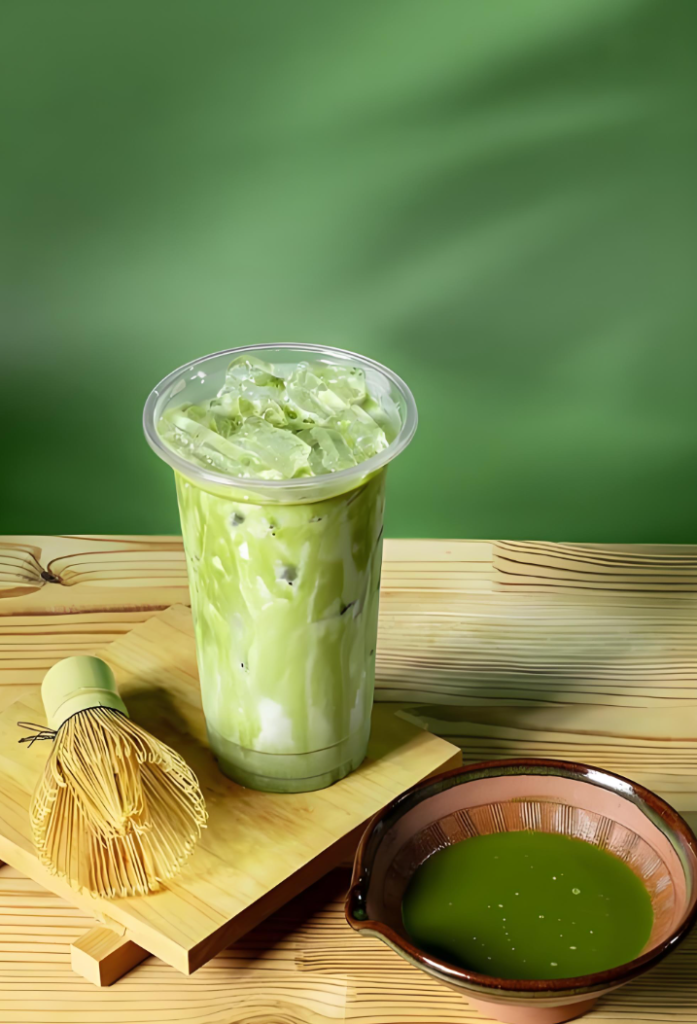
You’ll dial this in based on your matcha strength and your market’s sweetness preference. But you still need a standard starting spec for training.
Naoki Matcha provides a useful baseline formulation in “A guide on how to make matcha latte” (2024): a small matcha-water base plus milk and sweetener.
Use this operator-friendly spec sheet format.
Recommended starting ranges
Size Matcha (g) Warm water (ml) Simple syrup 1:1 (ml) Notes
12 oz 3–4 30–60 10–20 Good for “standard” sweetness
16 oz 4–6 40–80 15–30 Your default cafe size
20 oz 6–8 60–100 20–40 More dilution from ice
How to standardize quickly:
Pick a standard recipe inside the range.
Create a premium SKU by changing two things only: higher-quality matcha + slightly less syrup.
Should you batch matcha concentrate?
You can, but be careful. This is where operators can accidentally trade speed for quality.
When batching makes sense
You’re in peak rush and “make every slurry to order” becomes the bottleneck.
Your matcha drinks are a meaningful percentage of sales.
When batching is a mistake
You sell only a handful per day.
Your team can’t reliably hold and re-mix (you’ll get sediment and inconsistent cups).
If you batch, use this conservative rule
Batch small.
Hold cold.
Re-mix frequently.
If the color dulls or the aroma goes flat, dump it.
This keeps your program aligned with general storage/freshness guidance like Aprika Matcha’s matcha storage best practices for freshness.
Two service workflows: coffee bar vs boba line
Your station setup matters as much as the recipe.
Workflow A: coffee shop (espresso-bar style)
Best for: cafes that care about texture and presentation, and have staff trained to taste and adjust.
Make the slurry in a bowl or small pitcher
Build in the service cup for a layered look
Stir immediately before serving (or instruct the customer to)
Quality standard to teach:
bright color
light foam on top
clean finish (no chalky grit)
Workflow B: boba shop (shaker-line style)
Best for: high volume, toppings, consistent builds.
Use the boba shaker as your mixing engine
Make the slurry in the shaker
Add milk and ice and shake again
Pour into the cup and finish with toppings
If your staff asks “whisk or shaker?”, the answer is: whisk for premium texture, shaker for speed. The key is still sifting and dispersing the powder fully.
How to make iced matcha latte without clumps (train this like a safety rule)
If you want fewer remakes, teach clump prevention like you’d teach food safety: the steps are non-negotiable.
The clump-prevention checklist
Sift every drink.
Use warm (not boiling) water.
Slurry first, milk second.
Shake/whisk harder than you think you need to.
Keep tools dry.
The “three signs” QC check
Before the drink leaves the bar, staff should see:
no dark green specks stuck to the bottom
no powder streaks on the cup wall
smooth mouthfeel in a straw sip
Storage and prep: keep matcha green and usable on shift
Matcha is sensitive to air, light, heat, and moisture. Once it oxidizes, you lose both color and flavor.
Aprika Matcha’s cafe-focused guidance in “The Best Way to Store Matcha for a Longer Shelf Life” (2024) aligns with what most operators learn the hard way.
Storage SOP
Keep matcha airtight and away from light/heat.
Split inventory: bulk stays sealed; a smaller container is your daily service supply.
Use dry scoops only.
Condensation rule (important if you refrigerate)
If you keep matcha cold, don’t open the container straight out of the fridge in a humid shop. Let it temper first—condensation is how you ruin a container fast.
Troubleshooting (teach these as remake-prevention)
Problem: clumps or gritty texture
Likely causes
powder wasn’t sifted
slurry wasn’t fully dispersed before milk/ice
tools were wet
Fix
enforce “sift → slurry → build”
adjust water volume slightly upward before you blame the matcha
Problem: bitter or harsh finish
Likely causes
water too hot
too much matcha for the milk/sweetness balance
matcha is stale/oxidized
Fix
keep water in the ~70–80°C range
reduce dose or increase milk/syrup slightly
improve storage discipline
Problem: separation or “green sediment” at the bottom
Likely causes
slurry under-mixed
drink sat too long before serving
Fix
mix harder, serve faster
if batching any base, re-mix frequently and keep holds short
How to adapt iced matcha for boba menu builds
Once your iced matcha latte is stable, boba variations are easy—as long as you don’t break the base.
Matcha milk tea with boba
Start with the same slurry
Use your milk tea milk base if you have one
Add cooked tapioca pearls
Matcha with foam or toppings
If you add cheese foam, cold foam, or a topping layer:
keep the matcha base slightly stronger (upper end of your gram range)
don’t increase sweetness in two places (pick syrup or sweet topping as the main driver)
If you’re building a broader boba matcha lineup, BubbleTeaSuppliers.com’s bubble tea resource hub is a useful starting point for operators.
Matcha for bubble tea shop menu: a simple 4-item lineup
If you want a tight menu that works in both coffee and boba environments, start here:
Iced Matcha Latte (standard)
Premium Ceremonial Iced Matcha (less sweet)
Strawberry Matcha (culinary/latte-grade)
Dirty Matcha (matcha + coffee)
Operationally, this lineup lets you reuse the same base SOP and only change the flavor layer.
Training notes (what to put on your station card)
If you want one card taped to the wall, make it this:
Sift every drink
Water not boiling (target 70–80°C)
Slurry first
Taste + visual QC before it leaves the bar
Key Takeaway: Your matcha program isn’t “a recipe.” It’s a system: storage, dispersion, temperature, and training.
Next steps
If you want more operator-ready matcha and boba SOPs (including ingredient guides and variations), browse the guides on BubbleTeaSuppliers.com.