
When designing a commercial beverage program for a bubble tea shop, choosing between classic black milk tea and jasmine green milk tea is not simply a matter of offering two different colors on a digital menu board. It represents a fundamental decision in tea leaf chemistry, steeping thermodynamics, milk fat emulsion physics, and back-of-house operational workflow.
For boba shop owners and store managers, evaluating milk tea vs jasmine milk tea requires looking beyond general consumer taste descriptors. Classic black milk tea serves as the heavy, malty backbone of traditional boba menus, engineered to hold its structure against rich non-dairy creamers, heavy dairy fats, and dark brown sugar syrups. Conversely, jasmine milk tea offers a floral, aromatic, and refreshing profile that appeals to customers seeking a lighter, lower-caffeine alternative.
This guide provides a complete side-by-side operational comparison for bubble tea shop operators, covering tea leaf processing, commercial brewing SOPs, milk pairing chemistry, topping synergies, and menu margin optimization.
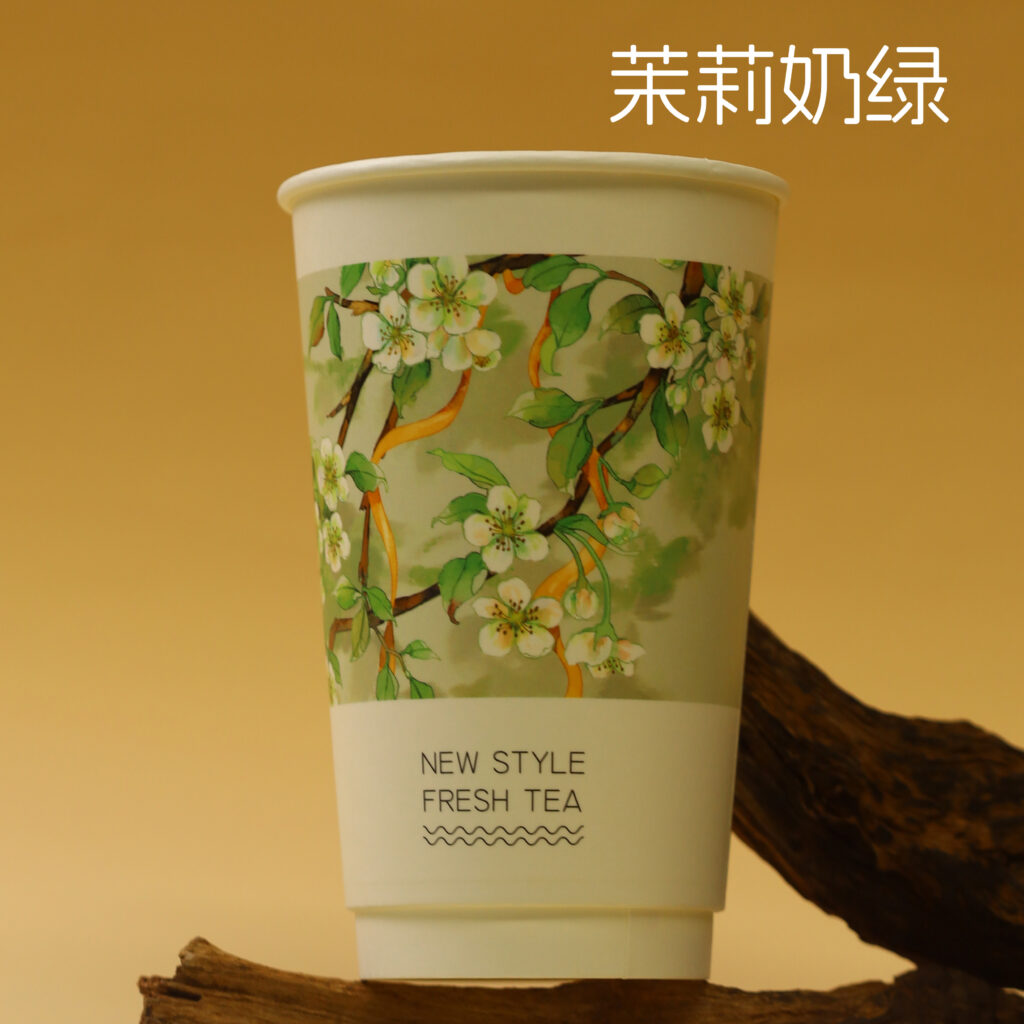
Quick Comparison: Classic Black Milk Tea vs. Jasmine Green Milk Tea
To help store operators quickly reference the core differences during recipe development and staff training, the following matrix summarizes the technical and commercial specs of both tea bases:
| Operational Dimension | Classic Black Milk Tea | Jasmine Green Milk Tea |
|---|---|---|
| Tea Botanical Base | Fully oxidized black tea (Camellia sinensis var. assamica or sinensis) | Unoxidized green tea scented with fresh Jasminum sambac blossoms |
| Dominant Chemical Profile | Theaflavins, thearubigins, high tannins | Catechins (EGCG), volatile linalool, benzyl acetate, geraniol |
| Color & Visual Appearance | Deep reddish-amber tea base; rich caramel-tan milk tea | Pale yellow-green tea base; light cream to ivory milk tea |
| Flavor Profile | Bold, malty, robust, toasted, slightly astringent | Light, delicate, highly aromatic, floral, fresh, subtly sweet |
| Ideal Water Temperature | 200°F – 212°F (93°C – 100°C) | 170°F – 180°F (77°C – 82°C) |
| Steeping Time (Batch SOP) | 8 – 10 minutes | 6 – 7 minutes |
| Leaf-to-Water Ratio | 1:30 to 1:35 (commercial concentrate) | 1:35 to 1:40 (commercial concentrate) |
| Milk & Fat Compatibility | High-fat matrices (35% non-dairy creamer, whole milk, condensed milk) | Medium-to-low fat matrices (low-fat non-dairy creamer, 2% milk, oat milk) |
| Best Topping Synergies | Black tapioca pearls, brown sugar boba, egg pudding, herbal jelly | Crystal boba, aloe vera, popping boba, cheese foam, coconut jelly |
| Urn Holding Time (Cold) | Up to 4–6 hours in insulated dispensers | 3–4 hours maximum (requires rapid shock-cooling) |
Tea Base & Chemical Composition
Understanding the fundamental difference between classic milk tea and jasmine milk tea begins with the botanical processing of the dry tea leaves.
Black Tea Processing & Polyphenol Structure
Classic milk tea relies on fully oxidized black tea leaves, typically sourced from Assam, Ceylon, or blended CTC (crush, tear, curl) crops. During processing, the tea leaves undergo full enzymatic oxidation. Polyphenol oxidase converts simple catechins into complex polyphenols known as theaflavins (which provide briskness and reddish color) and thearubigins (which deliver depth, dark amber hue, and full-bodied astringency).
Because black tea possesses high tannin density, its liquor delivers a strong structural mouthfeel. This robust astringency is essential when building traditional boba drinks: it cuts through rich dairy solids and sugar without allowing the beverage to taste flat or overly sweet.
Key Takeaway: Black tea leaves undergo complete oxidation to form theaflavins and thearubigins. This structural tannin density ensures the tea flavor remains distinct even when mixed with heavy non-dairy creamers and dense syrups.
Jasmine Green Tea Processing & Scenting Mechanics
In contrast, jasmine milk tea utilizes an unoxidized green tea base—often Green Snow Bud, Pouchong, or High-Mountain Green Tea—that undergoes a traditional scenting process (yin flower). High-grade commercial boba suppliers do not rely on synthetic liquid jasmine flavorings added after brewing. Instead, finished dry green tea leaves are repeatedly layered with fresh, night-blooming Jasminum sambac flower buds over multiple scenting rounds.
As the jasmine blossoms open at night, they release volatile aromatic compounds—primarily linalool (woody-floral notes), benzyl acetate (sweet floral fragrance), and (Z)-jasmone (warm herbal floral tone). The dry, porous green tea leaves absorb these essential oils. The spent flowers are then winnowed out, and the tea is gently re-dried to stabilize moisture levels.
Because green tea bypasses oxidation, its chemical profile is dominated by unoxidized epigallocatechin gallate (EGCG) and L-theanine. This gives jasmine milk tea its crisp, vegetal undertone, pale ivory color, and delicate fragrance. For a deeper breakdown of commercial raw ingredients, explore the Core Bubble Tea Ingredients Guide
.
Commercial Brewing Parameters & Thermodynamics
A frequent mistake in new boba shop operations is treating all tea leaves identically during back-of-house morning prep. Steeping green tea under black tea conditions destroys the delicate floral top notes and yields a bitterly harsh brew.
Black Tea Steeping SOP
Because black tea polyphenols require intense heat to fully extract, commercial kitchens utilize boiling water:
- Water Temperature: 200°F – 212°F (93°C – 100°C)
- Leaf-to-Water Ratio: 1:30 (e.g., 100g loose leaf black tea to 3,000 mL hot water)
- Steep Duration: 8 to 10 minutes (covered)
- Agitation: Stir thoroughly at the 0-minute and 5-minute mark to ensure uniform extraction.
This high thermal energy extracts the dark pigments and heavy tannins needed to create a dark tea concentrate that retains its punch after ice dilution.
+-----------------------------------------------------------------------------------+| BLACK TEA COMMERCIAL BREWING FLOW || || [Boiling Water 208°F] ---> [Steep 1:30 for 9 Mins] ---> [Strain & Press Leaves] || | || v || [Store in Thermal Urn] <--- [Mix Non-Dairy Creamer / Sugar] <--- |+-----------------------------------------------------------------------------------+Jasmine Green Tea Steeping SOP
Jasmine green tea leaves are thermally sensitive. Water above 185°F (85°C) scorches the unoxidized green tea catechins, releasing intense bitter compounds while rapidly evaporating delicate linalool floral esters.
According to published studies on jasmine tea aroma volatiles
, excessive processing or brewing temperatures lead to significant desorption and loss of delicate floral top notes.
To brew a clean jasmine green tea concentrate:
- Water Temperature: 170°F – 180°F (77°C – 82°C)
- Leaf-to-Water Ratio: 1:35 to 1:40 (e.g., 100g loose jasmine green tea to 3,500–4,000 mL water)
- Steep Duration: 6 to 7 minutes (covered)
- Agitation: Gentle single stir at the start. Avoid aggressive squeezing during filtering to prevent leaf fragmentation and sediment bitterness.
Pro Tip: After filtering a batch of brewed jasmine green tea, immediately place the container into an ice bath to shock-cool the liquid from 175°F down to below 70°F within 10 minutes. Shock-cooling locks volatile floral aromatics inside the liquid and prevents heat oxidation during service.
For complete batch sheets and step-by-step ratio calculators, review the Shop-Ready Milk Tea SOP
.
Milk & Creamer Emulsion Interactions
The choice between classic black tea and jasmine green tea dictates which dairy or non-dairy creamer system will yield a balanced beverage.
+-----------------------------------------------------------------------------------+| MILK FAT & TEA MATRIX BALANCE || || Heavy Fats (35% Fat Non-Dairy / Whole Milk / Condensed) || ===================================================> Ideal for Black Tea || (Tannins cut through milk fat without losing tea flavor) || || Light-to-Medium Fats (Low-Fat Creamer / 2% Milk / Oat Milk) || ===================================================> Ideal for Jasmine Green || (Preserves delicate linalool floral aromatics from being smothered) |+-----------------------------------------------------------------------------------+High-Fat Matrices & Black Tea
Classic black milk tea benefits from high-fat creamer formulations. Non-dairy creamer powders containing 30% to 35% vegetable fats, condensed milk, or whole fluid milk emulsify smoothly with black tea tannins. The fat globules bind with astringent polyphenols, rounding out sharp edges and creating the iconic creamy mouthfeel associated with traditional Taiwanese boba.
Because black tea has an aggressive flavor profile, it requires higher fat and sweetener levels to achieve balance. If a shop uses a low-fat creamer with a heavy Assam black tea, the drink often tastes overly bitter and watery.
Light-Fat Matrices & Jasmine Green Tea
Jasmine green milk tea requires a gentler touch. Excessive milk fat coats the drinker’s tongue, creating a hydrophobic layer that smothers subtle floral aromas. When heavy cream or high-fat condensed milk is added to jasmine green tea, the delicate jasmine fragrance disappears, leaving behind an indistinct sweet milk drink.
To highlight the aromatic qualities of jasmine green tea:
- Use non-dairy creamer powders formulated specifically for green tea (typically 25% to 28% fat content).
- Offer fresh 2% milk or barista-grade oat milk as premium fluid dairy alternatives.
- Pair with clean, neutral sweeteners such as cane sugar syrup or rock sugar syrup rather than heavy caramelized brown sugar.
To inspect detailed ingredient formulations, consult the Jasmine Milk Tea Ingredient Guide
.
Topping Compatibility & Flavor Synergy
A key revenue driver in bubble tea retail is topping customization. Because black milk tea and jasmine milk tea deliver contrasting flavor profiles, they demand different topping pairings to maximize customer satisfaction and average order value (AOV).
+-----------------------------------------------------------------------------------+| TOPPING SYNERGY GUIDE MATRIX || || [Black Tapioca / Brown Sugar] -------> Pairs Best With Classic Black Milk Tea || [Egg Pudding / Red Bean] -------> Pairs Best With Classic Black Milk Tea || || [Crystal Boba / Agar Pearls] -------> Pairs Best With Jasmine Milk Tea || [Cheese Foam / Salted Cream] -------> Pairs Best With Jasmine Milk Tea || [Aloe Vera / Coconut Jelly] -------> Pairs Best With Jasmine Milk Tea |+-----------------------------------------------------------------------------------+Classic Black Milk Tea Topping Pairings
Classic black milk tea excels when paired with chewy, rich, or caramelized toppings:
- Traditional Black Tapioca Pearls: The chewy, slightly sweet cassava pearls harmonize with the malty notes of Assam black tea.
- Brown Sugar Boba: Slow-cooked brown sugar tapioca adds caramel notes that complement robust black tea.
- Egg Pudding: Rich, velvety egg custard adds a dessert-like dimension that thrives alongside bold tea tannins.
- Grass Jelly (Herbal Jelly): The earthy, slightly medicinal notes of grass jelly contrast delightfully against sweet black milk tea.
Jasmine Green Milk Tea Topping Pairings
Jasmine green milk tea demands crisp, translucent, or floral-enhancing toppings:
- Crystal Boba (Agar Pearls): Crunchy, subtle, and low-calorie, crystal boba adds texture without altering the delicate jasmine scent.
- Cheese Foam (Salted Cream Top): A savory, velvety cheese foam layer resting on top of cold jasmine milk tea creates a striking visual contrast and a sweet-salty sensory balance.
- Aloe Vera Cubes: Juicy aloe vera chunks enhance the refreshing, hydrating character of floral green tea.
- Coconut Jelly & Popping Boba: Tropical coconut jelly or lychee popping boba highlights the naturally sweet top notes of the jasmine bloom.

Boba Shop Menu Strategy & Profit Margins
From a commercial perspective, a high-performing boba menu utilizes classic black milk tea and jasmine green milk tea in distinct revenue roles.
+-----------------------------------------------------------------------------------+| COMMERCIAL MENU POSITIONING STRATEGY || || +------------------------------------+ +----------------------------------+ || | CLASSIC BLACK MILK TEA | | JASMINE GREEN MILK TEA | || | - Core Volume Workhorse | | - Premium Signature Anchor | || | - High Velocity Sales | | - Floral LTO Platform | || | - Default "First-Time" Order | | - Higher Gross Margin Potential | || +------------------------------------+ +----------------------------------+ |+-----------------------------------------------------------------------------------+Classic Black Milk Tea: The Core Volume Workhorse
Classic black milk tea is the most recognized item on any boba menu. It accounts for 30% to 45% of total beverage volume in traditional shops.
- Role: High-velocity staple drink that drives repeat foot traffic.
- Operational Advantage: Long urn holding stability (up to 6 hours) reduces morning waste.
- Pricing Strategy: Competitive entry-level pricing anchor.
Jasmine Green Milk Tea: The Premium Signature & LTO Anchor
Jasmine green milk tea serves as the canvas for upscale, visual, and seasonal menu items.
- Role: Margin-boosting signature drink that attracts customers looking for lighter, premium, or floral options.
- LTO Flexibility: A single batch of jasmine green tea concentrate can anchor three distinct menu categories: classic jasmine green milk tea, fruit green teas (mango, passionfruit, lychee), and layered cheese foam drinks.
- Pricing Strategy: Premium pricing tier (typically $0.50 to $1.00 higher than basic black milk tea when customized with cheese foam or crystal boba).
For creative seasonal menu ideas and limited-time offer (LTO) recipes, explore these Green Milk Tea LTO Ideas
.
Frequently Asked Questions (FAQ)
Does jasmine milk tea have less caffeine than classic black milk tea?
Yes. On average, a 16 oz serving of jasmine green milk tea contains 25 mg to 45 mg of caffeine, whereas a 16 oz classic black milk tea contains 50 mg to 70 mg of caffeine. Green tea leaves are generally lower in caffeine, and lower brewing temperatures (175°F) extract less caffeine per minute than boiling black tea brews (208°F).
Can I use the same non-dairy creamer for both black milk tea and jasmine milk tea?
While you can use a universal non-dairy creamer in a pinch, it is not ideal for optimal flavor balance. Standard non-dairy creamer (32%–35% fat) works best for black tea. For jasmine green tea, use a specialized light creamer (25%–28% fat) or fresh fluid milk so the heavy creamer fats do not overpower the natural jasmine blossom scent.
Why does my jasmine green milk tea taste bitter in large batch brewing?
Bitterness in commercial jasmine tea batches usually stems from two factors: water temperature exceeding 180°F during steeping, or staff aggressively squeezing the tea filter bags when straining the leaves. Squeezing extracts harsh, high-molecular-weight catechins and tea dust sediment.
How long can brewed jasmine green tea concentrate be kept in a boba shop dispenser?
Brewed jasmine green tea concentrate should be rapidly shock-cooled in an ice bath and used within 3 to 4 hours. Unlike black tea, green tea oxidizes rapidly when exposed to air and light, turning from a bright yellow-green to a dull brown hue while losing its floral scent.
Next Steps for Boba Shop Operators
Mastering the distinct operational requirements of black milk tea vs. jasmine milk tea is essential for maintaining product consistency and maximizing shop profitability. By implementing dedicated steeping temperatures, matching milk fat percentages, and training staff on shock-cooling protocols, your shop can deliver exceptional quality across both traditional and floral beverage lines.
To upgrade your beverage operations:
- Audit Your Steeping Temperatures: Ensure kitchen staff use calibrated digital thermometers set to 175°F for jasmine green tea and 208°F for black tea.
- Standardize Ingredient Builds: Establish clear batch SOP sheets for leaf-to-water ratios, creamer dosing, and sugar levels.
- Source High-Grade Wholesale Tea Leaves: Partner with specialized boba suppliers to access premium Assam black teas and naturally scented jasmine green tea leaves.