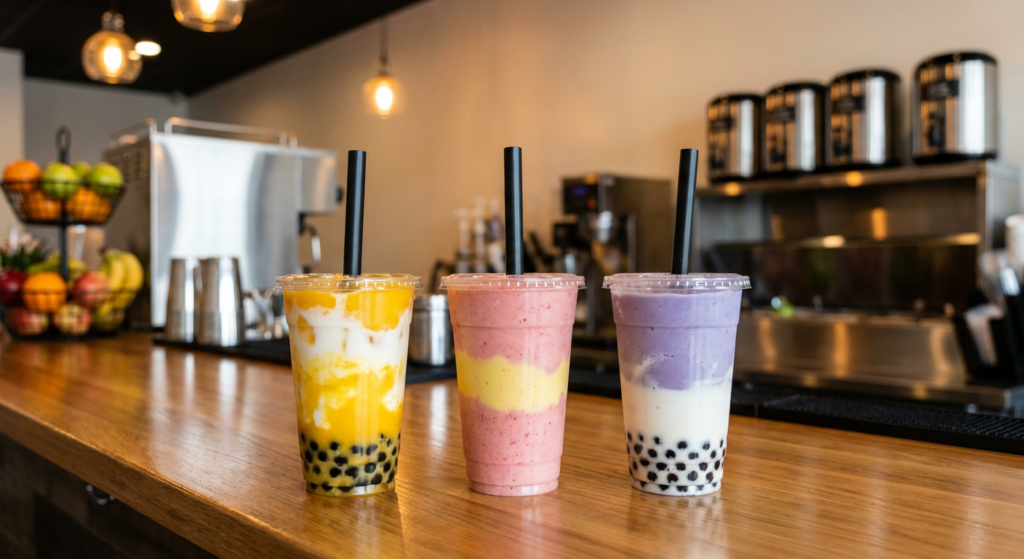
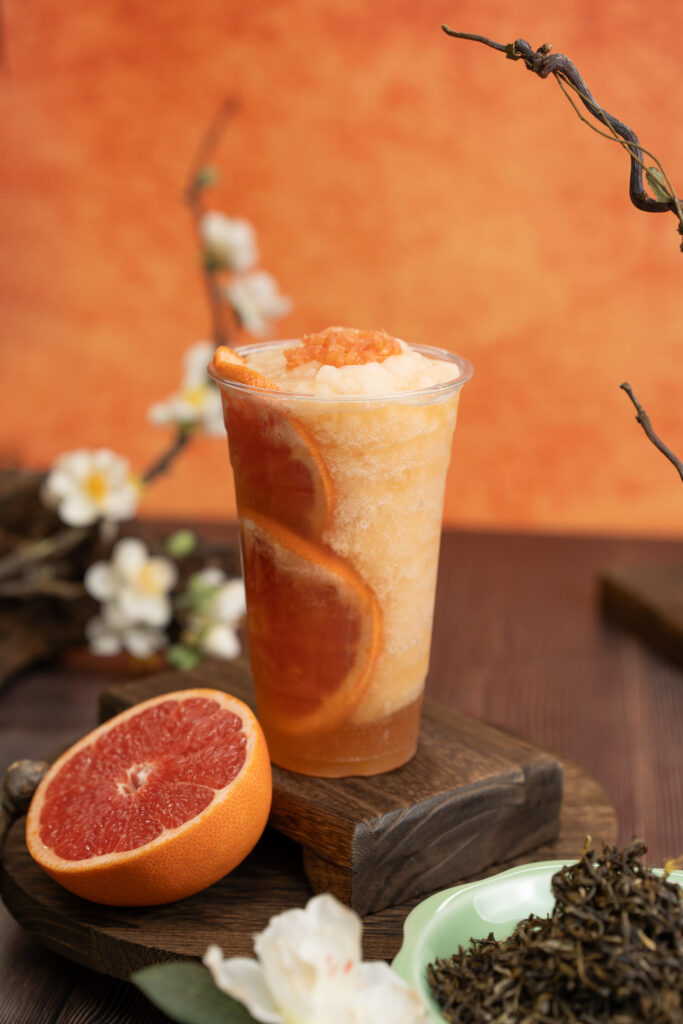
Adding smoothies to a boba tea shop menu is one of the fastest ways to increase average order value (AOV) and attract customers seeking indulgent, fruit-forward, or caffeine-free options. While traditional milk teas and fruit teas form the backbone of daily sales, blended fruit and specialty smoothies drive premium ticket prices, often selling for $1.00 to $1.50 more per cup than standard iced teas.
For boba shop owners and beverage operations managers, the key to a profitable smoothie line is operational efficiency. Uncontrolled fruit waste, complex portioning, and slow blender station bottlenecks can quickly erode drink profit margins and slow down service during peak hours.
This operational guide covers everything required to launch and scale smoothies in a boba tea shop: building a high-margin core menu, standardizing exact 16 oz and 22 oz recipe build sheets, selecting commercial blender equipment, and maximizing drink profitability through inventory cross-utilization.
Why Smoothies Belong on Your Boba Tea Shop Menu
A well-planned smoothie line fills critical menu gaps that traditional milk teas and fruit iced drinks cannot reach on their own.
1. Year-Round Ticket Size Expansion
While icy slushies often experience seasonal dips during winter months, thick smoothies maintain year-round customer demand. Positioning smoothies as rich, meal-adjacent treats or post-workout refreshments allows shops to sustain higher average ticket prices across all four quarters.
2. Maximum Ingredient Cross-Utilization
Adding smoothies does not require stocking dozens of new, single-use SKUs. High-quality fruit purees, flavor powders, and tea bases already used for fruit iced teas and specialty milk teas transition seamlessly into smoothie recipes.
According to the BubbleTeaSuppliers Slush vs Smoothie Menu Strategy Guide
, operators who limit their opening blended menu to 6 core items while re-using existing puree and powder bases achieve up to 35% lower food waste compared to shops offering extensive, custom fruit lineups.
3. Broadened Demographic Appeal
Smoothies appeal strongly to parents ordering for children, health-conscious consumers looking for real fruit purees, and customers seeking non-caffeinated options in the late afternoon or evening.
Key Takeaway: Design your smoothie menu around ingredients you already stock for fruit teas and specialty milk teas. Cross-utilization keeps inventory lean, speeds up barista training, and protects cash flow.
Core 6-Item Boba Smoothie Opening Menu
Rather than overwhelming your store baristas with complex customization, launch with a tight, standardized lineup of 6 high-selling smoothie SKUs. This starter menu balances classic fruit best-sellers, indulgent dessert profiles, and specialty tea hybrids.
Recommended Topping: Warm brown sugar tapioca pearls.
Why It Sells: A top-tier staple in Asian beverage concepts that commands high repeat purchases.
4. Thai Tea Boba Smoothie
Flavor Profile: Bold spiced black tea notes blended with sweet condensed milk.
Base Ingredients: Concentrated Thai tea brew, sweetened condensed milk, ice.
Recommended Topping: Honey tapioca pearls or egg pudding.
Why It Sells: Transforms a classic iced favorite into a creamy frozen dessert drink.
5. Matcha Green Tea Smoothie
Flavor Profile: Earthy, bittersweet, rich in L-theanine, paired with smooth sweetness.
Base Ingredients: Barista-grade matcha powder, milk base, simple syrup, ice.
Recommended Topping: Tapioca pearls, red bean, or cream cheese foam floating cap.
Why It Sells: Attracts wellness-minded customers and matcha enthusiasts willing to pay a premium price.
6. Piña Colada Boba Smoothie
Flavor Profile: Creamy coconut paired with tangy pineapple.
Base Ingredients: Pineapple fruit puree, coconut cream/milk base, ice.
Recommended Topping: Coconut jelly or crystal boba.
Why It Sells: Excellent summer driver that pairs naturally with clear jellies.
Standardized Boba Smoothie Recipe SOPs (16 oz vs 22 oz Specs)
Consistency is the single most critical factor in beverage operations. Baristas must follow strict weight and volume measurements to ensure every customer receives the exact same flavor and texture, regardless of who is working the shift.
Understanding the difference between fruit purees, syrups, and flavor powders
allows beverage managers to calibrate sweetness levels accurately across cup sizes.
Recipe Build Specifications Table
Drink SKU
Cup Size
Fruit Puree / Powder
Liquid Base (Milk / Tea / Water)
Sweetener (1:1 Syrup / Condensed)
Ice Weight
Topping Portion
Tropical Mango
16 oz
45 g Mango Puree
100 mL Jasmine Tea
25 mL Simple Syrup
210 g
60 g Boba
Tropical Mango
22 oz
65 g Mango Puree
150 mL Jasmine Tea
35 mL Simple Syrup
300 g
80 g Boba
Strawberry Banana
16 oz
40 g Strawberry Puree + 30 g Banana
100 mL Whole Milk
20 mL Simple Syrup
200 g
60 g Boba
Strawberry Banana
22 oz
60 g Strawberry Puree + 45 g Banana
150 mL Whole Milk
30 mL Simple Syrup
290 g
80 g Boba
Creamy Taro
16 oz
40 g Taro Powder
110 mL Milk / Water
20 mL Simple Syrup
210 g
60 g Boba
Creamy Taro
22 oz
60 g Taro Powder
160 mL Milk / Water
30 mL Simple Syrup
300 g
80 g Boba
Thai Tea Smoothie
16 oz
100 mL Thai Tea Conc.
30 mL Condensed Milk
15 mL Simple Syrup
210 g
60 g Boba
Thai Tea Smoothie
22 oz
150 mL Thai Tea Conc.
45 mL Condensed Milk
20 mL Simple Syrup
300 g
80 g Boba
Matcha Green Tea
16 oz
8 g Matcha Powder
120 mL Milk Base
30 mL Simple Syrup
200 g
60 g Boba
Matcha Green Tea
22 oz
12 g Matcha Powder
170 mL Milk Base
45 mL Simple Syrup
290 g
80 g Boba
Piña Colada
16 oz
45 g Pineapple Puree
80 mL Coconut Milk
20 mL Simple Syrup
210 g
60 g Coconut Jelly
Piña Colada
22 oz
65 g Pineapple Puree
120 mL Coconut Milk
30 mL Simple Syrup
300 g
80 g Jelly
Step-by-Step Barista Assembly Workflow
To keep speed-of-service under 90 seconds per drink at the blender station, train staff on this standard 6-step operational assembly:
Prep the Serving Cup: Scoop 60 g (16 oz) or 80 g (22 oz) of warm tapioca pearls into the bottom of the cup using a slotted boba spoon. Drizzle syrup along the inner cup walls if serving a brown sugar design.
Dispense Liquids & Sweetener: Add milk, tea base, and simple syrup directly into the commercial blender pitcher using calibrated portion pumps.
Add Fruit Puree or Powder: Weigh fruit puree on a digital scale or scoop pre-measured flavor powder into the blender jar.
Add Ice: Add exact weighed ice into the pitcher. Never eyeball ice volume; excess ice dilutes flavor and creates an overly thick, un-pumpable blend.
Execute Blend Cycle: Secure the blender lid, place in the sound enclosure, and press Program Button #2 (30-second automated ramp-up cycle).
Pour & Seal: Pour the blended smoothie smoothly over the pre-topped cup. Wipe the rim clean, pass through the cup sealer machine, and insert a wide boba straw.
Pro Tip: Maintain dedicated blender pitchers for dairy/powders and pure fruit teas to avoid allergen cross-contamination and streamline sink rinsing between drinks.
Commercial Equipment & Station Ergonomics Checklist
Blending ice and frozen fruit requires commercial-grade power. Household blenders or light-duty bar mixers will overheat, burn out motors, and leave un-blended ice chunks that clog wide boba straws.
┌────────────────────────────────────────────────────────────────────────┐│ Boba Shop Smoothie Station Layout │├────────────────────────────────────────────────────────────────────────┤│ [ Refrigerator ] ──> [ Digital Scale ] ──> [ Quiet Blender ] ││ Milk & Purees Pumps & Ice Auto 30s Cycle ││ │ ││ ▼ ││ [ Service Counter ] <── [ Cup Sealer ] <── [ Cup & Boba Prep ] ││ Wide Straw & Pass Automated Lidding Warm Pearl Holding Pot │└────────────────────────────────────────────────────────────────────────┘
Essential Equipment Checklist
High-Torque Commercial Blender with Sound Enclosure: Minimum 3.0 peak horsepower motor (such as Vitamix Quiet One or Blendtec Stealth 875) with sound reduction covers. Quiet operation is essential in compact retail spaces to prevent acoustic fatigue.
Portion Pumps & Squeeze Bottles: 30 mL heavy-duty syrup pumps calibrated for thick fruit purees and simple syrups.
Digital Gram Scales: Fast-response bench scale at the blender station for rapid fruit and ice measurement.
Warm Pearl Holding Pot: Electric thermal pot maintaining cooked tapioca pearls in brown sugar syrup at 60°C (140°F) for maximum 4-hour holding windows.
Automatic Pitcher Rinser: In-counter pressurized glass rinser installed next to the blender station to rinse blender jars in under 5 seconds.
Profit Margin & COGS Breakdown
Smoothies represent one of the highest gross-margin categories on a boba shop menu. Because ice and liquid base make up a significant portion of the drink volume, raw ingredient costs remain tightly controlled while perceived customer value remains high.
Applying proven pricing principles from boba milkshake and blended drink menu strategies
helps store operators set profitable price points.
Cost of Goods Sold (COGS) Model (16 oz Tropical Mango Boba Smoothie)
Cost Component
Portion / Quantity
Unit Cost
Total Cost ($)
Mango Fruit Puree
45 g
$0.007 / g
$0.32
Jasmine Green Tea Base
100 mL
$0.001 / mL
$0.07
Simple Syrup (1:1)
25 mL
$0.002 / mL
$0.05
Tapioca Pearls (Boba)
60 g
$0.003 / g
$0.18
Filtered Ice & Water
210 g
$0.0002 / g
$0.04
16 oz PP Cup, Lid & Straw
1 set
$0.22 / set
$0.22
Total Drink COGS
—
—
$0.88
Suggested Retail Price
—
—
$6.75
Gross Profit Dollar
—
—
$5.87
Gross Profit Margin (%)
—
—
86.9%
Even with premium dairy alternatives (such as barista oat milk or coconut milk) adding $0.25 to $0.35 in ingredient cost, gross margins comfortably exceed 80%.
⚠️ Warning: Never compensate for low-quality fruit purees by adding extra simple syrup. Excessive sugar creates an overly sweet, artificial taste that hurts customer retention. Invest in high-brix, authentic fruit purees to build long-term repeat business.
Top Smoothie Toppings & Upsell Pairings
Customization is the primary driver of boba shop culture. Offering complementary toppings allows customers to personalize their smoothie while increasing ticket price by $0.75 to $1.25 per drink.
Refer to the Mango Popping Boba Pairing Guide
when developing fruit-forward topping combinations.
Best Pairings: Creamy Taro, Thai Tea, Tropical Mango, Matcha Green Tea.
Operational Tip: Serve warm at the bottom of the cup so the contrast between warm chewiness and frozen smoothie creates a memorable sensory experience.
2. Popping Boba & Crystal Boba
Best Pairings: Tropical Mango, Strawberry Banana, Piña Colada.
Operational Tip: Popping boba filled with real fruit juice adds a burst of flavor that pairs exceptionally well with lighter, fruit-based smoothies.
3. Coconut Jelly & Aloe Vera Dices
Best Pairings: Piña Colada, Mango, Strawberry.
Operational Tip: Rectangular jelly cuts offer a firm, satisfying crunch that holds up well against thick blended bases.
4. Cream Cheese Foam Cap
Best Pairings: Matcha Green Tea, Strawberry Banana, Mango.
Operational Tip: Pour a 1.5 oz layer of salted cream cheese foam over the top of the smoothie before sealing to create a multi-layered, photogenic drink.
Frequently Asked Questions (FAQ)
Can I make boba smoothies ahead of time in batches?
No, smoothies should always be blended fresh per order. Blended ice separates from fruit puree and milk solids within 10 to 15 minutes, causing icy separation and texture degradation. However, you can pre-batch liquid bases, pre-weigh frozen fruit, and cook tapioca pearls in advance to keep order fulfillment fast.
How do I prevent boba from hardening when mixed with ice?
Tapioca pearls harden when exposed to direct freezing temperatures for extended periods. To keep pearls soft and chewy, place warm boba at the bottom of the cup first, then pour the blended smoothie on top immediately before serving. Instruct customers to stir gently with their wide boba straw.
What is the difference between a boba slush and a boba smoothie?
A boba slush is typically a water-and-ice-based blended drink made with fruit syrups or green tea, resulting in a crisp, icy, snow-like consistency. A boba smoothie incorporates milk, dairy alternatives, yogurt, or rich fruit purees, creating a creamy, velvety texture with higher body and mouthfeel.
Should I use fresh fruit or commercial fruit purees for my boba shop?
For commercial boba shops, high-brix commercial fruit purees and IQF (Individually Quick Frozen) fruit pieces are strongly recommended over raw fresh fruit. Commercial purees deliver year-round flavor consistency, eliminate seasonal price spikes, reduce prep labor, and significantly lower food spoilage risk.
Next Steps: Upgrade Your Boba Shop Menu Line
Launching smoothies in your boba tea shop is a proven, high-margin strategy to boost average ticket size and diversify your drink offerings. By standardizing 16 oz and 22 oz recipe build sheets, utilizing commercial quiet blenders, and cross-utilizing your existing inventory of fruit purees and flavor powders, your shop can deliver consistent, premium blended drinks during every shift.
Ready to expand your store’s beverage lineup? Explore wholesale ingredient catalogs, barista-grade matcha powders, premium fruit purees, and sample kits at BubbleTeaSuppliers