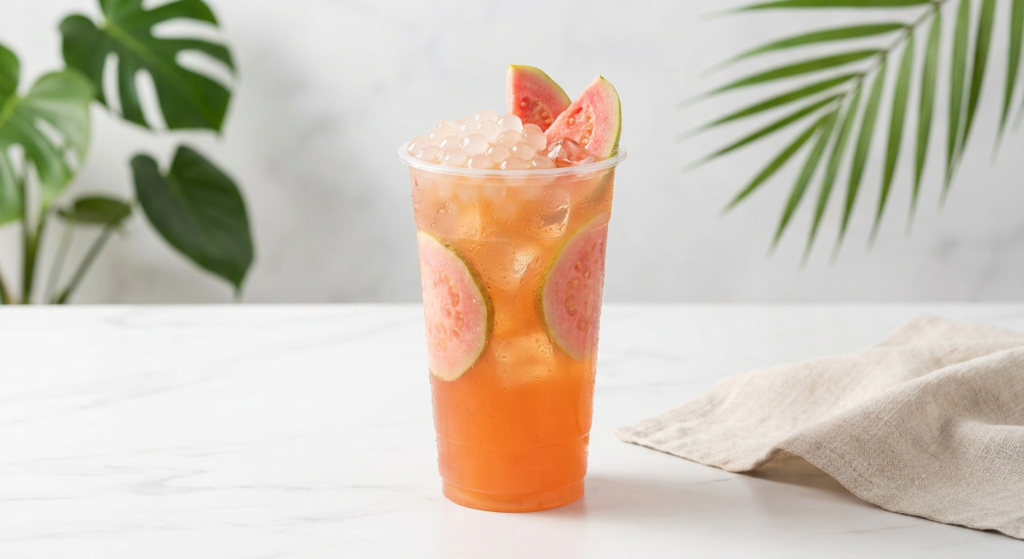
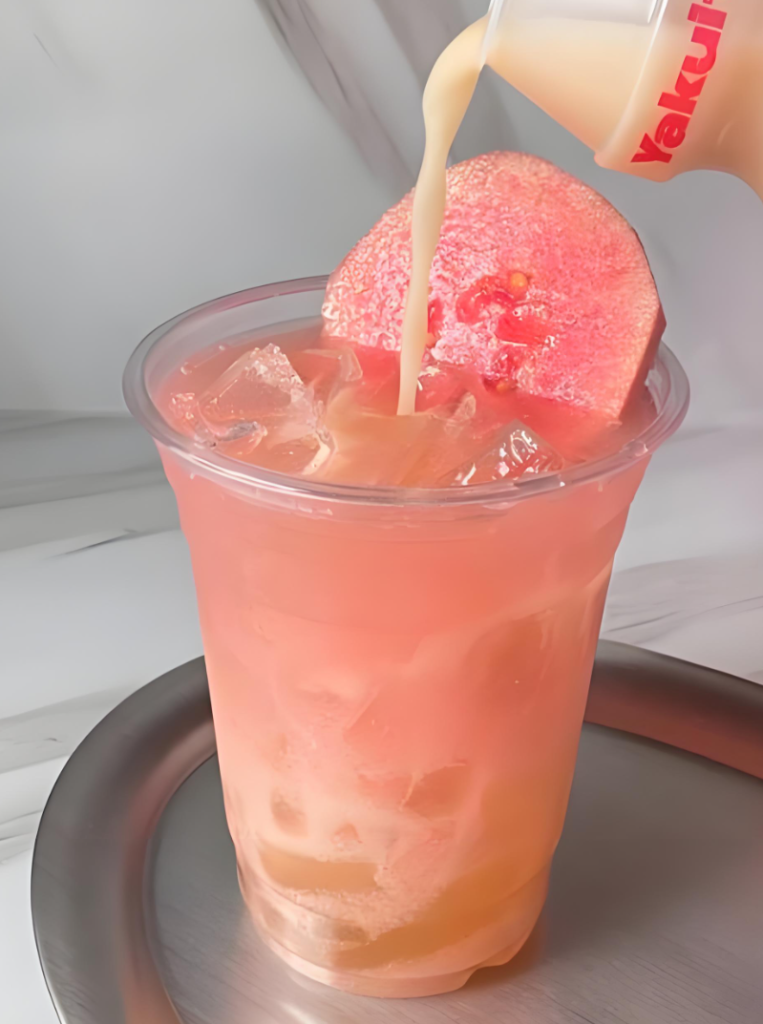
Guava fruit tea has emerged as one of the fastest-growing tropical specialty drinks in the North American bubble tea market. Driven by consumer demand for vibrant, exotic, and lower-calorie fruit tea options, shop operators who introduce a well-balanced guava offering frequently report strong repeat sales and healthy profit margins. With its signature pink hue, aromatic tropical fragrance, and pleasant balance of sweet and tangy notes, guava pairs exceptionally well with floral tea bases and textured boba toppings.
However, translating a popular fruit flavor into a high-margin, operational success across multiple shifts requires strict standardization. Without precise Standard Operating Procedures (SOPs), fruit teas suffer from flavor fading, bitter tea tannin extraction, syrup separation, or inconsistent sweetness levels between baristas.
This commercial guide provides bubble tea shop owners, store managers, and beverage developers with a complete operational playbook. You will find exact 16 oz (500 ml) and 22 oz (700 ml) spec sheets, ingredient performance comparisons (syrup vs. puree vs. hybrid), batch brewing guidelines, unit cost calculations (COGS), and proven menu variations designed to maximize speed of service and profitability.
The Science of the Tea Base: Why Jasmine Green Tea Is the Gold Standard
The foundation of any superior guava fruit tea is its tea base. Guava possesses a distinct tropical bouquet containing over 300 volatile aroma compounds—dominated by floral, fruity, and slightly herbaceous notes. If the tea base is too heavy or dark (such as a roasted Black Tea or dark Oolong), it masks the natural pink guava profile. Conversely, if the tea base is too weak, the drink tastes like simple fruit juice rather than an authentic tea beverage.
Barista-grade green tea scented with real jasmine blossoms serves as the ideal pairing. The bright, fragrant top notes of jasmine elevate guava’s natural floral notes without competing against its sweet-tart finish.
Pro Tip: Avoid heavily artificial jasmine tea flavorings. Synthetic aromas breakdown when shaken with acidic fruit bases, causing a harsh chemical aftertaste. Choose a high-altitude barista-grade loose-leaf Jasmine Green Tea
scented with natural night-blooming jasmine flowers for a clean, lingering floral finish.
Batch Brewing SOP (3-Liter Master Batch)
To maintain flavor consistency during peak shop hours, baristas must follow a strict leaf-to-water ratio, precise temperature controls, and timed steeping intervals.
+-----------------------------------------------------------------------------------+| BATCH JASMINE GREEN TEA BREWING SOP (3 LITERS) |+-----------------------------------------------------------------------------------+| 1. Measure 90 g loose Jasmine Green Tea leaves (1:33 leaf-to-water ratio). || 2. Heat 3,000 ml filtered water to exactly 175°F – 180°F (75°C – 80°C). || 3. Pour water over leaves in an insulated brew bucket; stir gently ONCE. || 4. Cover and steep for exactly 6 minutes and 30 seconds. || 5. Strain immediately through a fine-mesh filter bag into a cold holding container.|| 6. Add 1,000 g clean ice to shock-chill the tea soup down to < 10°C. |+---------------------------------------------------------------
Temperature Control & Extraction Chemistry
Water temperature is the most critical variable in tea extraction:
Water > 190°F (88°C): Over-extracts tea catechins and bitter polyphenols. The resulting astringency overpowers the guava flavor, forcing baristas to add excessive fructose to compensate.
Water < 170°F (75°C): Under-extracts floral essential oils, leaving the tea base flat and watery when shaken over ice.
Shock-Chilling: Straining hot tea directly over calculated ice volumes locks in delicate volatile aromatics and prevents oxidation, which turns green tea soup dark yellow or brown within hours.
When stored in a commercial insulated dispenser or refrigerated pitcher, properly chilled jasmine tea soup maintains optimal freshness for up to 6 hours. For full technical details on commercial tea shelf-life, consult our batch jasmine tea brewing SOP
.
Ingredient Selection: Guava Syrup vs. Pink Guava Puree vs. Guava Jam
Boba shop operators must choose the right ingredient format based on their shop volume, storage footprint, and brand positioning. The three primary commercial formats each carry specific operational trade-offs.
Operational Criteria
Commercial Guava Syrup
Pink Guava Puree / Pulp
Commercial Guava Jam / Paste
Visual Appearance
Translucent pink
Cloudy with authentic fruit pulp
Thick with visible fruit bits
Mouthfeel & Texture
Light, clean, refreshing
Rich, pulpy, natural density
Heavy, jam-like, high viscosity
Speed of Service
Ultra-fast (dissolves instantly)
Fast (requires moderate shaking)
Slow (requires stirring/coating)
Storage & Shelf-Life
Ambient (12–18 months)
Refrigerated after opening (14–21 days)
Refrigerated after opening (30 days)
Cost Per Dose (22 oz)
$0.14 – $0.18
$0.26 – $0.35
$0.22 – $0.30
Best Menu Application
Fast-casual, high-volume shops
Artisan, fresh-fruit concept menus
Wall-smear / visual layered drinks
1. Commercial Guava Syrup
Guava syrup is formulated with concentrated fruit juice, sugar, and natural acidity regulators. It provides maximum operational efficiency. Because it dissolves instantly in cold liquid, baristas can shake and serve drinks in under 20 seconds. It is ambient-stable, eliminating refrigerator space constraints during storage.
2. Pink Guava Puree
Pink guava puree contains crushed fruit pulp and natural fiber. It delivers an authentic “fresh fruit” aesthetic and a richer mouthfeel. However, purees settle at the bottom of holding containers, requiring baristas to shake or stir the storage bottle before every dose. It also incurs higher refrigerated holding costs.
3. The Recommended Hybrid Formula (Syrup + Puree Blend)
For shops seeking both speed and artisan quality, a hybrid formulation delivers optimal results:
60% Guava Syrup: Provides fast solubility, bright color, and baseline sweetness consistency.
40% Pink Guava Puree: Supplies natural fruit pulp, cloudiness, and an authentic tropical aroma.
This hybrid approach lowers overall ingredient costs compared to pure puree while elevating drink quality far beyond standard syrup-only preparations. For more details on ingredient tradeoffs, review our fruit syrup vs. puree operational guide
.
Master Spec Sheets: Standardized Guava Fruit Tea Recipes
The following recipes are calibrated for standard US bubble tea serving sizes: 16 oz (500 ml cup) and 22 oz (700 ml cup). Measurements are provided in both liquid volume (ml) and weight (g) for precise dosing using commercial syrup pumps or digital kitchen scales.
Standard 16 oz (500 ml Cup) Iced Guava Jasmine Green Tea
Chosen Topping: 50 g Crystal Boba or Coconut Jelly (placed at bottom of cup)
Guava Flavor Base: 35 ml Guava Syrup (or 20 ml Syrup + 15 ml Puree)
Liquid Fructose (55%): 10 ml (adjust based on sweetness level)
Fresh Lemon/Lime Juice: 5 ml (optional, brightens acidity)
Brewed Jasmine Green Tea: 150 ml (chilled)
Filtered Water / Ice: 180 g Ice cubes + filtered water to fill shaker to 450 ml mark
Assembly Flow (16 oz Cup):[Topping 50g in Cup] ──> [In Shaker: Syrup 35ml + Fructose 10ml + Lemon 5ml + Jasmine Tea 150ml + Ice 180g] ──> [Shake hard 6–8 seconds] ──> [Pour over Topping] ──> [Seal & Serve]
Standard 22 oz (700 ml Cup) Iced Guava Jasmine Green Tea
Chosen Topping: 70 g Crystal Boba or Coconut Jelly (placed at bottom of cup)
Guava Flavor Base: 50 ml Guava Syrup (or 30 ml Syrup + 20 ml Puree)
Liquid Fructose (55%): 15 ml (adjust based on sweetness level)
Fresh Lemon/Lime Juice: 8 ml (optional, brightens acidity)
Brewed Jasmine Green Tea: 200 ml (chilled)
Filtered Water / Ice: 250 g Ice cubes + filtered water to fill shaker to 650 ml mark
Key Takeaway: Always add toppings to the serving cup first before pouring the shaken tea. Shaking toppings inside the cocktail shaker breaks down delicate boba structures and creates cloudiness in clear fruit tea.
Sweetener & Ice Level Calibration Matrix
US consumers expect customizable sweetness and ice levels. To maintain consistent drink balance when customers request reduced sugar or less ice, baristas should follow this standardized dosing table for a 22 oz (700 ml) cup.
Customer Selection
Guava Base
Liquid Fructose (55%)
Jasmine Tea Base
Ice Volume
Filtered Water Addition
100% Sugar / Regular Ice
50 ml
15 ml
200 ml
250 g
Fill to 650 ml line
70% Sugar / Regular Ice
50 ml
10 ml
200 ml
250 g
Fill to 650 ml line
50% Sugar / Regular Ice
50 ml
5 ml
200 ml
250 g
Fill to 650 ml line
30% Sugar / Regular Ice
40 ml
0 ml
210 ml
250 g
Fill to 650 ml line
100% Sugar / Less Ice (30%)
50 ml
15 ml
200 ml
100 g
Add +120 ml cold water
100% Sugar / No Ice
50 ml
15 ml
220 ml
0 g
Add +180 ml cold water
Note: When a customer requests “No Ice”, baristas must top off the cup with cold filtered water or chilled tea soup to maintain full serving volume without oversaturating sweetness.
Unit Economics & COGS Breakdown for Boba Shop Operators
Understanding your Cost of Goods Sold (COGS) is vital for setting retail menu prices and maintaining profitable operations. The following cost model is based on average wholesale ingredient prices in the US market for a 22 oz (700 ml) Iced Guava Jasmine Green Tea with Crystal Boba.
+-----------------------------------------------------------------------------------+| COGS BREAKDOWN — 22 oz GUAVA JASMINE GREEN TEA WITH CRYSTAL BOBA |+-----------------------------------------------------------------------------------+| Component | Volume / Dose | Unit Cost (USD) |+-------------------------------+---------------------+------------------------------+| Jasmine Green Tea Leaves | 5.7 g (200 ml liquid)| $0.09 || Guava Syrup / Puree Blend | 50 ml | $0.22 || Liquid Fructose (55%) | 15 ml | $0.03 || Crystal Boba Topping | 70 g | $0.16 || Packaging (PP Cup, Seal, Straw)| 1 Set | $0.18 |+-------------------------------+---------------------+------------------------------+| TOTAL COST OF GOODS SOLD (COGS)| — | $0.68 per cup |+-------------------------------+---------------------+------------------------------+
Profit Margin Analysis
Average US Retail Menu Price: $6.50 – $7.25
Estimated Unit Cost (COGS): $0.68
Gross Profit Per Cup: $5.82 – $6.57
Gross Margin Percentage: 89.5% – 90.6%
Because fruit teas require no dairy or heavy milk powders, their COGS is significantly lower than traditional milk teas or slushies. Guava fruit tea stands as one of the highest gross-margin menu items a boba shop can offer. Adopting standardized recipes prevents ingredient over-dosing and protects shop margins, similar to the operational practices outlined in our commercial fruit tea SOP standards
.
High-Margin Menu Variations & Topping Pairings
To maximize customer lifetime value, boba shops should leverage one primary guava ingredient inventory across multiple menu items. Here are three high-converting menu variations:
1. Guava Passionfruit Tropical Slush (Blended)
A refreshing frozen slushie designed for hot summer peak seasons.
Recipe (22 oz): 40 ml Guava Syrup + 20 ml Passionfruit Puree + 15 ml Fructose + 150 ml Jasmine Tea + 350 g Ice. Blend on high speed for 15 seconds.
Recommended Topping: Coconut Jelly or Mango Popping Boba.
2. Pink Guava Cheese Foam Cloud Tea
A savory-sweet layered drink targeting adventurous Gen-Z consumers.
Build: Prepare standard Guava Jasmine Green Tea in shaker. Pour into serving cup over Crystal Boba, leaving 1.5 inches at top. Float 80 ml salted cream cheese foam on top.
Visual Appeal: High-contrast contrast between pastel pink fruit tea and stark white cream cheese foam.
3. Guava Lime Refresher (Low-Calorie Option)
A light, hydrating menu option geared toward health-conscious patrons.
Recipe (22 oz): 35 ml Guava Syrup + 15 ml Fresh Lime Juice + 200 ml Chilled Jasmine Tea + 250 g Ice + 2 fresh lime wheels muddled in cup.
For broader menu development ideas and seasonal product combinations, explore our guide on tropical fruit tea menu variations
.
Quality Control, Storage & Troubleshooting
Even with clear recipes, operational issues can arise during live shop service. Here is how store managers can troubleshoot common quality variations:
Issue 1: Drink Tastes Bitter or Harsh
Root Cause: Jasmine tea leaves were steeped above 185°F (85°C) or left in the brew bucket past 7 minutes.
Corrective Action: Re-train baristas on strict water temperature checks using a calibrated digital thermometer. Dump over-extracted tea batches.
Issue 2: Flavor Separation in Cup (Puree Settling)
Root Cause: Natural fruit fiber in purees density-separates from tea liquid if the drink sits on the pickup counter.
Corrective Action: Teach baristas to perform a vigorous 8-second shaker pass to emulsify fruit pulp with tea. Serve immediately with a wide-bored straw.
Issue 3: Inconsistent Sweetness Between Shifts
Root Cause: Baristas relying on manual liquid measuring cups rather than automated fructose dispensing machines or color-coded syrup pumps.
Corrective Action: Install dedicated, calibrated syrup pumps (e.g., 10 ml per stroke) on all fruit syrup containers. Conduct daily pump calibration checks during opening shift prep.
Commercial Guava Fruit Tea FAQs
What is the best tea base for guava fruit tea in a commercial boba shop?
Jasmine Green Tea is the industry standard tea base for guava fruit tea. Its delicate floral aroma complements guava’s natural sweet-tangy tropical flavor without masking it. Four Season Oolong or light White Tea can also be used for premium specialty variations.
Should boba shops use guava syrup or guava puree?
High-volume fast-casual shops benefit from guava syrup due to its ambient shelf-life, lower cost, and rapid dissolution speed. Artisan shops seeking real fruit texture prefer guava puree. A 60/40 hybrid blend of syrup and puree offers the ideal balance of speed, low cost, and pulpy texture.
What is the average shelf life of prepped jasmine green tea soup?
Brewed jasmine green tea soup stored in an insulated stainless dispenser maintains peak flavor for 4 to 6 hours at room temperature. After 6 hours, catechins oxidize, causing color darkening and loss of floral aroma.
What toppings pair best with guava fruit tea?
Crystal boba (konjac boba), coconut jelly, and lychee or mango popping boba are the top three toppings for guava fruit tea. Traditional black tapioca pearls can also be offered, but clear or tropical toppings provide better visual contrast against guava’s pink color.
How much fructose should be added to guava fruit tea?
For a standard 22 oz (700 ml) drink made with 50 ml guava syrup, add 15 ml of 55% liquid fructose for 100% regular sweetness. Adjust to 10 ml for 70% sweetness, 5 ml for 50% sweetness, and 0 ml for 30% sweetness.
Next Steps for Boba Shop Operators
Standardizing your guava fruit tea offerings is one of the most effective ways to boost summer beverage sales, lower COGS, and deliver a memorable customer experience. By combining a barista-grade Jasmine Green Tea base with precise ingredient ratios and efficient shift assembly, your store can maintain speed of service even during peak hours.
To request wholesale ingredient sample kits, bulk loose-leaf jasmine tea, or custom menu training support for your bubble tea shop, visit BubbleTeaSuppliers.com