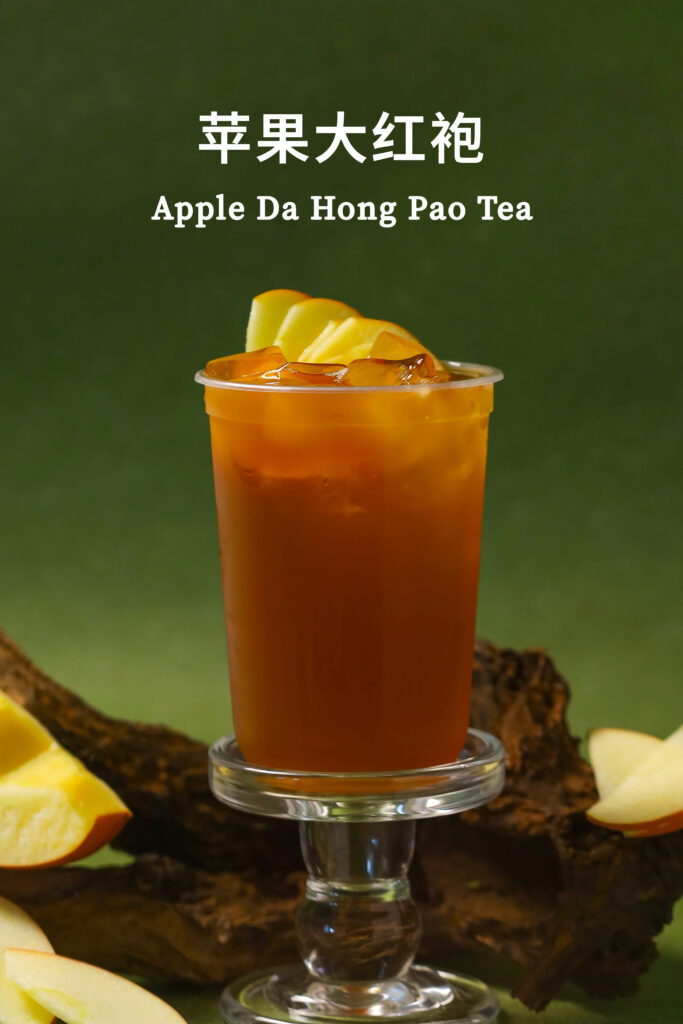
Fruit tea is no longer a seasonal add-on. It is the fastest-growing corner of the U.S. bubble tea market, and the numbers back that up. Grand View Research
put the fruit-flavor segment at roughly 38% of bubble tea market revenue in 2025, while Fortune Business Insights
calls fruit the fastest-growing segment in the United States, driven by customers who see these drinks as lighter and more refreshing than a heavy milk tea.
For a shop owner, that growth is both an opportunity and a trap. Done right, a fruit tea program is a high-margin, dairy-free anchor that moves fast at peak. Done wrong, it means a shelf of expensive purees that cloud every drink, a menu that tastes different between shifts, and a COGS line that quietly eats your profit.
This guide walks you through building a fruit tea drinks menu the way a beverage director would: start from your own constraints, pick the right tea base, choose the fruit format that fits your volume and price point, lock in exact spec sheets, and only then decide on a supplier.
Start With an Honest Needs Assessment
Before you compare ingredients, answer four questions about your own operation. The right fruit format, tea base, and even cup size depend on them.
1. What throughput do you expect? At peak, how fast does the line have to move? If you expect to push a drink every 30–45 seconds, a format that needs extra prep or careful open-life tracking will hurt you more than it helps.
2. What price point are you defending? A $6.00–$6.50 fruit tea can carry premium ingredients. A $4.50 value-menu fruit tea cannot. Your ingredient budget should follow your menu position, not the other way around.
3. How many SKUs do you want to manage? Every additional fruit flavor is another ingredient to store, track, and rotate. Most independent shops do better with a tight core of four to six fruit offerings plus one or two seasonal swings.
4. What storage do you actually have? Refrigerated purees need cold chain and shorter open-life tracking. Shelf-stable syrups and dry powders are more forgiving. If your back-of-house is tight, that reality should weigh on your choice.
Write these answers down. They become the filter sheet you’ll run every ingredient decision through.
Pro Tip: Newer operators almost always over-order variety. Start with your highest-confidence fruit drinks (mango, passionfruit, strawberry, lychee) and add flavors only after a flavor sells through consistently for a few weeks.
Choose the Right Tea Base for Fruit Tea
The base determines whether the fruit reads bright or gets swallowed. For most fruit tea drinks, green tea or jasmine green tea is the default because it keeps fruit forward and adds a clean floral note without competing for attention.
Use these pairings as your starting logic:
Fruit profile
Best tea base
Why
Tropical (mango, passionfruit, pineapple)
Jasmine green or green tea
Keeps the fruit bright and refreshing
Floral-delicate (lychee, white peach)
Jasmine green or white tea
Adds aroma without overpowering
Bold / classic (strawberry, blackberry)
Black tea
Gives a stronger backbone for an iced-tea feel
Smooth / refined (grape, peach)
Oolong
Smoother, more rounded body
Kerry’s 2025 bubble tea trends report
confirms the flavor gravity pulling US menus this direction: lychee, mango, peach, strawberry, and grape consistently rank among top cold-beverage flavors, and passionfruit keeps climbing. A jasmine-green backbone lets each of those flavors carry its own character.
For a worked example of how a base shifts a build, see how a pineapple fruit tea recipe SOP
is structured around a chilled jasmine-green base with a 35 ml pineapple-syrup dose for a 16 oz cup.
Fruit Syrup vs Puree vs Powder: Pick Your Format
This is the decision most shops get wrong, because there is no single “best” format. Each one optimizes for a different priority: speed and cost, premium body, or shelf stability.
Attribute
Fruit syrup
Fruit puree
Fruit powder
Speed of service
Fastest: pour and shake
Slower: thicker, needs handling
Medium: must dissolve well
Consistency
Excellent: standardized dosing
Good, but lot/open-life sensitive
Excellent: scoop-reproducible
Fruit character
Flavor-forward, less texture
Real pulp and body
Creamier, can taste synthetic if low-grade
Storage
Shelf-stable
Refrigerated, shorter open-life
Dry, shelf-stable
Cost per serving
Low
High
Low (if mixing succeeds)
Best fit
High-volume core menu
Signature / premium drinks
Creamy or dry-storage-focused builds
Syrup wins when consistency and speed matter most. Because the flavor and sweetness travel together in the bottle, it doses fast and tastes the same every time, ideal for a core mango green tea you’ll sell a hundred of a day.
Puree earns its higher cost when you want visible fruit, body, and a premium story. A passionfruit-guava drink with real pulp can carry a higher menu price, because customers can see and taste the fruit. The trade-off is discipline: puree needs refrigeration and tighter open-life tracking once opened.
Powder is the wildcard. It stores dry, batches reproducibly by weight, and gives a creamy, rich result that many customers like. Its risk is mixing: under-blended powder in a cold drink clumps, and a cheap powder can taste more like candy than fruit.
The strongest commercial approach mixes formats rather than picking one. Use syrup as your base for sweetness and standardization, then add a small puree dose to premium drinks for pulp and mouthfeel. It keeps your cost per drink controlled while protecting the “real fruit” impression that justifies a higher price. For a deeper breakdown of exactly how these behave in the cup, see the fruit puree vs syrup vs powder shop guide
.
Key Takeaway: Match the format to the menu role. Syrup for core volume, puree for premium signature drinks, and a syrup-plus-puree blend when you want both speed and a real-fruit impression.
Lock in Exact Spec Sheets (16 oz and 22 oz)
Fruit tea drinks live or die on precision. Without fixed build cards, the same drink tastes different between baristas, between shifts, and between stores, and consistency is what turns a first-time order into a repeat order.
These are practical commercial starting points for a standard fruit tea, expressed in ml and grams:
Component
16 oz (~500 ml)
22 oz (~650–700 ml)
Chilled tea base
200–220 ml
280–300 ml
Fruit syrup
30–45 ml
40–60 ml
Fruit puree (≈1.5× syrup)
45–60 ml
60–80 ml
Fruit powder
8–15 g
12–20 g
Ice (fill ≈80–85% of shaker)
180–220 g
240–300 g
Topping (popping boba / jelly)
40–60 g
50–70 g
Treat these as calibration floors, not gospel. The right dose depends on the brix and intensity of your specific syrup or powder. The smart way to standardize is to control sweetness by target brix rather than guesswork, a method covered in the bubble tea syrup buying guide for cost and consistency
.
A couple of operational notes matter here. Puree generally needs about one and a half times the volume of syrup to hit the same fruit intensity, so budget it accordingly. And a 22 oz drink is roughly 35–40% more liquid than a 16 oz, so scale at least the tea and fruit components up. Don’t just add ice, or you’ll water down the flavor.
Batch brewing is your speed-of-service lever. Pre-chill your tea base in a dispenser and portion toppings in advance so the line only has to pour, shake, and seal. That’s the difference between a fruit tea program that backs up your counter and one that clears it.
Build a COGS and Margin Model That Holds
A fruit tea costs more to build than a classic milk tea, and you should price it as a different product, not a cheap offshoot. Direct ingredient cost for a fruit tea commonly lands around $0.90–$1.10 per 16–22 oz cup versus roughly $0.50–$0.70 for a basic milk tea, mainly because fruit concentrates, purees, and premium toppings cost more than tea, creamer, and sugar syrup.
A reasonable target for a fruit tea drink is an ingredient cost around 13–17% of menu price when the fruit is in season and the recipe is controlled, stretching to 18–24% for off-season or premium fruit-forward builds. To keep the example concrete: at a $6.50 menu price, a $0.98 ingredient cost is about 15% COGS; nudge that to $1.30 and you’re at 20%, which is workable but leaves less room for labor and overhead. Most operators run their strongest fruit teas closer to that 13–17% band when they can.
The math gets murky fast, though, because wholesale prices vary by supplier, region, and order volume. Rather than hand you a fixed price list that will be wrong by the time you read it, here’s the framework: for every fruit drink, sum the portion cost of tea base, fruit ingredient, sweetener, topping, and cup/seal, divide by your menu price, and keep the result inside your target band. If a premium puree pushes a drink past about 20%, either raise the price or splice the format (syrup base plus a smaller puree accent) to pull cost back down.
This is exactly the kind of line-item thinking behind the super fruit tea profit margin guide
, which lays out a full ingredient-by-ingredient cost build for a large-cup fruit tea.
Vet Your Fruit Tea Suppliers Like a Professional
Once you know your format and your target cost, sourcing becomes a checklist rather than a leap of faith. Run every supplier through these criteria before you commit.
Sample consistency across lots. Order two different batches and taste them side by side. Fruit ingredients that vary between shipments will quietly destroy your drink-to-drink consistency.
Specs you can build to. You need real numbers: brix, sugar content, dilution ratio, and open-life (how long the ingredient stays good once opened). Vague specs mean you’re guessing every batch.
Cold-chain honesty. If you’re buying puree, confirm the refrigeration requirements and shelf life, and confirm your distributor can actually hold that cold chain end to end. A thawed-and-refrozen puree is a quality disaster.
Responsive MOQ and packaging. Can they sell you the case sizes you’ll actually rotate before open-life expires? A low MOQ that matches your volume beats the cheapest price at a case size you’ll waste.
Partner, not just price. You want a supplier that helps you calibrate doses and troubleshoot, not one that vanishes after the invoice clears.
This is the point where a credible wholesale partner earns its keep, which is why many operators consolidate fruit teas, syrups, powders, and toppings with a single supplier they trust. When you’re comparing, put vendors through this checklist the same way you’d test the fruit itself.
Next Steps
A profitable fruit tea program is built in layers: a clear needs assessment, the right tea base, a fruit format matched to each menu role, locked-in spec sheets, a COGS model you track, and a supplier vetted against real criteria. Start with four strong flavors, keep your dough under control, and let spec sheets do the consistency work so your baristas don’t have to.
Ready to stock a fruit tea line that holds up to peak-hour rush? Explore wholesale fruit tea ingredients, syrups, purees, and toppings at BubbleTeaSuppliers.com
to compare specifications and open the conversation with a supplier that works like a beverage partner.