
A matcha iced drink looks easy on the menu. On shift, it’s one of the quickest ways to create remakes: clumps that hit like bitter sand, a flat olive color, or a drink that separates before the customer gets out the door.
This SOP is written for US coffee shops and bubble tea shops. It gives your team a repeatable build, QC checks, and a simple buying rule for matcha grade—so “matcha iced drink” becomes a reliable, profitable SKU instead of a wild card.
What makes a matcha iced drink go wrong (and how to prevent it)
Matcha is a powder suspension. It doesn’t behave like syrup.
Most failures come from one of four controllables:
- Storage + freshness (oxidation kills color and aroma)
- Sifting (prevents bitter pockets)
- Water temperature (too hot = harsh bitterness)
- Dispersion method (whisk/shaker/blender—done in the right order)
If you standardize those four, your matcha program stops being “art” and becomes a system.
Decide what kind of matcha iced drink you’re selling
Before you touch the recipe, decide which cup you’re building. This changes matcha grade, sweetness, and what tools are “good enough.”
Option A: bright, premium, lightly sweet matcha
- Flavor goal: smooth, creamy, minimal bitterness
- Typical buyer: specialty coffee customer, matcha fan
- Matcha: higher-quality ceremonial or “latte-grade ceremonial”
- Operational risk: overspending if the drink is heavily flavored
Option B: bold, sweet, topping-friendly matcha
- Flavor goal: matcha that holds up to syrups/foams/toppings
- Typical buyer: boba customer, flavored latte customer
- Matcha: culinary grade or robust latte blend
- Operational risk: bitterness if temperature and dose aren’t controlled
Pro Tip: Support both options with the same base SOP. Price them differently. “Premium ceremonial” can be the upsell; the standard build uses a robust latte/culinary grade.
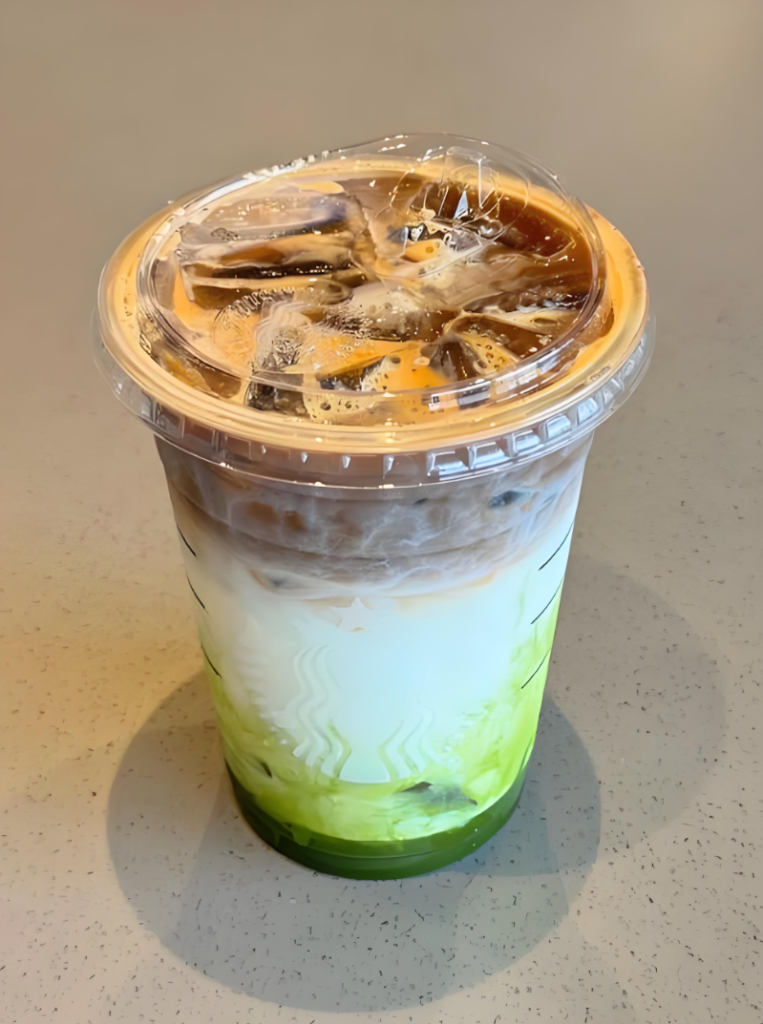
Ceremonial vs culinary matcha for iced drinks (a practical buying rule)
“Ceremonial” and “culinary” aren’t tightly regulated labels. Treat them as signals, then judge by taste, color, and performance in milk.
A simple operator rule:
- Premium drink + light sweetness → ceremonial or a ceremonial latte blend
- Standard drink + flavored/topping builds → culinary or latte-grade matcha designed for milk
If you’re comparing options, use an internal reference checklist like BubbleTeaSuppliers’ guide on premium matcha powder wholesale: standard vs ceremonial grade for cafés to keep your buying criteria consistent.
The non‑negotiable sequence for any matcha iced drink
No matter which station you’re on, the sequence is:
Sift → make a smooth matcha base (“matcha shot”) → then add milk and ice.
This is the fastest path to “no clumps” across both coffee bars and boba shaker lines.
Tools: whisk vs shaker vs blender (what to standardize)
You can hit a smooth cup with different tools. Choose based on speed and your team’s training.
- Bamboo whisk (chasen) or small wire whisk
- Best texture and suspension
- Slower; needs a bowl/pitcher
- Shaker (boba shaker or sealed jar/bottle)
- Fast and consistent for iced service
- Works best when you shake matcha with water before milk and ice
- Blender
- Useful for batch bases or very high volume
- Risk: over-aeration; warming the base if you blend too long
If you need one “workhorse” tool for a mixed coffee + boba operation, the shaker is usually the best ROI.
Matcha iced drink SOP: the base matcha shot (no clumps)
This is the core you train once, then reuse across lattes, milk teas, and fruit matcha builds.
Water temperature: what to teach staff
For iced drinks, you don’t need boiling water. Matcha can disperse in room-temp water, and overly hot water can make bitterness louder.
A practical training standard:
- Warm (not boiling) water is usually easiest for fast dispersion.
- If your shop prefers an iced-only method, room-temperature water also works.
Ippodo’s iced matcha latte recipe is a good reference point for using non-boiling water and building the drink over milk and ice.
Step-by-step SOP (with “done when” checks)
Step 1 — Set up and portion
Input: matcha, dry bowl/shaker, fine sieve, scale/scoop
Action:
- Portion matcha for the cup size (see spec sheet below)
- Keep tools dry (water on the whisk or in the shaker creates sticky clumps)
Output: dose ready to sift
Done when: matcha is measured and your vessel is dry (no condensation)
Step 2 — Sift the matcha
Input: portioned matcha, fine sieve
Action:
- Sift matcha into the bowl/shaker to break up static clumps
Output: fluffy, lump-free powder
Done when: no visible pellets or compressed clumps
⚠️ Warning: Skipping sifting is the #1 cause of “surprise bitter pockets.”
Step 3 — Make the matcha shot
Input: sifted matcha + water
Action:
- Add a small amount of water
- Whisk hard (W motion) or shake vigorously until smooth and lightly foamy
Output: smooth, glossy matcha base
Done when: you can’t see dry powder streaks on the sides or bottom
Step 4 — Sweeten while the base is fully mixed
Input: matcha base + liquid sweetener (optional)
Action:
- Add syrup and mix again
Output: fully dissolved sweetness
Done when: no grit; base tastes balanced (not “green water”)
Step 5 — Build the iced drink
Input: matcha base + cold milk + ice
Action:
- Fill cup with ice
- Add milk
- Pour matcha base over the top (layered look) or combine in a shaker for speed
Output: finished matcha iced drink (iced matcha latte)
Done when: color is even after a stir; no visible clumps; texture is smooth
Recipe spec sheet (starting points by cup size)
These are starting ranges for training. Dial them to your matcha strength and your market’s sweetness preference.
| Size | Matcha (g) | Water (ml) | Simple syrup 1:1 (ml) | Notes |
|---|---|---|---|---|
| 12 oz | 3–4 | 30–60 | 10–20 | Good for “standard” sweetness |
| 16 oz | 4–6 | 40–80 | 15–30 | Common default cafe size |
| 20 oz | 6–8 | 60–100 | 20–40 | More dilution from ice |
How to standardize fast:
- Pick one standard recipe inside the range.
- Create a premium SKU by changing only two variables: better matcha + slightly less syrup.
Coffee-bar workflow vs boba-line workflow
Station setup matters as much as the recipe.
Workflow A: coffee bar (presentation + texture)
Best for: cafes that care about texture and the layered look.
- Make the matcha shot in a bowl or small pitcher
- Build in the service cup
- Stir right before handoff (or instruct the customer to stir)
QC standard:
- bright color
- light foam
- clean finish (no chalky grit)
Workflow B: boba line (speed + consistency)
Best for: high volume and topping builds.
- Make the matcha shot in the shaker
- Add milk and ice and shake again
- Pour into the cup and finish with toppings
If staff asks “whisk or shaker?”: whisk for premium texture, shaker for speed. The non-negotiable is still sift → shot → build.
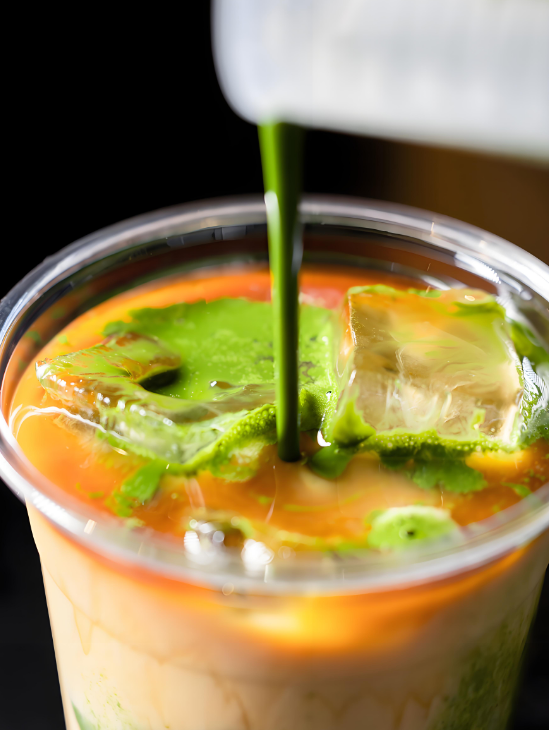
Can you batch matcha concentrate?
You can, but batching is where operators trade speed for quality without noticing until complaints show up.
Batching makes sense when:
- matcha is a meaningful percentage of sales
- making every shot-to-order becomes a peak bottleneck
Batching is a mistake when:
- you sell only a few matcha drinks per day
- the team can’t reliably remix and control hold times
If you batch anyway:
- batch small
- hold cold
- remix frequently
- dump when aroma goes flat or color dulls
Food safety and holding guidance (keep it simple and defensible)
Matcha powder is shelf-stable when kept dry, but your prepared drink components aren’t.
Two practical rules your team can follow:
- Keep your refrigerator at or below 40°F (4°C), per the FDA’s safe food storage guidance.
- Don’t leave dairy or prepared drinks sitting out. Use the same “don’t gamble” approach you use for milk-based coffee drinks.
Troubleshooting (teach these as remake-prevention)
Problem: clumps or gritty texture
Likely causes
- matcha wasn’t sifted
- base wasn’t fully dispersed before milk/ice
- tools were wet
Fix
- enforce “sift → shot → build”
- increase water slightly in the shot before blaming the matcha
Problem: bitter or harsh finish
Likely causes
- water too hot
- dose too high for your milk/sweetness level
- matcha is stale or oxidized
Fix
- standardize a warm (not boiling) water target
- reduce dose or slightly increase milk/syrup
- tighten storage discipline
Problem: separation or green sediment at the bottom
Likely causes
- under-mixed base
- drink sat too long before serving
Fix
- mix harder, serve faster
- if batching, remix frequently and keep holds short
How to turn this into a small matcha iced drink lineup that sells
A tight lineup reduces training time and improves consistency.
Start with four items:
- Iced Matcha Latte (standard)
- Premium Ceremonial Iced Matcha (less sweet)
- Strawberry Matcha (culinary/latte-grade)
- Dirty Matcha (matcha + coffee)
If you want a matcha fruit build that uses the same matcha shot method, link your team to BubbleTeaSuppliers’ Matcha Guava Fruit Tea SOP (16 oz).
Training notes: what to put on a station card
If you tape one card to the wall, make it this:
- Sift every drink
- Shot first (fully dispersed)
- Milk and ice last
- QC check: no specks, no streaks, smooth straw sip
Key Takeaway: A matcha iced drink isn’t “a recipe.” It’s a system: storage, dispersion, temperature discipline, and staff training.
Next steps
For more operator-ready matcha builds, variations, and ingredient guidance, browse the SOP library on BubbleTeaSuppliers.com. You can also use their internal reference posts like Matcha Latte Recipes for a Refreshing Summer (Shop-Ready) and Matcha vs Hojicha: which belongs on your bubble tea menu? when you’re building seasonal menus.