
Taro coconut milk tea should go on your permanent menu, not into a seasonal slot. Price it above your standard milk tea, keep the build powder-fast for consistency, and let a coconut-forward limited-time variant carry the novelty instead of the base drink.
That is the short version. The longer version is about the money.
Most of the writing on this drink is recipe content written for someone standing in a home kitchen. Very little of it addresses what an operator actually needs to decide: whether the drink earns a permanent slot, what it should cost, which toppings belong on it, and what those decisions quietly cost in prep minutes and margin. This is that version.
The structure below moves from the menu decision to the price ladder to the numbers, then to the toppings bundle and the sub-decisions that decide whether the launch holds up on a Tuesday afternoon.
Why taro coconut milk tea earns a permanent menu slot
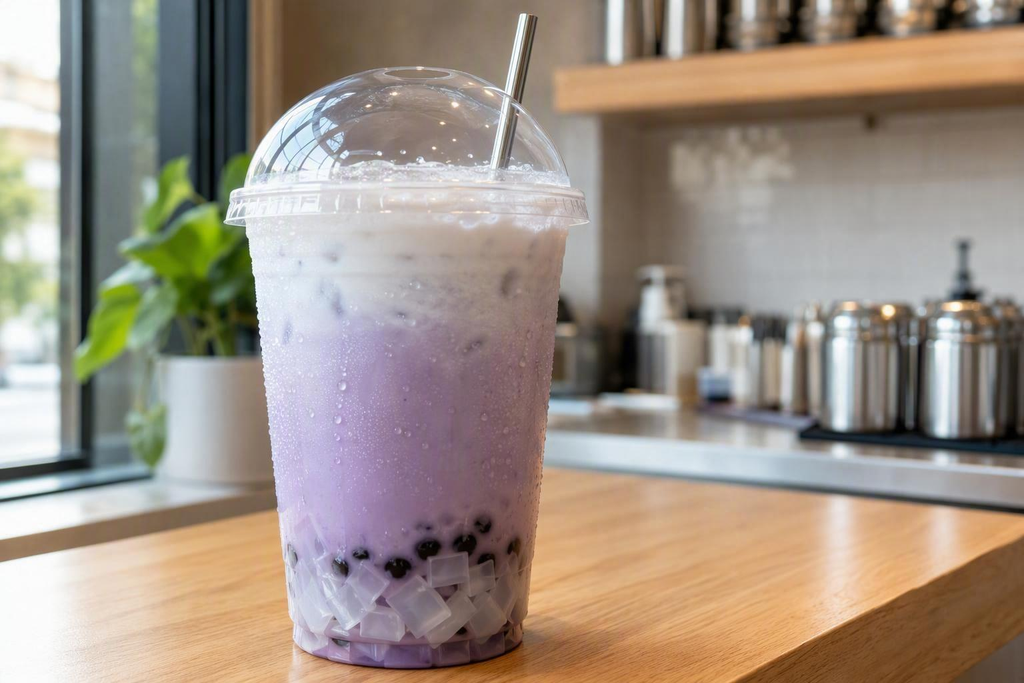
Taro is already a proven flavor in US shops. It delivers a creamy, slightly earthy profile with a color that photographs well, and it shows up on chain menus across the country — chain benchmarks put taro pearl milk tea around $6.25, a point we will return to when pricing. Coconut adds something a second taro drink cannot: a lighter, tropical read on the same base, which lets you sell the drink to customers who find standard taro milk tea too heavy.
The second reason is positioning. Coconut gives the drink a plant-forward story. Even if you build it with dairy, the coconut-forward framing lets you offer a dairy-free variant without designing a separate drink — the brand’s guide to coconut milk tea as a non-dairy base option pairs it with black or oolong tea and lists grass jelly, coffee jelly, and red bean as the topping matches. That matters more than it sounds, because dairy-free requests are a growing share of customization at the register, and having one drink that answers both cravings means one less SKU.
What coconut adds that a second taro drink does not
If you already sell taro milk tea, adding a coconut version is not a duplicate. It is a texture and temperature play. The coconut layer reads as cooler and more refreshing, which makes the drink more defensible in warm-weather months without retiring the original.
The plant-forward angle and who it brings in
Coconut-forward drinks bring in customers who want a creamy drink but avoid dairy by default. That audience usually resolves to one of three outcomes at your counter: they modify an existing drink, they leave, or they order something they did not want. A dedicated taro coconut build collapses all three into a clean menu line. Note the labeling implication early — if your taro base or coconut element contains dairy, say so, and verify your allergen disclosure against your local requirements rather than assuming the drink is dairy-free because “coconut” is in the name.
Taro coconut milk tea pricing: what the US market supports in 2026
Start with the range the market already accepts. Cost guides published in 2026 put standard US boba drinks between roughly $3.00 and $7.00, with an average around $4.50, and note that specialty or topping-loaded builds push toward $6.00–$8.00 and above in major metros, per latestcost.com’s 2026 bubble tea cost guide. A separate tea shop pricing benchmark from PriceWise lands in the same place, putting standard milk tea at $4–$6 and specialty or topping-heavy drinks at $6–$8+.
Toppings are priced separately in most operations, and the observed band is wide: $0.25 to $2.00 per add-on, with most shops clustering around $0.50 to $1.00. For context on how large the category is, Fortune Business Insights projects the US bubble tea market to reach roughly USD 0.57 billion in 2026 — enough volume that a single well-priced core drink is worth getting right.
That gives you a defensible three-tier ladder.
| Tier | Cup size | Build | Recommended price | What it signals |
|---|---|---|---|---|
| Core | 16 oz | Taro base + coconut element, standard ice/sugar | $5.75–$6.25 | Your everyday specialty milk tea |
| Upsell | 24 oz | Same build, larger cup | $6.75–$7.25 | Size upgrade, not a new recipe |
| Premium | 16 oz | Fresh-milk or fresh-taro build, or a foam cap | $7.50–$8.00 | Visible premium in the cup |
The prices above are reasoned recommendations built on the cited market bands, not quoted figures from any single shop. Test them against your own metro — the same drink that sells for $5.75 in a suburban strip mall can hold $7.50 in a dense urban market.
The pricing error that erases the premium
The mistake to avoid is pricing taro coconut at the same point as your house standard milk tea. Coconut and taro both add ingredient cost and a step at the shaker, so charging your base milk tea price converts every cost increase into direct margin loss — and it teaches customers that this drink is not special.
Pro Tip: Price the drink at the bottom of the specialty band rather than the top, then let toppings and size carry the ticket higher. A $5.95 core drink with a $0.75 topping and a size upgrade beats a $7.25 drink that customers order once instead of weekly.
Chain benchmarks support the “specialty, not standard” position. Public 2026 menu listings for Sharetea’s taro drinks show a taro pearl milk tea at $6.25 and a taro ice blended with pudding at $7.50, while a separate Kung Fu Tea price listing puts milk teas in the $5.25–$6.50 band and premium specialty drinks up to about $7.25. Taro sits above the milk tea line and below the ceiling. That is where yours belongs.
Core item or LTO? Building a two-layer menu architecture
Treat this as two layers, not a binary choice.
Layer one: the permanent base drink
The base drink stays on the menu year-round. Taro’s established position in the US market means it is not a risky permanent commitment, and a permanent item builds repeat purchase and a reliable reorder cadence for your taro and coconut ingredients.
Layer two: one rotating seasonal variant per quarter
The variant is where novelty lives. Keep it to one rotating variant per quarter so your menu, POS, and training load stay flat. A coconut-forward frozen treatment in the warm-weather window is the obvious first move — and it is already a recognized pattern, since the brand’s own taro milk tea powder SOP and profit-margin guide lists a taro coconut blended slush as a summer frozen LTO.
The failure mode here is real and worth naming: if you pull the whole drink in and out of the menu with the seasons, you teach regular customers to wait. They order something else in January, and some of them keep ordering that something else in June. A permanent base with a rotating variant keeps the baseline while still giving you something new to promote.
If your operation is small or demand is genuinely unproven, run the reverse sequence: launch as a limited-time special, then commit it to the permanent menu once repeat purchase shows up in your own data after four to six weeks. The strategic endpoint is the same; only the order changes.
On the ingredient side, the base build should lean on a powder-based taro for speed and consistency, with a fresh-style build reserved for the premium tier. The tradeoffs between those formats — including why powder-based builds hold flavor more reliably across shifts — are covered in detail in the brand’s guide to choosing taro ingredients that stay consistent.
Cost, margin, and the numbers behind the price
Bubble tea operations commonly target a 60–65% gross margin on core drinks, which implies a COGS of roughly 35–40% of the selling price. One menu-strategy source cites taro milk tea specifically in the 60–65% margin range, though note that figure comes from the Taiwanese market and should be read directionally rather than as a US measurement — Klikit’s 2026 bubble tea menu ideas lists it alongside a 50% default sweetness for taro drinks, which is where the sweetness recommendation below comes from.
Apply that to the ladder and the math gets simple. A $5.95 core drink at 38% COGS carries about $2.26 in ingredient cost and roughly $3.69 in gross profit before labor, packaging, and commissions. That is the number your toppings and size upgrades are fighting to protect.
The structure that holds up:
- Protect the base. Do not let the base drink’s COGS drift past 40% of its price just to make the build richer.
- Raise contribution with toppings, not recipe complexity. A topping adds a small, measurable cost and a full add-on price.
- Keep a premium tier for the customers who want the best version. The premium tier exists to make the core tier look reasonable, and it sells to a real segment.
If you want the gram-level build spec and the per-cup cost math for a taro base, that brand guide we linked earlier walks through the two-stage dissolution method and the spec sheets behind it.
Two caveats on the percentages. First, COGS percentages vary with your ingredient format — a fresh-taro build will run higher than a powder build. Second, delivery platforms add a commission that sits on top of the cost stack; it should be reflected in your delivery menu pricing rather than absorbed by your in-store price.
Hidden costs that quietly flatten your margin
The premium on this drink is easy to calculate and easy to lose. Five costs do most of the damage.
Prep labor minutes per drink. Dissolving a taro base and then layering a coconut element adds steps at the shaker. At 40 seconds of added time per drink and 120 drinks a day, that is over an hour of added labor — real money, especially at peak. Pre-batch the taro concentrate, and train the two-stage method: hot concentrate dissolution first, then dilute.
Topping spoilage. Every topping SKU adds a hold-time clock. Adding coconut jelly, tapioca pearls, pudding, and aloe at once means four spoilage curves running simultaneously. Cap the bundle and rotate seasonal toppings instead of stacking them.
Coconut texture risk. Coconut formats behave differently in the cup. Full-fat coconut milk reads drinkable and familiar, coconut cream gives a richer mouthfeel that can overpower a build if you do not rebalance the sweetness, and coconut powder dissolves into a consistent creamer-style base. Decide on one format and test it against the exact build and hold time you will use in service. A version that tastes perfect when freshly blended can look broken after fifteen minutes on a delivery run — the brand’s comparison of what kind of milk works in a boba shop covers how each option behaves in service.
SKU complexity. Each variant adds menu space, POS programming, and training. This is the case for one permanent base plus one rotating variant rather than five near-identical drinks.
Cannibalization. A taro coconut drink will pull some sales from your existing taro milk tea, and that is manageable if you plan for it. Differentiate deliberately: coconut-forward naming, a visibly different cup build, and a price point that separates the two.
⚠️ Warning: Do not absorb delivery-commission cost into your in-store price. If delivery takes a commission, price a separate delivery menu. Undifferentiated pricing means the delivery channel quietly subsidizes itself out of your milk tea margin.
Taro milk tea toppings: a three-tier bundle that protects the check average
Creamy drinks want creamy-adjacent toppings. The pairing logic that works across milk tea generally applies here: tapioca pearls, pudding, grass jelly, red bean, and foam toppings all sit comfortably on a taro base, while fruit-forward toppings belong with fruit teas and seasonal drinks instead.
Coconut jelly is the signature pairing for this drink specifically. It reinforces the flavor story, it is already named as a strong topping for milk-tea builds, and it gives the cup a visual difference from your standard taro milk tea — the brand’s own commercial and DIY coconut jelly recipes work through both the from-scratch agar version and the shop-ready format.
| Tier | Toppings | Add-on price | Role |
|---|---|---|---|
| Core | Tapioca pearls, coconut jelly, grass jelly | +$0.75 for the first | The default upsell |
| Premium | Cheese foam / milk foam cap, pudding, red bean | +$1.25–$1.50 | Higher-ticket builds |
| Seasonal | One rotating item tied to the current variant | +$1.00 | Novelty with a fixed end date |
Three rules keep the bundle from becoming a cost center: cap the bundle at three toppings, keep fruit-forward items out of this drink so your topping inventory does not fragment, and use a single bundled topper price instead of itemized pricing so the register stays fast.
Pro Tip: Build the core topping into the core drink’s price and present the bundle as included rather than added. A drink that reads as “$5.95, coconut jelly included” converts better than “$5.20 plus $0.75” for the same total — and it locks the topping into the standard build, which stabilizes your prep.
The broader pairing logic — which toppings to prioritize across your whole milk tea line and which to reserve for seasonal drinks — is laid out in the brand’s playbook on milk tea toppings that sell.
Naming, sizes, and the sub-decisions that decide the launch
Naming does more work than most operators expect. Use a clear functional name first, with an optional signature descriptor: “Taro Coconut Milk Tea” or “Coconut Taro Milk Tea” both read cleanly. If you offer a richer build, signal it in the name — “Taro Coconut Fresh Milk” for the premium version versus “Classic Taro Coconut Milk Tea” for the powder-based core.
That naming separation matters because it justifies the price gap on the menu itself. Customers do not need to understand your ingredient system; they need to see why one line costs $5.95 and the other costs $7.95. The same menu-decision logic behind choosing between taro and ube flavors applies here — the name is doing merchandising work, not description. The brand’s breakdown of the taro vs ube milk tea menu decision covers how to frame that choice.
On operations, keep it tight:
- Two sizes maximum — 16 oz as the core, 24 oz as the upsell.
- Default sweetness at 50% for taro-based drinks, since the taro base already carries sweetness. Full sweetness reads as cloying and pushes customers to modify every order.
- Standard ice defaults with customization available, so the register is fast by default and flexible on request.
- One coconut format, decided once and standardized across shifts.
The seasonal variant playbook
The variant is where you spend your novelty budget. Three mechanics work well.
Vary the form, keep the flavor. Push the coconut element further forward, lighten the taro, and market it as a cooling drink. Coconut-forward drinks come into their own in warm-weather months, and coconut joins mango, pineapple, and watermelon as one of the seasonal ingredients that reliably lift a tropical menu push — which gives you a calendar hook without touching the base recipe. The brand’s breakdown of seasonal bubble tea specials built on seasonal ingredients covers how to time that kind of launch.
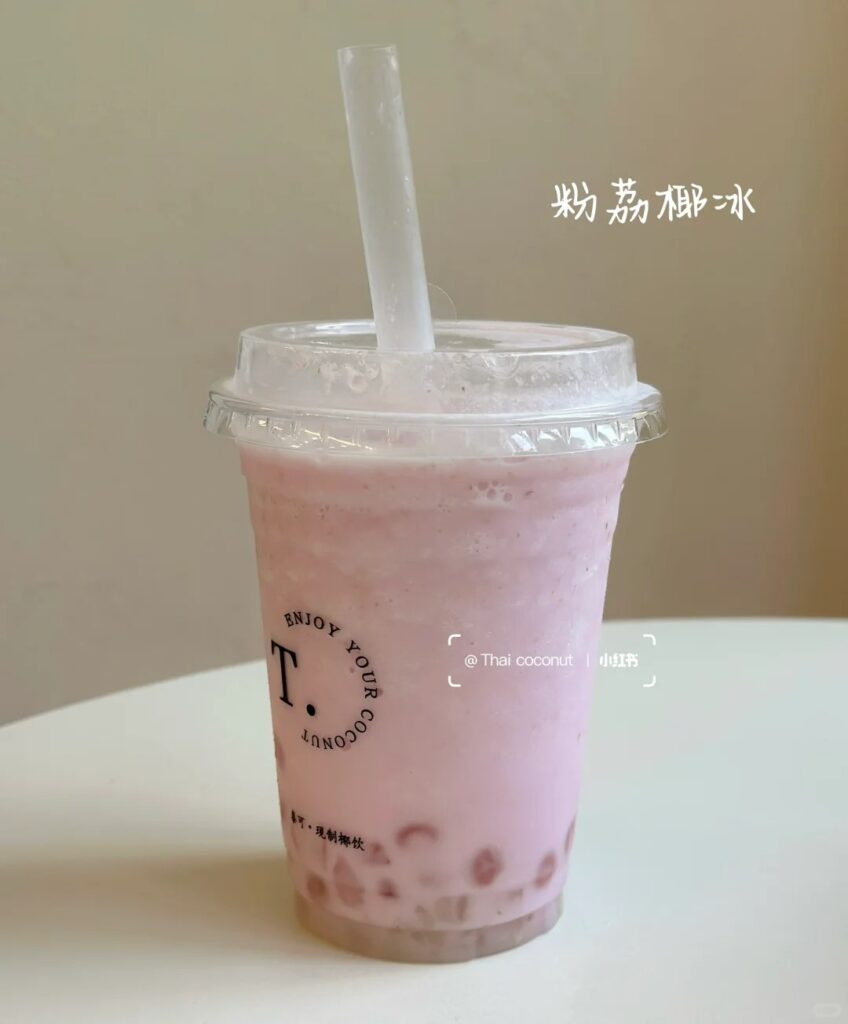
Rebuild it as a frozen drink. A blended version is a different texture at the same flavor, so it reads as a new drink to customers while reusing your existing taro and coconut inventory.
Give the variant a dated window, not a permanent fixture. A clear start and end date makes it read as an event; retire it on schedule. A variant that never ends stops being an event and turns into menu clutter.
The variant mechanics that keep a rotating menu line profitable — how to structure an LTO without fragmenting your ingredient inventory — are covered in the brand’s guide to LTO variations for bubble tea shops.
FAQ
Should taro coconut milk tea be seasonal or year-round? Year-round as a permanent core drink, with seasonal amplification. Taro holds a stable position in the US market, so a permanent slot is low-risk and builds repeat purchase. Put the novelty into one rotating variant rather than moving the base drink in and out of the menu.
How much should a taro coconut milk tea cost? In most US markets, price a 16 oz core build at roughly $5.75–$6.25, a 24 oz upsell at $6.75–$7.25, and a premium fresh-milk or foam-topped build at $7.50–$8.00. That ladder sits above standard milk tea, which generally runs $4.50–$7.00 across US shops, and below the top specialty tier. Those are recommendations built on published 2026 market bands, so test them against your own metro before you commit.
Which toppings go best on taro coconut milk tea? Coconut jelly is the signature pairing, followed by tapioca pearls and grass jelly in a core bundle priced around +$0.75. Pudding, red bean, and a cheese foam cap work as premium add-ons in the +$1.25–$1.50 range. Cap the bundle at three toppings to control prep time and spoilage.
Will it cannibalize my existing taro milk tea? Some, and that is manageable. Differentiate on three axes: coconut-forward naming, a visibly different cup build with coconut jelly as the defining topping, and a price point that separates the two drinks. Shops that launch the coconut version as a near-identical build at the same price lose the premium and split their own sales.
Next steps
Run the launch in this order, and the drink pays for its own slot.
- Decide the build and lock one coconut format. Test it against your exact service build and a fifteen-minute hold before you commit.
- Set the ladder. Place the core drink at the bottom of the specialty band, and set the premium tier only if the premium is visible in the cup.
- Reset the topping bundle. Cap it at three, build the core topping into the price, and keep fruit-forward items out.
- Pre-batch and train. Two-stage taro dissolution, coconut format standardized, prep time measured at peak rather than at open.
- Schedule the variant. One seasonal build per quarter with a dated window, retired on time.
If you are sourcing the taro base, coconut elements, jellies, and toppings for this build in one pass, BubbleTeaSuppliers carries the range — powders, jellies, and topping formats sized for shop volume rather than home use. Review the bubble tea product range before you set your final price, since your ingredient format is the single biggest driver of whether the 35–40% COGS target holds.